The FAO index hit 136.0 in September, its highest since November 2022. Wheat, sugar and freight are rising together — and import-dependent nations will feel it at the market stall first.
Published 4 October 2026 · 18:00 GMT
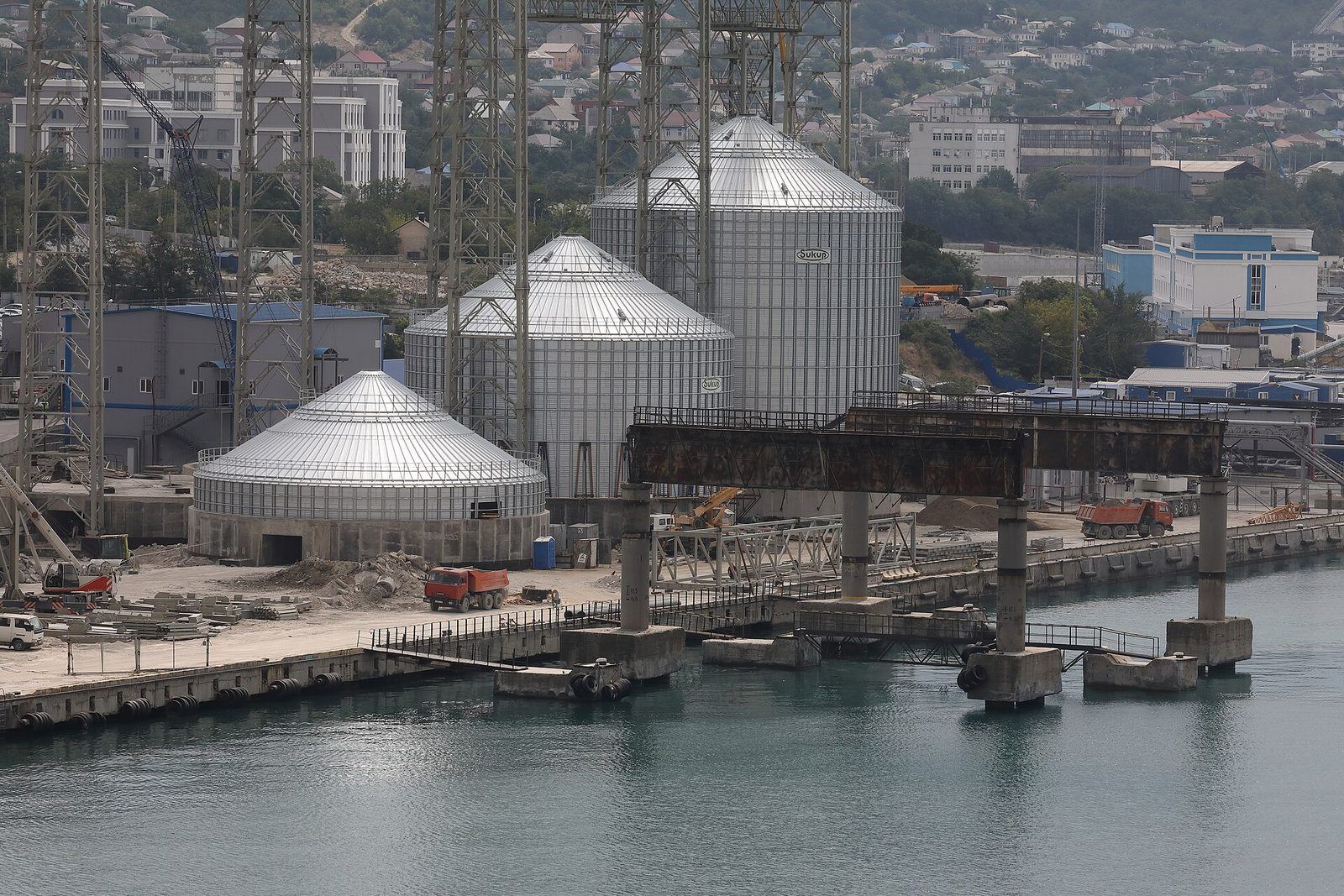
World food prices rose in September to their highest level in nearly four years, the UN's Food and Agriculture Organization said on 2 October, as logistics disruptions in the Strait of Hormuz and the Black Sea combined with climate shocks to pressure energy, transport and key commodities. For the Global South's food importers — from Lagos to Dhaka — the warning is not abstract.
ROME — The numbers landed on Friday, and they confirmed what traders, millers and bakers across the Global South have been feeling for months: world food prices rose in September to their highest level in nearly four years. The Food and Agriculture Organization's benchmark index averaged 136.0 points, up from a revised 134.0 in August, marking the third consecutive monthly increase and the loftiest reading since November 2022. The index now stands 5.8 percent above where it was a year ago, and while it remains about 15 percent below the record set in March 2022, the direction of travel has unmistakably changed. For countries that buy their food on world markets, the bill is arriving at the worst possible moment.
The damage was led by the cereals the poorest half of the world lives on. The FAO's cereal price index climbed 5.1 percent in a single month, averaging 17.2 percent higher than in September 2025. World wheat prices surged 6.3 percent, hitting their strongest level since August 2023, as what the FAO described as a war-related collapse in Black Sea trade pushed wheat futures to a three-year peak in early September. Global maize prices rose 5.6 percent on concerns over reduced yield prospects for US corn, weaker export availability in Brazil and the same choked shipping routes through the Black Sea. The rice index added a more modest 1.4 percent, as Indica quotations rose on weather worries and seasonally tighter supplies. On the Chicago Board of Trade, wheat futures have risen roughly 35 percent since late June as buyers scrambled for alternative supplies, while CIF wheat prices for the East Mediterranean reached about 301 dollars per tonne in late August, with freight costs climbing alongside.
World prices move first; household budgets follow. Every point the index gains is a tax collected at the poorest tables first.
Sugar was the month's fastest mover. The FAO sugar price index jumped 6.1 percent from August — its third straight monthly increase — as fears of a severe El Niño weather pattern pushed international sugar prices to an 18-month high. Adverse weather is threatening to curb supply in major production zones in India and Thailand, according to the FAO's reading. Vegetable oils edged up 0.9 percent, driven by palm oil on strong demand and El Niño-related production risks in Southeast Asia, and the oil index now sits 18.3 percent above a year earlier. The only relief in the basket came from meat and dairy: the meat index eased 1.1 percent on lower poultry prices, partly linked to a drop in European Union demand as new import rules took effect, while dairy slipped a marginal 0.1 percent.
In his statement on Friday, FAO Chief Economist Maximo Torero named the converging pressures plainly: 'We are seeing a persistent and increasingly broad-based build up in global commodity prices, as disruptions in the Strait of Hormuz and the Black Sea combine with climate shocks, putting pressure on energy, transport and key food commodities.' The Strait of Hormuz, through which a large share of the world's traded energy and fertilizer feedstocks passes, remains constrained amid the Iran war that began in February, and the Black Sea grain corridor — once the world's cheapest wheat highway — is now a war corridor. 'If sustained,' Torero added, 'these pressures will soon pass through to consumer food prices, especially in food and energy import-dependent countries.' That pass-through is the story that matters now.
And it is a story the West African market knows by heart. In Nigeria, where wheat is almost entirely imported, the landed cost of a 50-kilogram bag of flour has roughly doubled in recent years — moving from a range of about 20,000–25,000 naira to 40,000–55,000 naira — under the combined weight of global price increases and naira depreciation, according to industry market reporting. Port congestion, demurrage charges and diesel for milling and baking, priced off Brent crude that the Bureau tracks at 102.25 dollars, pile cost upon cost before a single loaf reaches the stall. Bakers compress margins until they cannot: bread prices rise, loaf sizes shrink, and households quietly substitute cheaper starches. In Cameroon, where a bag of flour has surged toward 22,500 CFA francs and millers have at times suspended deliveries, the government has pushed cassava flour as a wheat substitute — a stopgap that signals how thin the margin of resilience has become. Energy costs for milling and baking add another layer: with unreliable grid power, Nigerian millers and bakers run diesel and gas generators, while high interest rates inflate the working capital needed to finance large grain purchases. Every one of those costs sits downstream of the same energy and transport squeeze Torero named.
Across the continent, the import bill is already inflating. Egypt, the world's largest wheat buyer, sourced 60 percent of its wheat from Russia between July 2025 and January 2026 — a dependence that puts Cairo directly in the path of Black Sea disruptions, with governments that subsidize bread facing rising fiscal pressure as import costs climb. In Kenya, wheat traded near 263.20 dollars per tonne in August, more than 31 percent higher than a year earlier, and the Cereal Millers Association warned this week that delays in wheat import approvals are layering extra costs onto millers that will eventually reach consumers through flour and bread prices. In Djibouti, elevated diesel, import and shipping costs, compounded by the Red Sea and Black Sea disruptions, are expected to push up rice, wheat flour and sugar prices, the Famine Early Warning Systems Network reported. For Sudan and South Sudan, conflict, collapsed currencies and broken roads add a brutal premium on top of every dollar the world index adds. French operators were even preparing in August to ship a 67,000-tonne cargo of wheat to Sudan — a market France had not supplied for nearly two decades — a sign of how far buyers are reaching beyond the Black Sea. But longer shipping distances from the Americas, Australia and Europe mean replacement cargoes arrive later and cost more.
What makes this build-up more punishing than a simple harvest failure is that the harvest, on paper, is not failing. The FAO kept its forecast for global cereal production in 2026 almost unchanged at 2.979 billion tonnes — 2.1 percent below the 2025 peak, but still the second-largest harvest on record. The problem is not what farmers grew; it is whether the grain can move. The FAO cut its forecast for world cereal trade in 2026/27 by 0.7 percent, citing lower wheat and maize export expectations 'due largely to constrained Black Sea shipping routes.' A record harvest sitting behind a blockade is a harvest that feeds no one. And with uncertainty over Hormuz adding to the cost of biofuel feedstocks such as maize, energy prices are feeding the food price twice — once at the pump and once at the farm. The FAO's own numbers underline the paradox: the agency kept production almost unchanged while cutting the trade forecast — more grain grown, less grain moving. Uncertainty over Hormuz is also supporting prices of biofuel feedstocks such as maize, tightening the knot between the oil market and the dinner table.
So what comes next is less a question of supply than of transmission. World commodity prices move first; household budgets follow with a lag of weeks to months, and the lag is shortest where currencies are weakest and import dependence is deepest. The El Niño watch through the southern hemisphere summer will decide whether sugar's 18-month high has further to run, and October's harvest reports from North America and Europe will set the tone for the next FAO release. For the policymakers of the importing South, the playbook is familiar and unglamorous: secure cargoes early at whatever price the market demands, watch freight indices as closely as farmgate prices, and brace the social budgets — bread subsidies, school meals, strategic reserves — that stand between a commodity index at 136 and a family dinner. The four-year high is the headline. The pass-through is the crisis.
Western capitals read the FAO's September print primarily as an inflation warning for their own consumers. After two years of disinflation, a food index back at a four-year high — with cereals up 17.2 percent on the year — threatens the final stretch of the battle against price pressures, and central bankers will be watching the pass-through to retail food with particular attention. In India, where retail inflation already sits near 4.8 percent, the Reserve Bank of India's rate-setting panel meeting on 5–7 October faces a sharpened dilemma: wheat, maize and sugar jumping together strengthens the case for a hawkish hold, with direct consequences for the rupee and for the margins of packaged-food companies across emerging markets. For now, the index remains roughly 15 percent below the March 2022 record set after Russia's invasion of Ukraine — a cushion Western policymakers still count on, but one that narrows with each monthly gain.
For Western traders and importers, the September report is a logistics problem before it is a hunger problem. The collapse in Black Sea trade and the constrained Strait of Hormuz are raising freight and insurance costs across bulk commodities, and Chicago corn and wheat each rose roughly 15 percent in a single recent week — the kind of broad rally that can feed through to inflation when energy costs are also elevated. European buyers, meanwhile, are adjusting to their own new import rules that have already cut poultry demand and weighed on the meat index. The Western lens sees a market repricing risk, not scarcity: plenty of grain exists, but the routes that made it cheap are no longer reliable. Alternative suppliers — Canada, the United States, Argentina, Australia and the European Union — could capture the displaced demand, but longer routes and higher-priced origins will slow the substitution and keep freight markets tight.
From the Asian shore, the September spike reads as a double exposure: climate and shipping. Fears of a severe El Niño pushed international sugar prices to an 18-month high, and the adverse weather the FAO cites in India and Thailand goes straight to the sweet spot of the region's export economy — sugar, and palm oil in Southeast Asia, where production risks are rising. Bangladesh, a heavy food and energy importer, reported the FAO's warning of consumer pass-through with particular alarm: when wheat, sugar and vegetable oils all climb together, the import bill of a country like Bangladesh widens on three fronts at once, and the taka has little room to cushion the shock. In India, where retail inflation already runs near 4.8 percent, a weak monsoon is still working its way through the farm economy, sharpening the central bank's dilemma ahead of its October 5–7 meeting.
East Asia's major buyers, meanwhile, are already hunting for alternatives to Black Sea grain. Asian importers have increased purchases from Australia and Argentina, with some replacement cargoes priced substantially above Black Sea wheat — a premium that Asian millers can absorb more easily than their African counterparts, but a premium all the same. The region's governments remember the 2022 shock, when the index hit 160.2, and the lesson was stockpiles: those who rebuilt strategic reserves after March 2022 now face September 2026's 136.0 with buffers intact. The Eastern lens is anxious but prepared — the question is whether El Niño turns preparation into necessity. Some replacement cargoes from Australia and Argentina are already priced substantially above Black Sea wheat — a premium Asian buyers can absorb more easily than African ones, but a sign that the whole region's import bill is repricing upward.
This is where the FAO's warning lands first and lands hardest. The Global South does not consume the FAO index; it pays it, in hard currency, at the port, before a bag of flour ever reaches a market stall. West Africa imports the overwhelming bulk of its wheat, and when world wheat prices rise 6.3 percent in a month to their highest since August 2023, the cost travels down a chain that is already strained at every link: scarce foreign exchange, congested ports, demurrage fees, diesel for mills and ovens, and currencies that weaken against the dollar precisely when import bills rise. In Nigeria the 50-kilogram flour bag has roughly doubled in naira terms; in Cameroon millers have at times stopped delivering altogether; in Kenya millers warn that bureaucratic delays on import approvals are adding costs that consumers will pay. The index moves in Rome; the pain moves in CFA francs, naira and shillings.
And yet the South is not only a victim of the price — it is also where the response is being invented. Cameroon's push toward cassava flour as a wheat substitute, Kenya's commitment to buy local wheat at a guaranteed price before authorizing imports, and the quiet rebuilding of grain reserves across the continent are all attempts to shorten the distance between the harvest and the table. The FAO notes that the 2026 cereal harvest will still be the second-largest on record — the grain exists; what is missing is affordable movement. For the importing South, the September report is a reminder that food security was never only about growing food. It is about owning the routes, the reserves and the refining capacity between the field and the family. Until then, every point the index gains is a tax collected at the poorest tables first. Governments that subsidize bread and other wheat-based staples will face mounting fiscal pressure as import bills climb — the cruel arithmetic of a crisis priced in dollars and paid in local wages.
Three shocks are converging. The Iran war has constrained the Strait of Hormuz, through which much of the world's traded energy passes. War has collapsed grain trade through the Black Sea, once the cheapest wheat highway. And climate shocks, including fears of a severe El Niño, are threatening harvests in major production zones. The FAO's index averaged 136.0 points in September — its highest since November 2022, and the third monthly rise in a row.
Commodity prices move first and household budgets follow with a lag of weeks to months, shortest where currencies are weakest and import dependence is deepest. FAO chief economist Maximo Torero warned the pressures 'will soon pass through to consumer food prices, especially in food and energy import-dependent countries.' For shoppers in the importing South that means dearer bread, flour and sugar; Western consumers face renewed inflation risk after two years of disinflation.
Wheat is the sharpest pain: world prices rose 6.3% in September to their highest since August 2023 as Black Sea trade collapsed. Sugar jumped 6.1% to an 18-month high on El Niño fears. The import-dependent South pays first — Nigeria, where a 50-kilogram flour bag has roughly doubled to 40,000–55,000 naira; Cameroon, where flour surged toward 22,500 CFA francs; and Egypt, which bought 60% of its wheat from Russia.
It depends on logistics more than harvests. The FAO kept its 2026 cereal production forecast at 2.979 billion tonnes — the second-largest harvest on record — but cut the 2026/27 trade forecast by 0.7% with Black Sea shipping constrained. The El Niño watch through the southern summer will decide whether sugar's 18-month high runs further, and the October FAO release, due in early November, will show if September was a peak or a plateau.
