Emergency Lawyers says warplanes struck artisanal mining camps in Sudan’s River Nile state on Saturday morning, in what would be one of the deadliest single attacks on civilians of the border mining wars. Neither Cairo nor Khartoum has commented.
Published 11 October 2026 · 23:48 GMT
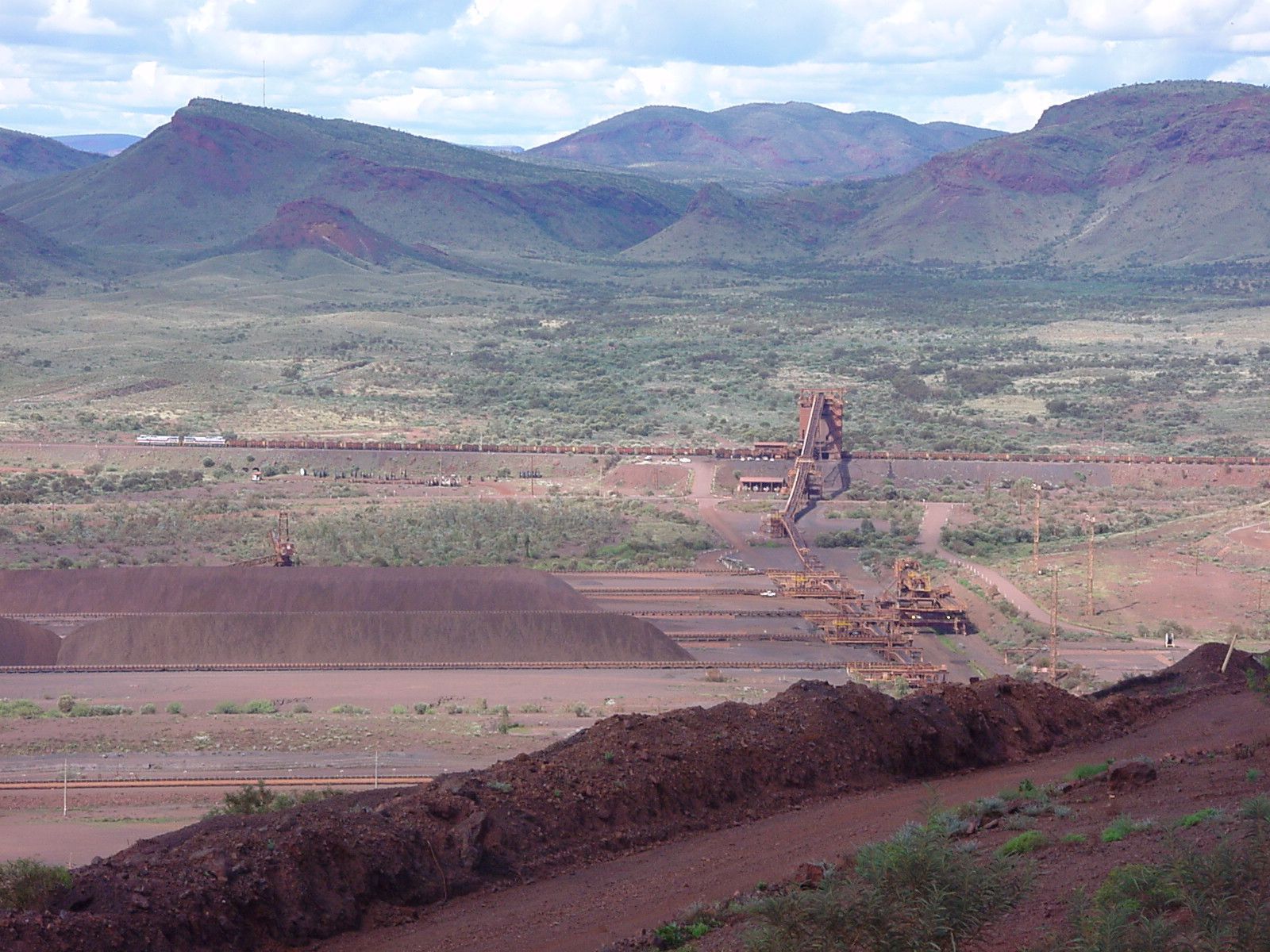
On the morning of Saturday, October 10, 2026, jets struck artisanal gold-mining camps at Jabal al-Uqaydat — also spelled Al-Aqeedat — in Sudan’s River Nile state, near the disputed Halayeb Triangle and the desert border with Egypt. The Sudanese rights group Emergency Lawyers, based in Khartoum, said at least 72 civilian prospectors were killed and described its figure as provisional. The Sudan Doctors Network had earlier reported 13 dead and warned the number would climb, saying some of the wounded were seriously hurt with little access to medical care.
Eyewitnesses cited by the Sudan Tribune said the attack began around 06:00 local time, with the aircraft firing more than five missiles directly into miners’ camps and excavation pits, some with people still inside them. A survivor, Abdel-Aziz Yousef, told the Associated Press the target was an artisanal mine in a mountainous area and that many were killed or wounded while others fled fearing further strikes. As of Sunday, neither the Egyptian government nor the de facto Sudanese authorities had commented.
The known facts trace a short, violent timeline. Around 06:00 local time (04:00 GMT) on Saturday, aircraft attacked the Jabal al-Uqaydat gold-mining site, an informal artisanal operation near the Al-Ansari trading market in Sudan’s River Nile state, close to the disputed Halayeb Triangle. AFP places the site’s gold market just south of the triangle; the Associated Press describes the wider area as the border triangle between Sudan, Egypt and Libya. A survivor quoted by AFP, Sharaf Ali, said thousands of miners worked the site and that a jet struck five times.
Two Sudanese monitoring groups have published figures. The Sudan Doctors Network reported 13 dead first, then said the toll was expected to rise, noting that the wounded faced limited access to health facilities. Emergency Lawyers later put the figure at at least 72, calling it provisional. The group said the miners had been struck in Sudanese territory and blamed Egyptian forces — a direct accusation Cairo has not answered. The BBC reported that the Sudan Doctors Network said miners had been repeatedly warned by Egyptian authorities to evacuate the area. And in June, Egyptian security forces arrested hundreds of people along the border, accusing them of illegal gold mining and smuggling — the backdrop of enforcement that preceded Saturday’s bloodshed.
For all the reporting, the central questions are unanswered. Nobody has officially confirmed who ordered the strike or even identified the aircraft: Emergency Lawyers blames Egyptian forces, but Cairo has said nothing, and Khartoum’s de facto authorities have not commented either. It is not settled which side of the border the missiles landed on — initial reports suggested the Egyptian side, while Emergency Lawyers insists the site was in Sudanese territory.
The casualty figures are unverified and far apart: 13 from the Sudan Doctors Network, at least 72 from Emergency Lawyers, with the Paris-based Sudan Tribune citing survivors who expect the toll to run far higher. Without access to the site, independent verification is impossible, and the wounded described by the doctors’ network are in an area with almost no medical infrastructure. Whether the miners received any workable warning before the jets arrived — and whether any investigation will follow — remains unknown.
Because in Sudan, gold is not a commodity — it is ammunition. A 2024 United Nations report found that more than half of the gold mined in Sudan is smuggled out of the country, and the paramilitary Rapid Support Forces have moved thousands of tons of it from Darfur and Kordofan to fund their war effort. Artisanal mines like Jabal al-Uqaydat sit at the start of that chain: thousands of poor prospectors digging in the desert, their output feeding smuggling networks that reach across the region’s borders.
That is why the strike matters beyond its death toll. Egypt has treated the southern border’s mining camps as a security problem for years — the displacement crisis in Darfur shows how deeply the war has hollowed out civilian life, while the fight over the Darfur arms embargo underlines how gold money and weapons flow in the same channels. When enforcement against miners escalates from burned equipment and live ammunition to missiles fired into camps, the line between policing a border and waging war on civilians disappears. Sudan’s dossier tracks how the war economy has consumed the state; Saturday’s strike is the latest evidence that the people at the bottom of the gold chain pay the highest price.
The strike is the endpoint of a predictable escalation ladder. In June, Egyptian forces arrested hundreds of miners and were accused of burning equipment, torching shelters, and firing live ammunition to clear the camps. By October, the same objective — clearing the border zone of artisanal mining — was pursued with missiles from the air. Each rung was unpunished, so the next rung was climbed. That is the first lesson: unaccountable enforcement does not de-escalate; it normalizes the next level of violence.
The second lesson is about the gold. As long as Egypt and Sudan’s warring parties treat artisanal mining as a security threat to be bombed rather than an economy to be formalized, the camps will keep filling with desperate men and the strikes will keep killing them. The miners are not the smuggling networks; they are the cheapest, most replaceable link in them. Killing them does not stop the gold — it just makes the gold cheaper, because fear lowers the price of desperate labor. Until the trade itself is addressed, Saturday’s 72 dead will be a down payment on the next massacre, not its end.
The second-order effects will move through markets before they move through courts. Gold buyers in the region will price in the risk of disrupted artisanal supply; smuggling routes will shift to quieter corridors; and the Rapid Support Forces’ financiers will absorb the loss the way war economies always do — by squeezing the diggers harder. Diplomatically, the strike poisons an already fraught Egypt-Sudan relationship: Cairo’s silence reads as either guilt or contempt, and Khartoum’s silence reads as impotence. Both readings invite the next strike.
There is a legal shadow, too. Emergency Lawyers has already invoked international humanitarian law and the right to life, warning the attack may constitute a war crime. Without an investigation, that warning will join the archive of unheeded ones — but archives matter. They are what prosecutors open when the politics finally change.
Watch three things. First, the toll: Emergency Lawyers called 72 provisional, and the Sudan Tribune’s survivor accounts suggest it will rise — a sharply higher final figure would make silence harder to sustain. Second, Cairo: Egypt has not confirmed or denied the accusation, and its first statement, when it comes, will reveal whether it claims the strike, denies it, or buries it. Third, the border itself: if mining resumes at Jabal al-Uqaydat within weeks, it will prove what the miners already know — that the camps cannot be bombed out of existence, only bombed, again and again.
The deeper watch is on the gold. Sudan’s war keeps exporting its costs across borders — refugees, weapons, and now airstrikes. Until the international response treats the artisanal gold trade as the war’s financial engine rather than a local policing problem, the desert will keep producing the same two outputs: smuggled gold and dead miners.
Through the Western lens, the strike is a test of accountability that will almost certainly be failed. Western coverage — led by the BBC and the wire services — frames the attack as an atrocity in a war the world has stopped watching: a provisional toll of 72 civilians, a rights group accusing a state air force, and two governments saying nothing. The expectation is familiar: condemnation from human-rights organizations, no credible investigation, and the story sliding off the front pages within days. The subtext is the gold itself — Western sanctions and UN reporting have long tried, and failed, to choke the smuggling networks that turn Sudan’s artisanal mines into war finance.
From the East, the story reads as border sovereignty enforced the hard way — and as Western selectivity. The Cairo-Moscow-Beijing axis treats the southern border as a zone where states do what they must: Egypt has warned miners, arrested hundreds, and burned equipment before turning to heavier means. There will be no hand-wringing in this telling, only the logic of a state protecting a contested frontier against unregulated extraction that feeds armed groups. The accusation from Emergency Lawyers will be read as the predictable NGO script — loud, unverifiable, and aimed at constraining the sovereignty of a partner state while Western capitals say nothing about their own border enforcement.
The Global South sees its own reflection in the camps at Jabal al-Uqaydat: thousands of poor men digging for gold because there is nothing else, killed by jets because they dug in the wrong desert. From Khartoum to the Sahel, the strike confirms a hierarchy — borders drawn by others, enforced by air power, with African lives as the acceptable cost. Emergency Lawyers’ charge that the attack violated Sudan’s sovereignty lands hard here, not as legal theory but as lived experience: a neighbor’s warplanes over your territory, your government too broken to protest. The gold will keep flowing north and east; the miners’ families will keep burying their dead.
Emergency Lawyers, a Sudanese rights group based in Khartoum, says at least 72 civilian gold prospectors were killed when jets struck the Jabal al-Uqaydat mining site on Saturday morning, October 10, 2026. The group stresses the figure is provisional and expects it to rise. The Sudan Doctors Network earlier reported 13 dead, and survivors cited by the Sudan Tribune believe the final toll could run far higher.
Emergency Lawyers blames Egyptian forces and says the strike hit Sudanese territory — a claim neither Cairo nor the de facto Sudanese authorities have commented on. The Sudan Doctors Network says Egyptian authorities had repeatedly warned miners to evacuate the area, and Egypt has previously used force against artisanal mining sites along the border. The aircraft involved has not been officially identified.
Cairo treats unregulated artisanal mining on its southern border as a security and smuggling problem. In June, Egyptian security forces arrested hundreds of people accused of illegal gold mining and smuggling, and rights groups say border guards have burned equipment and fired on workers. A 2024 UN report found over half of Sudan’s gold is smuggled out — much of it financing the war.
Jabal al-Uqaydat — also spelled Al-Aqeedat — is an informal artisanal gold-mining site in Sudan’s River Nile state, near the Al-Ansari trading market and the disputed Halayeb Triangle. AFP places its gold market just south of the triangle; the Associated Press describes the area as the border triangle where Sudan, Egypt and Libya meet. Thousands of miners worked the remote desert site.
