The ANC-linked North West businessman appeared briefly in the Musina Magistrate's Court on Thursday on charges of attempted theft and money laundering, tied to two Absa-financed vehicles intercepted at the Beitbridge border post in July — the latest turn in his collision course with the Madlanga Commission.
Published 22 October 2026 · 13:32 GMT
The ANC-linked North West businessman appeared briefly in the Musina Magistrate's Court on Thursday on charges of attempted theft and money laundering, tied to two Absa-financed vehicles intercepted at the Beitbridge border post in July — the latest turn in his collision course with the Madlanga Commission. Suliman Carrim appeared in the Musina Magistrate's Court in Limpopo on 22 October 2026 on charges of attempted theft and money laundering. His bail application was postponed to 30 October after the court roll proved too congested to hear it; he remains in custody at the Kgosi Mampuru II Correctional Centre in Pretoria.
The factual core of the new case is consistent across every outlet — two Absa-financed vehicles intercepted at Beitbridge on 22 July 2026, allegedly bound for Malawi on fraudulent bank documents, with Carrim added as an accused on 21 October and appearing in Musina on 22 October.
Whether Carrim is a flight risk. The state points to a one-way ticket to Saudi Arabia via Dubai; his lawyers insist he held a return booking for a sixteen-year annual journey — a factual dispute the courts, not the press, will resolve.
Whether Carrim is a flight risk.
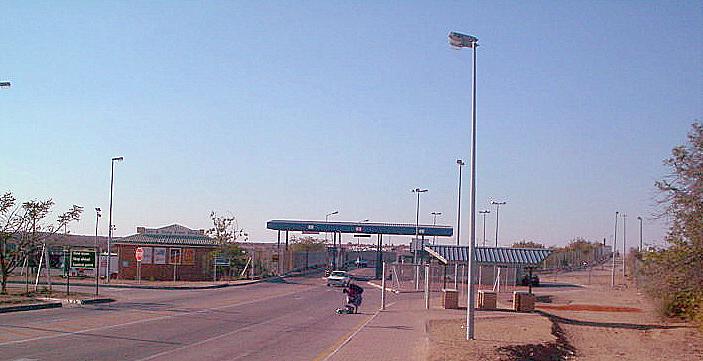
On Thursday 22 October 2026, Suliman Carrim — the ANC-linked North West businessman at the centre of South Africa's Madlanga Commission saga — appeared briefly in the Musina Magistrate's Court in Limpopo to face fresh charges of attempted theft and money laundering. It was his second court appearance in a week, and it lasted only long enough to be postponed.
Carrim's counsel told the magistrate his client was ready to proceed with a bail application and was prepared to wait the entire day for an opening on the court roll. The prosecution replied that the roll was already packed — a bail application and a trial were scheduled — and there was simply no room to accommodate him. The matter was escalated to the chief prosecutor in the hope that another courtroom and magistrate could be found.
After a short recess, the court was told Carrim needed to return to Pretoria for hospital treatment at 4pm. The bail application was consequently postponed to 30 October. Carrim remains in custody at the Kgosi Mampuru II Correctional Centre in Pretoria — and he will be back in Musina on Friday 30 October, two days after the Pretoria Magistrate's Court delivers judgment on his separate bail application over his failure to appear before the Madlanga Commission.
The new charges reach back to 22 July 2026, when police officers stationed at the Beitbridge Border Post in Musina intercepted two motor vehicles that were allegedly destined for Malawi. National police spokesperson Brigadier Athlenda Mathe said preliminary investigations indicated the vehicles had been transported from Mahikeng in the North West toward the border for onward travel across it.
"It is alleged that arrangements had been made to obtain bank authorisation documents to facilitate the legal cross-border movement of the vehicles. However, the required authorisation was allegedly not provided, and fraudulent bank documents were subsequently arranged," Mathe said.
The National Prosecuting Authority's Limpopo spokesperson, Mashudu Malabi, stated the allegation against Carrim directly: "It is alleged that Carrim, acting in collusion with his employees, attempted to steal two vehicles belonging to ABSA by taking them out of the country using fraudulent documentation." Two suspects are already in custody after being arrested while allegedly attempting to cross into Zimbabwe at Beitbridge with the vehicles; they are due in the Musina Regional Court on 27 October. The vehicles — still under finance — were handed back to Absa, and on 21 October the Commission's Recommendations Task Team added Carrim as an accused in the two existing cases.
Several decisive questions remain open. The NPA alleges Carrim acted "in collusion with his employees" — but the precise division of roles, and who allegedly produced or procured the fraudulent bank documents, has not been disclosed. Whether any Absa staff were involved is unconfirmed; the verified record speaks of Carrim's own employees, not the bank's.
The money-laundering charge implies investigators see a financial trail beyond the vehicles themselves, but no details of amounts, accounts or beneficiaries have been made public. It is also unclear whether this case connects to the parallel fraud-and-corruption investigation involving the Ngaka Modiri Molema District Municipality, over which Carrim could face further charges. And the defence has not yet answered the new charges in open court — the bail application on 30 October will be the first full hearing of Carrim's side. Until then, the allegations remain exactly that: allegations, subject to the court process.
On its face this is a court story about two cars. In context, it is a chapter in the most consequential accountability process in South Africa since the Zondo state-capture inquiry. The Madlanga Commission of Inquiry is probing alleged criminal infiltration of the country's criminal justice system — and Carrim is one of its most prominent witnesses-turned-accused.
Evidence before the commission has laid bare his business relationships with alleged crime boss Vusimuzi "Cat" Matlala — including a R10-million advance Carrim said would help Matlala fulfil a SAPS-linked Medicare 24 contract — as well as with North West businessman Brown Mogotsi and tender tycoon Hangwani "Morgan" Maumela, whom the Special Investigating Unit is pursuing over the alleged looting of Tembisa Hospital. That a figure this embedded now faces money-laundering charges tied to forged bank documents at Absa, one of the country's largest banks, and to a cross-border smuggling route into Malawi via Beitbridge — Africa's busiest land border crossing — makes this a stress test for two systems at once: the commission's ability to convert testimony into prosecutions, and the integrity of the region's financial and border controls. The deputy police chief's resignation amid the Madlanga fallout shows how far the commission's shockwaves already travel through the country's police leadership.
The new charges land a week after Carrim's dramatic arrest on the night of Thursday 15 October at OR Tambo International Airport, where the Commission's Recommendations Task Team stopped him as he prepared to board a flight to the United Arab Emirates. The arrest followed months of friction: Carrim had repeatedly failed to return to the Madlanga Commission to complete his testimony, citing ill health — even as he was reportedly spotted at a Cape Town shop and eatery. In August, the commission resolved to lay criminal charges over his non-appearance after he refused an independent medical assessment.
His explanation for the travel — that his doctors had encouraged him to go abroad for "spiritual upliftment" — sat uneasily beside the state's account. Prosecutors told the Pretoria court he held a one-way ticket to Saudi Arabia via Dubai; his lawyers insisted he held a return booking for a journey he had made annually for sixteen years. The state opposed bail citing flight risk, witness interference and evidence-tampering concerns; judgment is reserved to 28 October. The commission itself welcomed the arrest, saying it sends a message to witnesses. The signal is unmistakable: non-cooperation with the commission now carries a cell at Kgosi Mampuru.
Beyond Carrim himself, the case probes three systems. First, the banks: the alleged use of fraudulent Absa authorisation documents raises questions about how vehicle-finance paperwork can be forged and presented at a border post — and what controls Absa and its peers will now tighten. Second, the border: Beitbridge handles more than 500 trucks and some 14,000 travellers daily, making it southern Africa's great commercial artery and, inevitably, its smuggling highway; the alleged Mahikeng–Beitbridge–Malawi route maps a corridor that investigators across the region will be studying.
Third, the enforcement model: the Commission's Recommendations Task Team — the SAPS unit acting on the commission's referrals — is proving to be the sharp end of the inquiry, converting commission findings into arrests within days. If the CRTT's pipeline holds, the Madlanga process could succeed where past inquiries stalled: at the step between testimony and trial. It is the same institutional-credibility question hanging over South Africa's mini-budget this week — whether the country's institutions can still convert scrutiny into outcomes.
The calendar is now the story. On 27 October, the two men arrested at Beitbridge appear in the Musina Regional Court. On 28 October, the Pretoria Magistrate's Court delivers judgment on Carrim's bail application in the Commissions Act matter — the charge of failing to appear before the Madlanga Commission. And on 30 October, Carrim returns to the Musina Magistrate's Court for the bail application in the vehicle-smuggling case, with the matter itself also set down for that day.
Investigations continue into the alleged fraud and uttering around the bank documents, and further charges linked to the Ngaka Modiri Molema municipal corruption probe remain possible. Each date is a separate door; behind each one, the state must now prove what it has alleged. (Pretoria has had a crowded news week — the Bureau also reported on the Tibetan exile government's appeal for protection in the capital.)
West: the rule-of-law lens, with no Western byline on this case yet No Western newsroom had reported this specific case as of publication — the coverage is, for now, an entirely South African affair. The western analytical lens nonetheless reads it through a familiar frame: institutional credibility. In that telling, the Carrim case is a data point in the larger question foreign investors and diplomats ask about South Africa — whether the post-state-capture accountability drive can convert commissions into convictions.
East: a smuggling corridor the East watches but does not yet narrate No eastern outlet — Chinese, Indian, Japanese or Korean — had covered this case as of publication, after a direct search of their reporting on 22 October. The eastern lens nonetheless has a natural entry point: the route. The alleged Mahikeng–Beitbridge–Malawi corridor sits inside the illicit-trade networks that move vehicles, minerals and contraband across southern Africa — networks that matter to eastern capitals as consumers of the region's commodities and as partners in its infrastructure.
South: the newsroom that knows the docket best South African coverage is the most textured, because it lives inside the saga. The Daily Maverick's investigation-first reporting connects the new charges to the commission's evidence — the Matlala millions, the SAPS-linked contracts, the tender networks — treating the vehicle case as the latest front in a wider war. IOL, the Sowetan, TimesLIVE, The Citizen and The Witness work the court mechanics: the congested roll, the postponed bail bids, the custody details. eNCA and the Daily Sun reconstructed the airport arrest and the duelling ticket narratives.
Suliman Carrim, 49, is a North West businessman and former ANC regional treasurer who became a central figure in the Madlanga Commission of Inquiry. His testimony before the commission detailed business dealings with alleged crime boss Vusimuzi "Cat" Matlala, businessman Brown Mogotsi and tender tycoon Hangwani Maumela. He is also under scrutiny by the Special Investigating Unit over multimillion-rand transport contracts and municipal corruption allegations in the North West.
The Madlanga Commission is a judicial commission of inquiry probing alleged criminal infiltration of South Africa's criminal justice system — the police, prosecutors and related institutions. Presided over by a judge, it hears testimony under oath, can subpoena witnesses, and refers findings for criminal investigation. Its Recommendations Task Team works with the police to convert those referrals into arrests and prosecutions.
Attempted theft and money laundering, linked to two Absa-financed vehicles. The state alleges Carrim colluded with his employees to take the vehicles out of South Africa using fraudulent bank authorisation documents. Police intercepted the vehicles at the Beitbridge Border Post on 22 July 2026 while they were allegedly being moved from Mahikeng toward Malawi. Two other suspects are already in custody.
The CRTT is the police unit that acts on the Madlanga Commission's referrals. Working with the SAPS Cold Case Unit, it added Carrim as an accused in the two vehicle cases on 21 October and arrested him at OR Tambo International Airport on 15 October over his failure to appear before the commission. It is the enforcement arm turning inquiry findings into court cases.
Three court dates in eight days: the two Beitbridge suspects appear in the Musina Regional Court on 27 October; judgment on Carrim's bail bid in the Pretoria matter is due 28 October; and his bail application in the vehicle case returns to the Musina Magistrate's Court on 30 October. Investigations into the alleged document fraud continue, and further charges over municipal corruption remain possible. All allegations are unproven until tested in court.
