Oversubscribed three to four times, Dangote's $1.6 billion share sale now runs to October 27 — so Africa can own the refinery Hormuz made Europe's fuel backstop.
Published 14 October 2026 · 18:00 GMT
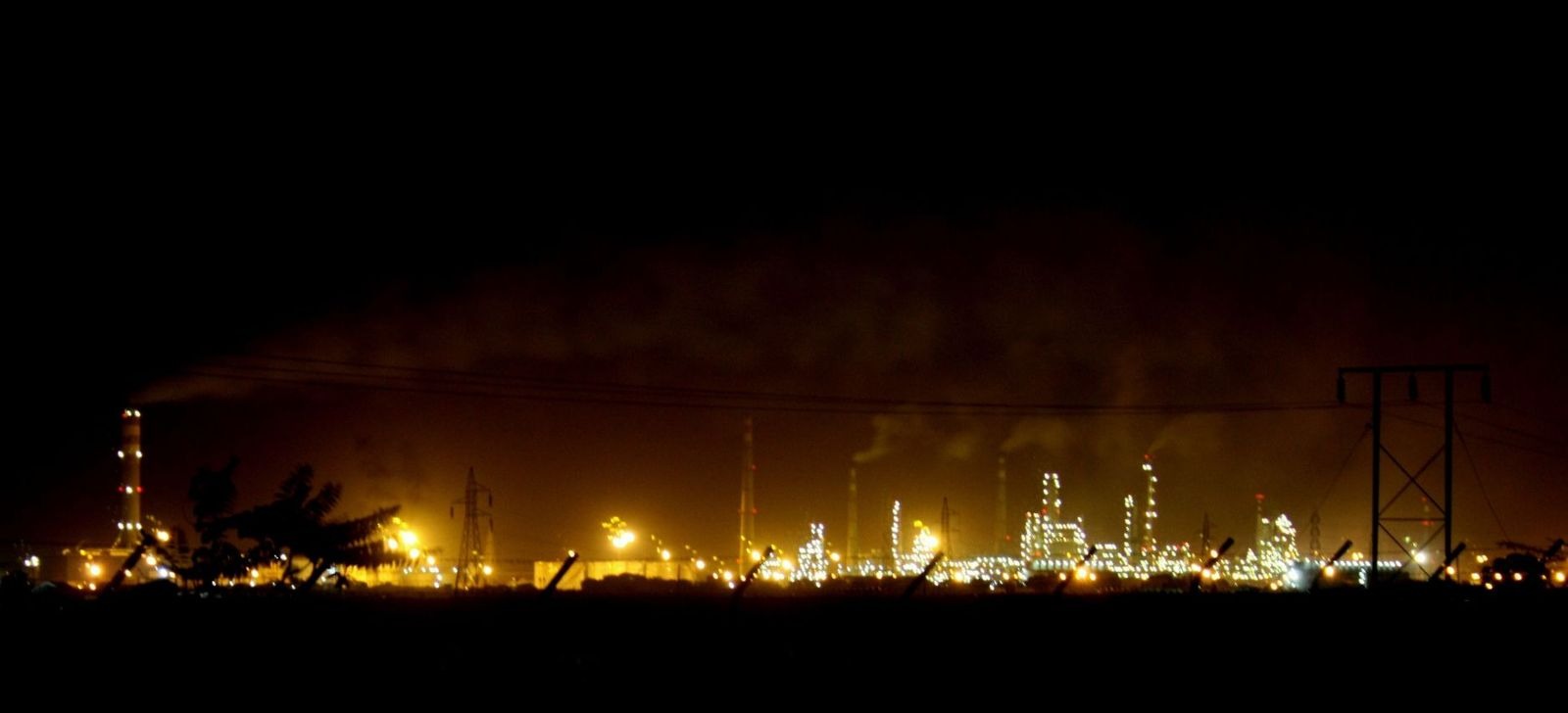
In the second quarter of 2026, a Lagos refinery became Europe's largest supplier of jet fuel — built to end Nigeria's addiction to imported petrol, now keeping Europe's airports moving while war chokes the Strait of Hormuz. This week its owners invited Africa to buy in: subscriptions already run three to four times the target.
On Monday, Dangote Petroleum Refinery and Petrochemicals said it would keep its initial public offering open until Tuesday, October 27, 2026, two weeks past the original October 13 closing date, after Nigeria's Securities and Exchange Commission approved the extension. The offer, which opened on September 14, puts 4.1 billion ordinary shares on the table at ₦525 each — about ₦2.15 trillion, or roughly $1.6 billion, if fully subscribed. The minimum ticket is ten shares, or ₦5,250 before charges. The price did not move and the terms did not change; only the clock did. The company said the extra fortnight exists so more Africans can finish account openings, identity checks and cross-border paperwork — not to chase more cash.
The money claim is blunt and worth quoting. Speaking to journalists at the Lekki refinery on Monday, group president Aliko Dangote said subscriptions had already reached three to four times the sum the company originally set out to raise. "The IPO is going very well," he said, before adding that the extension was about people, not cash: "We want more of our African brothers and sisters to participate." No independent figure for total applications has been published, so the three-to-four-times number remains the company's claim, not a verified count. Still, demand is heavy enough that the issuer is building rails for it: depository receipts in Kenya, a single Southern African trading hub in Botswana, and an institutional window in Ethiopia.
Africa's largest refinery now decides what European planes burn — and Africans are buying into the machine.
Because the ambition is continental, and continental access takes paperwork. The company has been negotiating market-by-market access so investors beyond Nigeria can actually buy. In Kenya, the Capital Markets Authority approved a prospectus for Global Depositary Receipts on October 5, arranged by Renaissance Capital (Kenya), at Ksh53.50 per receipt with the minimum slashed to ten receipts — Ksh535, a fraction of the earlier Ksh107,000 threshold. In Southern Africa, the Committee of SADC Stock Exchanges designated Botswana as the single host trading venue for the IPO, with Access Bank acting as depository issuer, so 14 exchanges clear through one corridor. Ethiopia's Capital Market Authority cleared the offer for up to 100 accredited institutional investors. The chief financial officer, Murat Erden, said the refinery had drawn interest from investors in every African country except Comoros, São Tomé and Príncipe, and Seychelles.
The target Dangote has set is as many as 10 million shareholders, which would make this one of the largest retail share offerings in African history. The roadshow has carried that message from Lagos to Kano, where the Emir of Kano, Muhammadu Sanusi II, told residents in September that buying into the refinery was a chance at genuine wealth distribution: the oil money, for once, staying in African pockets. The refinery's managing director and chief executive, David Bird, said the extension gives investors across Africa time to take part in the company's future growth. Collation of subscription returns is scheduled for November 3, when the size of the real shareholder register will finally be measurable — claim versus count.
Through war. After Iran closed the Strait of Hormuz at the end of February 2026 in response to American and Israeli attacks, Europe lost roughly a quarter of its usual diesel and jet fuel supply. Inventories at Northwest Europe's oil trading hub fell to their lowest in about twelve years, and Brent crude climbed to $107 a barrel. Into that gap stepped the Lagos refinery. In the second quarter of 2026, Europe imported about 80,000 barrels a day of jet fuel from Dangote — roughly 13 percent of the resulting shortfall — making it the continent's largest single refinery supplier of the fuel, according to Kpler data. Only the United States, as a country, supplied Europe with more.
The refinery is well placed for this role by geography as much as by scale: cargoes from Lagos reach Atlantic markets without passing through Hormuz or the Red Sea. Diesel and gasoil exports rose 23 percent to about 48,000 barrels a day in 2026, and in June the plant shipped some 466,000 tonnes of jet fuel to Europe, outpacing American shipments into the continent that month, according to vessel-tracking data cited by The Voice. Aliko Dangote said the refinery had sold out its jet fuel allocations to Europe for August and September, keeping only what Nigeria itself needs. "Without Dangote, Europe would still have sourced fuel but at a higher clearing price," said Janiv Shah of Rystad Energy, who expects the refinery's role to grow materially in coming years. Kpler analyst Sumit Ritolia noted the barrels have eased an otherwise tight middle-distillate market.
The numbers describe a reversal decades in the making. Nigeria's petroleum regulator, the NMDPRA, reported that in August 2026 the refinery supplied 35.9 million litres of petrol a day to the domestic market — 71 percent of the country's petrol — while petrol imports fell 26 percent to 14.6 million litres a day and diesel imports collapsed from 7.9 to 1.3 million litres a day. The plant produced an average of 41.94 million litres of petrol daily, 18.01 million of diesel and 24.48 million of aviation fuel, exporting the surplus. The nameplate is 650,000 barrels a day, yet in August the refinery ran at 105.21 percent utilisation, processing 736,470 barrels a day. As recently as 2024 Nigeria was still importing about 400,000 barrels a day of petrol; in 2026 that figure is near 83,000. The National Bureau of Statistics recorded a 96.15 percent fall in the petrol import bill in the first quarter of 2026. For a country profile of the stakes, see Nigeria.
The trade data tell the larger story. The U.S. Energy Information Administration reports that Nigeria exported an average of 350,000 barrels a day of petroleum products in the second quarter of 2026, against 46,000 a day in 2023, while seaborne imports fell below 130,000 barrels a day from nearly 400,000 three years earlier. Europe took 130,000 barrels a day of Nigerian products in the quarter, up from 15,000 in 2023; other African countries took nearly 120,000. The pattern Europe built — buying Nigerian crude, refining it, and selling the petrol back at an estimated $17 billion a year — has been broken at the refinery gate. Nigeria is now earning foreign exchange on refined products instead of spending it importing them.
The regional picture is sharpening too. Argus Media reports that deliveries of Dangote products to West African countries hit a record 172,000 barrels a day in September — petrol, diesel, gasoil and aviation fuel moving from Senegal to Angola — while West African imports from outside the continent fell to their second-lowest monthly volume since December 2017. Imports into the region from the European Union, Britain and Norway dropped to a five-month low. This is the physical economy of trade arteries being redrawn: African demand met by African refining, at freight costs and lead times that beat Rotterdam. The test ahead is whether this is a wartime detour or a permanent route.
Then there is the money, stated plainly. The refinery posted a net profit of $1.82 billion in the first half of 2026 on revenue above $13 billion, reversing a $476 million loss across all of 2025, according to its prospectus — and nine-month figures put net profit at $4.73 billion on $22.48 billion of revenue. A July private placement led by Africa Finance Corporation was 3.7 times oversubscribed at a valuation of about $40 billion; the prospectus now frames the business at roughly $47 to $49 billion, per a Renaissance Capital Africa research note. That valuation is what the ₦525 share price is asking investors to believe. The risks sit on the other side of the ledger: the refinery still depends partly on imported crude, with pipeline vandalism and upstream underinvestment forcing it to negotiate direct supply deals with Nigerian producers, and three state-owned refineries recorded zero production in August. If crude prices spike or the Hormuz conflict widens, refining margins can swing hard in either direction.
What happens between now and October 27 will be watched as a referendum on African retail capital. The offer closes on a Tuesday, the returns are collated on November 3, and then the allotment mechanics — who actually gets shares when demand runs at three to four times supply — will test the fairness of the whole exercise. The proceeds are earmarked for the refinery's expansion programme, including the petrochemicals build-out, and for deepening its capacity to serve domestic and international markets. Whatever the final subscriber count, one thing is already settled: the refinery that was built to make Nigeria self-sufficient in fuel has become the refinery the continent — and, improbably, Europe — cannot do without.
The Western reading is relief with an edge of unease. Europe's energy security now depends, in part, on a privately owned Nigerian refinery built for a different purpose — a concentration that comforts traders and worries strategists in equal measure. Brussels reads the IPO as confirmation that the market works: capital found the gap Hormuz opened, and Kpler-tracked cargoes did what sanctions architecture could not. The unease is about leverage — whoever refines the fuel sets the terms — and about a valuation inflated by wartime margins that may not survive peace.
For investors in London and New York, the story is simpler: a $47–49 billion prospectus valuation on a plant running above nameplate, exporting into a 12-year-low inventory market, with Brent at $107. The three-to-four-times subscription claim reads as credible given the profit turn ($1.82B H1 vs a $476M 2025 loss). The open question is allotment discipline: whether the November 3 collation produces a genuine 10-million-strong retail base or a headline number that flatters the float.
The Eastern reading — from the Gulf to Asia — treats Hormuz as the hinge and Dangote as the proof of concept. Middle East producers watch their own refining margins compress as Nigerian barrels capture the Atlantic premium; Asian importers, equally exposed to any Hormuz closure, note that alternative refining capacity now exists outside the Gulf and outside the West. The IPO itself is read as South–South capital formation: African savings financing African industry, routed through Nairobi, Gaborone and Addis Ababa rather than London.
There is also a competitive read. Indian and Chinese refiners, long the swing suppliers of middle distillates, now face a new low-cost Atlantic competitor with a 5-day sail to West Africa against their 6-week routes. If Dangote holds 700,000 barrels a day of throughput and keeps expanding into petrochemicals, the Eastern view holds, the map of refined-product trade has a permanent new node — and one less reason to price everything off Gulf outages.
The Global South reading is the one Sanusi voiced in Kano: this is what resource sovereignty looks like when it stops being a slogan. Nigeria spent decades earning dollars on crude and spending them on imported petrol — a $17-billion-a-year round trip through European refineries. Dangote broke that loop at home and is now capturing the loop abroad, selling refined fuel to the continent that used to sell it back. The IPO's pan-African plumbing — Kenyan receipts, a Botswana trading hub, Ethiopian institutions — is read as infrastructure for a continent that intends to own its value chains.
The caution in the South is about ownership versus control. A 10-million-shareholder base sounds like democratisation, but the allotment mechanics of November 3 will decide who actually holds the equity. And the refinery still buys some of its crude abroad while Nigeria's own state refineries sit idle — a reminder that industrial sovereignty is built barrel by barrel, upstream as well as downstream.
Not on the evidence available. The company says subscriptions already run three to four times its original target — a claim not yet independently verified — and Nigeria's SEC approved the move. The stated reason is practical: giving investors across Africa time to open accounts, clear identity checks and use new cross-border rails such as Kenyan depository receipts. An extension on a genuinely weak book would more likely have come with a price cut, and the ₦525 price is unchanged.
Through new cross-border channels built for this offer. In Kenya, Global Depositary Receipts priced at Ksh53.50 each, with a minimum of ten receipts (Ksh535), are available after the regulator approved the prospectus on October 5. Southern Africa will trade through a single host venue in Botswana under the SADC exchanges committee. Ethiopia's regulator cleared the offer for up to 100 accredited institutional investors. Nigeria remains the primary market.
No, but the direction is unmistakable. Argus Media reports Nigeria still imported about 78,000 barrels of petrol a day from April to August 2026 against consumption of 279,000, because demand exceeds the refinery's petrol output. Yet the regulator's August data show 71% of petrol now supplied locally, imports down 26% in a month, and the first-quarter petrol import bill down 96% year on year. Nigeria is now a net exporter of refined products overall.
That depends on how long Middle East shipping stays disrupted, but analysts see durable demand. Rystad's Janiv Shah expects Dangote's role to increase materially, and Kpler data show European middle-distillate markets structurally tight. The refinery's Atlantic location gives it a lasting freight advantage into Europe and West Africa. What could change the picture is a Hormuz reopening restoring Gulf supply — or a Dangote outage at 105% utilisation, which leaves little margin for error.
