Tonight on TV Globo the two finalists make their last direct case to a nation split 50-50. On Sunday, Brazil decides between a fourth Lula term and a return of the Bolsonaro project — a choice with consequences from Washington to Pretoria.
Published 23 October 2026 · 07:07 GMT
Tonight on TV Globo the two finalists make their last direct case to a nation split 50-50. On Sunday, Brazil decides between a fourth Lula term and a return of the Bolsonaro project — a choice with consequences from Washington to Pretoria. Flávio Bolsonaro won the October 4 first round with 47.03% of valid votes against 45.16% for President Lula, topping a 12-candidate field but falling short of an outright majority.
Rio de Janeiro, October 23 — Forty-eight hours before Brazil chooses its president, the two finalists meet tonight for the second and final televised debate of the campaign, broadcast by TV Globo from Rio de Janeiro. President Luiz Inácio Lula da Silva and his right-wing challenger, Senator Flávio Bolsonaro, make their last direct case to a nation the polls describe as split exactly in half. AFP (via The Hindu) (2026-10-23)
The encounter is the campaign's last scheduled moment of direct confrontation before Sunday's runoff. The first debate, on October 18, quickly lapsed into what observers called a barrage of insults. An online petition carrying more than a million signatures has asked Globo to run a live fact-checking system tonight, after both camps accused each other of flooding the campaign with disinformation. AFP (via The Hindu) (2026-10-23)
On Sunday, October 25, Brazilians decide whether Lula, 80, secures an unprecedented fourth non-consecutive term — or whether the country turns right again under Flávio Bolsonaro, 45, eldest son of former president Jair Bolsonaro, serving a 27-year sentence over the attempt to overturn his 2022 defeat. CNA (2026-10-05)
The first round, on October 4, delivered the campaign's defining shock. Flávio Bolsonaro finished first with 47.03 percent of valid votes against 45.16 percent for Lula, topping a field of 12 candidates — yet falling short of the absolute majority that would have settled the contest outright. The result blindsided the polling industry: private surveys had forecast Lula leading by around three points. "The pollsters missed badly," said Robert Muggah of the Igarapé Institute, warning runoff polls showing a dead heat could understate Bolsonaro as well. CNA (2026-10-05); Reuters (via Mezha) (2026-10-23)
The latest surveys describe a race that has tightened, not settled. Datafolha's October 22 poll (2,154 interviewed October 20-22, ±2 points) ties the pair at 50 percent of valid votes each, against a four-point Bolsonaro lead two weeks earlier; with blank, null and undecided counted, 47-46. Quaest's October 21 poll (October 17-20) found 45-44 — also inside the margin of error. The same Datafolha round puts Lula's approval at 49 percent, ahead of 48 percent disapproval for the first time since July. AFP (via The Hindu) (2026-10-23); Reuters (via The Straits Times) (2026-10-21)
The campaign has played out across rallies, debates and social media — with the courts proving instrumental and both sides crying industrial-scale disinformation. The first debate left voters cold: "The debates have once again descended to a fifth-grade level, which is absurd," a Rio voter told AFP. Bolsonaro has hammered the incumbent on insecurity and the cost of living — "How long has it been since you put meat, a piece of meat, in your freezer?" Lula has targeted his rival's Washington ties, declaring "the Bolsonaro family is subordinate to American interests" after US tariffs of 12.5 to 37.5 percent on Brazilian goods. AFP (via The Hindu) (2026-10-23); Le Temps (2026-10-19)
Brazil requires more than half of valid votes to win outright; neither finalist cleared the bar on October 4. For the deeper first-round story, see our account of Bolsonaro's first-round upset and the final pre-vote polling picture.
The honest answer to the only question that matters — who wins on Sunday — is that nobody knows. Every major survey sits inside the margin of error, and the pollsters' first-round miss hangs over the industry: institutes that had Lula ahead by three points watched him finish two behind. Whether that was a one-off or a structural undercount of Bolsonaro's vote is the unpriced risk of this race. CNA (2026-10-05)
Turnout is the second unknown. Millions stayed home or spoiled ballots in the first round; which camp's voters return Sunday — and how the 5 percent pledging blank votes and 2 percent undecided break late — decides a contest this tight. Reuters (via Mezha) (2026-10-23)
The third unknown is tonight's debate itself. Political analyst Leandro Gabiati, director of the Dominium consulting firm, told AFP that "Lula is on an upward trajectory, but he has not yet landed a decisive blow to turn the tide. This debate could be his last chance." Whether 90-odd minutes of television can move a frozen electorate — or whether, like the first debate, it dissolves into insult trading — will only be visible in the tracking polls that follow. AFP (via The Hindu) (2026-10-23)
Brazil is Latin America's largest economy and one of the ten largest in the world. A Bolsonaro victory, CNA notes, "would extend a wave of wins across Latin America by right-wing candidates aligned with US President Donald Trump" — while a Lula re-election "could be a challenge for Washington, which has clashed with his government over trade and security." CNA (2026-10-05)
The Washington dimension is concrete. The Trump administration's successive tariff rounds on Brazil — most recently 12.5 to 37.5 percent, which Lula calls unfair and a strategic mistake — have become his closing argument: the Bolsonaro family, he charges, subordinates Brazil to American interests. Bolsonaro's camp counters that Lula's confrontational diplomacy invited the punishment. Le Temps (2026-10-19); Reuters (via Mezha) (2026-10-23)
Three variables, in rough order of weight: the pollsters' error (do they understate Bolsonaro again?), turnout among first-round abstainers, and tonight's debate — the last mass-audience moment either candidate gets. Underneath them sits the disinformation war both camps say the other is waging, and the courts standing by to referee it. Our analysis of the cost-of-living squeeze shaping voter anger gives the economic backdrop.
Strip away the noise and the race has a clear shape: momentum belongs to Lula, structure to Bolsonaro. The incumbent closed a four-point deficit to a statistical tie in two weeks — but Bolsonaro won the first round outright, overperformed every major poll doing it, and the burden of converting undecideds now falls on the man who finished second. As analyst Leandro Gabiati told AFP, Lula "has not yet landed a decisive blow to turn the tide." AFP (via The Hindu) (2026-10-23)
The deeper current is the information environment. This election is being fought as much in the courts and on messaging apps as on television — and in a race measured in tenths of a point, the marginal voter is not choosing between programs but between two stories about who the other candidate really is. Tonight's debate matters less for what is said than for which story survives contact with a live audience. AFP (via The Hindu) (2026-10-23)
There is also the dynastic question. Flávio Bolsonaro is the eldest son of a former president serving a 27-year sentence for attempting to overturn an election — the very election Lula won. When Lula addressed the imprisoned ex-president directly in the first debate — "Vote for me, Bolsonaro, you know your son, you know I'm better than him" — he made the frame explicit: this runoff is a referendum on the Bolsonaro project as much as on Lula's record. Le Temps (2026-10-19)
Nowhere is the runoff watched more anxiously than in the Global South. Two months ago, Brazil and South Africa met in Pretoria for the eighth session of their Joint Commission — foreign minister Ronald Lamola stressing the partnership's importance "in a political climate where multilateralism faces critical challenges." A Bolsonaro presidency could reverse that: under Jair Bolsonaro, Brazil turned from South-South cooperation toward Washington, and Africa vanished from Brasília's priorities. Daily Maverick (2026-10-23)
The multilateral stakes run through BRICS and the G20, where Brazil under Lula has been South Africa's key partner for a fairer international order. Under Lula, Brazil also became an outspoken critic of Israel's Gaza campaign and, in September 2025, joined South Africa's genocide case against Israel at the International Court of Justice. Flávio Bolsonaro has promised to move Brazil's embassy to Jerusalem; Benjamin Netanyahu has openly backed his candidacy and congratulated him on the first round. For Pretoria, losing Brasília would be a diplomatic blow of the first order. Daily Maverick (2026-10-23)
The economic geometry matters too. China is Brazil's largest trading partner; Lula kept Brasília's independent line — Beijing trade ties, active BRICS diplomacy — while Bolsonaro promises closer Washington alignment via his family's Trump ties. The region reads the runoff as a signal: a Bolsonaro win consolidates Latin America's rightward turn; a Lula win preserves its counterweight. Our dossier on the BRICS power bloc's expansion maps the institutional stakes. teleSUR English (2026-10-18)
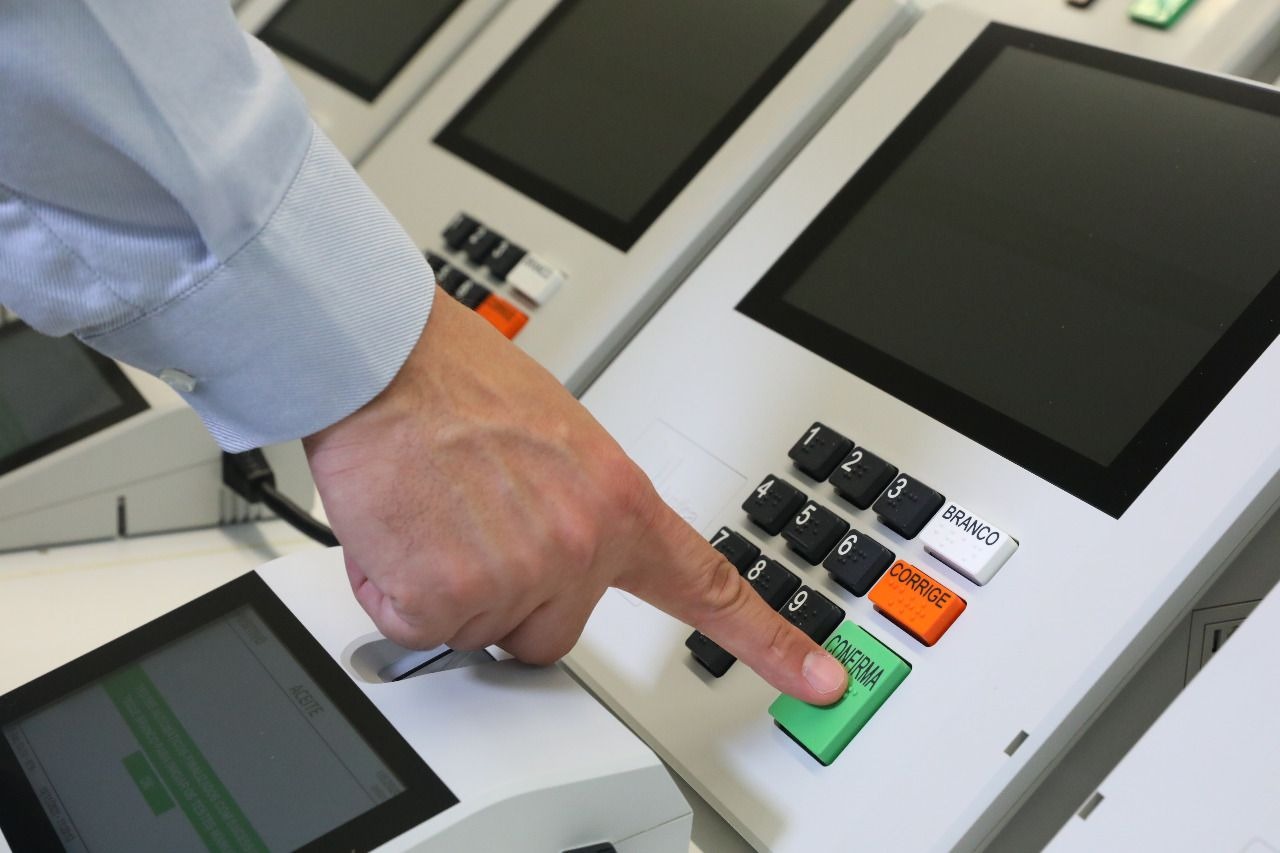
Tonight: the final debate on TV Globo, the campaign's last unscripted encounter, under a million-signature demand for live fact-checking. Sunday: voting across Brazil's 27 states, with electronic ballot boxes expected to deliver a result within hours. Then the concession — or the contestation. AFP (via The Hindu) (2026-10-23)
The winner takes office on January 1, 2027, inheriting an economy squeezed by tariffs, a Congress to assemble into a governing coalition, and a country split down the middle. For Lula's Workers' Party, defeat would close the book on the Lula era; for the Bolsonaros, a loss would test whether the movement outlives its patriarch's imprisonment. Either way, the verdict will be read in Washington, Beijing, Pretoria and Jerusalem before the night is out. The Bureau will report the result as it lands.
The Western wire record — AFP from Rio, Reuters on the polls — frames this as a democracy stress-test: a dead-heat runoff, courts refereeing a disinformation war, markets pricing a business-friendly challenger. The emphasis falls on institutional guardrails — electronic voting, electoral justice — and whether a country this polarized accepts the count.
The East Asian coverage, led by CNA from Brasília, reads the runoff through trade and capital flows: China as Brazil's largest trading partner, a currency and stock market buoyed by the challenger's prospects, and a campaign fought over the cost of living rather than ideology. For Singapore and the region's investors, the question is continuity of commercial predictability — and whether Brasília's independent foreign policy, which keeps Beijing's largest Latin American trade relationship stable, survives Sunday.
The Global South lens — South African analysis in the Daily Maverick, Latin American coverage on teleSUR — sees a civilizational fork: Lula's Brazil as the anchor of South-South cooperation, BRICS reformism and the ICJ accountability front, against a Bolsonaro presidency that would pull Brasília toward Washington and Jerusalem and let the Africa bridge wither. For Pretoria, Sunday is not a foreign election; it is a vote on whether the multipolar project keeps its most important Western-hemisphere partner.
The runoff is on Sunday, October 25, 2026. The candidates are incumbent President Luiz Inácio Lula da Silva, 80, seeking a fourth non-consecutive term, and Senator Flávio Bolsonaro, 45, the eldest son of former president Jair Bolsonaro. Neither cleared 50% of valid votes in the October 4 first round, forcing the head-to-head.
Every major poll is inside the margin of error. Datafolha's October 22 survey ties them at 50% of valid votes each, while Quaest (October 21) gives Bolsonaro 45% against Lula's 44%. Pollsters missed the first round badly — they had forecast Lula ahead by three points before he finished two points behind.
Brazil is Latin America's largest economy and a BRICS anchor. A Lula win preserves South-South cooperation and Brasília's role in the ICJ genocide case against Israel; a Bolsonaro win would pull Brazil toward Washington and Jerusalem, extend Latin America's rightward wave, and reprice markets betting on the business-friendly challenger.
Brazil's electronic voting system historically delivers a result within hours of polls closing on Sunday evening. The winner is inaugurated on January 1, 2027, inheriting a tariff confrontation with the United States, a Congress to assemble into a coalition, and an electorate split down the middle.
