The Bosnian Serb leader declared Bosnia and Herzegovina effectively dead at a final campaign rally on Saturday 3 October, on the eve of general elections that are the first since his conviction and removal from office — and the first to use biometric voter identification.
Published 3 October 2026 · 09:18 GMT
It was the closing chord of the campaign, and Milorad Dodik chose his words for maximum detonation. At a final rally on Saturday 3 October, the Bosnian Serb leader declared that Bosnia and Herzegovina is effectively “dead” — a verdict pronounced on the state itself, one day before its citizens go to the polls.
The setting was the familiar theatre of Dodik's politics: a rally crowd, the flags of Republika Srpska, and a leader who no longer holds office but still holds the room. Dodik, convicted and removed from the presidency of the Serb entity for defying the binding decisions of the international High Representative, is not himself a candidate in Sunday's vote. He does not need to be. His face is on the SNSD's billboards, his voice closes its rallies, and his narrative — that Bosnia is an impossible country, that Serbs are turned toward Serbia — remains the grammar of Serb politics.
Al Jazeera's report of the rally carried the line that will travel: Bosnia is “dead.” The word landed in a campaign already saturated with the rhetoric of the 1990s. Three weeks earlier, on 7 September, convicted war criminal Ratko Mladić was buried in Belgrade with state honours — a funeral attended by Republika Srpska election candidates, to international condemnation. On 25 September, Dodik told an American podcast that “Christians in Bosnia and Herzegovina no longer want to live under Muslim rule.” At another rally, he said efforts were underway to make the border between Serbia and Republika Srpska disappear: “We are turned toward Serbia. The border on the Drina is an obstacle for us, and we are working to make it disappear.”
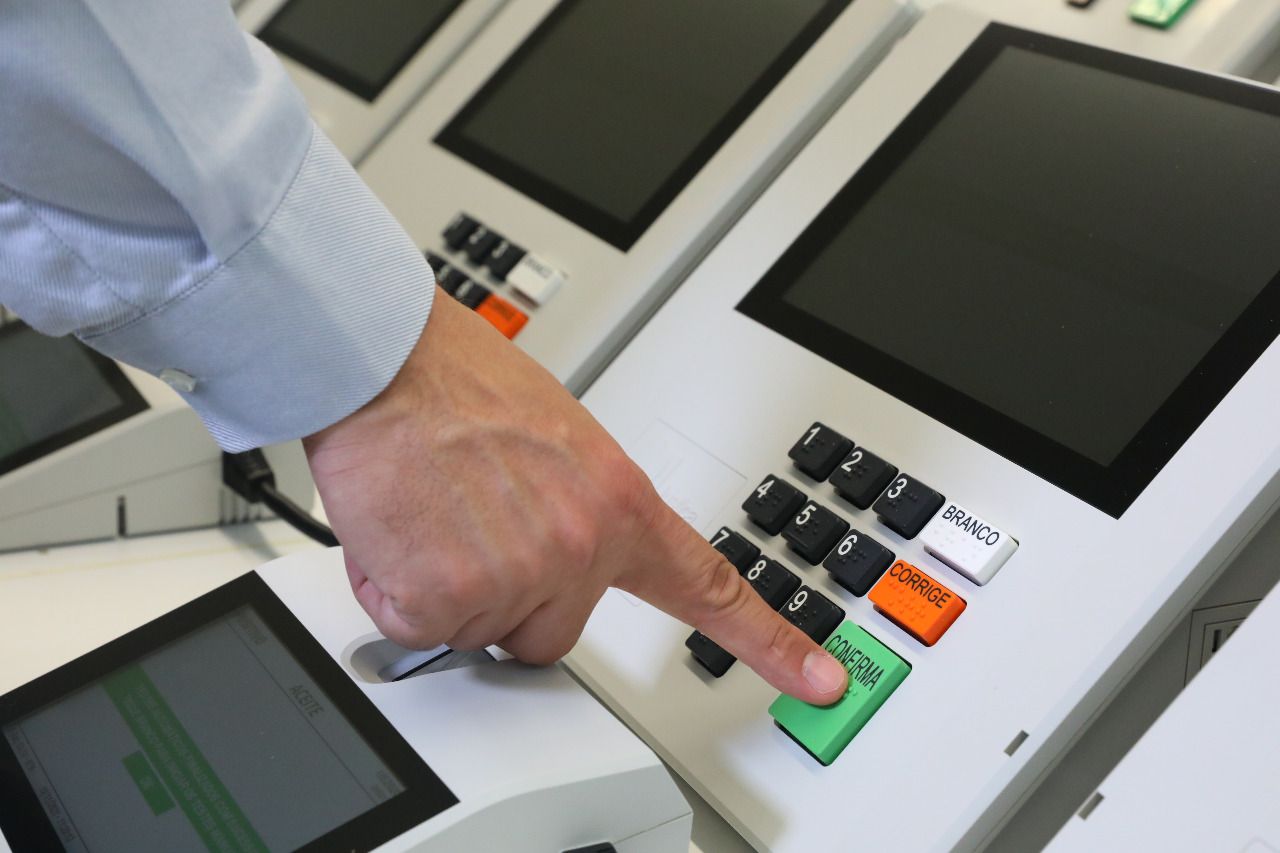
Sunday's vote is, by several measures, the most consequential Bosnian election in years. It is the first general vote since Dodik's conviction and removal — the event that was supposed to close the era of his personalised rule. It is also the first general election to use biometric voter identification and electronic ballot scanners, introduced with EU support to reduce fraud, speed up counting, and rebuild public trust in a system long suspected of being gamed. The technology, the Atlantic Council notes, may produce results that upset the longstanding domination of the ruling blocs — and offer a clearer picture of the country's demographic decline.
So the man who was removed from office stood before a crowd on the eve of the vote and pronounced the state dead. The paradox is the point: Dodik campaigns as the undertaker of a country he still seeks to lead, in an election whose new machinery was built precisely to make votes like his supporters' count honestly.
The declaration: at a final campaign rally on 3 October 2026, Bosnian Serb leader Milorad Dodik said Bosnia and Herzegovina is “dead,” according to Al Jazeera's report. The rally closed the campaign for general elections held on 4 October.
The speaker's status: Dodik is not a candidate. He was convicted of defying binding decisions of the High Representative — after pushing through a package of secessionist laws that had been blocked — and removed from office; his appeal was rejected and his mandate as Republika Srpska president was terminated. He remains head of his party, the SNSD (Alliance of Independent Social Democrats), which has been in power for nearly two decades.
The election: Bosnians vote on 4 October in general elections. These are the first general elections since Dodik's conviction and removal, and the first to deploy biometric voter identification and electronic ballot scanners nationwide. The technology was introduced with EU support in 2024 with the stated goals of reducing voter fraud, speeding up the count, and increasing public trust.
The campaign backdrop: the election campaign officially began on 4 September; three days later, Ratko Mladić — the former commander of the Army of Republika Srpska, convicted of genocide — died in custody in The Hague and was buried in Belgrade with state honours. Political leaders from Republika Srpska, including election candidates, attended the funeral, drawing criticism from the international community and from parties in the Federation. Dodik responded to warnings against glorifying convicted war criminals by saying “no one will tell the Serb people whom they should mourn.”
The rhetoric: on 25 September, appearing on the “War Zone” podcast, Dodik said that “Christians in Bosnia and Herzegovina no longer want to live under Muslim rule.” At a campaign rally, he said efforts were underway to eliminate the border between Serbia and Republika Srpska: “We are turned toward Serbia. The border on the Drina is an obstacle for us, and we are working to make it disappear.”
The institutional context: Bosnia and Herzegovina's system divides power by ethnicity — a tripartite presidency with one Bosniak, one Croat and one Serb member, elected from the two entities — under the oversight of the international High Representative, whose binding decisions Dodik was convicted of defying. The EU treats reform of this deadlock as integral to the country's accession path.
The external dimension: Russia has been one of Dodik's strongest external supporters, criticising the international oversight mechanisms and opposing Bosnia's drift into Western institutions — one reason the election is watched as part of a wider contest over influence in the Balkans. The United States lifted sanctions against Dodik and several associates that had been in place since 2017, days after he accepted his removal.
We do not know how the biometric voter identification system will perform under the load of a full general election. The technology was introduced with EU support and tested before, but Sunday is its first nationwide general-election deployment — and its failure modes, if any, will only be discovered in real time, in front of a public already sceptical of the count.
We do not know whether the new technology will produce the upset some expect. The Atlantic Council notes the scanners and biometric ID may break the longstanding domination of key ruling blocs and reveal the true scale of demographic decline — but that is a forecast, not a result. The old blocs have survived every previous reform of the count.
We do not know how the SNSD will perform with Dodik formally off the ballot. He remains the face on the billboards and the voice at the rallies, and analysts describe his aura as undiminished — but this is the first general election fought without him as an office-holder, and the difference between influence and incumbency will be measured on Sunday.
We do not know what “dead” means as a programme. Dodik's declaration could be the closing rhetoric of a grievance campaign, or the prelude to a concrete move — further secessionist legislation, another referendum push, another collision with the High Representative. The word is a verdict; whether it is also a plan remains to be seen.
We do not know how Sarajevo and the international community will answer. The High Representative's office, the EU, and Bosnia's central institutions have tools — legal, financial, diplomatic — but each use of them feeds Dodik's narrative of a state administered from outside. The response to Sunday's results will be as consequential as the results themselves.
We do not know, finally, what the voters want. The polls measure ethnic blocs, not desires; the biometric count may finally show who actually voted, and in what numbers. Whether Bosnia's citizens reward the politics of the funeral and the “dead” declaration, or punish it, is the one question only Sunday can answer.
A leader who declares his own country dead, on the eve of an election, is doing something more specific than insulting the state. He is telling his voters that participation and rejection are the same act: vote for us, and you vote against Bosnia. It is the perfect closed loop of ethnonational politics — the campaign promises nothing for the country because the country, in this telling, does not exist. What remains is the entity, the nation, the tribe, and the leader who embodies it.
The timing gives the declaration its weight. This was supposed to be the first election of the post-Dodik era: convicted, removed, barred from office, his American sanctions lifted only after he accepted the verdict. Instead, the campaign's central figure is Dodik — on the billboards, at the rallies, on an American podcast declaring that Christians will not live under Muslim rule. The institutions removed the man; the politics kept him. That is the real result of the conviction saga, and it is more damning than any single verdict: Bosnia's system proved it could punish Dodik, but not replace him.
The biometric vote is the counter-story, and it may be the more important one. For the first time, Bosnia will count its general election with biometric identification and electronic scanners — machinery built, with EU money, to make fraud harder and trust easier. If it works, Sunday produces the most credible Bosnian result in the country's history, and a clearer picture of a demographic decline the old counts obscured. If it fails — technically, or in public confidence — the losers will have a ready-made grievance, and Dodik's “dead” will acquire a second meaning: not just the state, but the vote itself.
The Mladić funeral hangs over all of it. Three weeks before the election, the architect of Srebrenica was buried with state honours in Belgrade, and Republika Srpska's candidates attended. The international community condemned; Dodik said no one would tell Serbs whom to mourn. The sequence — funeral, podcast, border-erasure rhetoric, “dead” declaration — is a campaign built from the materials of the 1990s, offered to voters in 2026. Whether that is nostalgia or programme is the question Bosnia has been failing to answer for thirty years.
And beyond Bosnia, the election is a data point in the Balkans' larger contest. Russia's backing for Dodik, the EU's stalled accession path, the American sanctions lifted as quickly as they were imposed — every external actor is watching Sunday for a signal about which way the region tilts. A strong SNSD result, won on a platform of declaring the state dead, would be read in Moscow as vindication and in Brussels as a warning. Bosnia's elections have never been only about Bosnia.
Start with the paradox, because Dodik built his career on it: he is the undertaker who keeps winning the funerals. Removed from office, convicted, barred — and still the central figure of the campaign, still closing rallies, still setting the terms. The institutions of the Bosnian state, backed by the international community, proved strong enough to convict him and too weak to displace him. That is not a failure of the verdict; it is a verdict on the system. Dayton built a state designed to prevent any one group from ruling, and then watched as one man learned to rule the prevention itself.
The “dead” declaration is best read as the logical endpoint of that career. For two decades, Dodik's politics have rested on a single proposition: that Bosnia and Herzegovina is an artificial, impossible construct, and that Republika Srpska's destiny lies with Serbia. Every collision with the High Representative, every secessionist law, every referendum threat was a performance of that proposition. To declare the state dead on the eve of the vote is not a departure — it is the thesis statement, finally said out loud, without the diplomatic hedging. The honesty, of a kind, is the news: the subtext became the text.
Consider what the declaration does functionally. It inoculates against defeat: if the SNSD underperforms, it was a vote in a dead country, in a system rigged by Sarajevo and the internationals. It justifies the next collision: a dead state owes no obedience to the High Representative's binding decisions — the very decisions Dodik was convicted of defying. And it flatters the base: the voter is not abandoning Bosnia, because Bosnia abandoned itself. Every future secessionist move now has its epitaph pre-written.
Against this, set the biometric machines. The EU-supported voter identification and electronic scanners are the most concrete reform Bosnia has managed in years — a technical fix for a political disease, but a real one. If Sunday's count is clean, fast, and trusted, it does something Dodik's rhetoric cannot undo: it produces a result that belongs to the voters, not to the blocs. The demographic data alone — the true scale of the exodus the old counts hid — could reshape the country's self-understanding more than any rally speech. Technology will not save Bosnia, but a credible count is the precondition for any politics that might.
The external geometry is the third force. Russia's support for Dodik has been one of Moscow's cheapest investments in the Balkans: a sympathetic leader, a veto on Western integration, a permanent crack in the region's EU path. The American decision to lift sanctions after Dodik accepted his removal reads, from Banja Luka, as a transaction completed — punishment ended, influence retained. Brussels, meanwhile, holds the accession carrot over a country whose leading Serb politician has just declared it dead. The contradiction is the policy: the West needs Bosnia's institutions to work, and keeps negotiating with the man who announces their death.
The honest bottom line is narrower than the drama and wider than the rally. Narrower: one word, “dead,” spoken at one rally, on the eve of one vote. Wider: a political system that can convict its most powerful spoiler and still watch him dominate the campaign is a system describing its own limits — and a biometric count that finally shows who voted may be the first honest mirror Bosnia has held up in thirty years. Sunday will tell us which of those two stories is stronger: the undertaker's, or the machines'.
The first consequence is the legitimacy of the count. The biometric system was built to end the era of disputed tallies; Sunday is its examination. A clean, fast, trusted count strengthens every institution that touches it and weakens every grievance that feeds on suspicion. A glitch — a scanner failure, a biometric mismatch, a delayed result — hands the losers, whoever they are, a ready-made story of theft. In a campaign that ended with the state declared dead, the machinery of the vote carries an unusual burden: it must prove the state alive, one ballot at a time.
The second is the SNSD's succession. This is the first general election fought with Dodik as influencer rather than incumbent — the face on the billboard, not the name on the ballot. A strong result proves the machine runs without the office; a weak one opens the succession question the party has avoided for twenty years. Either way, Sunday measures something new: the difference between Dodik the institution and Dodik the man.
The third is Banja Luka versus Sarajevo. Whatever the results, the “dead” declaration has set the temperature for the next cycle of entity-versus-state confrontation. A strong SNSD showing will be read as a mandate for further defiance of the central institutions and the High Representative; a weak one will be read in Sarajevo as vindication of the conviction strategy. The space between those readings is where Bosnia's crises live.
The fourth is the EU path. Brussels has made reform — of the electoral system, of the Dayton deadlock — the price of accession progress. A credible biometric election is a down payment; a campaign that closed with secessionist border-erasure rhetoric and a declaration of the state's death is the opposite. The EU will have to decide whether Sunday's vote is evidence of progress or proof of futility, and its answer will shape the accession timeline for years.
The fifth is the region. A Dodik vindicated at the polls is a signal to every nationalist entrepreneur in the Balkans that the Western playbook — convict, sanction, remove — ends with the target still on stage. A Dodik diminished is a signal that the playbook works. Belgrade, Moscow, Brussels and Washington are all reading the same results for different lessons, and the lessons will be applied elsewhere.
The immediate next step is the vote itself. Polls open across Bosnia and Herzegovina on Sunday 4 October, and the biometric identification system faces its first general-election test. Watch the early reports from polling stations: are the scanners working, are the queues moving, are observers reporting calm? The machinery's performance on the day is the first result, before any vote is counted.
The count follows, and with it the credibility test. The electronic scanners were introduced to speed up the tally and make it trustworthy; Sunday evening and Monday will show whether they deliver. Any delay, discrepancy, or dispute will be magnified by a campaign that ended with the state's death pronounced — the losers will reach for the grievance first and the evidence later.
The SNSD's number is the political result to watch. Not just whether the party holds its ground, but by how much, and where: a result that matches the Dodik era suggests the machine is intact; a slump suggests the post-office transition has begun. The billboards carried his face; the ballot will say whether the face still converts.
The institutional response comes after. The High Representative's office, the central institutions in Sarajevo, and the EU will each have to position themselves toward the outcome — and toward whatever Dodik does with his “dead” declaration next. If the word was rhetoric, the response can be routine. If it was prelude, the response will define the next crisis.
And the longer question is the border. Dodik's rally promise — to make the Drina border with Serbia disappear — is the concrete policy inside the “dead” rhetoric, and it will not stay rhetorical forever. Whether Sunday's results embolden that project or constrain it is the true measure of this election: not who won the most votes, but whether Bosnia's map is still negotiable.
Through a Western and institutional lens, Dodik's “dead” declaration is the latest assault on the Dayton architecture by the man who has spent his career hollowing it out — and the proper response is the defence of the institutions. From this perspective, Bosnia is not dead; it is obstructed, by a leader convicted of defying the High Representative's binding decisions, sustained by Russian backing, and rewarded — perversely — with lifted American sanctions the moment he accepted his removal. The biometric vote is the West's answer: clean machinery, credible counts, and the slow, unglamorous work of making the state function despite its spoilers. The EU accession path remains open, in this reading, for a Bosnia that reforms — and Dodik's rhetoric is precisely what the reforms are meant to outlast.
This lens also notes the company the campaign kept: the Mladić funeral in Belgrade, attended by Republika Srpska candidates; the “Muslim rule” podcast remarks; the border-erasure promises. Each is read as a data point in a secessionist programme, not as folklore. The West's wager is that institutions — courts that convict, scanners that count, a High Representative whose decisions bind — can contain the programme. Sunday's vote is the wager's latest test.
Through a Russian-adjacent and Serb-national lens, Dodik's verdict is not an insult but a diagnosis — and a widely shared one. Bosnia and Herzegovina, in this reading, is an artificial construct imposed at Dayton, administered ever since by an unelected High Representative with powers no democratic state would tolerate, and kept alive by Western fiat rather than by the consent of its peoples. That the state's leading Serb politician declares it dead is, from this perspective, simply honesty: the Serb entity never chose Bosnia, the Croats are restive, and only international pressure holds the edifice together. The “impossible country” framing — used even by outside analysts — is the polite version of the same verdict.
This lens reads Dodik's conviction as the proof of the diagnosis: a leader punished for defying an international appointee's decrees is, in this telling, evidence that Bosnia is a protectorate, not a state. Russia's support for Dodik follows naturally — Moscow defends the principle that peoples decide their arrangements, and opposes the Western project of folding the Balkans into its institutions by administrative force. Whether one accepts the diagnosis or not, the lens insists on the question it poses: if a state must be declared alive by outsiders, was it ever alive at all?
Through a Global South lens, Bosnia is a cautionary tale about internationally managed peace — and Dodik's “dead” is the sound of the management failing. The South knows this story: a war ended by foreign diplomats, a state designed at a negotiating table, an international overseer with binding powers, and then thirty years of stasis while the underlying divisions hardened. From Algiers to Jakarta, the lesson drawn is sceptical: that peace imposed from outside produces states that belong to no one, and that no amount of biometric machinery can substitute for a political settlement the peoples themselves own.
This lens also hears the demographic truth the new scanners may reveal. Bosnia has been emptying for years — its young people leaving for Germany, Austria, and beyond — and the old counts obscured the exodus. A credible biometric tally may finally show a country voting with its feet as well as its ballots. For the South, that is the deeper obituary: not Dodik's rhetoric, but the quiet departure of a generation. States do not die when a politician declares them dead; they die when their children leave.
