Canberra forecasts a record A$422 billion from resource exports this year — built on war-inflated energy prices and US$4,600 gold — just as iron ore begins its long slide.
Published 6 October 2026 · 18:00 GMT
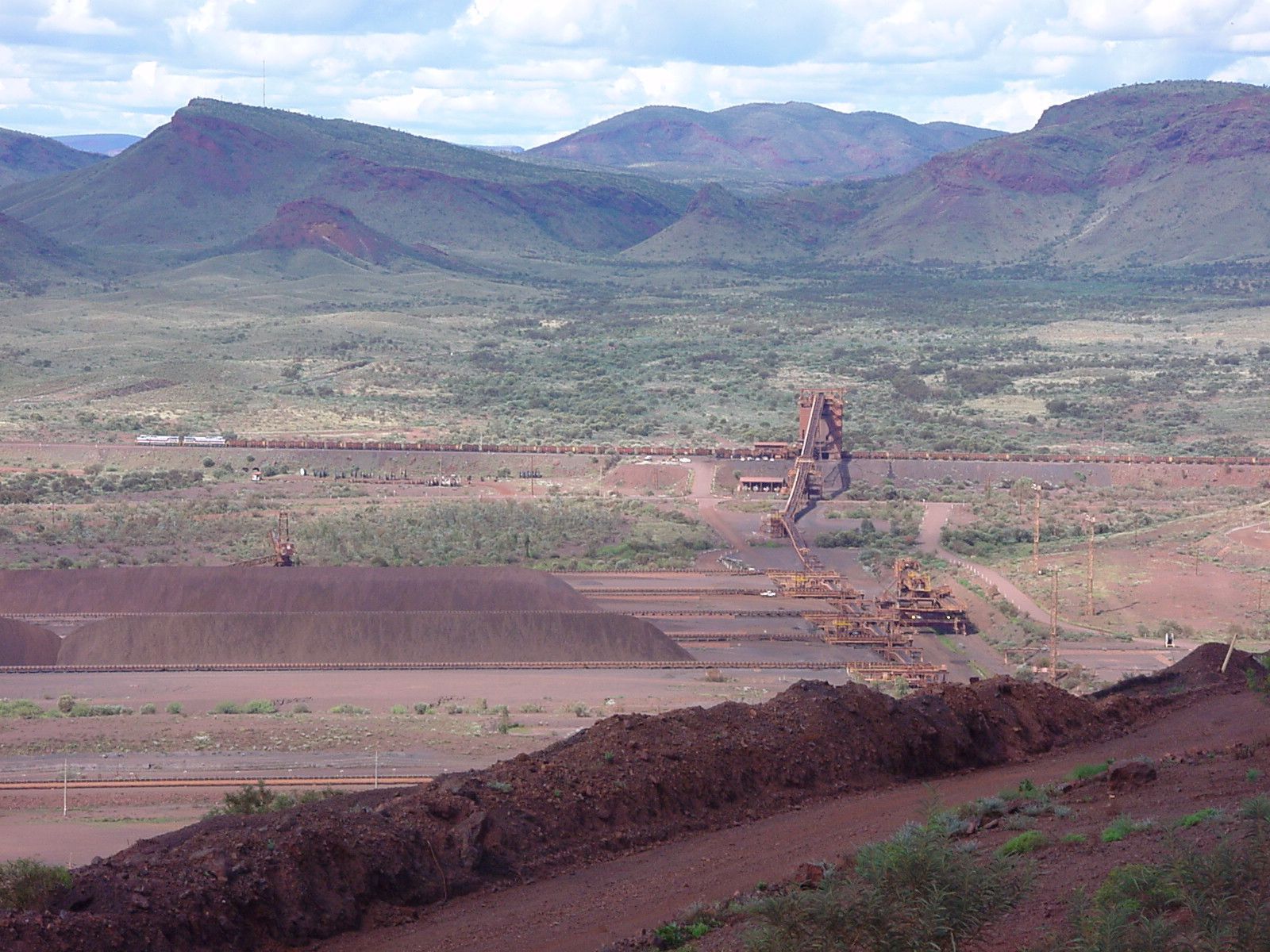
SYDNEY — Somewhere out in the Pilbara, a driverless train nearly three kilometres long is hauling iron ore to the coast right now, as it has every hour of every day for twenty years. That rhythm built modern Australia: the schools, the surplus, the swagger. This week Canberra's forecaster delivered a strange verdict — a record A$422 billion in resource export earnings for 2026–27, the biggest number the country has ever printed, in the very year its founding export starts to fade. Iron ore is still the king of the cargo list. It is simply no longer the future.
The September Resources and Energy Quarterly, from the Department of Industry, Science and Resources, puts a number on the year ahead: A$422 billion in resource and energy export earnings in 2026–27 — roughly US$293 billion — up from A$403 billion in 2025–26 and A$6 billion more than forecast in June. Beneath the surface, two wars are doing the arithmetic: Middle East conflict has disrupted shipping through the Strait of Hormuz and lifted energy prices, while the war in Ukraine keeps fuel costs elevated. The lift, the department says plainly, comes from higher energy and gold prices.
And of course the money matters far beyond the mines. Resources contribute about 11 per cent of Australia's GDP, roughly two-thirds of merchandise export value, and directly employ some 300,000 people. Resources Minister Madeleine King framed the windfall the way governments always do — as schools and clinics: "In tough times for global trade, our resources industry is standing strong," she said, and the earnings support "well paid jobs" plus spending on bulk-billing doctors, fee-free TAFE and schools. In other words: the quarry pays for the classroom.
Iron ore will remain Australia's largest resource export, more than a quarter of resource and energy earnings through the whole outlook period. But the direction is unmistakable: earnings fall from A$123 billion in 2025–26 to A$107 billion this year, then slide toward A$79 billion in real terms by 2030–31. Volumes peak at 951 million tonnes in 2027–28 before easing to 912 million. The benchmark price fell about US$10 a tonne in the September quarter on weaker Chinese construction, thinner mill margins and high port inventories.
Meanwhile the challenger has arrived. Guinea's Simandou began ramping up shipments in the September quarter and should reach 120 million tonnes a year by 2030 — high-grade ore aimed at the same Chinese buyers. UBS, in a note this week, offered the sharper diagnosis: "Simandou matters, but iron units matter more." Grade depletion means the world digs more rock for less iron — Rio Tinto has trimmed its flagship Pilbara Blend from 61.6 to 60.8 per cent iron, BHP has cut its leading grades, and Fortescue has dropped its 60.1 per cent West Pilbara fines for a 55 per cent product. On UBS's maths, grade decline alone demands 50 million tonnes of extra ore supply in 2026 versus 2023 forecasts. The king is not being dethroned by one rival; he is thinning from within.
A record A$422 billion — arriving in the very year Australia's founding export starts to fade. The quarry is diversifying, whether the quarry likes it or not.
Here is the changing of the guard: gold exports of about A$68 billion a year will overtake liquefied natural gas as Australia's second-largest export, behind only iron ore. The metal averaged a record US$4,600 an ounce through 2026 — up 34 per cent on 2025 — after dipping to US$4,000 in June and rebounding on tame inflation data. Central banks bought 289 tonnes in the June quarter alone, a number that says more about the state of the world than any commentary could.
Look closer and the mechanism is simple: gold is what people buy when the news gets frightening, and the news has been frightening. Geopolitical uncertainty and resilient bank buying have kept prices elevated, and the forecaster expects them to stay high through 2028 before easing to about US$3,760 an ounce in real terms by 2031. For Australia, that means the Kalgoorlie pits and the Perth Mint refinery are quietly becoming as important to the trade balance as the gas trains of the north-west shelf. Fear, it turns out, is an export commodity too.
LNG is the near-term windfall: earnings jump from A$57 billion to A$70 billion this year — 27 per cent — as Middle East supply disruptions lift prices, before retreating toward A$42 billion in real terms by 2030–31. Japan, Australia's most loyal gas customer, watches closely — the pair held their finance ministerial dialogue only yesterday (as we reported).
Then the metals boom inside the headline. Copper earnings rise from A$13.3 billion to A$16.3 billion after LME prices hit a record above US$14,700 a tonne in early September — up 36 per cent — on mine disruptions, the Democratic Republic of Congo's resumed concentrate export ban, and US buying ahead of possible tariffs. Zinc surged about 30 per cent to top US$4,000 a tonne in late August. Metallurgical coal should contribute about A$44 billion after prices spiked to US$263 a tonne in late August — the highest since March 2024 — on Chinese demand and diesel shortages hitting Mongolian deliveries. Lithium nearly doubles from AU$10 billion to AU$17 billion on supply disruptions in China and Zimbabwe plus steady battery-chain demand. Critical minerals exports jump from about A$17 billion to A$26 billion this year. The quarry is diversifying.
The customer still matters more than the cargo. China buys roughly three-quarters of the world's seaborne iron ore and makes about half of the world's steel — which is why every Australian mining board watches Beijing the way farmers watch the sky. And Beijing's appetite is behaving strangely: Reuters found China's total imports of base and minor metals climbed 11 per cent to a record 250 million tonnes in January–August, while iron ore and ferrous imports rose 5 per cent to a record 870 million tonnes — even as crude steel output slipped 3 per cent in August and property stayed in its long slump.
Then the pivot: Chinese steel demand is rotating from apartment towers toward factories, transmission networks, infrastructure, renewables and export manufacturing — an economy retooling itself. Good news for copper and aluminium; less good for the lower-grade ore that fed the property boom. And here is the sting: Guinea's Simandou, co-developed by Rio Tinto, Chinalco, China Baowu and the Winning consortium, gives Beijing a high-grade alternative — over 4 billion tonnes of reserves above 65 per cent iron — and, as one shipping analysis put it, "independent of the fraught regional politics of the Indo-Pacific." The first cargoes reached Chinese ports this year. Australia's best customer is now also its customer's landlord.
Step back and five forces come into focus. Geopolitically, the forecast rests on disruption: the Hormuz blockade and shifting trade barriers are assumed to hold world growth to 2.9–3.0 per cent in 2026 — slightly below the IMF's July forecast — while lifting the energy prices that flatter Australia's earnings. Underneath runs the critical-minerals race: Zimbabwe, Africa's top lithium producer, suspended raw mineral exports in February to force local processing, then softened its stance this month as miners battled the price slump — a reminder that resource nationalism cuts both ways.
Macroeconomically, the forecaster warns that a stronger Australian dollar will erode the local-currency value of every tonne sold — the classic curse of a commodity boom. Demographically, growth is moving south: UBS argues three billion Global South consumers will plug the steel-demand gap as China slows, and India's iron ore imports are forecast to rise from 10 million to 55 million tonnes by 2031. Historically this rhymes with the last supercycle — China industrialised, prices soared, the wave broke — except the new wave is electrification: copper consumption climbs from 27.9 million tonnes in 2025 to 32.4 million in 2031, pulled by grids, renewables, EVs and AI data centres. Technologically, the constraint is inputs as much as geology — the Middle East conflict threatens sulphuric acid supply and has already lifted diesel costs. The playbook is being rewritten in five hands at once.
The winners are easy to spot. Gold miners ride the fear trade. Copper producers — BHP, whose Escondida mine in Chile fights grade decline of its own, and Rio Tinto — led the ASX higher on Tuesday on the copper rebound, with battery-mineral stocks up over two per cent. Lithium hopefuls get a second wind from the AU$10-to-17-billion upgrade. The federal budget banks a windfall it never legislated. And Guinea, after decades of false starts, finally joins the iron ore map.
The losers are quieter. Thin-margin iron ore juniors face a decade of falling real prices. Fortescue, built on lower-grade ore, is already reformulating its product slate. Households get the paradox of plenty: record export earnings alongside elevated domestic energy prices, which Commonwealth Bank economists warn will push inflation above earlier forecasts. And the forecaster's verdict is the coldest comfort of all — this is the peak. After A$422 billion comes A$391 billion, then the long slide to A$379 billion. Peaks are only visible in the rear-view mirror; Canberra claims to see this one in advance.
First, the December quarterly — the next revision will show whether the A$6 billion upgrade was a trend or a one-off gift from Hormuz. Second, copper: analysts see a structural deficit opening from 2026 as mine investment lags demand, with prices averaging about US$13,500 a tonne through 2027. If the deficit bites harder, copper could do for the 2027 forecast what gold did for this one.
Third, Simandou's ramp — running near 39 million tonnes a year against a 120-million-tonne design. The gap between those numbers is the biggest swing factor in the iron ore market. Fourth, China's steel curbs and property data: imports from Australia, Brazil and South Africa were already lower over the first eight months of 2026. And finally, the currency — a strong Australian dollar is the silent tax on every forecast in this report. If the RBA's tightening keeps the dollar high while commodity prices soften, the A$391 billion of 2027–28 could arrive early. The record is real. The question is how long the music plays.
The Western financial press reads the September quarterly as a vindication and a warning in the same document. Bloomberg's framing puts the near-term windfall — almost 5 per cent earnings growth on Middle East and Ukraine disruptions — front and centre, while the trade press (Resources Review, Australian Resources & Investment) stresses the revision upward and then the turn: A$391 billion next year, A$379 billion by 2030–31. The analyst notes add the sceptical edge — UBS's grade-depletion thesis says the iron ore market is structurally tighter than the headline tonnes suggest, which means Canberra's price forecasts may prove too pessimistic on iron ore even as they are too optimistic on the peace premium lasting.
Canberra's own spin, via Minister Madeleine King, is unabashedly domestic: the quarry funds the clinic. Western coverage takes that framing largely at face value while noting the tension underneath — record export earnings arriving alongside domestic energy-price pain and an RBA tightening cycle, a combination the Commonwealth Bank's economists warn could push inflation above earlier forecasts. The Western read, in short: enjoy the record, hedge the descent.
No verifiable Xinhua, CGTN or China Daily English item on the September quarterly itself was found in today's research; the Eastern read below is honest analysis built from confirmed Chinese-side facts, not a fabricated outlet voice. From Beijing's vantage point, the quarterly reads less as an Australian record than as a buyer's market taking shape. Simandou's ramp — a Chinalco, Baowu and Winning project with over 4 billion tonnes of reserves above 65 per cent iron — is the strategic counterweight to decades of dependence on Pilbara supply, and its first cargoes arriving at Majishan and Rizhao this year mark the moment the counterweight became real tonnage.
The second Chinese read is about the demand pivot the quarterly quietly confirms: record Chinese imports of base and minor metals (up 11 per cent to 250 million tonnes in January–August) alongside slipping crude steel output show an economy retooling from property toward manufacturing, grids and exports. For Beijing, Australia's A$422 billion peak is the sound of a supplier enjoying the last years of the old pricing power — while China builds the alternative supply and the alternative demand at the same time.
The Global South press reads the quarterly through the supply side it actually lives on. South Africa's Engineering News framed the year's lithium story around Harare: Zimbabwe's February suspension of raw mineral exports — Africa's top lithium producer forcing beneficiation at home — sent Chinese lithium carbonate futures jumping more than 9 per cent in a session, a reminder that the South no longer ships raw and stays quiet. That the REQ now expects Australian lithium earnings to nearly double on "supply disruptions in China and Zimbabwe" shows how directly Southern policy moves price into Northern balance sheets.
The second Southern read is demographic and it is the quarterly's most underpriced line: three billion consumers in the Global South plugging the steel-demand gap as China slows, with India's iron ore imports forecast to rise from 10 million to 55 million tonnes by 2031. For the South, Australia's record is not a story about Australia at all — it is the receipt for a world where the demand centre of gravity is moving, and the suppliers who read that map first will own the next cycle.
Australia is forecast to earn a record A$422 billion — about US$293 billion — from resource and energy exports in 2026–27, according to the September 2026 Resources and Energy Quarterly. That is up from A$403 billion in 2025–26 and A$6 billion more than forecast in June. Earnings are then expected to decline to A$391 billion in 2027–28 and A$379 billion by 2030–31 as energy prices normalise.
Iron ore remains Australia's largest resource export, accounting for more than a quarter of resource and energy earnings. But its earnings are forecast to fall from A$123 billion in 2025–26 to A$107 billion in 2026–27 as China's steel demand plateaus and Guinea's Simandou mine adds high-grade supply. Gold, at about A$68 billion a year, has overtaken LNG as the second-largest export.
LME copper topped US$14,700 a tonne in early September 2026 — a 36 per cent year-on-year rise — driven by mine disruptions, the Democratic Republic of Congo's resumed ban on concentrate exports, lower ore grades in Chile, and strong US buying ahead of possible tariffs. Electrification, grid expansion, AI data centres and electric vehicles keep demand growing faster than new mine supply.
Simandou, in south-eastern Guinea, is one of the world's largest high-grade iron ore deposits, with over 4 billion tonnes of reserves above 65 per cent iron. Co-developed by Rio Tinto, Chinalco, China Baowu and the Winning consortium, it began shipping in late 2025 via a 600km railway to the Atlantic coast. It is designed for 120 million tonnes a year — about 7 per cent of global seaborne supply — and competes directly with Australian ore in China.
