The Security Council unanimously rolled over the Darfur arms embargo for two more months, but Russia and China blocked a US push to widen it across all of Sudan, leaving a 20-year-old sanctions regime to govern a war that has killed tens of thousands and displaced some 13 million people.
Published 9 October 2026 · 04:31 GMT
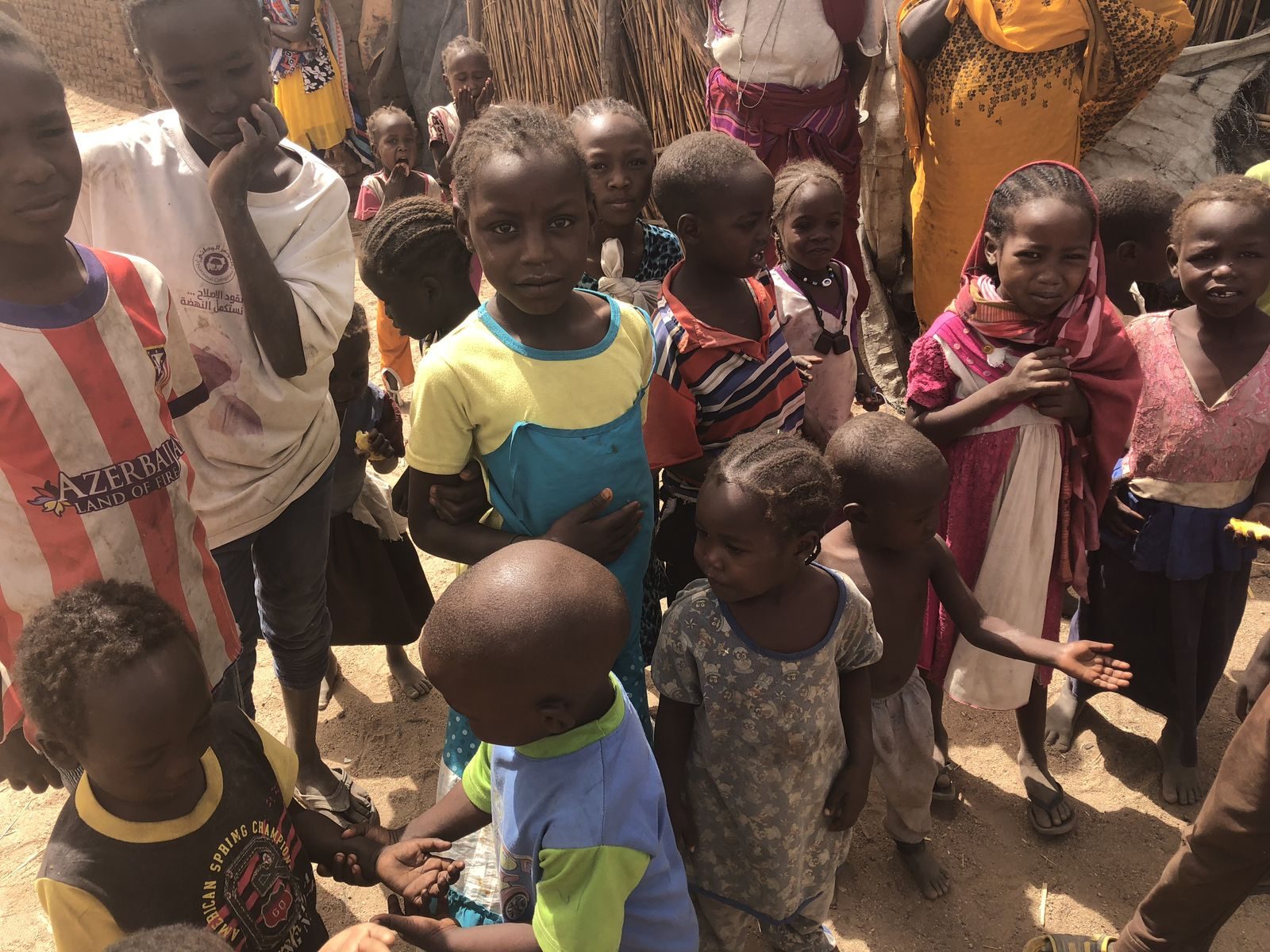
The United Nations Security Council voted unanimously on Thursday to extend its arms embargo on Darfur for two more months, kicking a hard question down the road rather than answering it. The new measure, Resolution 2830, keeps the embargo in force until December 11 and was described by the United Nations as a short-term technical rollover: a pause button, not a policy. The sanctions were last renewed for a single month on September 11, and the longer stretch now bought is explicitly meant to give negotiators more time. What the Council could not agree on was the proposal Washington has pushed for weeks: widening the Darfur embargo to cover all of Sudan, a country at war since April 2023. Russia and China opposed any widening, and the measure died. The resolution also extends the mandate of the panel of experts that monitors the sanctions until January 11, 2027, keeping the UN's monitoring machinery running while the politics stay frozen. Darfur itself, a region about the size of Spain, has seen some of the war's worst violence (see our coverage of the El Fasher exodus), with displacement camps attacked and repeated massacres killing thousands at a time.
The embargo is old. It was imposed in 2005 under Resolution 1591 and has covered armed actors in Darfur ever since, paired with a travel ban and asset freeze on designated individuals and entities, and watched over by a five-member panel of experts. The United States has argued for weeks that this architecture is obsolete: the current sanctions regime is, in the words of US Ambassador Jeff Bartos, over 20 years outdated and insufficient for the realities of the war today, and he has urged the Council to expand the arms embargo across the entire territory of Sudan. Moscow disagrees outright. Russia's deputy UN ambassador, Anna Evstigneeva, said her country would not permit even a hint of broadening the restrictions: a veto-line position, not a negotiating opener. Beijing stands with Moscow in keeping the existing regime as it is. Khartoum objects from the other direction: Sudan's UN ambassador, Al-Harith Mohamed, argued that a total embargo runs against the UN Charter's guarantee of the right to self-defence, a claim that lets the army frame the embargo debate as a sovereignty question. The war's facts are not in dispute: fighting between the Sudanese army and the paramilitary Rapid Support Forces has killed at least 59,000 people, though aid groups warn the true toll could be far higher; some 13 million people are displaced; parts of the country are in famine (see the Sudan factbook). The army holds central and eastern Sudan; the RSF controls Darfur in the west and parts of the south.
That is the question the rollover was designed to defer, and the answer is genuinely open. A second two-month extension would be routine; a breakthrough into a country-wide embargo would require Russia or China to move, and neither showed any sign of doing so this week. Nor is it clear that a wider embargo would bite. Sudan's war economy runs on regional arms pipelines that the Darfur-only regime has never managed to dry up; expanding the embargo's legal geography without expanding enforcement would change the map without changing the flow. We also do not know the true death toll. At least 59,000 is a floor, with aid groups warning it is far below reality, and we do not know how many of the roughly 13 million displaced will ever return home.
Arms embargoes rarely end wars, but they set the diplomatic weather. A country-wide embargo would have been the first time since 2005 that the Council treated Sudan as one conflict rather than a Darfur problem: a recognition that the war has outgrown its original geography. By blocking it, Moscow and Beijing kept the sanctions frozen in the era of a different war, one centred on Darfur's government-backed militias, not on a national clash between a regular army and a paramilitary force with its own supply lines. The decision also reads as a proxy for the Council's wider paralysis. The same great-power split that deadlocks Sudan is the split that deadlocks nearly every enforcement file, and each technical rollover is a small admission that the Council can administer sanctions it no longer has the unity to redesign (see our coverage of the displacement crisis). For the people the embargo is supposed to protect, the stakes are measured in months: every rollover is two more months in which weapons keep arriving, camps keep emptying, and a famine deepens.
The vote exposed a Council that can still unanimously agree on the easy half of sanctions, keeping them alive, while it cannot touch the hard half: making them fit the war. That is not a new pattern; it is the pattern. The Darfur embargo has been rolled over, renewed and technically extended for two decades, and each extension has made the regime harder to question precisely because it is always about to expire again. Washington's push broke that rhythm, and the push failed, which tells you the equilibrium is stable: Russia and China will pay the price of unanimous rollovers to avoid the price of an expanded regime. The deeper question is whether anyone still believes the embargo shapes the battlefield. Arms reach both sides through regional channels that no Council text has interrupted in 20 years; what the sanctions mainly do now is signal. A signal that never changes is background noise. December's vote will be the test of whether the Council can turn the signal back on.
The first-order effect of the rollover is stasis; the second-order effects spread outward. Humanitarian agencies now plan against a sanctions framework that will not change before December, which shapes how they negotiate access with two warring authorities who both read the embargo as a judgment on their legitimacy. Regional arms brokers, reading the same signal, face no new deterrent: two more months of the old regime is two more months of known enforcement gaps. And in New York, every rollover sets a precedent for the next one: the longer a technical extension cycle runs, the easier it becomes to repeat, which is how a 2005 regime survives into 2026. The most dangerous second-order risk is attention decay. Each unanimous extension makes the war look managed, and wars that look managed get less pressure, not more.
Diplomats now have until December 11 to find language that Washington can call progress and Moscow can accept: a narrow window for a compromise that failed to appear in the weeks already spent. The likely outcomes rank themselves. Another technical rollover is the base case; a modest compromise, tighter listing criteria or a reinforced expert panel, is possible; a genuine country-wide embargo is the least likely, requiring one of the two blocking powers to reverse a position it stated publicly. Meanwhile the panel of experts keeps working under its extended mandate to January 2027, so evidence of violations will accumulate whatever the Council decides. Away from New York, the calendar that matters is the dry season: when the rains stop, fighting typically intensifies, and Darfur's camps will face the worst of it whatever the Council votes.
The Western framing, led by Washington, treats the embargo as a lever that must grow with the war: a 2005 Darfur-only regime cannot govern a 2026 country-wide conflict, and the United States reads Moscow's and Beijing's opposition as cover for continued arms flows. European capitals broadly share the American diagnosis while quietly doubting that a paper expansion would change facts in Darfur. In this telling, the rollover is not neutrality. It is a victory for those who benefit from the status quo, purchased with the two things the Council always trades: time and ambiguity.
The Eastern lens, voiced by Moscow and Beijing, reads the American proposal as an instrument of pressure rather than a humanitarian measure: widening an embargo to a whole country at war risks crippling a government's self-defence while doing little to disarm its enemies. Russia's line, no hint of broadening, is also a message about the Council itself: permanent members do not get to redesign enforcement regimes unilaterally. In this telling, restraint is the principle, and the rollover is the Council working as designed.
The Global South lens watches from closer to the blast radius. Neighbouring states and regional bodies live with the consequences the Council negotiates over: refugee flows, cross-border militias, and a famine that does not respect borders. From this vantage, the New York debate over legal geography can look beside the point. Darfur-only or country-wide, enforcement has always been the missing half. The rollover buys diplomats time; it buys displaced families nothing, and that asymmetry is what the Global South remembers when the next resolution comes around.
The Darfur arms embargo is a UN sanctions regime imposed in 2005 under Resolution 1591. It bans the supply of arms to armed actors in Sudan's Darfur region, alongside a travel ban and asset freeze on designated individuals and entities, and it is monitored by a five-member panel of experts. It has been renewed repeatedly ever since, most recently on Thursday for two more months.
Washington argues the regime is over 20 years outdated: a Darfur-only embargo cannot govern a war that now spans the whole country, fought between the Sudanese army and the paramilitary Rapid Support Forces since April 2023. The United States wanted the embargo stretched across all of Sudan to match the war's actual geography and choke off arms flows to both sides.
Moscow and Beijing argued for keeping the existing regime, with Russia's deputy ambassador saying her country would not allow even a hint of broadening. They treat a country-wide embargo as a dangerous precedent that would constrain a government's self-defence, and they resist American-led redesigns of enforcement regimes in general. The result was a deadlock the two-month rollover papers over.
The war between the Sudanese army and the Rapid Support Forces, which began in April 2023, has killed at least 59,000 people, though aid groups warn the true toll is far higher. About 13 million people have been displaced, one of the largest displacement crises on earth, and parts of the country have been pushed into famine. Darfur has seen some of the worst violence.
