At a Park City rally for embattled Senator Roger Marshall, Donald Trump turned France's worst unrest in years into a campaign warning — offering no evidence that a Democratic win would bring 'raging fires' to America.
Published 20 October 2026 · 11:46 GMT
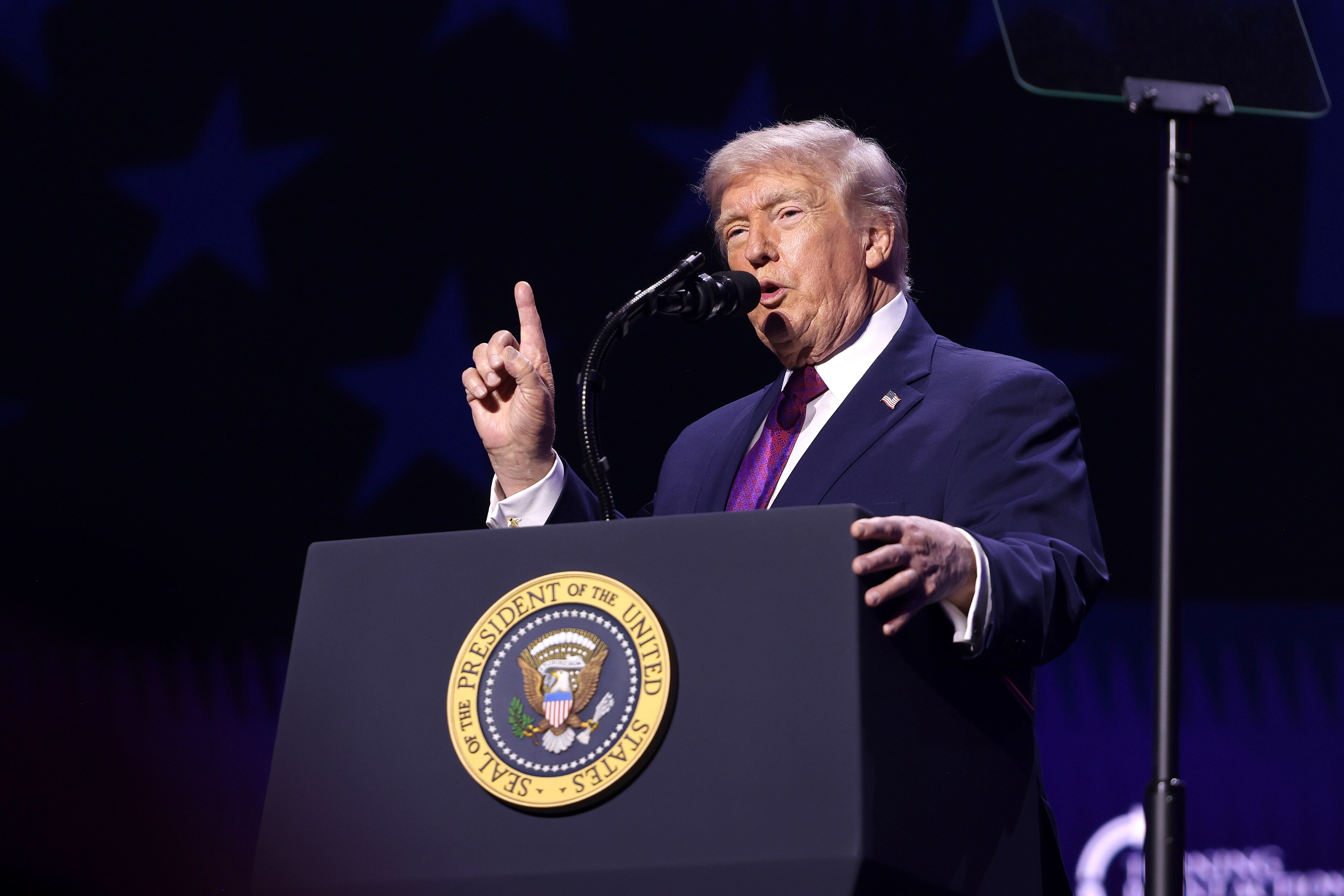
PARK CITY, Kansas — US President Donald Trump on Monday turned the worst civil unrest in France in years into a campaign weapon, warning a Kansas rally that the United States would "burn" like France if Democrats prevail in the November 3 midterm elections.
The rally, billed as a Wichita "Kansas Style Rally" at the Heartland Credit Union Arena in Park City, was staged for Republican Senator Roger Marshall, facing an unexpectedly tight re-election fight against Democrat Adam Hamilton, a Methodist megachurch pastor. Doors opened at 2:30 p.m.; Ted Nugent opened; Trump spoke around 6 p.m. local time.
"I love you Kansas, but I'm here for a guy named Roger Marshall," Trump said. In new stump material, he cast France's violent protests as a preview of America under Democrats. He provided no evidence. "We're not going to let that happen to this country," he said. "When you see burning steeples and raging fires in France, just remember that is what the radical Dumocrats want to do to America."
Per the Washington Examiner, Trump called France "a once great nation that is being conquered, looted, and burned to the ground by migrants, jihadists, and communists who hate Christianity," accused "globalist, left-wing politicians" of treasonously importing migrants, and closed: "It's never happening here." Hecklers interrupted repeatedly; Trump labeled them "paid protesters," told supporters to "get rid of" them, and urged: "pretend I'm on the ballot."
The facts are not in dispute. The rally took place October 19, 2026, in Park City, Kansas, for incumbent Senator Roger Marshall. The Democratic challenger is Adam Hamilton. The Cook Political Report rates the race a Toss Up — remarkable where no Democrat has won a Senate seat in 94 years, since 1932.
Trump won Kansas by 16 points in 2024; Republicans privately blame Iran-war frustration and rising prices for Marshall's predicament. A Reuters-Ipsos poll published Monday put Trump's approval at a record-low 31 percent. Democrats need a net plus-four in both chambers — House 218-214, Senate 53-47 GOP — ahead of November 3.
In France, the backdrop is real: cost-of-living and public-services protests descended into weekend riots and looting, the worst unrest in years. Prime Minister Sebastien Lecornu says curfews will be imposed "where necessary"; retailers have begun filing insurance claims. Trump also defended Marshall over his former practice's 700-plus patient lawsuits and boosted gubernatorial candidate Ty Masterson.
The core claim is unproven: no evidence was offered that a Democratic win brings France-style unrest to America. Reuters noted the absence of proof; no independent analysis draws the link. The France comparison is a rhetorical device, not a causal chain.
How Kansas voters receive it is unknown. Internal polling reportedly shows soft Marshall support among rural men 55 and under — prompting a 32-day rural blitz — but the race's true state rests on private surveys.
Details of the $8 billion Harvest Fuel Relief Program remain thin beyond the headline figure, reported by a single outlet. France's damage tally is pending; insurers are just starting. Whether the hecklers were coordinated is unknown — no evidence of payment exists.
Fifteen days out, a sitting president stumping in a state he carried by 16 points is itself the story: internal GOP polling sees a national wave, driven per Reuters by Iran-war frustration and the affordability failure — the very issue animating France's streets.
Second, it exports another country's crisis as a domestic fear object. France's unrest is a purchasing-power story; Trump recast it as migration and civilizational collapse, eliding the economic roots documented by French and international reporting — echoing his earlier claim that "migrants have taken over France."
Third, rhetoric escalates at record-low standing: 31 percent is Trump's Reuters-Ipsos nadir. Presidents at historic lows typically moderate; he bets maximalist "raging fires" warnings will drive turnout. The Marshall Toss Up is the first empirical test.
And it matters for France: when an American president uses your burning streets as a prop, the narrative stops being yours — curfews and claims become illustrations of someone else's argument.
The 5D lens: domestic weakness outsourced to foreign imagery.
Geopolitics. The Iran war hangs unnamed over the evening: Republicans on defense "due to voter frustrations over the Iran war and rising prices" — the same war whose human cost keeps climbing. A president fighting a distant war and losing the affordability argument reaches for a foreign riot as a domestic threat narrative: narrative import-substitution.
Macroeconomics. Same root both sides: purchasing power. Kansas petrol $3.98, diesel $5.78 — up about 45 percent per AAA — voters airing cost-of-living grievances. France: cost-of-living and underfunded public services. Trump acknowledged none of the symmetry; the economics were laundered into a migration story.
Demographics. Soft support among rural men 55 and under triggered the 32-day rural blitz — the supposed bedrock wobbling on prices.
History. No Democrat sent to the Senate from Kansas since 1932; a 94-year streak rated Toss Up is the datum historians will cite for the realignment. French disorder as a US trope has pedigree — 1968, the 2005 banlieues: Paris has burned in American stump speeches before.
Structure. One Reuters wire by two reporters, replicated across dozens of outlets: the whole English record flows from a single evidence chain. Hence independent verification — and honest provenance tagging.
If Marshall holds, the France gambit becomes template: foreign crises as domestic fear objects at every rally. If he loses a 94-year seat, the lesson inverts — maximalism failed at maximal weakness, and 31 percent becomes the story.
For France, costs are real: curfews and looting harden, via the world's largest media market, into a global image of a country "conquered, looted, and burned to the ground" — indexed forever — complicating Lecornu's politics and the rebuild. The information space is already polluted: AI-faked images of the French riots went viral this week.
The $8 billion Harvest Fuel Relief is pre-election fiscal signaling at its most direct: watch the USDA's Farm Service Agency before November 3.
And rhetoric normalizes by repetition — "Dumocrats," "paid protesters," the "Shylock" defense — from a presidential podium. Each unchallenged use lowers the cost of the next.
Fifteen days to November 3; the 32-day rural blitz continues; Marshall-Hamilton — Toss Up in a near-century GOP state — is the bellwether. Fresh Reuters-Ipsos readings will show whether 31 percent was floor or ledge.
In France, the next nights under Lecornu's targeted curfews test containment; retailers' insurance claims will start quantifying damage. PSG-Barcelona goes ahead in Paris — a small signal of the authorities' risk reading.
Watch whether "burn like France" travels: if the line recurs at the next rally, it is doctrine. If it vanishes, Kansas rendered its verdict.
The West Reuters' Bo Erickson and Steve Holland meet the France claim with open skepticism — "provided no evidence" — balancing the stump material against the economy: "Trump himself has struggled to make goods and services more affordable." The wire notes the anti-immigrant, anti-Muslim character and rights advocates' criticism. The Washington Examiner supplies fuller quotes without the distance; StateLine Daily adds texture — the $8 billion farm programme, AAA fuel prices, heckler choreography. The Western frame is electoral: what it means for November 3.
The East No East outlet carried the Kansas rally. Searches of CNA, The Hindu and NHK found no independent reporting — a genuine gap, recorded not papered over. The East covered the French half independently: CNA and The Hindu reported Lecornu's "curfews where necessary" order and the violent weekend's shock.
The Global South The South reads a parable of Western disorder. TBS News (Bangladesh) carried the rally; Al Jazeera ran approval-collapse and midterms analysis plus two France pieces — "game over for Macron's centrists?" and the protests as an "outburst of resentment" against Macron. The Southern reading notes the irony Trump skipped: the former colonial metropole used as a morality tale by a president at a record-low approval.
He told the Park City crowd: 'When you see burning steeples and raging fires in France, just remember that is what the Dumocrats want to do to America.' In fuller quotes carried by the Washington Examiner, he called France 'a once great nation that is being conquered, looted, and burned to the ground by migrants, jihadists, and communists who hate Christianity,' accused 'globalist, left-wing politicians' of importing migrants, and vowed: 'It's never happening here.' He provided no evidence for it.
Because it may not be safe. Republican Senator Roger Marshall faces Democrat Adam Hamilton in a race the Cook Political Report rates a Toss Up — in a state that has not elected a Democratic senator in 94 years, since 1932, which Trump carried by 16 points in 2024. Republicans privately blame voter frustration over the Iran war and rising prices. A president stumping in Kansas fifteen days before the midterms is the signal: internal polling sees a national wave.
France has seen its worst unrest in years. Huge protests over the cost of living and underfunded public services descended into riots and looting over the weekend. Prime Minister Sebastien Lecornu has said new curfews will be imposed 'where necessary' — independently reported by CNA and The Hindu — and retailers have begun filing insurance claims. French and international reporting frames the crisis as economic and governance-driven, not the migration-driven collapse Trump described.
A Reuters-Ipsos poll published on the day of the rally put Trump's approval rating at a record low of 31 percent. Democrats need a net gain of four seats in both chambers: Republicans hold the House 218-214 and the Senate 53-47. The midterms are on November 3 — fifteen days after the Kansas rally. Al Jazeera's analysis ties the approval collapse directly to the stakes of the midterms.
Roger Marshall is the Republican incumbent senator from Kansas, seeking re-election. Adam Hamilton is his Democratic challenger, a Methodist megachurch pastor and former Republican. Trump defended Marshall on stage against attacks over his former OB-GYN practice, which sued more than 700 patients for unpaid bills — dismissing the criticism as a caricature. Trump also boosted Republican gubernatorial candidate Ty Masterson at the rally.
