Senegal convenes foreign creditors in a virtual meeting on October 6, with the IMF, to negotiate a debt treatment that deliberately leaves CFA-franc debt untouched.
Published 6 October 2026 · 06:00 GMT
Senegal has called its foreign creditors to a virtual meeting on October 6, with the International Monetary Fund in the room, as Dakar pushes to restructure its external debt under the G20 Common Framework. The country faces a debt load of nearly 130% of GDP after the disclosure of hidden liabilities froze a $1.8 billion IMF program — and its finance minister has drawn a red line: CFA franc-denominated debt stays outside the operation.
The format is deliberately low-key: a video call, a presentation of the economy, reform proposals and a timetable for the debt treatment, then the floor opened to questions. A separate official-creditor committee will follow. Senegal says it wants an "enhanced" version of the Common Framework — shorter timelines, earlier information-sharing, parallel discussions with different creditor groups — and World Bank president Ajay Banga has said he wants Dakar's case to go through "at the fastest speed of any of the prior cases." For a mechanism whose earlier outings in Zambia, Ghana and Ethiopia dragged on for well over a year, that is a serious wager.
Underneath the procedural choreography sits a political calculation with regional stakes. By ring-fencing CFA franc-denominated borrowing, Dakar is shielding the Senegalese and West African banking system from the haircut it is asking others to take. Fitch Ratings estimates that banks across the West African Economic and Monetary Union hold government securities worth three times their equity — between 25% and 35% of their assets, up from about 24% at the end of 2019. Senegalese banks' exposure to their own government alone stands near 12% of assets: a haircut on that stock could wipe out their capital and destabilise the union's shared financial system.
Dakar is asking creditors to take a haircut — everyone except the banks that kept it alive. That is the red line, and the gamble.
Start with the arithmetic that forced the issue. Senegal is spending an estimated 2.5 billion CFA francs a day on interest — money that would otherwise fund schools, health centres and roads. Energy subsidies ran to 245 billion CFA francs between December 2025 and August 2026, and would have reached 1,069 billion without a partial tariff adjustment — subsidies financed, in the end, by debt. With growth now projected to fall to 2.7% this year from 6.7% last year, partly because the Iran war curbed investment and drove up energy costs, the arithmetic no longer works without an outside intervention.
The new IMF arrangement — about $2.2 billion over three years, agreed at staff level days before the creditor meeting — is meant to restore macroeconomic stability and debt sustainability, strengthen domestic revenue collection, and improve oversight of public debt and state-owned enterprises. But it is not signed yet: the Fund's executive board must approve it, and Senegal must first secure financing assurances from the World Bank, the African Development Bank and other lenders. The creditor meeting is the next milestone on that road.
The short answer is misreporting. After the Fund froze its earlier $1.8 billion program, a reconciliation exercise revised central government debt at the end of 2023 from 74.4% of GDP to 111% — the jump reflecting previously undisclosed liabilities, now estimated at roughly $13 billion. Dakar turned to regional borrowing markets and retail bond sales to keep the state running; the first government securities auction held after the debt-treatment announcement raised 101 billion CFA francs ($179 million) with borrowing costs broadly stable, suggesting the regional market has not yet repriced the operation. But the stock is too large, and domestic arrears — 1.956 trillion CFA francs ($3.5 billion) as of March 2025 — are threatening to stall economic activity and destroy jobs.
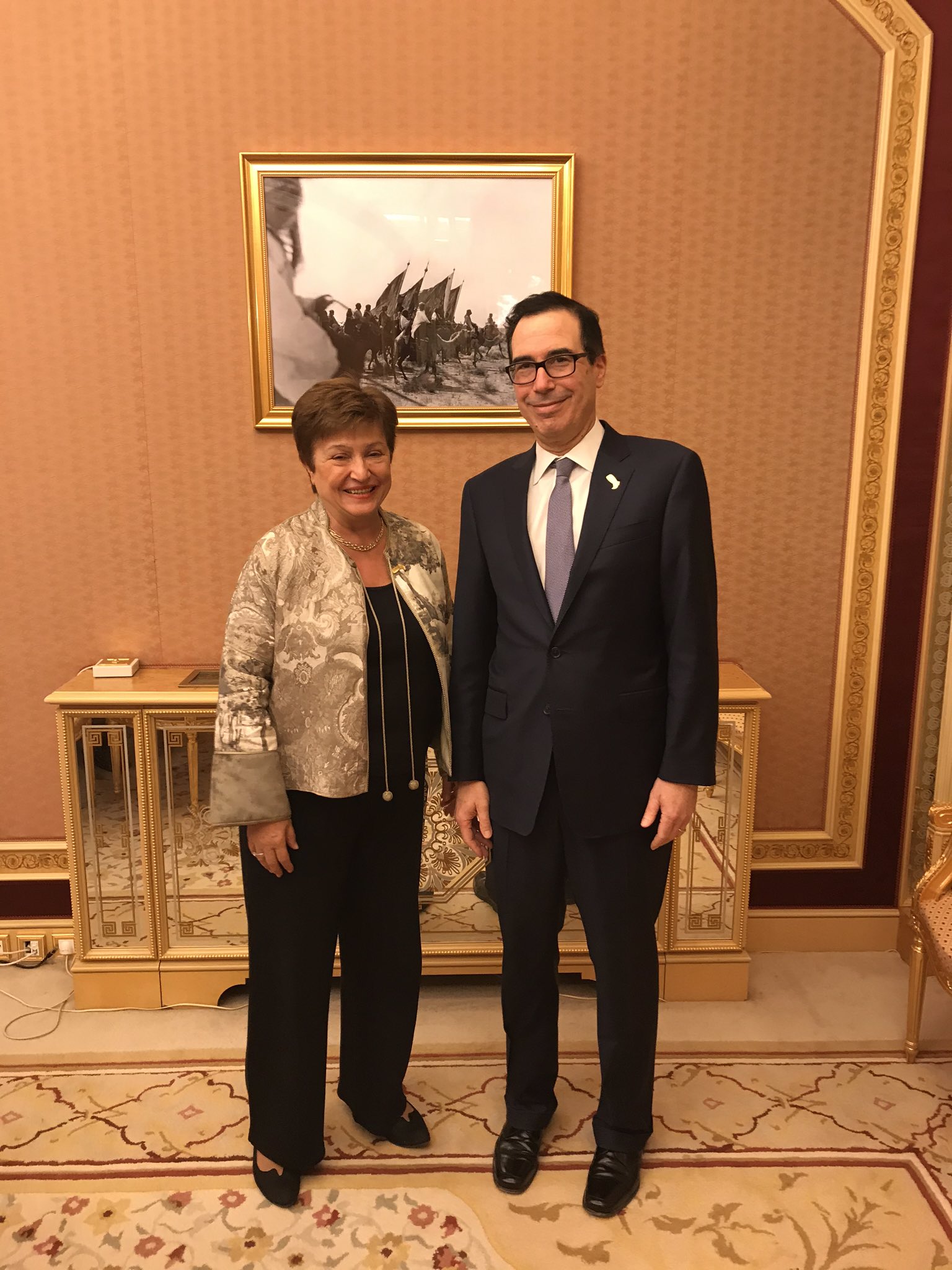
A technical agreement with the IMF was announced days before the meeting, and President Bassirou Diomaye Faye has made debt diplomacy a personal file: he met Fund chief Kristalina Georgieva in Nairobi, was due to see World Bank president Ajay Banga, US Treasury secretary Scott Bessent and Georgieva again in Washington. Yet the politics remain delicate at home. Prime Minister Ousmane Sonko once called a debt restructuring "a disgrace" for the country; his successor as head of government, Ahmadou Al Aminou Lo, now insists the country will "reprofile" — extending maturities, renegotiating interest rates — rather than restructure. Investors read maturity extensions and rate cuts as restructuring whatever word is used, and a group of international bondholders has already organised, appointing White & Case as legal adviser.
The timeline is compressed but instructive. In 2024 the Fund suspended its program after the hidden debt surfaced. Through 2025 and 2026 Dakar financed itself increasingly on the Ivorian-led regional market — the eight WAEMU states share a central bank, a currency and a financial market, which is precisely why the CFA debt question is systemic rather than bilateral. Oil production entered its first full year in 2025, lifting real GDP by 6.7%, but non-hydrocarbon growth slowed to 2.2% before rebounding to 4.7% in the first quarter of 2026, and hydrocarbons do not automatically create jobs. By early September, finance minister Cheikh Diba presented the plan to use the Common Framework while excluding CFA franc debt; the bondholder group organised within days; Amundi, Europe's largest asset manager, warned that Senegal's bond prices — in the low fifties on the dollar and euro — did not reflect the risk that bondholders would carry much of the adjustment.
The sequencing since has been textbook crisis management: present the framework, reassure the regional market with a successful auction, reach a staff-level deal with the Fund, then face the creditors. Today's meeting tests whether the choreography holds once creditors — bilateral lenders led by China, Eurobond holders advised by White & Case, and the official-creditor committee still to be formed — are all looking at the same spreadsheet.
The Framework was created in 2020, during the pandemic, to bring official bilateral creditors — Paris Club members and newer lenders such as China — together with private creditors in coordinated debt workouts for low-income countries. Its first cases exposed major coordination weaknesses: Zambia's negotiations stretched well over a year as governments, bondholders and Chinese lenders argued over how much relief each group should provide; Ghana's completed in just over a year. The G20, the IMF and the World Bank later set up the Global Sovereign Debt Roundtable, with borrowers and private-sector participants, and issued a restructuring playbook to make the process more transparent.
Senegal is the first real test of the "enhanced" version — shorter timelines, earlier coordination, parallel creditor tracks. "Senegal will really be the test case," Martin Kessler of the Paris School of Economics' Finance for Development Lab told Bloomberg. If Dakar succeeds, the Framework becomes a more predictable mechanism for sovereign debt resolution in Africa; if it bogs down, investors will treat the playbook as paperwork. An IMF debt sustainability analysis will ultimately determine how much relief is needed; the negotiation that follows decides who provides it.
Geopolitics and macroeconomics converge on one fact: this is a debt workout designed to protect the regional banking system by design, not by accident. Excluding CFA-denominated obligations spares the WAEMU lenders whose balance sheets are loaded with sovereign paper — but it shifts the burden toward bilateral creditors led by China and Eurobond holders, which could make negotiations longer and sharper. Analysts at Amundi note the arithmetic plainly: if you exclude one group, then another, then a third, everything shifts toward the bondholders.
The historical pattern is the Common Framework's own record — lengthy, creditor-fractious, and only now being reformed. The structural trend beneath is the rising weight of domestic-market financing in francophone Africa: regional markets funded the state after the IMF froze its program, deepening the sovereign-bank nexus that Dakar is now protecting. The demographic dimension is the daily interest bill — 2.5 billion CFA francs a day — and the social cost of the medicine the new IMF program will likely demand: cutting energy subsidies, broadening the tax base, removing exemptions. Those measures could raise electricity, fuel and some consumer prices for households already squeezed. Growth at 2.7%, debt near 130% of GDP, and an IMF program that has not yet been approved: the room for error is narrow.
Three tests in the coming weeks. First, the official-creditor committee: whether China and Paris Club creditors align on comparable treatment, or whether the exclusion of CFA debt poisons the comparability principle the Framework depends on. Second, the bondholder group: whether its White & Case-advised committee engages or digs in for litigation, and whether Amundi's warning on overvalued bonds proves prophetic. Third, the Fund's board: the $2.2 billion program needs financing assurances from multilateral lenders and a debt sustainability analysis that says the plan works. If the meeting produces a clear timetable and broad creditor attendance, Senegal gets the runway it needs; if creditors fragment, Dakar will face the prolonged exclusion from cheaper funding that today's meeting is meant to prevent — and the overlapping crises playbook of the developing world gains another chapter.
From a Western market perspective, the October 6 meeting is a credibility test for a borrower that misreported roughly $13 billion in liabilities. Investors and institutions in Washington, London and Paris will judge Dakar on transparency — the very thing that broke the relationship in 2024 — and on whether the 'enhanced' Common Framework can deliver faster than Zambia's drawn-out precedent. Ajay Banga's personal bet on record speed raises the stakes: failure would confirm that the mechanism remains paperwork.
The arithmetic also speaks clearly to bond markets: with CFA debt and concessional debt ring-fenced, the adjustment must come from somewhere, and Amundi's warning that bonds near fifty cents are overvalued reflects a sober read that Eurobond holders will carry much of the relief. The organised bondholder committee, advised by White & Case, signals that creditors intend to negotiate hard rather than accept a reprofiling dressed as something lighter.
From Beijing and the wider non-Western creditor side, Senegal's case arrives with a familiar question: will the 'comparable treatment' demanded of bilateral creditors be applied fairly, or will the CFA exclusion concentrate losses on official lenders while Western bondholders negotiate preferential terms? China, the leading bilateral creditor, has been the sticking point in previous Common Framework cases — Zambia's delays were in large part about its position — and today's meeting tests whether the enhanced process can settle burden-sharing early rather than at the end.
There is also a structural reading: Senegal's turn toward regional markets after the IMF freeze deepened the sovereign-bank nexus inside WAEMU, and the decision to shield it now is as much about the CFA zone's financial architecture — a system with deep French institutional roots — as about Senegal itself. For non-Western observers, the outcome will reveal whether the reformed Framework is genuinely multilateral or still weighted toward protecting structures built under Western stewardship.
From the Global South perspective, Senegal's story is painfully familiar: a country that discovered oil, was promised an economic transformation, and then learned that hydrocarbons do not automatically create jobs or fiscal space. The daily 2.5 billion CFA franc interest bill — money diverted from classrooms and clinics — is the lived face of debt distress, and the prospective conditions of the new IMF program, from energy subsidy cuts to a broader tax base, will land on households already paying more for electricity and fuel.
Yet Dakar's manoeuvre also carries a sovereign logic many Southern capitals will recognise: protecting the regional banking system — the lenders who kept the state financed when the Fund walked away — rather than sacrificing them to satisfy external creditors first. If Senegal threads the needle — restructuring external debt while keeping the CFA zone's financial machinery intact — it offers a template for other WAEMU states facing the same sovereign-bank trap. If it fails, the lesson is bleaker: that even oil and a cooperative Fund cannot save a state from the arithmetic of hidden debt.
Hidden liabilities discovered after the 2024 political transition pushed the debt stock to nearly 130% of GDP, froze a $1.8 billion IMF program, and left Senegal spending an estimated 2.5 billion CFA francs a day on interest. A staff-level deal for a new $2.2 billion IMF program requires restoring debt sustainability, which means reworking what is owed and to whom.
Created in 2020 during the pandemic, it coordinates debt restructurings between official bilateral creditors (Paris Club members, China) and private creditors for low-income countries. Zambia's case stretched well over a year and Ghana's took just over a year, prompting reforms — the Global Sovereign Debt Roundtable and a restructuring playbook — that Senegal will be the first to test in 'enhanced' form.
Banks across the West African Economic and Monetary Union hold government securities worth about three times their equity, so a haircut on CFA-denominated debt could wipe out their capital and destabilise the shared regional financial system. Finance minister Cheikh Diba has drawn that red line, but the exclusion shifts the burden toward bilateral creditors and Eurobond holders, potentially lengthening negotiations.
Senegal will present its economy, reform proposals and a debt-treatment timetable, open the floor to questions, then convene a separate official-creditor committee. The IMF's executive board must still approve the $2.2 billion program, which needs financing assurances from the World Bank and the African Development Bank, and a debt sustainability analysis will fix the actual relief target.
