The new space age is not a repeat of Apollo. It is cheaper rockets, private landers, lunar ice mines on drawing boards, and telescopes reading the chemistry of alien skies. The science is spectacular — and the question of who space belongs to is now urgent.
Published 14 October 2026 · 06:00 GMT
Last updated: October 2026
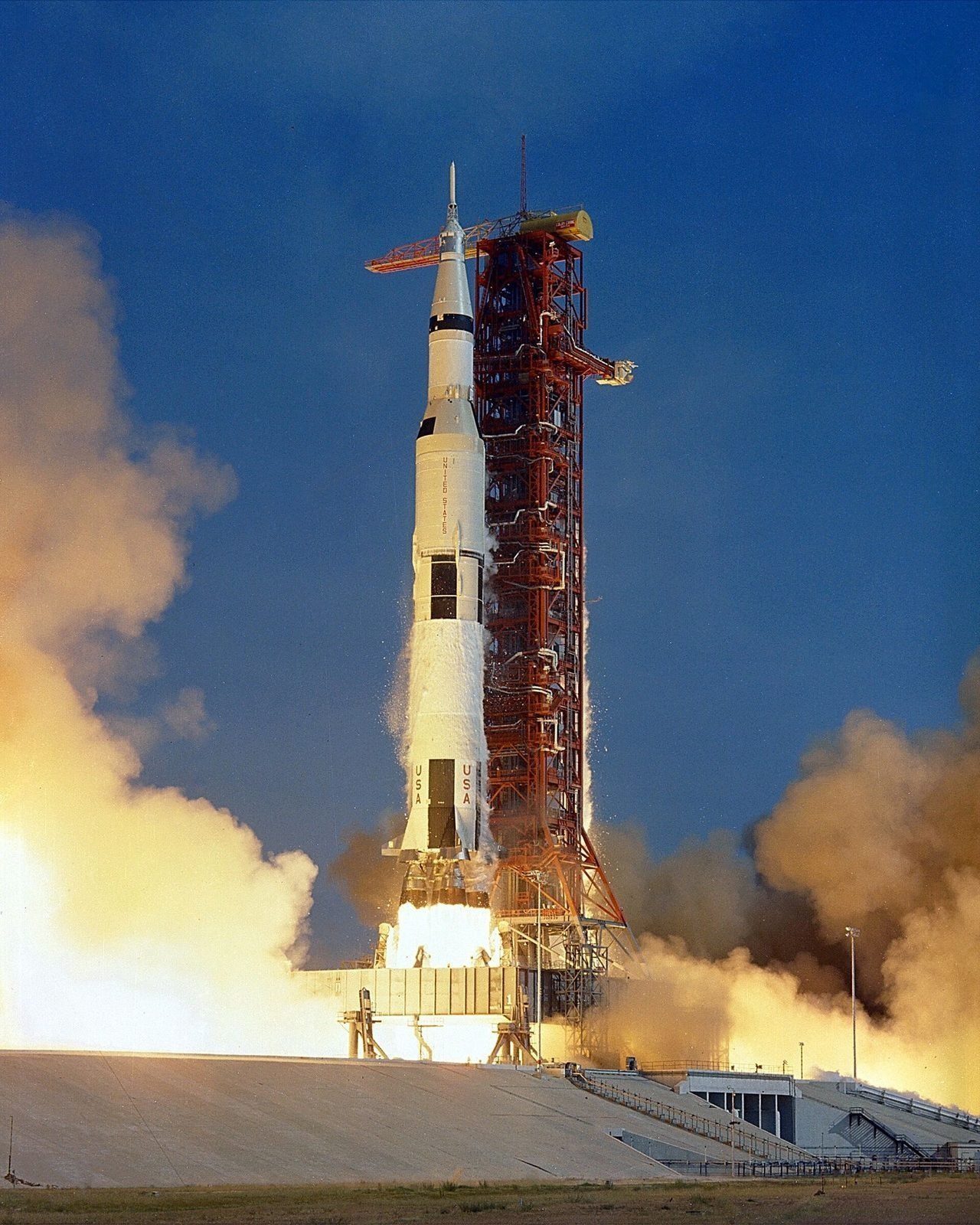
The new space age is not a repeat of Apollo. It is cheaper rockets, private landers, lunar ice mines on drawing boards, and telescopes reading the chemistry of alien skies. The science is spectacular — and the question of who space belongs to is now urgent.
When Apollo 11 landed in 1969, it was a feat of state power: a quarter of a million people, a twentieth of the US federal budget at its peak, a single destination, flags and footprints. The astronauts left, and no one went back for half a century. The new space age, now unfolding, is structurally different. Rockets land themselves and fly again. Private companies build landers. Dozens of countries operate space agencies. The goal is no longer a visit but a presence — a lunar base, a Martian programme, a cislunar economy — and the economics, for the first time, might support it.
The engine of the change is cost. Reusable first stages, mass production, and competition have cut the price of a kilogram to orbit by roughly an order of magnitude compared with the Shuttle era. When launch is cheap, everything else becomes possible: constellations of thousands of satellites, private space stations, missions that can afford to fail and try again. The shift is visible in the numbers — launches per year have multiplied, and the majority are now commercial. Space has gone from a cathedral, built once by a priesthood, to a construction site, noisy and crowded and full of contractors.
That crowding is both the promise and the problem. Low Earth orbit is now a shared commons filling with satellites, debris and radio interference. The Moon is acquiring a legal and traffic problem before it has a permanent resident. The science is advancing faster than the governance. The decade ahead will decide whether space becomes a well-managed frontier or a gold rush with orbital consequences.
The Moon's return began with a discovery: water. In 2009, a NASA impactor crashed into the permanently shadowed crater Cabeus and threw up a plume containing water ice. Orbiters have since mapped hydrogen enrichment at both poles, consistent with ice in cold traps that never see sunlight. Water on the Moon is transformative. It is drinking water and oxygen for crews. Split by electrolysis, it is hydrogen and oxygen — rocket propellant. A lunar fuel station could refuel missions heading to Mars or beyond without hauling every kilogram of propellant out of Earth's deep gravity well. The Moon stops being a destination and becomes infrastructure.
The Artemis programme — NASA's return-to-the-Moon effort, with partners in Europe, Japan, Canada and the Arab world — aims to land astronauts near the south pole, build a lunar Gateway station in orbit, and establish a sustainable presence. Alongside it, commercial landers have begun delivering payloads to the surface, some succeeding, some crashing, in a rapid learning cycle that would have been unthinkable under the old cost structure. China has landed rovers on the far side, returned lunar samples, and announced its own crewed lunar ambitions. India landed near the south pole. The Moon is no longer a two-player race. It is a multi-polar construction project.
The science of the Moon is not a side show. Lunar samples are time capsules from the early Solar System: the Moon preserves a record of bombardment, of the Sun's history, of Earth's own early crust that our active planet has erased. A lunar far-side radio telescope, shielded from Earth's interference by the Moon itself, could listen to the cosmic dark ages — the period before the first stars — in a way no Earth-based instrument can. Lunar geology, seismology and astronomy are first-rate science, not just flags.
But the Moon is also a test of whether humanity can do a frontier without repeating the worst of its history. Who owns lunar ice? The 1967 Outer Space Treaty says no nation can claim sovereignty over celestial bodies, but it is silent on resource extraction. The US Artemis Accords and national legislation permit commercial extraction; other states and legal scholars dispute that reading. The practical questions — who gets the best ice deposits, who manages dust and debris, who protects scientifically precious sites — have no agreed answer. The law is a half-century behind the rockets.
Mars remains the horizon. Robotic orbiters, landers and rovers have mapped it in exquisite detail. Perseverance has been collecting samples in sealed tubes — igneous rocks, sediments, a record of a crater lake that once held water — awaiting a return mission that would bring them to Earth laboratories. Those samples are, in scientific value, arguably the most precious cargo in the history of spaceflight: they could contain evidence of ancient Martian life, or the geochemical proof of its absence, and they would be analysed with instruments no rover can carry. Getting them home — Mars sample return — has proved harder and more expensive than planned, and its schedule has slipped. The science case has not weakened. If anything, it has strengthened as the cached samples have grown.
Human Mars missions remain a project of the 2030s at the earliest, and the challenges are formidable: radiation exposure on the months-long transit, landing heavy payloads in a thin atmosphere, life support for years, and the psychological toll of isolation and delay. The honest debate is not whether humans will go to Mars but in what order and at what cost. The robotic path — sample return, followed by more capable rovers and eventually human-tended science — delivers the science first. The crewed path delivers the inspiration first. Both have value. Neither should be sold as easy.
The search for life frames all of it. Mars once had liquid water, a thicker atmosphere and the chemical ingredients of life. Whether life ever started there is unknown — and the answer, either way, is profound. A second genesis would mean life is common in the universe. A sterile Mars, despite habitable conditions, would mean life's origin is rare and precious. The samples Perseverance has cached may hold the answer, or at least the next clue. That is why Mars sample return matters more than any single Mars headline.
While the Moon and Mars dominate the headlines, the most quietly revolutionary space science is happening light-years away. Since the first exoplanet detections in the 1990s, astronomers have confirmed thousands of planets around other stars. The James Webb Space Telescope has moved the field from counting planets to characterising them: reading the chemistry of their atmospheres as starlight filters through, detecting water, carbon dioxide, methane and other molecules. For the first time, we can ask not just whether a planet exists but what its sky is made of.
The targets that matter most are rocky planets in habitable zones — the orbital band where liquid water could exist on the surface. Webb has begun probing a handful, and the results are tantalising and ambiguous, as early science should be. Detecting a molecule is not detecting life. Oxygen, methane and even phosphine can be produced without biology, and the signals are faint, contested and sensitive to instrument systematics. The field's discipline is to demand multiple lines of evidence, independent confirmation, and the elimination of abiotic explanations before any biosignature claim. A false announcement of alien life would damage the field for a generation. A careful, verified one would be the greatest discovery in human history. The stakes justify the patience.
Closer to home, planetary defence has moved from theory to demonstration. The DART mission in 2022 slammed a spacecraft into the asteroid Dimorphos and measurably changed its orbit — proof that a kinetic impactor can deflect an asteroid. Surveys have now catalogued the large majority of near-Earth objects big enough to cause global catastrophe. The remaining risk is dominated by smaller objects — tens of metres — that could devastate a city or a region, and by comets on long-period orbits with little warning. Planetary defence is the cheapest existential insurance humanity has ever bought, and it works. It deserves funding proportionate to its value, not its drama.
The most consequential space story may be the one directly overhead. Satellite constellations now provide broadband to remote regions, monitor crops, track deforestation, measure sea level, and watch disasters in real time. Earth observation from orbit has become essential infrastructure for climate science, agriculture and humanitarian response. The same constellations, however, are filling low Earth orbit with thousands of objects, raising the risk of collisions and the cascade known as Kessler syndrome, in which debris begets debris until an orbit becomes unusable. Astronomers, too, pay a price: satellite trails streak through telescope images, and radio interference threatens the quiet bands that radio astronomy needs.
The governance of orbit is catching up slowly. Debris-mitigation guidelines, deorbit requirements, collision-avoidance sharing and proposals for active debris removal exist, but enforcement is weak and the incentives are perverse: the operator who deorbits responsibly bears the cost, while the operator who does not free-rides. The parallel with the oceans and the atmosphere is exact. Space is a commons, and commons without rules degrade. The decade's most important space technology may not be a rocket but a regime: traffic management, debris removal, and agreed norms for the Moon and for orbit, negotiated before a crisis forces them.
Three falsifiers. If lunar polar ice proved to be thin, impure or inaccessible, the lunar fuel-station economics would collapse — and the Moon would remain a science destination, not infrastructure. If Mars samples returned to Earth showed unambiguous biosignatures verified by multiple laboratories, the question of life beyond Earth would be settled in the affirmative. If an exoplanet atmosphere showed a combination of gases with no plausible abiotic explanation, confirmed independently, the biosignature debate would move from "if" to "how". Until then, the correct posture is the one that has served space science best: build the instruments, fly the missions, and let the data speak — while writing the rules before the rush makes them impossible.
Through a Western lens, space is a commercial and strategic race: launch markets, Artemis Accords, competition with China.
Through an Eastern lens, it is a prestige and capability programme: lunar and station milestones as proof of technological arrival.
Through a Global South lens, it is an access and equity question: who gets the broadband, the Earth observation, the seats at the table where the rules are written — and whether the Moon becomes a new extractive frontier or a shared inheritance. The stars belong to no one. The rules for reaching them belong to whoever writes them first.
Yes — water ice in permanently shadowed polar craters, confirmed by impactor and orbiter data. Water on the Moon is transformative: drinking water and oxygen for crews, and, split by electrolysis, hydrogen and oxygen — rocket propellant that could make the Moon a fuel station. Its quantity, purity and extractability are still being characterised.
No firm date exists. Robotic sample return is the priority science mission; crewed Mars landings are a 2030s-or-later project with major radiation, landing and life-support challenges still unsolved. The challenges are formidable: radiation exposure on the months-long transit, landing heavy payloads in a thin atmosphere, life support for years, and the psychological toll of isolation and delay.
Yes, for the size class tested. In 2022 the DART spacecraft slammed into the asteroid Dimorphos and measurably changed its orbit — proof that a kinetic impactor can deflect an asteroid. Smaller objects and long-period comets remain the harder planetary-defence problem.
