In laboratories around the world, materials are being built atom by atom to do things textbooks said were impossible — conduct without resistance, remember magnetic states, host particles that are their own antiparticles. The breakthroughs are real. So is the hype cycle that keeps burying them.
Published 14 October 2026 · 06:00 GMT
Last updated: October 2026
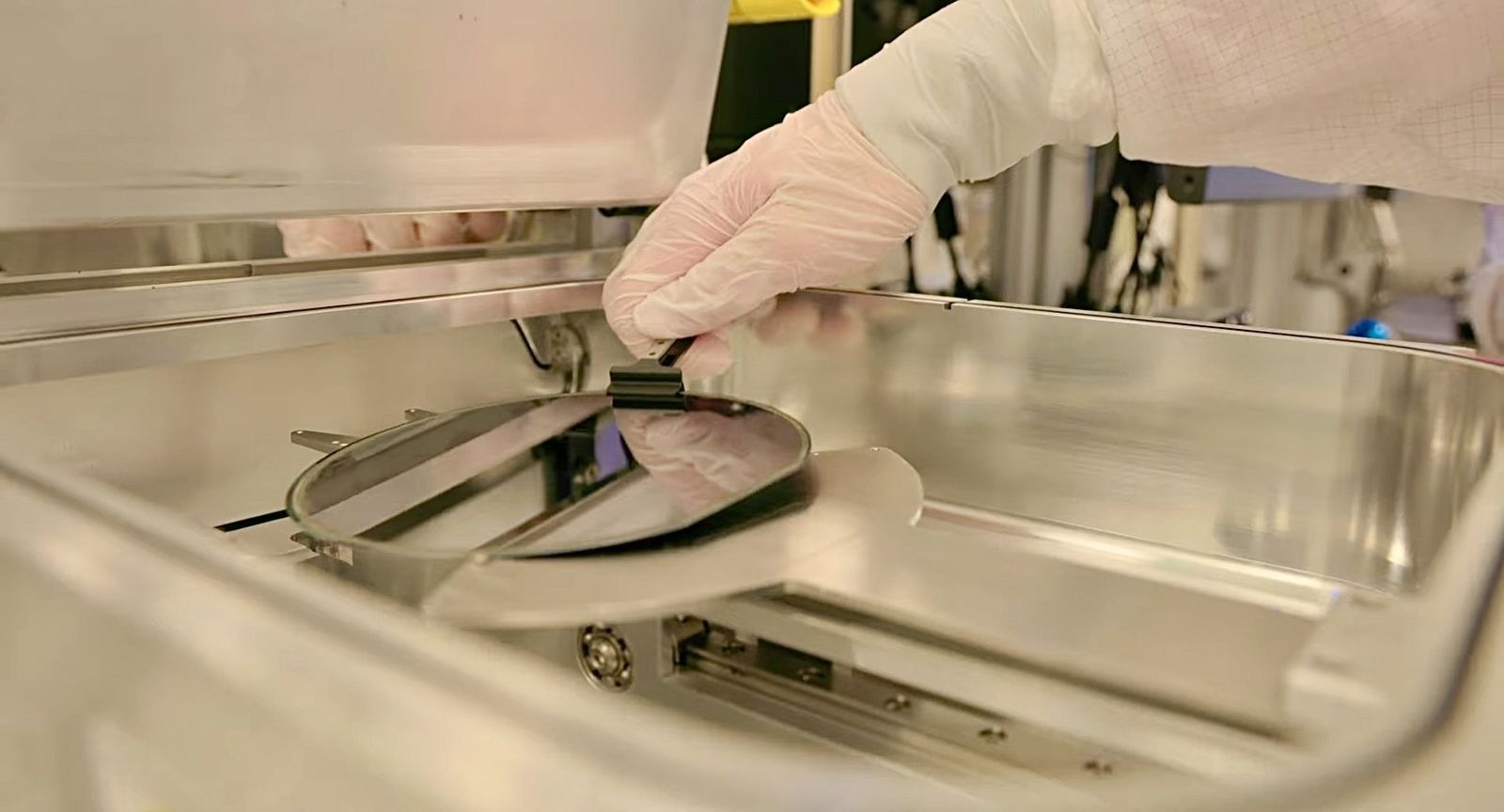
In laboratories around the world, materials are being built atom by atom to do things textbooks said were impossible — conduct without resistance, remember magnetic states, host particles that are their own antiparticles. The breakthroughs are real. So is the hype cycle that keeps burying them.
For most of human history, materials were found, not made. Stone, bronze, iron, steel — each age named for a substance humans happened upon and learned to shape. The twentieth century broke that pattern with semiconductors and plastics. The twenty-first is breaking it again, more radically: physicists and chemists are now designing materials atom by atom, layer by layer, to exhibit properties that no naturally occurring substance possesses. The field has a name — quantum materials — and it is where condensed-matter physics, materials science and engineering have fused into a single discipline of invention.
What makes a material "quantum" is not that it is small. It is that its behaviour cannot be explained by treating electrons as independent particles bouncing around. In quantum materials, electrons act collectively — entangled, correlated, moving in lockstep — and the collective produces phenomena that no single electron possesses: superconductivity, in which current flows without resistance; magnetism that persists without an external field; states of matter in which the interior insulates while the surface conducts perfectly. These are not incremental improvements on familiar materials. They are new kinds of matter, with new rules.
The stakes are practical, not merely academic. A room-temperature superconductor would transform the electricity grid (no transmission losses), transport (levitating trains without expensive cooling), medicine (cheaper, smaller MRI machines), and computing (circuits without heat). Topological materials could underpin quantum computers whose qubits are protected from noise by mathematics itself. Two-dimensional materials a single atom thick could make electronics faster, lighter and more efficient. None of these promises is guaranteed. All of them are grounded in real, published, replicated physics. The task is to tell the difference between the promise and the press release.
Superconductivity was discovered in 1911, when Heike Kamerlingh Onnes cooled mercury to near absolute zero and watched its electrical resistance vanish. For decades the phenomenon seemed confined to temperatures so cold as to be useless outside laboratories. Then, in 1986, high-temperature copper-oxide superconductors shattered the ceiling, working at temperatures reachable with liquid nitrogen. The Nobel Prize followed within a year. Since then, the search for higher temperatures — ideally room temperature, at ambient pressure — has become the most famous chase in materials science.
The physics is tantalising. Under extreme pressure, hydrogen-rich compounds called hydrides have shown superconductivity at temperatures approaching room temperature — but only inside diamond-anvil cells at pressures millions of times atmospheric, a regime with no practical application. At ambient pressure, the record remains far below room temperature. Every few years, a claim of a room-temperature ambient-pressure superconductor electrifies the world — and then, under replication, dissolves. The most famous recent case, LK-99 in 2023, collapsed within weeks as laboratories worldwide failed to reproduce superconductivity and traced the observations to impurities and magnetic artefacts. The episode was embarrassing for the headlines. It was a triumph for the method: replication worked, quickly and publicly.
The lesson is not that room-temperature superconductivity is impossible. Theory places no hard ban on it. The lesson is that the claim must survive independent synthesis, measurement by multiple techniques, and the elimination of every mundane explanation — ferromagnetism, impurities, measurement artefacts, wishful thinking. The field's serious work proceeds by a slower route: understanding the mechanism of high-temperature superconductivity in cuprates and iron-based compounds, where after nearly forty years the full theory is still contested, and using that understanding to design new families. Progress is measured in kelvins and in understanding, not in viral videos.
If superconductors are the grail, topological materials are the quiet revolution already under way. Topology is the branch of mathematics that studies properties unchanged by continuous deformation — the reason a doughnut and a coffee cup are, topologically, the same object (one hole each). In the 2000s, physicists realised that the electronic structure of some materials carries a topological character: a kind of twist in the quantum wavefunction that cannot be removed without fundamentally changing the material. The consequence is striking: the bulk of the material insulates, while its surface or edges conduct electricity in channels that flow without scattering, immune to defects and impurities that would disrupt an ordinary conductor.
The first topological insulators were predicted and then observed in the late 2000s, earning a Nobel Prize. Since then the zoo has expanded: topological semimetals, Weyl and Dirac materials, two-dimensional topological insulators, and most exotically, materials predicted to host Majorana modes — quasiparticles that are their own antiparticles, first theorised by Ettore Majorana in 1937. Majorana modes are prized because they could encode quantum information in a way that is topologically protected from local noise — the central obstacle to building a useful quantum computer. Several claims of Majorana observation have been retracted or contested, a reminder that this frontier, too, demands replication. But the underlying physics is now textbook, and devices exploiting topological edge states are moving from demonstration toward engineering.
The practical promise is twofold. First, dissipationless or low-dissipation electronics: circuits that waste far less energy as heat, at a moment when computing's energy appetite is becoming a planetary problem. Second, quantum computing hardware with built-in error resistance. Neither is imminent at scale. Both are active engineering programmes at major laboratories and companies, with real devices, real measurements and real — if slow — progress.
The second great invention of recent physics is flatness. In 2004, Andre Geim and Konstantin Novoselov isolated graphene — a single layer of carbon atoms in a honeycomb lattice — with adhesive tape, and won the Nobel Prize for a material that is stronger than steel, more conductive than copper, and essentially two-dimensional. Graphene itself has been slower to conquer the world than the headlines promised; it has no band gap, which makes it awkward for digital logic. But it opened a continent: the two-dimensional materials — transition-metal dichalcogenides, hexagonal boron nitride, phosphorene — that can be stacked like Lego, one atomic layer at a time.
The most spectacular offspring is twistronics. Stack two sheets of graphene, rotate one by a "magic angle" of about 1.1 degrees, and the combined material becomes superconducting — a superconductor made from carbon, the most ordinary of elements, by geometry alone. The discovery, in 2018, showed that the twist angle is a new knob of nature, a way to engineer electronic behaviour without changing chemistry. Researchers now stack three, four and five layers, combine different 2D materials, and build moiré superlattices whose properties are tuned by angle, electric field and strain. It is materials design at the level of the wavefunction.
The path from these exquisite laboratory devices to technology is long. Two-dimensional devices are fragile, hard to manufacture at scale, and sensitive to every wrinkle and contaminant. But the direction is clear: the future of electronics is not only smaller transistors but engineered quantum matter — materials whose function is designed, not discovered.
No physics story carries more hope, or more hype, than fusion. The physics is not in doubt: fuse light nuclei, release energy — the Sun does it, hydrogen bombs do it, and laboratory plasmas have done it in brief flashes for decades. The engineering is the mountain. To make a power plant, you must confine a plasma hotter than the Sun's core, sustain it, keep it stable, breed tritium fuel, survive neutron bombardment of the walls, and extract more energy than you put in — continuously, safely, affordably.
The field has had genuine milestones. Magnetic-confinement machines — tokamaks and stellarators — have reached higher temperatures, longer pulses and better confinement. Inertial-confinement fusion at the US National Ignition Facility achieved scientific breakeven in 2022, releasing more fusion energy than the laser energy delivered to the fuel pellet — a landmark of physics, though far from a power plant, since the total energy drawn from the wall was far larger. Private fusion companies, funded by billions, are pursuing a zoo of approaches: compact tokamaks with high-temperature superconducting magnets, field-reversed configurations, magneto-inertial hybrids, stellarators with AI-optimised coils.
The honest framing is this: fusion is no longer a question of whether it can work in principle. It is a question of engineering, materials, tritium supply and cost — and of schedule. The joke that fusion is always thirty years away persists because the schedule has always slipped. The difference now is that the magnets, materials and computing tools are genuinely better, and that private capital is testing approaches the public programmes were too cautious to try. Fusion may yet arrive too late to be the hero of the climate transition — that role belongs to solar, wind, batteries and fission, which exist now. Its role, if it comes, is as the deep-decarbonisation baseload of the second half of the century. A worthy prize, pursued without pretending it will save the 2030s.
Three falsifiers. If an ambient-pressure room-temperature superconductor were independently synthesised in multiple labs, showed zero resistance and the Meissner effect (expulsion of magnetic fields), and survived scrutiny of impurities, the field would change overnight — and the claimants would deserve every headline. If topological quantum computing produced a logical qubit with error rates far below conventional approaches and survived independent verification, the quantum race would reorder. If a fusion device produced sustained net electricity to the grid at competitive cost, the energy world would change. Until then, the correct posture is neither dismissal nor credulity: it is attention to replication, measurement and the slow accumulation of engineered reality.
Through a Western lens, quantum materials are a competition story: patents, fabs, export controls, the race with China.
Through an Eastern lens, they are a state-capacity story: long-horizon funding, megaprojects, and patience for basic science.
Through a Global South lens, they are an access story: who gets the cheap MRI, the lossless grid, the efficient electronics — and whether the materials revolution repeats the resource-extraction pattern of the last one. The physics is universal. The benefits are not, unless policy makes them so.
Theory does not forbid it, but no verified ambient-pressure room-temperature superconductor exists. Under extreme pressure, hydrogen-rich hydrides have shown superconductivity near room temperature, but only inside diamond-anvil cells at pressures millions of times atmospheric, a regime with no practical application. Claims must survive independent replication — several famous ones have not.
A material whose electronic structure carries a topological twist, making its surface conduct while its bulk insulates, in channels protected against scattering by defects. Topology studies properties unchanged by continuous deformation, and the surface channels flow without scattering, immune to defects and impurities that would disrupt an ordinary conductor.
No. The physics is proven but a net-electricity, affordable, sustained power plant has not been demonstrated. To make a power plant, you must confine a plasma hotter than the Sun's core, sustain it, keep it stable, breed tritium fuel, and extract more energy than you put in — continuously and affordably. Fusion is a candidate for the second half of the century, not a substitute for deployable clean energy now.
