On the prairie beside Lourdes' basilica, before 150,000 people — many in wheelchairs — the first American pope condemned assisted dying as “false compassion” at the shrine of miraculous cures, and declared: what is legal is not necessarily moral.
Published 2 October 2026 · 18:00 GMT
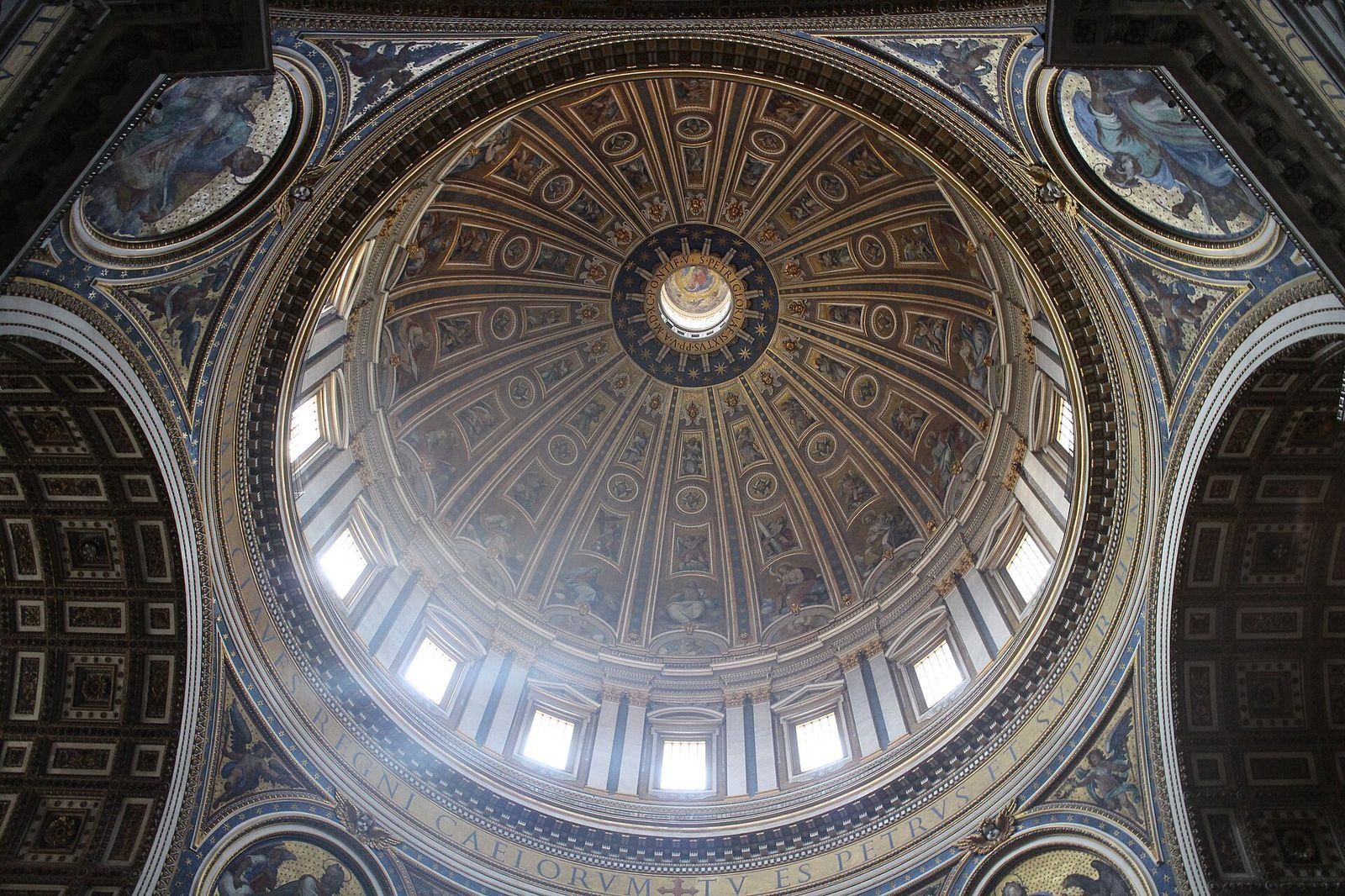
They came in wheelchairs, on stretchers, on the shoulders of their fathers — 150,000 of them spread across the prairie of Lourdes. And the man in white who came to meet them, the first American pope in history, had come to say the one thing France's lawmakers did not want to hear.
The prairie at Lourdes is not a square. It is a field — the great lawn beside the basilica where the Sanctuary puts its biggest crowds when the basilica cannot hold them. On Sunday morning, September 27, the third day of Pope Leo XIV's four-day apostolic journey to France, it held what the Associated Press estimated at 150,000 people. Many of them were in wheelchairs. Some lay on stretchers. Lourdes is the address of last resort for the Catholic sick — the shrine of the incurable — and on this Sunday the incurable had front-row seats. The night before, the Pope had knelt in the dark at the Grotto of Massabielle, where the Church holds that the Virgin Mary appeared eighteen times to a peasant girl in 1858. He touched the rock, lit a candle, drank the spring water — the rituals of every pilgrim — and placed a Golden Rose at the foot of the statue of Our Lady of Lourdes, praying, in the words reported by Agence France-Presse, for France to have 'wise and generous leaders ... eager to serve the common good,' and for the country's voice to be heard 'in promoting the defence of fundamental human rights and peace in the world, rejecting the mentality of war once and for all.' Twenty-four hours earlier, on Saturday afternoon, the same man had celebrated an open-air Mass at Paris's Place de la Concorde before what the Vatican said was a crowd of 800,000 — worshippers stretching, AFP reporters wrote, all the way beyond the Arc de Triomphe. (The figure is the Vatican's estimate, and it belongs to Paris, not to Lourdes — a correction worth making, because the week produced two miracles of crowd arithmetic, one in each city, and they should not be confused.) It was, by any measure, the largest Catholic gathering on French soil in years — and it happened in a republic that has been officially secular for 121 years. On the prairie, before the sick, Leo XIV delivered the sentence that will define the trip: 'On the contrary, it is precisely in the name of this inalienable dignity of the human person that we must reject the temptation to cause death under the guise of false compassion.' Applause rolled across the lawn. Then, sharper: 'What is legal is not necessarily moral.'
Why Lourdes — and why now — is the whole story. The Church has recognized seventy-two 'miraculous' cures at Lourdes; the shrine exists because people whom medicine could not save came here anyway. To stand in that place and condemn medically assisted death is not a generic pro-life speech. It is a direct answer to a specific parliamentary timetable: France's lawmakers recently gave final approval to legislation allowing adults with incurable illnesses to receive lethal medication, and the National Assembly enshrined abortion as a constitutional right in 2024. The Pope did not name the French law. He did not have to. Everyone on the prairie understood the addressee. He also named, obliquely, his own country. Leo XIV — born Robert Prevost in Chicago, elected in May 2025, the first American pope in the Church's two-thousand-year history — had, in the days before the trip, criticized a medical-aid-in-dying law that took effect on September 12 in his home state of Illinois, the thirteenth American state with such a law. The Associated Press noted the timing. So the Lourdes homily was doing double duty: a message to the French parliament and a message to thirteen American statehouses, delivered from a French field to a global audience of 1.4 billion Catholics. There was a third message, and it may be the most important one. On Sunday, Leo met privately — for nearly two hours, the Vatican said — with seven French survivors of clerical sexual abuse. One of them, Jean-Marie Delbos, eighty years old, abused as a schoolboy at the Notre-Dame de Bétharram boarding school near Lourdes, told journalists the Pope had taken him in his arms: 'It was extraordinary,' he said. 'I never thought I would have a pope before me.' For the occasion, the Bishop of Lourdes had ordered the covering of the sanctuary's frescoes by the disgraced artist Marko Rupnik — panels of wood and aluminium hiding the work of a man accused of sexual assault, now facing canonical criminal proceedings in Rome. The Church's past was literally covered up for the cameras; the Pope's response was to sit with its victims for two hours. That choreography was not accidental.
The journey itself was a statement of intent. The official programme, published by the Vatican, ran September 25 to 28: a courtesy visit to the Élysée and a meeting with the authorities and the diplomatic corps at the presidency; a visit to the headquarters of UNESCO; vespers with bishops, priests, deacons and seminarians at Notre-Dame; a prayer vigil with young people at the Stade de France in Saint-Denis; a morning at the Maison Bakhita centre for migrants in Paris; a meeting with catechumens and the newly baptized at the Institut Catholique; the open-air Mass at the Place de la Concorde; the flight south to Lourdes; prayer at the grotto; the Sunday Mass on the prairie; the care centre for the sick; the evening rosary and torchlight procession, at which the Pope said he was taking part 'as a pilgrim among pilgrims'; and a final day in Metz, the city of Robert Schuman, the founding father of the European Union. It was the first official papal visit to France in nearly two decades — Benedict XVI came in 2008 — and Leo XIV is only the third pope to visit Lourdes, after John Paul II in 1983 and 2004 and Benedict XVI in 2008. The grotto draws millions of pilgrims a year, 'especially sick and disabled believers hoping for a cure from the famed spring water,' as the Associated Press put it. One hundred and sixty-eight years after the apparitions of 1858, the town remains what one might call the emotional capital of global Catholicism. The abuse file explains why Lourdes, specifically, mattered for this Pope. A 2021 French inquiry found that clergy or lay members of the Church had abused about 330,000 people as minors in France over seven decades. Le Monde reported that the Pope began his Lourdes day with a moment of reflection before the 'weeping child' — the photograph of a weeping cherub that French bishops affixed to their meeting chamber wall after the inquiry's release, as a permanent reproach. The visit was choreographed as penance as much as pilgrimage.
Metz is where the trip turned from pastoral to political. Speaking in French in the hometown of Robert Schuman, Leo XIV lamented that 'war has returned, even to Europe: a new senseless slaughter, claiming countless civilian lives every day.' He urged negotiators seeking to end the four-year war in Ukraine — he did not name it directly, but no one misunderstood — to 'show courage in negotiation and to be willing to give up some positions for the greater good of peace,' invoking a 1917 appeal by Pope Benedict XV amid the carnage of the First World War. He warned against 'the illusion that rearmament is the answer,' as European military spending climbs by its largest amount since the Cold War. Reuters called it his clearest political vision yet for Europe. Aboard the flight home, he went further: Russia and Ukraine should 'sit down, engage in dialogue,' he told reporters, because the wars 'no longer make sense.' The Church, he said, 'has a responsibility to promote these values, continually inviting leaders — from Russia and Ukraine, as well as other countries — to come together, sit down, engage in dialogue.' He decried leaders 'beginning to speak about nuclear weapons and wars that are becoming ever more destructive,' and argued for 'spending more on health and education and less on weapons,' noting that 'a small number of people are becoming immensely wealthy from an industry that promotes war.' The context is a Vatican that has quietly kept a channel open: on August 25, the Vatican's foreign minister met his Russian counterpart Sergey Lavrov in Moscow — the first face-to-face talks between the two sides since Russia's full-scale invasion of Ukraine in 2022. An American pope, in other words, is positioning the Holy See as one of the few Western institutions that still talks to Moscow. In an age when every capital has picked a side, the Pope is trying to be the room where the sides meet. Geopolitics, first lens: this is what a moral superpower looks like when it decides to spend its capital.
“What is legal is not necessarily moral.”
Lourdes is not only a shrine; it is an economy. Millions of pilgrims a year — the sick, the disabled, their families, their volunteer carers — arrive by special trains, fill the town's hotels, eat in its restaurants, buy its candles and its spring water. The Hautes-Pyrénées region lives, in large measure, on the commerce of hope. The Sanctuary's own care centre, the Accueil Notre-Dame, which the Pope visited on Sunday, is both a charity and an institution — a hospital of the soul with a real payroll. The prairie Mass was therefore also an economic event: 150,000 people in one small town is a mobilization that no music festival could match, and it happens in Lourdes every year in smaller doses, all year. The French state, officially secular, maintains the roads, the rail links and the security apparatus that make it possible — the 1905 separation of church and state turns out to be perfectly compatible with the state underwriting the logistics of faith, because the tax receipts do not ask about metaphysics. There is a darker economic reading, and the Pope supplied it himself. On the flight home, his attack on the arms industry — 'billions upon billions of euros or dollars' that 'could be used to solve problems such as world hunger, housing, unemployment' — framed the week as a contest between two economies: the economy of care, wheelchairs and candles, and the economy of war. Lourdes runs on the first. Metz, the garrison city where he closed the trip, has run on the second for centuries. He chose his stages like a man who thinks in symbols. Look at who was on the prairie, and you see the Church's future arguing with its past. The trip's first full day included a prayer vigil with young people at the Stade de France and a meeting with catechumens and the newly baptized at the Institut Catholique de Paris — the Church in France is losing the old and gaining the young, the classic pattern of a faith becoming a choice rather than an inheritance. Aline Riziki, 41, born in the Democratic Republic of Congo and living in France for eleven years, told AFP she had 'dropped everything to come here and see him, to pray for peace in the east' of her homeland. Jeanne de Montagnac, 29, came with her husband and their two-year-old daughter perched on his shoulders: 'It's an important moment for us to be surrounded by other people who also have faith.' The demography of global Catholicism has already moved: the Church's growth is in Africa and Asia, its contraction in Europe. The 1.4 billion Catholics the Pope leads are increasingly young, southern and poor — which is why the prairie at Lourdes, with its wheelchairs and its Congolese pilgrims and its young families, looked more like the Church of 2050 than like the France of 2026. The French presidential hopefuls who turned up at the Paris Mass — Marine Le Pen and Édouard Philippe were both present, while Emmanuel Macron sent his wife Brigitte and a message on X saying France was 'proud to welcome' the Pope — were reading the same demography. Seven months before the April–May presidential election, nobody wanted to be photographed absent from the largest Catholic gathering in years.
The deeper pattern is French. For 121 years, the Republic has been officially secular — laïcité is not a policy, it is the civic religion — and for 121 years, the Republic has been negotiating with the Catholicism it claims to have separated from. A president who did not attend the Mass still sent his wife and a proud message on X. The far right's leader stood in the crowd. Eight hundred thousand people prayed at the Place de la Concorde, the square where the Revolution guillotined its enemies, within sight of the obelisk. France does not do irony by halves. The structural question is what the Church is becoming in the post-Christian West. The abuse crisis — 330,000 victims in France alone, the Bétharram school a few kilometres from Lourdes, the Rupnik frescoes hidden behind panels — is the institution's original sin made contemporary, and Leo XIV's answer was personal rather than institutional: two hours with seven survivors, an embrace for an eighty-year-old man. Whether that is enough, the courts and the canonical proceedings in Rome will decide. What is clear is the Pope's theory of the papacy: not a manager but a witness. He came 'as a pilgrim among pilgrims,' in his own words at the torchlight procession — the phrase comes from the Vatican's transcript — and he placed a Golden Rose, the papacy's oldest honour, at the feet of a statue. 'What is legal is not necessarily moral' is, finally, a constitutional claim. It asserts that there is a law above the law — that parliaments can be wrong, majorities can be wrong, and that a moral authority older than the Republic gets to say so, on the Republic's own soil, to the Republic's own sick. That is either the most reactionary sentence uttered in France this year or the most necessary one. The prairie applauded. The Assembly has not yet replied.
Four things to watch. First, the law: France's end-of-life legislation will move to implementation, and the Church is now on record, at the highest level, calling it immoral — the bishops' conference has its marching orders, and so does every Catholic hospital administrator in the country. Second, the election: seven months out, the presidential hopefuls have been photographed at the Mass; the question is whether the Catholic vote becomes a constituency to be courted or a crowd to be feared, and how laïcité's guardians respond to 800,000 people praying in the capital. Third, Ukraine: the Vatican–Moscow channel exists — the August 25 meeting proved it — and Leo XIV has now publicly committed the Holy See to the proposition that concessions are the price of peace. Whether Kyiv or Moscow takes the call is the test of whether moral authority converts into diplomatic currency. Fourth, the abuse file: the Pope promised, in Le Monde's rendering of his Lourdes words, 'the search for truth, justice, forgiveness and reparation.' The Rupnik canonical proceedings in Rome, the Bétharram cases in French courts, the next bishops' conference — the prairie's applause was for words. The victims are waiting for acts.
The Western press read the week through two prisms at once: spectacle and reckoning. Le Monde framed Lourdes as the abuse chapter — the covered Rupnik frescoes, the 'weeping child,' the two-hour meeting with survivors near the Bétharram school — and asked the question the prairie's applause cannot answer: whether a Pope's embrace changes an institution that produced 330,000 victims in France alone. The French secular press, meanwhile, counted the crowd the way it counts everything: 800,000 people praying in the capital of laïcité, seven months before a presidential election, with Le Pen in the front rows. For them, the story is political arithmetic — a Catholic electorate that can no longer be treated as folklore.
The American coverage added a third prism: the home-state pope. The Associated Press emphasized that Leo criticized Illinois's medical-aid-in-dying law — in effect since September 12, the thirteenth such American law — days before flying to France. An American pope is now lobbying, from a French prairie, against legislation in his own country. Western liberals hear a theocrat crossing the line between pulpit and parliament; Western conservatives hear a conscience the law cannot silence. Both agree on one thing: this pontificate will not stay in the sacristy.
From Kyiv and Moscow, the week looked different: Lourdes was the prelude, Metz the headline. The Kyiv Independent reported Leo's call for negotiators to 'sacrifice certain positions for the superior good of peace' as his clearest political statement on the war — and in Kyiv, 'concessions' is a word that lands like a threat, pressure on the invaded to pay the invader for stopping. Moscow, by contrast, can read the same sentence as vindication: the Pope urging dialogue is the Pope legitimizing negotiation, which is what Russia has demanded while its drones keep falling on Ukrainian cities. The August 25 meeting between the Vatican's foreign minister and Sergey Lavrov — the first since 2022 — tells the East that the Holy See is dealing.
The Eastern lens also catches what the West underplays: a pope warning against 'the illusion that rearmament is the answer' is a pope dissenting from the entire European defense consensus, at the exact moment military spending grows fastest since the Cold War. Benedict XV's 1917 peace appeal, which Leo invoked, failed to stop the First World War. The East's question is unsentimental: does moral authority stop artillery? The Vatican's answer — keep the channel open, keep talking to Lavrov — is the only answer it has ever had.
The Global South read the homily upside down. In Manila, Mumbai and Johannesburg, where the Associated Press and Reuters feeds ran the story, the assisted-dying debate is a rich-world argument: in much of the South, the dying do not lack the right to die — they lack morphine, hospices and hospitals. The Pope's 'false compassion' sermon, delivered before the sick of Lourdes, travels south as something else entirely: a defense of the poor against a world that prices everything, including death. Aline Riziki, the Congolese-born pilgrim who came to pray 'for peace in the east' of her homeland, is the South's face in this story — faith as survival, not as culture war.
The South also heard the economics. Leo's attack on the arms industry — 'billions upon billions' that could feed the hungry and house the homeless — is the South's own budget argument, made by a pope: every euro spent on rearmament is a euro not spent on the clinics of Kinshasa or the schools of Karachi. And his Golden Rose prayer, asking Mary to obtain for France 'wise and generous leaders' and to reject 'the mentality of war once and for all,' reads in the South as a wish list for its own capitals. The Church's future is southern; Lourdes' prairie, young and poor and in wheelchairs, already looks like it.
Beijing just wrote the biggest liquidity check of the year — and changed nothing else.
The People's Bank of China will offer banks up to one trillion yuan a day — about $149 billion — in overnight funds from September 28 through October 8, covering the Golden Week holiday. It is the largest such cap since the tool's introduction in June 2026, up from 600 billion yuan in mid-September.
The calendar explains the timing. Golden Week sends hundreds of millions of Chinese traveling and spending; banks need cash the way airports need runways. The central bank is making sure the plumbing holds.
The scale, though, is the story. One trillion yuan a day is not holiday housekeeping. It is a backstop — a signal that whatever the holiday throws at the financial system, the PBoC has already covered.
And then, the other hand: nothing. Chinese banks left the one-year and five-year loan prime rates unchanged at 3.00% and 3.50% — the 16th consecutive month without a move.
Sixteen months of stillness in the price of credit, alongside the largest liquidity flood of the year. Beijing is watering the garden and refusing to lower the fence — liquidity yes, cheaper credit no.
Governor Pan Gongsheng gave the doctrine a name: slower loan growth is becoming "the new normal." Property and local-government borrowing are shrinking faster than emerging industries can borrow. The credit engine is being rebuilt mid-flight.
Liquidity is Beijing's answer to everything except the one question markets keep asking: where is the growth?
The PBoC is not idle elsewhere. It stepped up support with a net 200-billion-yuan injection through medium-term lending facility operations, reiterated its "moderately loose" stance, and kept its grip on the yuan.
The yuan, for its part, cooperated — rebounding after briefly dipping below 6.70 per dollar as US Treasury yields rose and the PBoC's grip eased.
The diplomacy helped. A US–China summit extended the trade truce to January — without new tariff cuts, but without new tariffs either. A truce, not a peace; markets will take it.
Step back and the contrast is the story. In Washington, yields cross 5% and traders bet on another hike. In Beijing, the central bank floods the system with cash and leaves rates untouched for a 16th month. Two central banks, two planets.
The logic is not mysterious. China's problem is not hot demand — it is cold credit. Pumping liquidity keeps the system liquid; cutting rates into weak demand would be pushing on the proverbial string.
The risk is the one Beijing knows best: banks awash in cash, with nowhere productive to lend it. Liquidity without lending becomes asset froth — the 2015 lesson, still fresh in institutional memory.
For the region, the signal matters more than the mechanics. A stable yuan and a liquid Chinese banking system through Golden Week is the foundation under Asia's supply chains. When Beijing sneezes, the region's exporters reach for tissues.
Watch what happens after October 8. If the trillion-yuan window closes quietly, it was holiday plumbing. If support lingers, it was something else — a central bank telling you, without saying it, that the economy needs the help.
Western coverage — Reuters and the financial wires — emphasizes the restraint: Beijing holding rates while flooding liquidity, a central bank running out of its favorite tools.
In this telling, 16 months of unchanged loan prime rates is the real headline — evidence of a policymaker boxed in by a hawkish world, a weak property sector, and the fear that rate cuts would only weaken the yuan. Liquidity is what you do when you've decided rates can't move.
Pan's "new normal" gets a skeptical hearing: an elegant phrase for a credit engine that no longer transmits. The question in Western commentary is whether "moderately loose" is a stance or a shrug.
Eastern coverage — Xinhua and Chinese outlets — emphasizes the calibration: targeted, seasonal, and exactly as doctrine prescribes.
In this telling, the trillion-yuan facility is textbook PBoC: precise, time-bound, and aimed at a known seasonal need. The unchanged rates are not paralysis but prudence — "moderately loose" means loose where it counts, steady where it matters, with the yuan's stability as the binding constraint.
The summit's truce extension gets equal billing: diplomacy buying the central bank room to maneuver, and the maneuver working — the yuan's rebound presented as policy competence, not luck.
Global South coverage — Malaysia's business press among it — emphasizes the neighborhood: what Beijing's plumbing means for everyone downstream.
The read from Kuala Lumpur: a liquid China through Golden Week is good news for ASEAN exporters, supply chains, and the region's own central banks. Yuan stability is a public good in Asia, and the PBoC just underwrote another week of it.
The caution in this coverage is borrowed from experience: when the region's biggest economy needs record liquidity to get through a holiday, the "new normal" of slower credit is everyone's normal too.
To read Beijing's move properly, you need the toolkit. Start with the overnight reverse repo — the instrument at the center of the trillion-yuan headline. In a reverse repo operation, the central bank lends cash to commercial banks overnight, taking bonds as collateral; the banks get the liquidity they need, the central bank gets the bonds back the next morning plus a sliver of interest. It is plumbing, not policy: the money created exists for a day, maybe rolled over, and its purpose is to keep the interbank market — the market where banks lend to each other — from seizing. The cap is the message. A trillion yuan a day says: whatever the holiday throws at the system, the PBoC has already covered.
The tool itself is young — introduced only in June 2026 — which makes the record cap more interesting. A new instrument's ceiling is normally discovered cautiously; jumping from 600 billion yuan in mid-September to a full trillion two weeks later is not calibration but declaration. It tells the banks, and through them the market, that the central bank will not be outbid by seasonal stress. The facility runs September 28 to October 8, covering Golden Week exactly. Time-bound, enormous, and explicitly temporary: the PBoC is writing a check it intends to tear up on the 9th. The question the article ends on — what happens after October 8 — is the only one that matters, because a backstop that lingers stops being a backstop and starts being a subsidy.
Then the medium-term lending facility — the MLF — through which the PBoC added a net 200 billion yuan. If reverse repos are the overnight overdraft, the MLF is the term loan: banks borrow for months, not hours, pledging collateral, at a rate the central bank sets. The MLF rate is the PBoC's quiet policy lever — it guides the loan prime rates without the drama of changing them. And the loan prime rates, the LPRs, are the number the article keeps returning to: 3.00 percent for one year, 3.50 percent for five, unchanged for the sixteenth consecutive month. The LPR is the benchmark for most new lending in China; holding it still while flooding the system with cash is the whole doctrine in one gesture. Liquidity yes. Cheaper credit no.
The sixteen months of stillness deserve their own reading, because stillness is also a decision — sixteen times over. In a world where Washington is hiking and yields cross 5 percent, cutting Chinese rates would narrow the already thin cushion against capital outflow and yuan depreciation; every basis point of easing is a basis point of incentive for money to leave. The PBoC's box, as the Western lens describes it, is real: a property sector that no longer transmits stimulus, local governments deleveraging rather than borrowing, and a currency whose stability is the binding constraint on everything else. Holding the LPR is not paralysis. It is the recognition that the price of credit is no longer the economy's binding constraint — and that moving it would cost more in currency stress than it buys in growth.
The calendar explains the timing, as the article says — but the calendar deserves its scale stated plainly. Golden Week is the largest annual human migration on earth compressed into seven days: hundreds of millions of Chinese traveling, spending, withdrawing cash, settling bills. The banking system's cash demand does not rise. It detonates. ATMs must be stocked, merchants' settlement accounts funded, the interbank market supplied with enough reserves to clear a week's worth of the world's second-largest economy changing hands. In normal years, the PBoC manages this with routine open-market operations. This year it wrote the biggest check in the tool's short history.
The scale, though, is the story — the article's line, and worth pressing. One trillion yuan a day is not holiday housekeeping; it is a backstop sized for something the PBoC sees and the market does not yet. Seasonal demand explains the facility's existence. It does not fully explain its size. Either the central bank is being theatrically cautious — signaling strength by oversupplying safety — or its internal read on holiday-season financial stress is darker than the public data. Both readings are consistent with "moderately loose." Only one of them is reassuring. The banks will take the cash either way; the signal is in the surplus.
There is also the consumption angle, which is where the liquidity meets the real economy. Golden Week is China's great annual test of consumer confidence: the week when households vote with their wallets on whether the economy feels safe. A banking system visibly backstopped — cash available, payments clearing, no friction — is the precondition for the spending the state wants to see. The PBoC cannot make households spend; it can only ensure that nothing in the plumbing stops them. In an economy where the consumer has been the missing piece and property wealth no longer does the spending's work, the holiday's cash registers matter more than the interbank rate. The trillion yuan is, among other things, a bet on the tills.
And the regional read — the Global South lens from Kuala Lumpur — captures what the holiday means beyond China's borders. A liquid China through Golden Week is the foundation under Asia's supply chains: exporters paid, importers funded, the region's own central banks spared the volatility of a yuan under holiday stress. Yuan stability, as the article notes, is a public good in Asia, and the PBoC just underwrote another week of it. When the region's biggest economy needs record liquidity to get through a holiday, the "new normal" of slower credit becomes everyone's normal — but a stable holiday is still a stable holiday, and Asia's exporters will take it.
Central bankers choose their phrases the way diplomats choose communiqués — every word weighed, every ambiguity intentional. When Governor Pan Gongsheng said slower loan growth is becoming "the new normal," he was not describing a statistic. He was retiring an expectation. For two decades, China's credit engine ran on a simple formula: property developers borrowed, local governments borrowed against land, and the resulting construction carried GDP. That engine is being dismantled mid-flight — property deleveraging, local-government debt discipline — faster than emerging industries can borrow to replace it. "New normal" is the doctrine that says: stop waiting for the old credit cycle to return. It is not returning.
The doctrine has a logic, and it is worth steelmanning before doubting. Credit-fueled growth bought China two decades of expansion and left it with the property crisis, the local-government debt pile, and the demographic headwinds now arriving together. Pumping cheap credit into that structure — the old playbook — would reflate the very imbalances the state is trying to defuse. Slower, cleaner credit growth, directed at manufacturing upgrades and strategic industries rather than concrete, is the quality-over-quantity bet. The PBoC is not refusing to stimulate. It is refusing to stimulate the old economy. The distinction is the entire policy.
The risk, as the article notes, is the one Beijing knows best: banks awash in cash with nowhere productive to lend it. Liquidity without lending becomes asset froth — the 2015 lesson, still fresh in institutional memory, when stimulus leaked into equity speculation rather than productive investment. The trillion-yuan facility, the 200-billion MLF injection, the "moderately loose" stance — all of it presupposes transmission channels that the "new normal" itself describes as weakened. Watering the garden, to use the article's image, works only if the soil still absorbs water. If property and local governments no longer drink, and emerging industries cannot drink fast enough, the water pools. Pooled liquidity has a history in China. It is called a bubble.
Step back and the contrast the article closes on — two central banks, two planets — is the frame that will define the autumn. Washington hikes into data it may not have, fighting inflation with the South's interest bills. Beijing floods with cash it cannot lend, defending a currency it cannot afford to let slip, waiting for a credit engine it is rebuilding mid-flight. Neither has a clean instrument. Both are improvising inside doctrines — data-dependence, the new normal — that describe the world they wish they governed. Watch October 8: if the trillion-yuan window closes quietly, it was holiday plumbing, and the doctrine holds. If support lingers, the PBoC will have told you, without saying it, that the new normal needs more help than the old vocabulary admits.
Monetary policy does not happen in a diplomatic vacuum, and the PBoC's autumn maneuver owes more to the summit than the communiqués admit. The US–China meeting extended the trade truce to January — no new tariff cuts, but no new tariffs either — and that pause is worth more to Beijing's central bank than any single instrument in its toolkit. Tariff escalation would have meant a weaker yuan, imported inflation, and capital flight arriving together; the truce removes the worst tail from the PBoC's planning. "A truce, not a peace; markets will take it," as the article says. So will central bankers.
The yuan's rebound — recovering after briefly dipping below 6.70 per dollar — is the truce's signature in the currency market. With US Treasury yields rising and the PBoC's grip easing, the currency found its footing not through intervention but through the removal of a threat. That distinction matters: a yuan steadied by diplomacy is cheaper to defend than a yuan steadied by reserves. Every week the truce holds is a week the PBoC does not have to choose between growth and the exchange rate — the choice that has boxed in Chinese policy for the better part of a decade.
But truces expire, and January is closer than it looks. The extension without tariff cuts is a freeze, not a thaw: the existing duties remain, the structural disputes untouched, the next escalation one headline away. The PBoC is therefore managing a window, not a settlement — using the diplomatic calm to get through Golden Week, to steady the currency, to buy the "new normal" time to prove itself. If January brings escalation, the trillion-yuan plumbing will look like the prelude to a harder season. Diplomacy bought the central bank room to maneuver, as the Eastern lens notes. Room is not resolution. It is rented, monthly, and the rent comes due in January.
