At 6:30 on Saturday morning a ballistic missile arced from Wonsan toward the East Sea — one day after Kim Yo Jong called the South 'despicable' and denied the DMZ mine blast that maimed three soldiers. In Pyongyang's grammar, weapons are punctuation.
Published 3 October 2026 · 06:00 GMT
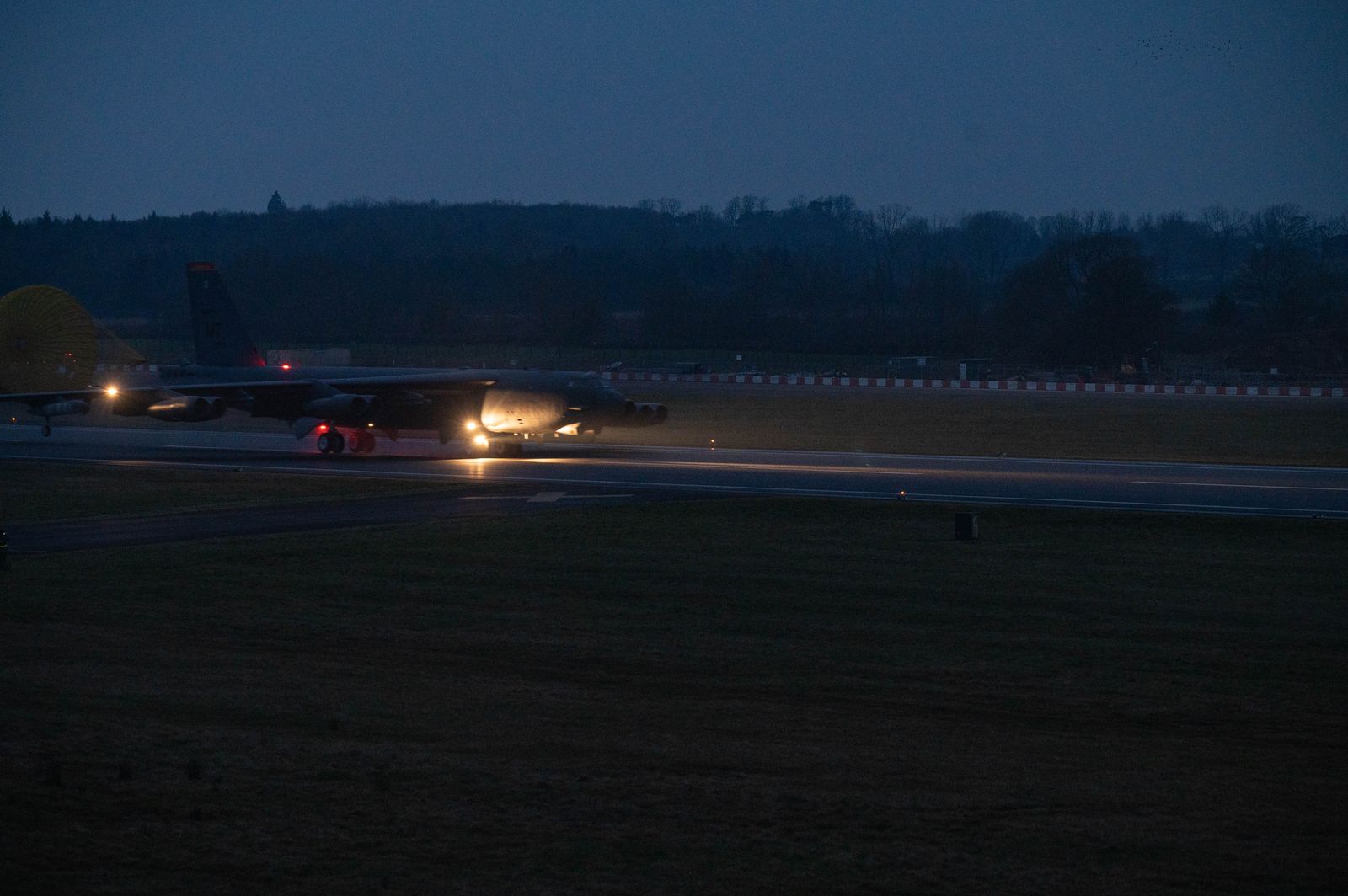
The missile left the pad at Wonsan at approximately 6:30 on Saturday morning, Seoul time, and the first people to know were the machines. Radar tracks bloomed on South Korean scopes, the arc computed itself in seconds — eastward, over the water, toward the East Sea that Japan calls the Sea of Japan — and by the time the human analysts had their coffee the trajectory was already history: roughly 680 to more than 700 kilometers of powered flight, splashdown outside Japan's exclusive economic zone, no damage reported to anyone. It was, by the cold arithmetic of ballistics, unremarkable — a short-to-medium-range shot of the kind North Korea fires the way other countries issue press releases. What made it remarkable was the calendar. Twenty-four hours earlier, Kim Yo Jong — the leader's sister and the regime's sharpest tongue — had called South Korea 'despicable' and flatly denied that the North had anything to do with the September 21 landmine blast that wounded three South Korean soldiers about ten meters south of the military demarcation line. Denial on Friday. Detonation on Saturday. In the choreography of the Korean peninsula, that is not a coincidence; it is a sentence, and the missile is the exclamation mark. Seoul's Joint Chiefs stepped up surveillance and shared tracking data closely with the United States and Japan. Tokyo lodged a formal protest, calling the launch a violation of UN Security Council resolutions. The presidential national security office in Seoul called it a violation of UNSC sanctions and 'a serious act that does nothing to help manage the current situation.' US Pacific Command, in its customary flat tone, assessed no immediate threat to American personnel, territory, or allies. Nobody was hurt. Everybody got the message. That is precisely how this particular weapons system works.
Consider the missile as what it is: a signaling instrument with a warhead it did not use. Six hundred and eighty to seven hundred kilometers is not an intercontinental threat and was never meant to be. It is a regional sentence, written in fire, legible to exactly three capitals — Seoul, Tokyo, Washington — and its vocabulary is range. Every kilometer of that arc was a word. The launch site at Wonsan, on the east coast, is the regime's favorite megaphone: a proven range, a clean easterly corridor, a splashdown zone that embarrasses Japan without quite violating its waters. No damage. Outside the EEZ. Formal protest duly filed in Tokyo. This is violence calibrated the way a pharmacist calibrates a dose — enough to be felt, not enough to kill the patient, because the patient is the crisis itself and Pyongyang needs the crisis alive. The Americans understood the dosage perfectly, which is why Pacific Command's statement read like a shrug: no immediate threat. Translation: we see what you did, we are not impressed into action, try harder or go home. And here is the dark technical joke of it all — the missile is the least interesting weapon in this story. The interesting one is buried in the mud of the DMZ.
Because Saturday's launch cannot be read without Friday's denial, and Friday's denial cannot be read without the blast of September 21. Twelve days ago, three South Korean soldiers were wounded by a landmine detonation roughly ten meters south of the military demarcation line — inside the Demilitarized Zone, the most heavily mined strip of earth on the planet, where mines are not accidents but architecture. Seoul's response was swift and unusually blunt: the military demanded an official apology from the North. Then came the forensics. A joint inspection with the US-led United Nations Command determined that the blast was caused by North Korean mines laid on the southern side of the line, and the UNC concluded that the North had violated the 1953 armistice agreement — the ceasefire that has governed, barely, for seventy-three years. This is not a minor finding. The armistice is the only legal tissue holding the peninsula short of open war, and a formal determination of violation is the diplomatic equivalent of a doctor noting the fracture on the chart. Pyongyang's answer came Friday from Kim Yo Jong: South Korea is 'despicable,' and the North had no role in the blast. Denial, delivered with the regime's trademark contempt. And then, at 6:30 Saturday morning, the missile. Read the sequence as Pyongyang wrote it: we did not lay those mines, we despise your accusation, and here is seven hundred kilometers of proof that your accusations do not frighten us. The missile is not separate from the mine dispute. It is the mine dispute, translated into a language that flies.
A serious act that does nothing to help manage the current situation.
The mines themselves deserve a defense technologist's attention, because they are doing exactly what mines have done since the Somme: denying ground. Defense Minister Kang Shin-chul told Seoul's lawmakers what the forensics suggested — the mines were likely laid during the North's ongoing border-fortification campaign, the vast project of ditches, walls, mines, and anti-tank barriers with which Pyongyang has been permanently sealing its southern frontier. This is area-denial engineering at national scale. A minefield is the cheapest border wall ever invented: no concrete, no guards, no maintenance beyond the occasional replacement, and it kills the very idea of crossing. Since Kim Jong Un designated South Korea the 'principal enemy' in 2024 — formally abandoning decades of reunification rhetoric — the North has been turning the DMZ from a buffer into a fortress wall. Mines on the southern side of the demarcation line, if the UNC's finding holds, mean the fortification is not merely defensive. It is forward. It reaches across the line it claims to respect. Ten meters south of the MDL is not a rounding error; it is a statement in high explosive, and three wounded soldiers are its punctuation. The mine is the infantry's veto. It says: this ground is not negotiable, not walkable, not yours.
The road to Saturday's dawn launch runs straight through the wreckage of inter-Korean relations, and the wreckage is now measured in concrete and ordnance. When Kim Jong Un stood before his rubber-stamp parliament in 2024 and declared the South the 'principal enemy,' he was not indulging in rhetoric. He was issuing an engineering order. Reunification — the dream, the doctrine, the constitutional fiction both Koreas had maintained for three generations — was deleted from the Northern catechism in a single speech. What replaced it was fortification: minefields re-laid and expanded, anti-tank barriers, the physical un-wiring of every road and rail link that had ever connected North to South. The peninsula's border, never soft, began to harden into something closer to a siege line. September brought the tempo up. On September 20, the North fired two short-range ballistic missiles — the second launch of the month even before Saturday's, a drumbeat establishing that the arsenal was warm. The next day, the DMZ blast wounded three Southern soldiers and detonated the diplomatic crisis. Seoul demanded an apology. The UNC inspected, found Northern mines south of the line, and declared the armistice violated. Friday, Kim Yo Jong's 'despicable.' Saturday, the missile from Wonsan. Each step is legible. Each step was also, in a sense, inevitable once the 'principal enemy' designation turned the border from a scar into a front. You do not fortify a frontier this aggressively and then act surprised when the fortifications draw blood. The blood was the point. The fortification is the policy.
Now the technical layer, because this is where the story's real machinery hums. A ballistic missile in the 680-to-700-kilometer class is a mature, confident system — not an experiment, not a prototype wobbling toward validation, but a fielded capability fired the way a power demonstrates a muscle it has already built. The range bracket matters: it covers every meaningful target on the peninsula and reaches comfortably into Japanese waters, which is precisely why Tokyo protests and precisely why the splashdown was placed outside the EEZ — provocation with a lawyer. Contrast the missile's elegance with the mine's primitivism and you see Pyongyang's full-spectrum doctrine in miniature: exquisite, expensive, long-range signaling hardware for the cameras and the radar scopes, and beneath it, in the mud, the cheapest weapon in the inventory doing the dirtiest work. The missile says 'we can reach you.' The mine says 'you cannot reach us.' Between those two sentences sits the entire North Korean theory of security. And Seoul's answer has been technological in turn: stepped-up surveillance, trilateral tracking-data fusion with Washington and Tokyo, the sensor net tightening with every launch. Each Northern test fires Southern sensors; each Southern sensor upgrade invites the next Northern test. It is an arms race conducted as a measurement race, and both sides are winning it.
Geopolitics first, because the peninsula is where great-power weather makes landfall. Saturday's launch landed in the middle of a trilateral embrace that would have been unthinkable a decade ago: Seoul's Joint Chiefs sharing tracking data 'closely' with the US and Japan, Tokyo filing its protest in formal diplomatic language, Pacific Command issuing its flat no-threat assessment. The machinery of the US-ROK-Japan security triangle worked exactly as designed — detect, share, assess, condemn, stand by. Pyongyang's launch was, among other things, a stress test of that machinery, and the machinery passed. But note what the test revealed: the triangle's response is entirely procedural. There is no longer any pretense that a single short-range launch will be 'answered' in any kinetic sense. Deterrence has become ritualized — the North performs capability, the allies perform vigilance, and the performance is the policy. Macroeconomics is the second dimension, and it is the one the communiqués never mention: every missile is also a budget line. A regime under some of the heaviest sanctions on earth, a regime whose people endure chronic scarcity, fires precision-guided hardware into the sea as punctuation — and each launch is a choice, denominated in resources, to fund signaling over sustenance. The South, meanwhile, funds the sensor net, the inspections, the readiness. The peninsula's standoff is an economic war of attrition fought in defense budgets, and both sides pay it gladly. Demographics, the third lens, hides in the fortification campaign itself: sealing a 250-kilometer frontier with mines, barriers, and ditches is labor on a mass scale, the kind of project that consumes the young men of an army and the years of a generation. The 'principal enemy' doctrine is being poured into concrete by hands that will never build anything else. A country that fortifies this hard is a country planning, structurally, to need the fortifications forever — which means planning, demographically, for permanent mobilization. The fourth dimension is historical pattern, and the pattern is seventy-three years old. The 1953 armistice was a pause, not a peace, and every decade since has replayed the same grammar: provocation, condemnation, calibration, quiet. The mine blast south of the MDL and the missile over the East Sea are new sentences in a very old language — the language of a war that never ended, spoken by regimes that inherited it the way families inherit feuds. Finally the structural and technological dimension: this is what deterrence looks like when both sides have perfected their instruments. The North's missiles grow more reliable with every test; the South's surveillance grows more total with every launch it tracks. Mines get smarter — or at least more numerous. Sensors get sharper. The DMZ, once a line on a map, is becoming a technological artifact: a mined, watched, fortified smart-border, the most instrumented nowhere on earth. The technology does not resolve the standoff. The technology is the standoff, hardened into hardware.
There is a temptation to file Saturday under 'routine provocation' — the phrase every wire service reaches for, the verbal equivalent of a shrug. Resist it, because the routine is the story. A regime that can fire a ballistic missile as a press release, deny a mine blast as slander, and absorb a formal armistice-violation finding as background noise is a regime for which escalation is not a risk but a medium. The water it swims in. And the mines deserve the last word on routine: somewhere in the DMZ mud, beneath grass that no human will ever mow, sit thousands of devices with no politics, no press office, and no off switch — patient, rusting, utterly indifferent to who laid them or why. Missiles are messages. Mines are facts. The peninsula now has both, in abundance, and the facts outlast the messages.
Watch the launch cadence: September 20 brought two missiles, October 3 brought one more — if the drumbeat continues into mid-October, Pyongyang is building toward something larger, perhaps a longer-range demonstration. Watch the UN Security Council, where the formal armistice-violation finding gives the condemnation machinery fresh material, though anyone expecting enforcement has not been watching the Council lately. Watch the DMZ itself: whether Seoul pushes for further joint inspections, whether demining is even discussable while the North fortifies, and whether the three wounded soldiers' incident produces the official apology Seoul demanded or hardens into another frozen grievance. Watch Seoul's two tracks — President Lee Jae Myung urging dialogue on Thursday even as his military demanded an apology, Unification Minister Chung Dong-young proposing border talks on Friday — and ask which track survives the next launch. Dovish presidents and flying missiles have a historically short honeymoon. And watch Wonsan. The east-coast range is warm, the messaging grammar is established, and the next sentence is already being loaded.
The Western read is condemnation wrapped in procedure. The launch violated UN Security Council resolutions — Tokyo said so formally, Seoul's national security office said so bluntly — and the armistice-violation finding on the mines puts Pyongyang in breach of the only legal instrument keeping the peace. The trilateral response worked as designed: detection, data-sharing, protest, readiness. In the Western telling, this is a rogue regime performing its familiar cycle — deny, deflect, demonstrate — and the correct answer is the one already given: vigilance without panic, sanctions without illusion.
But the Western lens has its own ritual blindness: it treats each launch as an isolated outrage rather than as the latest entry in a ledger the West helped write. Seventy-three years of armistice without peace, maximum-pressure sanctions that immiserate without disarming, and a deterrence posture that answers missiles with statements — the West condemns the grammar while declining to examine the conversation. Pacific Command's 'no immediate threat' is honest, and it is also an admission: the system is built to absorb these launches indefinitely, which means it is built to never resolve them.
The sharper Western worry, voiced quietly in Seoul, is the mine, not the missile. A ballistic launch is theater with telemetry; mines laid south of the demarcation line are a physical alteration of the border. If the fortification campaign keeps creeping forward ten meters at a time, the West faces a frontier redrawn in high explosive — and no communiqué has ever defused a minefield.
The Eastern read begins where the Western one ends: with the question of who gets to define a violation. From Moscow and Beijing, a sovereign state testing a missile over international waters — outside Japan's EEZ, harming no one — is exercising a right that nuclear-armed Western states exercise routinely and without apology. The formal protests and the invocation of Security Council resolutions are, in this telling, the application of a double standard administered by the very powers whose own arsenals dwarf the North's. Kim Yo Jong's denial of the mine incident is taken at something closer to face value: accusations from Seoul, issued in the heat of a demanded apology, are not forensics.
The Eastern lens also reads the fortification campaign differently. A state designated — by Washington's allies, in every joint statement — as a target for 'complete denuclearization' and encircled by the most advanced alliance military architecture in Asia is, in this view, doing the rational thing: hardening its border. Mines and anti-tank barriers are ugly, but they are defensive works by a state that has been told, explicitly and repeatedly, that its security will never be accommodated. The 'principal enemy' designation of 2024 did not emerge from nowhere; it answered a decade in which engagement was offered and withdrawn on Washington's timetable.
None of this, the Eastern press would add, excuses the wounded soldiers — but it relocates the blame. In this telling, the peninsula's danger is not Northern irrationality but the permanent crisis economy that all sides now profit from: the North gets its deterrent theater, the allies get their justification for the sensor net and the deployments, and the armistice gets another decade of profitable non-peace.
The Global South read is exhaustion, edged with instruction. From Jakarta to Nairobi to Brasília, the Korean peninsula is the world's longest-running security drama, and Saturday's episode — missile, denial, protest, repeat — inspires less fear than fatigue. The South's question is the practical one: who pays for the permanent crisis? The answer, visible in every defense budget in Northeast Asia, is everyone. Money that could build ports, grids, and schools is poured into sensor nets and missile shields because a 1953 ceasefire was never converted into a peace. The South, which lives with the consequences of great-power standoffs it did not start, recognizes the pattern intimately.
There is also a pointed Southern observation about the diplomacy on display. Seoul's president urges dialogue on Thursday; Seoul's military demands an apology; the Unification Minister proposes border talks on Friday; Pyongyang answers with contempt and a missile on Saturday. The South has seen this choreography from its own conflicts: the peace track and the pressure track running simultaneously, each sabotaging the other, both feeding the constituencies that profit from stalemate. Lee Jae Myung's dovish instinct is real, the Southern press tends to grant — and it is being devoured, in real time, by the machinery it inherited.
The Southern verdict, then, is neither condemnation nor apology for the North. It is a warning about mines — literal and political. A minefield, once laid, outlives every government that ordered it; a crisis architecture, once built, outlives every leader who promised to dismantle it. The DMZ's mines will still be there when everyone currently shouting is gone. The South knows, better than most, that the cheapest weapons leave the longest legacies.
Beijing just wrote the biggest liquidity check of the year — and changed nothing else.
The People's Bank of China will offer banks up to one trillion yuan a day — about $149 billion — in overnight funds from September 28 through October 8, covering the Golden Week holiday. It is the largest such cap since the tool's introduction in June 2026, up from 600 billion yuan in mid-September.
The calendar explains the timing. Golden Week sends hundreds of millions of Chinese traveling and spending; banks need cash the way airports need runways. The central bank is making sure the plumbing holds.
The scale, though, is the story. One trillion yuan a day is not holiday housekeeping. It is a backstop — a signal that whatever the holiday throws at the financial system, the PBoC has already covered.
And then, the other hand: nothing. Chinese banks left the one-year and five-year loan prime rates unchanged at 3.00% and 3.50% — the 16th consecutive month without a move.
Sixteen months of stillness in the price of credit, alongside the largest liquidity flood of the year. Beijing is watering the garden and refusing to lower the fence — liquidity yes, cheaper credit no.
Governor Pan Gongsheng gave the doctrine a name: slower loan growth is becoming "the new normal." Property and local-government borrowing are shrinking faster than emerging industries can borrow. The credit engine is being rebuilt mid-flight.
Liquidity is Beijing's answer to everything except the one question markets keep asking: where is the growth?
The PBoC is not idle elsewhere. It stepped up support with a net 200-billion-yuan injection through medium-term lending facility operations, reiterated its "moderately loose" stance, and kept its grip on the yuan.
The yuan, for its part, cooperated — rebounding after briefly dipping below 6.70 per dollar as US Treasury yields rose and the PBoC's grip eased.
The diplomacy helped. A US–China summit extended the trade truce to January — without new tariff cuts, but without new tariffs either. A truce, not a peace; markets will take it.
Step back and the contrast is the story. In Washington, yields cross 5% and traders bet on another hike. In Beijing, the central bank floods the system with cash and leaves rates untouched for a 16th month. Two central banks, two planets.
The logic is not mysterious. China's problem is not hot demand — it is cold credit. Pumping liquidity keeps the system liquid; cutting rates into weak demand would be pushing on the proverbial string.
The risk is the one Beijing knows best: banks awash in cash, with nowhere productive to lend it. Liquidity without lending becomes asset froth — the 2015 lesson, still fresh in institutional memory.
For the region, the signal matters more than the mechanics. A stable yuan and a liquid Chinese banking system through Golden Week is the foundation under Asia's supply chains. When Beijing sneezes, the region's exporters reach for tissues.
Watch what happens after October 8. If the trillion-yuan window closes quietly, it was holiday plumbing. If support lingers, it was something else — a central bank telling you, without saying it, that the economy needs the help.
Western coverage — Reuters and the financial wires — emphasizes the restraint: Beijing holding rates while flooding liquidity, a central bank running out of its favorite tools.
In this telling, 16 months of unchanged loan prime rates is the real headline — evidence of a policymaker boxed in by a hawkish world, a weak property sector, and the fear that rate cuts would only weaken the yuan. Liquidity is what you do when you've decided rates can't move.
Pan's "new normal" gets a skeptical hearing: an elegant phrase for a credit engine that no longer transmits. The question in Western commentary is whether "moderately loose" is a stance or a shrug.
Eastern coverage — Xinhua and Chinese outlets — emphasizes the calibration: targeted, seasonal, and exactly as doctrine prescribes.
In this telling, the trillion-yuan facility is textbook PBoC: precise, time-bound, and aimed at a known seasonal need. The unchanged rates are not paralysis but prudence — "moderately loose" means loose where it counts, steady where it matters, with the yuan's stability as the binding constraint.
The summit's truce extension gets equal billing: diplomacy buying the central bank room to maneuver, and the maneuver working — the yuan's rebound presented as policy competence, not luck.
Global South coverage — Malaysia's business press among it — emphasizes the neighborhood: what Beijing's plumbing means for everyone downstream.
The read from Kuala Lumpur: a liquid China through Golden Week is good news for ASEAN exporters, supply chains, and the region's own central banks. Yuan stability is a public good in Asia, and the PBoC just underwrote another week of it.
The caution in this coverage is borrowed from experience: when the region's biggest economy needs record liquidity to get through a holiday, the "new normal" of slower credit is everyone's normal too.
To read Beijing's move properly, you need the toolkit. Start with the overnight reverse repo — the instrument at the center of the trillion-yuan headline. In a reverse repo operation, the central bank lends cash to commercial banks overnight, taking bonds as collateral; the banks get the liquidity they need, the central bank gets the bonds back the next morning plus a sliver of interest. It is plumbing, not policy: the money created exists for a day, maybe rolled over, and its purpose is to keep the interbank market — the market where banks lend to each other — from seizing. The cap is the message. A trillion yuan a day says: whatever the holiday throws at the system, the PBoC has already covered.
The tool itself is young — introduced only in June 2026 — which makes the record cap more interesting. A new instrument's ceiling is normally discovered cautiously; jumping from 600 billion yuan in mid-September to a full trillion two weeks later is not calibration but declaration. It tells the banks, and through them the market, that the central bank will not be outbid by seasonal stress. The facility runs September 28 to October 8, covering Golden Week exactly. Time-bound, enormous, and explicitly temporary: the PBoC is writing a check it intends to tear up on the 9th. The question the article ends on — what happens after October 8 — is the only one that matters, because a backstop that lingers stops being a backstop and starts being a subsidy.
Then the medium-term lending facility — the MLF — through which the PBoC added a net 200 billion yuan. If reverse repos are the overnight overdraft, the MLF is the term loan: banks borrow for months, not hours, pledging collateral, at a rate the central bank sets. The MLF rate is the PBoC's quiet policy lever — it guides the loan prime rates without the drama of changing them. And the loan prime rates, the LPRs, are the number the article keeps returning to: 3.00 percent for one year, 3.50 percent for five, unchanged for the sixteenth consecutive month. The LPR is the benchmark for most new lending in China; holding it still while flooding the system with cash is the whole doctrine in one gesture. Liquidity yes. Cheaper credit no.
The sixteen months of stillness deserve their own reading, because stillness is also a decision — sixteen times over. In a world where Washington is hiking and yields cross 5 percent, cutting Chinese rates would narrow the already thin cushion against capital outflow and yuan depreciation; every basis point of easing is a basis point of incentive for money to leave. The PBoC's box, as the Western lens describes it, is real: a property sector that no longer transmits stimulus, local governments deleveraging rather than borrowing, and a currency whose stability is the binding constraint on everything else. Holding the LPR is not paralysis. It is the recognition that the price of credit is no longer the economy's binding constraint — and that moving it would cost more in currency stress than it buys in growth.
The calendar explains the timing, as the article says — but the calendar deserves its scale stated plainly. Golden Week is the largest annual human migration on earth compressed into seven days: hundreds of millions of Chinese traveling, spending, withdrawing cash, settling bills. The banking system's cash demand does not rise. It detonates. ATMs must be stocked, merchants' settlement accounts funded, the interbank market supplied with enough reserves to clear a week's worth of the world's second-largest economy changing hands. In normal years, the PBoC manages this with routine open-market operations. This year it wrote the biggest check in the tool's short history.
The scale, though, is the story — the article's line, and worth pressing. One trillion yuan a day is not holiday housekeeping; it is a backstop sized for something the PBoC sees and the market does not yet. Seasonal demand explains the facility's existence. It does not fully explain its size. Either the central bank is being theatrically cautious — signaling strength by oversupplying safety — or its internal read on holiday-season financial stress is darker than the public data. Both readings are consistent with "moderately loose." Only one of them is reassuring. The banks will take the cash either way; the signal is in the surplus.
There is also the consumption angle, which is where the liquidity meets the real economy. Golden Week is China's great annual test of consumer confidence: the week when households vote with their wallets on whether the economy feels safe. A banking system visibly backstopped — cash available, payments clearing, no friction — is the precondition for the spending the state wants to see. The PBoC cannot make households spend; it can only ensure that nothing in the plumbing stops them. In an economy where the consumer has been the missing piece and property wealth no longer does the spending's work, the holiday's cash registers matter more than the interbank rate. The trillion yuan is, among other things, a bet on the tills.
And the regional read — the Global South lens from Kuala Lumpur — captures what the holiday means beyond China's borders. A liquid China through Golden Week is the foundation under Asia's supply chains: exporters paid, importers funded, the region's own central banks spared the volatility of a yuan under holiday stress. Yuan stability, as the article notes, is a public good in Asia, and the PBoC just underwrote another week of it. When the region's biggest economy needs record liquidity to get through a holiday, the "new normal" of slower credit becomes everyone's normal — but a stable holiday is still a stable holiday, and Asia's exporters will take it.
Central bankers choose their phrases the way diplomats choose communiqués — every word weighed, every ambiguity intentional. When Governor Pan Gongsheng said slower loan growth is becoming "the new normal," he was not describing a statistic. He was retiring an expectation. For two decades, China's credit engine ran on a simple formula: property developers borrowed, local governments borrowed against land, and the resulting construction carried GDP. That engine is being dismantled mid-flight — property deleveraging, local-government debt discipline — faster than emerging industries can borrow to replace it. "New normal" is the doctrine that says: stop waiting for the old credit cycle to return. It is not returning.
The doctrine has a logic, and it is worth steelmanning before doubting. Credit-fueled growth bought China two decades of expansion and left it with the property crisis, the local-government debt pile, and the demographic headwinds now arriving together. Pumping cheap credit into that structure — the old playbook — would reflate the very imbalances the state is trying to defuse. Slower, cleaner credit growth, directed at manufacturing upgrades and strategic industries rather than concrete, is the quality-over-quantity bet. The PBoC is not refusing to stimulate. It is refusing to stimulate the old economy. The distinction is the entire policy.
The risk, as the article notes, is the one Beijing knows best: banks awash in cash with nowhere productive to lend it. Liquidity without lending becomes asset froth — the 2015 lesson, still fresh in institutional memory, when stimulus leaked into equity speculation rather than productive investment. The trillion-yuan facility, the 200-billion MLF injection, the "moderately loose" stance — all of it presupposes transmission channels that the "new normal" itself describes as weakened. Watering the garden, to use the article's image, works only if the soil still absorbs water. If property and local governments no longer drink, and emerging industries cannot drink fast enough, the water pools. Pooled liquidity has a history in China. It is called a bubble.
Step back and the contrast the article closes on — two central banks, two planets — is the frame that will define the autumn. Washington hikes into data it may not have, fighting inflation with the South's interest bills. Beijing floods with cash it cannot lend, defending a currency it cannot afford to let slip, waiting for a credit engine it is rebuilding mid-flight. Neither has a clean instrument. Both are improvising inside doctrines — data-dependence, the new normal — that describe the world they wish they governed. Watch October 8: if the trillion-yuan window closes quietly, it was holiday plumbing, and the doctrine holds. If support lingers, the PBoC will have told you, without saying it, that the new normal needs more help than the old vocabulary admits.
Monetary policy does not happen in a diplomatic vacuum, and the PBoC's autumn maneuver owes more to the summit than the communiqués admit. The US–China meeting extended the trade truce to January — no new tariff cuts, but no new tariffs either — and that pause is worth more to Beijing's central bank than any single instrument in its toolkit. Tariff escalation would have meant a weaker yuan, imported inflation, and capital flight arriving together; the truce removes the worst tail from the PBoC's planning. "A truce, not a peace; markets will take it," as the article says. So will central bankers.
The yuan's rebound — recovering after briefly dipping below 6.70 per dollar — is the truce's signature in the currency market. With US Treasury yields rising and the PBoC's grip easing, the currency found its footing not through intervention but through the removal of a threat. That distinction matters: a yuan steadied by diplomacy is cheaper to defend than a yuan steadied by reserves. Every week the truce holds is a week the PBoC does not have to choose between growth and the exchange rate — the choice that has boxed in Chinese policy for the better part of a decade.
But truces expire, and January is closer than it looks. The extension without tariff cuts is a freeze, not a thaw: the existing duties remain, the structural disputes untouched, the next escalation one headline away. The PBoC is therefore managing a window, not a settlement — using the diplomatic calm to get through Golden Week, to steady the currency, to buy the "new normal" time to prove itself. If January brings escalation, the trillion-yuan plumbing will look like the prelude to a harder season. Diplomacy bought the central bank room to maneuver, as the Eastern lens notes. Room is not resolution. It is rented, monthly, and the rent comes due in January.
