General Alexus Grynkewich told the Warsaw Security Forum that NATO would block, blunt and then break any attacker's warfighting system — while insisting war is neither imminent nor inevitable.
Published 13 October 2026 · 04:31 GMT
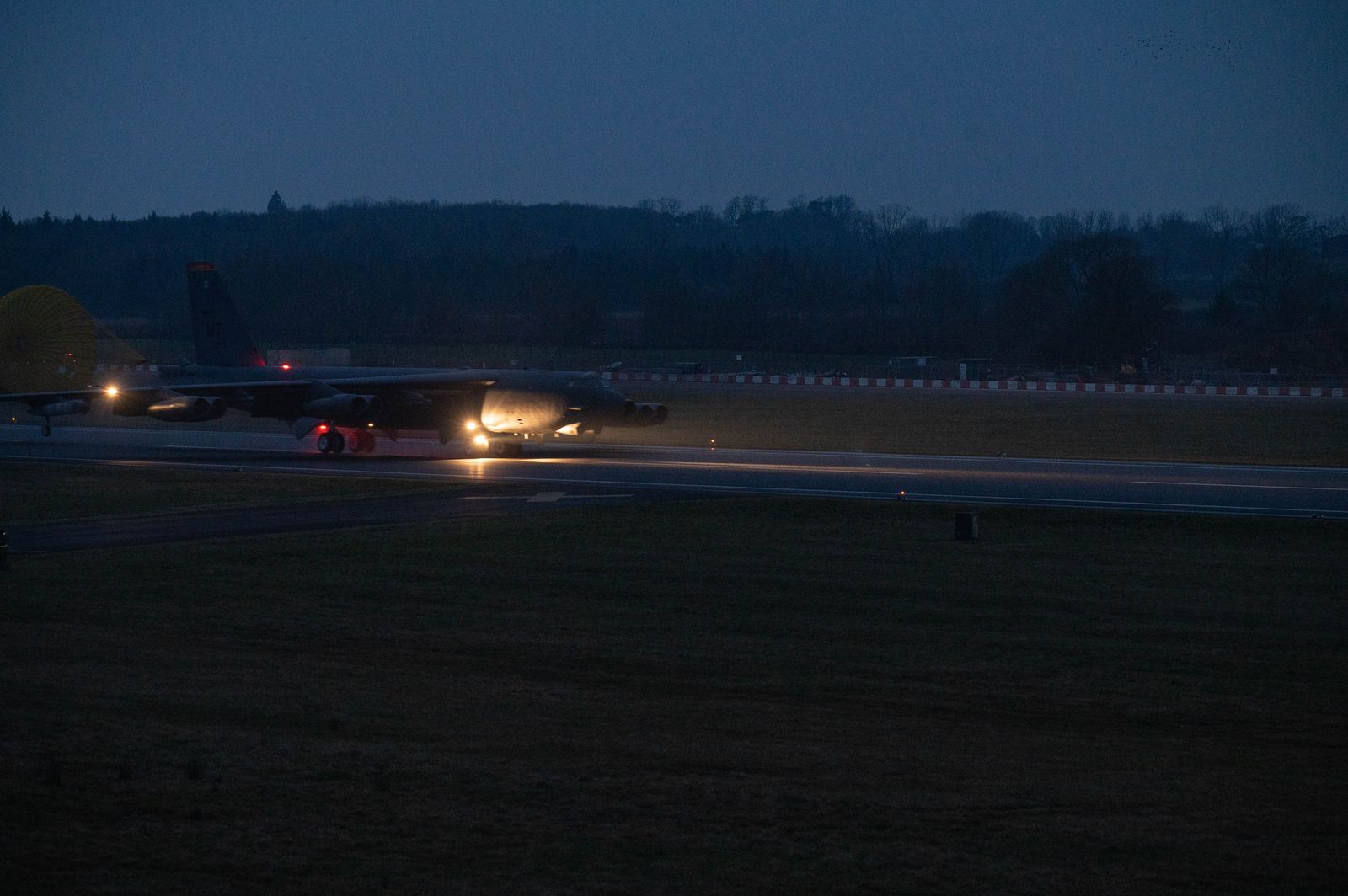
On Monday, October 12, 2026, NATO's top commander used the opening session of the Warsaw Security Forum to deliver the bluntest public statement of allied deterrence doctrine in recent years. US Air Force General Alexus Grynkewich, the Supreme Allied Commander Europe, warned that his forces would destroy "anything and everything" if someone was "foolish enough" to attack the alliance.
He laid out a three-stage doctrine: "We will block the initial attack. If the attack persists, we will blunt it and prevent any enemy advance. And if required, we will break the enemy's forces and the operational war-fighting system arrayed against us."
The setting matters. Warsaw sits on NATO's eastern flank, a few hundred kilometres from Ukraine's western border and the Russian enclave of Kaliningrad. The forum is where Central European officials and allied commanders have spent the war years comparing notes on drone incursions, sabotage plots and cyberattacks they attribute to Moscow — the backdrop against which Grynkewich chose to speak.
The core of the address was escalation arithmetic. Grynkewich said NATO's response would not stop at the forces involved in an initial attack: "Should the adversary choose to press the attack or commit his reserves, we will break the warfighting system engaged against us. This includes not just the attacking force itself, but anything and everything that supports, sustains and controls that force."
He summarised the promise in one line: "We will, in short, ensure any attack, against any ally, proves utterly futile." That "any ally" phrasing is the Article 5 formula — an attack on one is an attack on all — translated into operational language.
At the same time he insisted NATO is a defensive alliance, said he does not believe conflict is imminent or inevitable, and argued the most effective way to preserve peace is to prepare for war while maintaining open lines of communication to "resolve misunderstandings".
Context matters to the timing. European governments have accused Moscow of stepping up a campaign of sabotage, drone incursions and cyberattacks against them in recent months. Russia, for its part, warned last month that it could use nuclear weapons if NATO attempted to cut off its Baltic exclave of Kaliningrad, where it maintains a major military outpost. NATO's own 10-year strategy, adopted in 2022, described Russia as the alliance's most significant security threat — a formal assessment that has only hardened since.
On the Russian side, President Vladimir Putin said this month that Russia has no plans to attack any European country and wants to coexist peacefully. Moscow has also repeatedly denied involvement in sabotage and other hybrid operations. European leaders have said those denials do not reassure them, citing similar Russian statements made before the 2022 full-scale invasion of Ukraine.
What counts as an "attack" remains the central unanswered question. European governments accuse Moscow of a widening campaign of sabotage, drone incursions and cyberattacks, but none of those has been publicly judged to meet the threshold of an armed attack that would trigger the alliance's collective response. Grynkewich's doctrine describes what NATO would do once the decision to fight is taken; it does not say where the line between hybrid harassment and armed attack is drawn.
We also do not know what specific intelligence, if any, prompted this week's address. He said he spoke because sabotage and arson had made citizens nervous — a reassurance motive, not a threat announcement — but he offered no new incident or timeline.
Nor do we know how Washington's internal debate interacts with the message. Grynkewich sought to downplay concerns about the American commitment to the alliance, citing President Donald Trump's reception at a NATO summit in Ankara in July — "I was in the room and I felt the love," he said. But a commander's reassurance and a president's policy are different instruments, and allies will watch which one the next crisis obeys.
The phrase is deliberately maximalist. In operational terms, "everything that supports, sustains and controls" a force means command-and-control nodes, logistics hubs, staging areas, air-defence batteries and communications infrastructure — the system around the troops, not just the troops. That language mirrors how the alliance thinks about breaking an adversary's ability to wage war rather than simply repelling a first wave.
It matters because deterrence is a credibility game. A SACEUR who publicly specifies a break-the-system response is telling two audiences — the alliance's one billion citizens and any would-be attacker — that the response to aggression would be total, not proportional in the narrow sense. The related earlier address, when NATO's top commander last warned over Russian actions, shows this is a sustained signalling line, not a one-off outburst.
Commanders rarely describe targeting philosophy in this detail on an open stage. The choice to do so reflects two pressures. First, domestic: repeated sabotage and arson across Europe have created a public mood in which quiet confidence no longer suffices — citizens want to hear that someone has a plan. Grynkewich said so explicitly: the address was aimed at reassuring the alliance's billion citizens.
Second, strategic: deterrence only works if the adversary believes the threat. Spelling out that the response would reach "anything and everything that supports, sustains and controls" an attacking force raises the imagined cost of even a limited probe — a drone swarm here, a sabotage cell there — by implying that escalation would not stop at the border of the incident.
The most immediate second-order effect is on the grey zone itself. If hybrid attacks are now framed publicly as potential triggers for a break-the-system response, the ambiguity that saboteurs rely on shrinks — but the risk of miscalculation grows. An accident or a deniable operation could be read through the maximalist doctrine and invite a response its authors never intended.
The other effect is political: the address hands ammunition to both camps in Europe's defence debate — those who say deterrence requires more spending and harder borders, and those who warn that maximalist rhetoric narrows the space for the very "open lines of communication" Grynkewich says he wants.
Watch the eastern flank. NATO's 2022 strategic concept already names Russia the alliance's most significant security threat, and the months ahead will test whether public deterrence language translates into faster reinforcement timelines, deeper air-defence coverage and clearer rules for responding to drone and sabotage incidents. The war in Ukraine's latest phase will shape that calculus.
And watch the diplomacy. Grynkewich paired the hardest deterrence language with an appeal for communication to "resolve misunderstandings" — the classic two-track posture. The test of this address is whether the second track survives the first.
Through the Western institutional lens, this is deterrence done properly. A defensive alliance facing a neighbour that has already invaded Ukraine must make the cost of escalation legible in advance — especially when allied publics are rattled by sabotage and arson. Grynkewich's careful framing — no mention of Russia by name, explicit denial that conflict is imminent, peace through strength — is the classic NATO posture: firm enough to deter, restrained enough not to provoke.
Through the Arab-media lens that carried the story, the address reads as an American general speaking in American operational idiom — block, blunt, break — to an alliance whose credibility has lately been debated in Washington. The line about Trump's warm reception at the Ankara summit in July ("I was in the room and I felt the love") is read as the point of the exercise: reassuring Europe that the American security guarantee still holds.
For the Global South, the language is a reminder of how military blocs talk when they feel threatened — and how different the register is from the one applied to conflicts elsewhere. The promise to destroy "anything and everything" that sustains an attacker would be condemned as reckless adventurism if spoken by a rival bloc. The double standard is noted; so is the fact that deterrence, for those outside it, is just a word for other people's wars.
General Alexus Grynkewich is a United States Air Force general serving as NATO's Supreme Allied Commander Europe, known as SACEUR. The SACEUR is the alliance's top operational commander, responsible for all NATO military operations and for translating the political decisions of the North Atlantic Council into military plans. His Warsaw Security Forum address on October 12, 2026 laid out NATO's public deterrence doctrine: block, blunt, and if required, break any attacker's warfighting system.
He said so himself: recent acts of sabotage and arson have made citizens across the alliance nervous, and he wanted to reassure them. Speaking at the Warsaw Security Forum, he stated his aim was to assure the alliance's one billion citizens that NATO knows what it would do and how. Public, detailed deterrence signalling is also meant for a second audience — any potential attacker — by spelling out that the response would go far beyond the attacking units themselves.
No. Grynkewich explicitly said he does not believe conflict is imminent or inevitable, and he stressed that NATO is a defensive alliance. His framing was classical deterrence: the most effective way to preserve peace is to prepare for war while keeping lines of communication open to resolve misunderstandings. The blunt rhetoric sits inside a posture of deterrence, not a declaration of impending conflict.
According to reporting on the address, Russian President Vladimir Putin said earlier in October that Russia had no plans to attack any European country and wanted to coexist peacefully. Moscow has also repeatedly denied involvement in sabotage and hybrid operations against European states. European leaders have said such assurances do not reassure them, citing similar Russian statements before the 2022 full-scale invasion of Ukraine.
