The Taoyuan union’s walkout will coincide with mediation for Micron’s Taichung workers, as both unions demand 15% of operating profit in quarterly bonuses — and reject the chipmaker’s record-year rewards as discretionary.
Published 20 October 2026 · 09:16 GMT
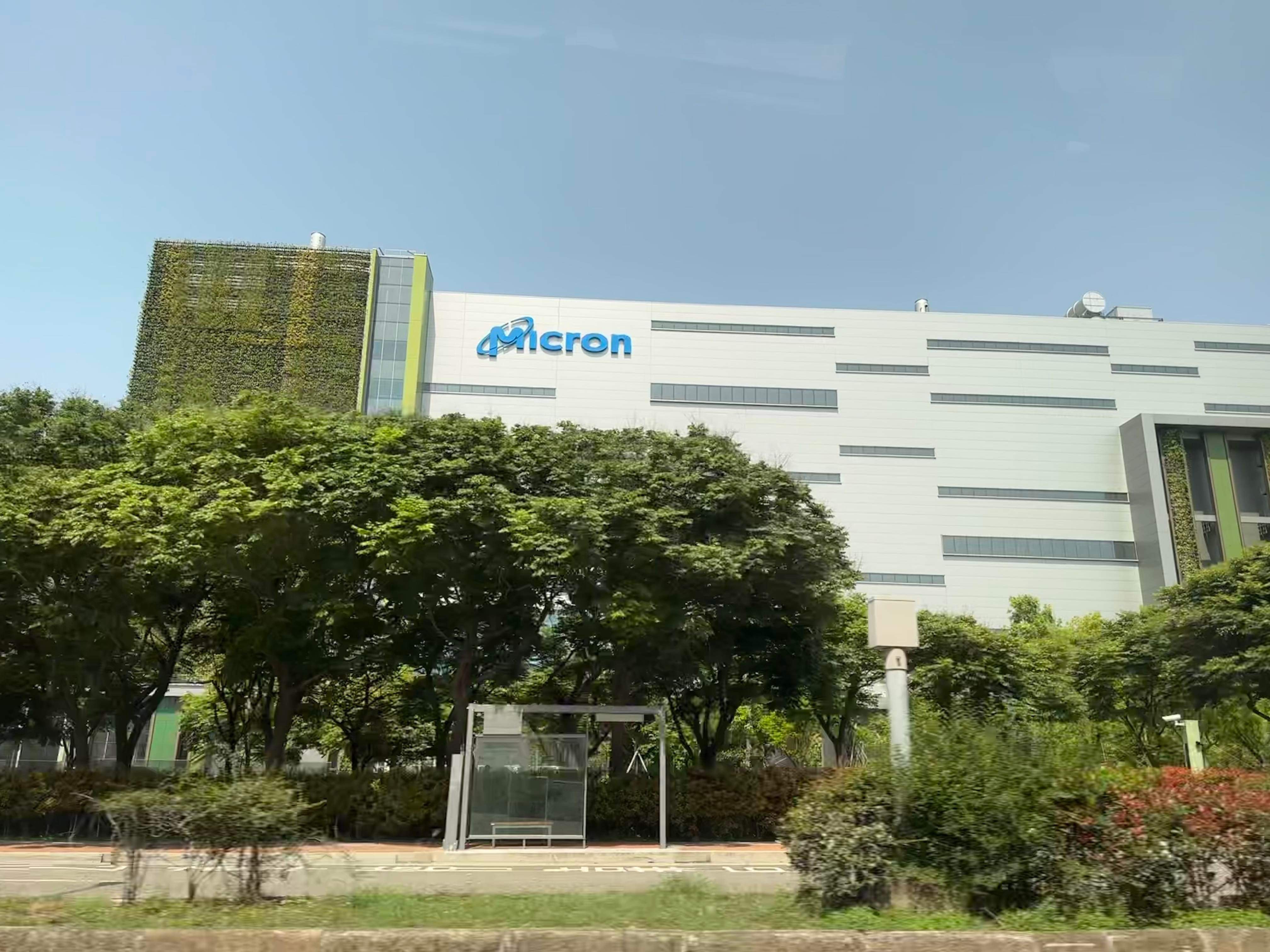
TAIPEI — The union representing Micron Technology workers in Taoyuan, Taiwan, announced on Monday that it will launch a strike on Thursday, October 22, deliberately timed to coincide with a mediation meeting between the US chipmaker and a separate union representing workers at Micron’s Taichung operations. The move sharply escalates a months-long dispute over employee bonuses at one of the memory-chip giant’s most important manufacturing hubs.
The Taoyuan union said the walkout was intended as a show of solidarity with the Taichung union and as pressure on Micron to put forward what it called a concrete profit-sharing proposal. The announcement, reported by Reuters from Taipei, turns a stalled negotiation into the most serious labor confrontation the American chipmaker has faced on the island.
Micron employs about 15,000 people in Taiwan, where it produces DRAM and high-bandwidth memory (HBM) chips — components at the heart of the artificial-intelligence server boom. The company says it has invested more than NT$1.6 trillion (about $49 billion) on the island.
“Through our actions, we will make our dissatisfaction with the current system heard and demonstrate our determination to establish a fair profit-sharing system,” the Taoyuan union said in its Monday statement.
The strike threat rests on an unusually decisive mandate. In early October, 1,994 members of the Taoyuan union voted in favor of strike action — 99 percent of those who cast valid ballots. With 2,012 of 2,258 eligible members voting, the yes vote represented 88.3 percent of the entire eligible membership, securing the union’s legal right to strike.
The two Micron unions — at Taoyuan and Taichung — have tabled four joint demands: a one-time fiscal 2026 bonus worth 15 percent of Micron’s global operating profit (about 83 months of pay per Taiwan employee, by their math); a permanent overhaul of the Incentive Pay Plan from fiscal 2027 distributing 15 percent of operating profit quarterly; a no-free-rider clause; and a non-retaliation clause for union activity.
Micron’s counter-offer, unveiled in September as its fiscal 2026 rewards package, looks very different. Eligible Taiwan employees — those who joined before August 29, 2025 — were promised a one-time cash bonus of NT$1 million, worth about $31,400, with proportional payments for staff hired during fiscal 2026. The company said total annual compensation for Taiwan production staff would amount to 35 to 68 months of salary, and that more than 60,000 employees worldwide would receive rewards after what it called an “extraordinary year.”
The unions rejected the package — not, they insist, because of its size alone, but because it leaves the underlying system untouched. Their exhibit A is the arithmetic of the boom: in 2025, Micron’s global bonus performance factor hit 93.9 percent, worth roughly 2.3 months of bonus for Taiwan staff (later adjusted to 2.6), while the chief executive’s annual cash performance pay equaled 32.4 months. Only about 40 percent of Taiwan employees had ever received stock awards, the union adds.
The unions cite South Korean rivals as the benchmark: Samsung’s semiconductor division ties its special bonus pool to 10.5 percent of operating profit; SK Hynix has committed 10 percent of annual operating profit over ten years. By the unions’ math, Micron’s current proposal equals only about 4.4 percent of operating profit — less than half the Korean standard, a fraction of the 15 percent demanded.
Mediation between Micron and the Taoyuan union ended without agreement in September. The Taichung union — which represents workers at Micron’s largest operation in Taiwan — remains in negotiations and has not yet held a strike vote. Taiwanese President Lai Ching-te weighed in last week, calling on Micron and its workers to negotiate “sincerely.”
How long Thursday’s walkout will last — the Taoyuan union said it would release further details on the day itself, leaving open whether this is a one-day warning shot or the start of something longer. Whether production will actually be disrupted: no stoppage or delivery impact has been reported, and fabs can run for a time on reduced staffing, though analysts warn that maintenance and process monitoring degrade quickly without full crews.
Whether Micron’s board has signed off on a revised compensation plan. The company told the unions it had prepared new options for the board’s October 8–9 meeting, but as of October 20 no public disclosure has confirmed what — if anything — was approved. What Micron will say in response to the strike call, and whether the Taichung union follows its Taoyuan counterpart toward a strike vote if Thursday’s mediation fails.
Deeply. Taiwan is Micron’s most important manufacturing base: the island’s fabs account for roughly half to three-fifths of the company’s global DRAM output, and the Taoyuan plant is principally a DRAM operation while Taichung — the larger site — anchors high-bandwidth memory production for AI accelerators. TrendForce, the Taiwan-based market intelligence firm, has warned that even a short stoppage could disrupt equipment maintenance and process monitoring enough to degrade yields — damage that outlasts the walkout itself.
The timing magnifies the stakes. Memory demand from AI data centers has sent Micron’s revenue soaring — more than eightfold since early 2024, with operating margins near 75 percent — and the dispute is, at its core, a fight over who captures that windfall. A prolonged confrontation would land in a memory market already stretched thin, with pricing power firmly in producers’ hands. For an industry that treats Taiwan as irreplaceable, a labor dispute at a top memory maker is a new kind of supply-chain risk — not geopolitical this time, but distributional.
For context on the memory supercycle, see the Bureau’s earlier coverage: AI chip earnings day: TSMC, Samsung, Huawei and GlobalFoundries, the AI boom’s record yields, and why chip stocks tumbled despite booming demand.
Because it converts an abstract grievance into a formula. The unions’ demand — 15 percent of operating profit, paid quarterly, locked in from fiscal 2027 — would replace Micron’s discretionary Incentive Pay Plan with a rule: when the cycle booms, workers automatically share in it; when it busts, the formula shrinks without a fight. That is precisely what management resists surrendering — discretion over the single largest variable cost in a cyclical industry.
The Korean benchmarks cut both ways. Samsung’s 10.5 percent and SK Hynix’s 10 percent give the unions a precedent — profit-linked bonuses are normal in memory — though 15 percent exceeds both. The unions’ answer: even at 15 percent, payouts would not necessarily top Korean rivals’, given Micron’s operating leverage. The demand looks radical until priced against the boom it taxes.
Read through five dimensions, the dispute is overdetermined. Geopolitically, it unfolds on the island the chip world depends on — hence the presidential comment on a domestic labor story. Economically, it is the classic late-cycle fight: 75-percent margins make the old bargain, modest bonuses for stability, look extractive. Demographically, it reflects a maturing Taiwanese tech workforce done with foundry-era paternalism. Historically, it echoes 20th-century auto workers converting record profits into profit-sharing formulas. Technologically, it is about HBM — the scarcest memory on earth — and who gets paid to make it.
First, memory markets. Even the threat of a stoppage at a producer of Micron’s scale can firm DRAM spot prices; an actual multi-day halt at Taoyuan would ripple through quarterly contract negotiations. Second, contagion: engineers at TSMC, MediaTek and the island’s equipment makers are watching whether a strike at a US-owned fab succeeds — Taiwan’s tech unions have historically been quiet, and a win would rewrite the playbook. Third, corporate planning: expect every memory maker to dust off contingency staffing plans and, quietly, to accelerate automation of the maintenance tasks a walkout would interrupt.
Fourth, politics. Lai Ching-te’s intervention puts the presidency on the hook for a settlement; a prolonged dispute would test his balancing act between courting foreign chip investment and protecting domestic labor. Fifth, investors will start pricing labor risk into memory equities — until now, the AI trade assumed the only threats to supply were earthquakes and export controls. A picket line is a new variable.
Thursday is the hinge. The Taoyuan walkout begins the same day Micron sits down with the Taichung union for mediation — the session the strike is designed to shadow. The Taoyuan union has promised operational details on the day; the Taichung union, if mediation fails, could move toward its own strike authorization vote, which would put Micron’s largest Taiwan operation in play.
Watch, too, for Micron’s response — the company has yet to answer the strike call publicly — and for any disclosure from the board’s October session on a revised compensation framework. If Thursday passes with a deal, the episode becomes a footnote in a record year. If it passes with a picket line and no agreement, the memory market will start doing strike math.
The Western business press reads this as a supply-chain and cost story first. Reuters frames the walkout through mediation mechanics and solidarity tactics; investor outlets translate it into market terms — Micron shares slid 16 percent in the five days to October 14, and the question on trading desks is whether a stoppage dents output or merely headlines.
Taiwan’s domestic lens is legalistic and arithmetic. Local reporting — from CNA’s Chinese-language dispatches to Newtalk’s demand-by-demand accounting — dwells on the vote mechanics (88.3 percent of eligible members), the four joint demands, and the contrast between the CEO’s 32.4 months and the rank-and-file’s 2.3. President Lai’s call for “sincere” negotiation signals Taipei will not let a flagship foreign investor’s labor dispute fester.
From the Global South, the story lands as a parable of the AI boom’s missing dividend. South African and Malaysian outlets emphasize the same numbers — record revenues, margins near 75 percent, a bonus worth 83 months’ pay on the table — and the same question: when a US chipmaker’s best year is built on Asian factories, what share belongs to the workers who run them?
The Taoyuan union says Micron’s bonus system does not share the AI-driven profit boom fairly. In early October, 1,994 members — 99% of valid ballots, 88.3% of eligible members — authorized a strike. The unions demand 15% of operating profit paid quarterly from fiscal 2027, plus a one-off bonus worth about 83 months’ pay. The walkout is set for Thursday, October 22, coinciding with mediation for Micron’s Taichung workers.
In September, Micron announced fiscal 2026 rewards including a one-time NT$1 million cash bonus (about $31,400) for eligible Taiwan staff, saying total annual compensation for production workers would equal 35 to 68 months of salary, with over 60,000 employees rewarded worldwide. The unions rejected it, arguing it preserves management discretion instead of creating a permanent, formula-based profit-sharing system.
Micron employs about 15,000 people in Taiwan and says it has invested more than NT$1.6 trillion (about $49 billion) on the island. Its Taiwanese fabs produce DRAM and high-bandwidth memory for AI servers, accounting for roughly half to three-fifths of the company’s global DRAM output. Taichung is Micron’s largest operation in Taiwan; the Taoyuan plant focuses mainly on DRAM.
No production disruption has been reported, and the union has not said how long Thursday’s walkout will last. But analysts warn that even a brief stoppage can degrade chip yields by interrupting equipment maintenance and process monitoring. With memory markets already tight amid AI demand, traders are watching whether the dispute spreads to Taichung, Micron’s biggest Taiwan site.
All eyes are on Thursday, October 22: the Taoyuan strike begins as Micron holds a mediation session with the Taichung union. The Taoyuan union promises to release operational details that day. If mediation fails, the Taichung union could move toward its own strike vote. Markets also await any word on whether Micron’s board approved a revised compensation plan at its October session.
