President Trump has created a three-person committee to investigate mortgage-fraud allegations against Fed Governor Lisa Cook, setting a closed White House hearing for November 5 in a renewed bid to remove her that the Supreme Court already blocked once.
Published 10 October 2026 · 06:00 GMT
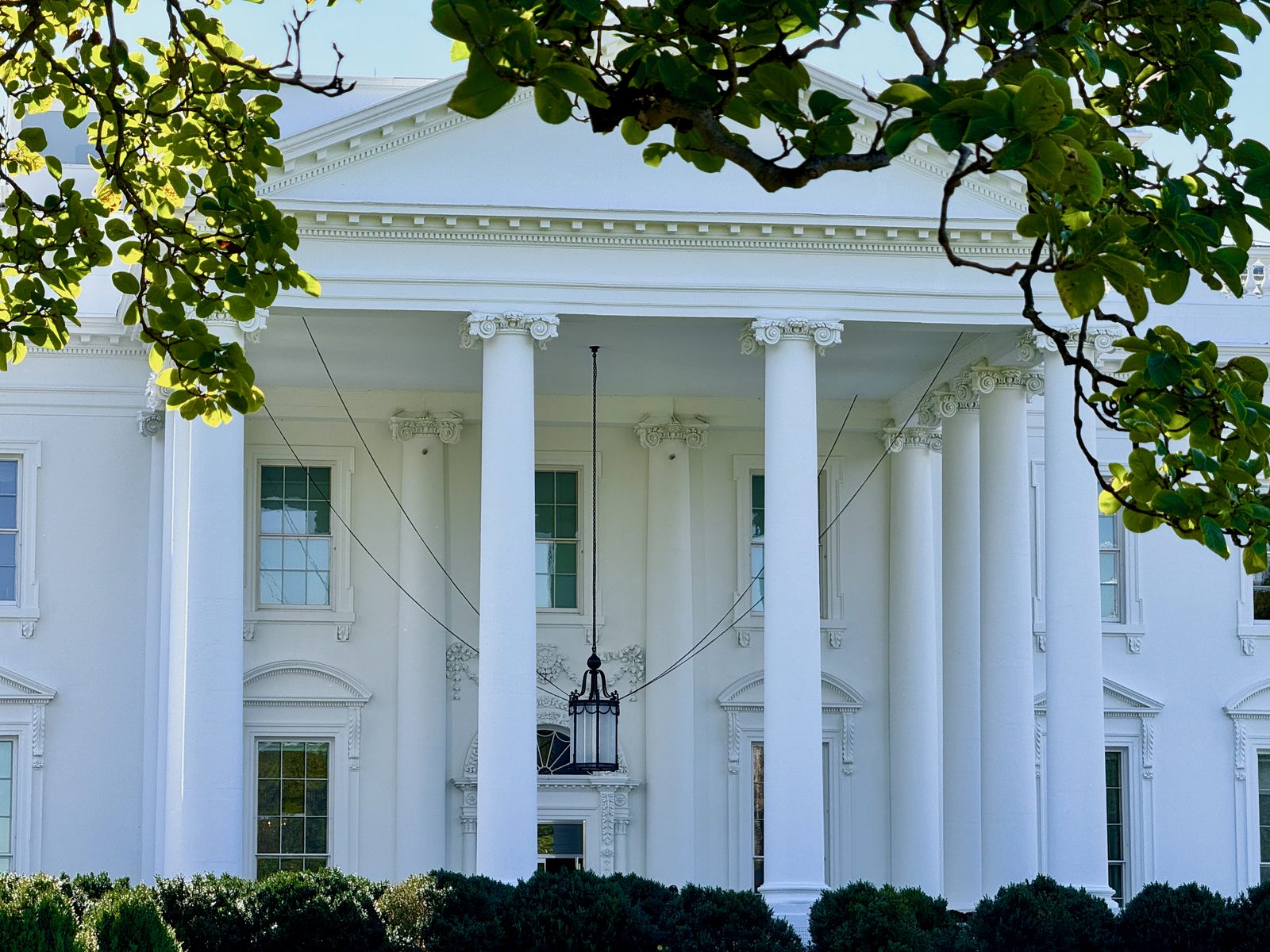
The White House has opened an unprecedented chapter in its campaign against the Federal Reserve. President Donald Trump signed a memorandum, dated October 7 and released on October 9, creating a three-person committee of inquiry to investigate allegations that Governor Lisa Cook made false statements on mortgage documents. The panel must deliver written findings of fact and legal conclusions to the president on whether there is cause to remove her, after a closed four-hour hearing at the White House on November 5, two days after the midterm elections. Cook, who denies any wrongdoing and has not been charged, may submit a written statement in advance and attend with counsel. The move answers a Supreme Court ruling in June that blocked her earlier dismissal for lack of due process, but it revives the most direct assault on the central bank's independence in its 112-year history.
The memorandum runs to a few pages and reads like a court order. Dated October 7 and published on the White House website on October 9, it creates what it calls a committee of inquiry, empowers it to consult federal departments including the Justice Department, and instructs it to determine whether there is cause to remove Federal Reserve Governor Lisa Cook from office. Cook, an economist appointed to the Board in 2022 and reappointed in 2023 to a term running to 2038, is accused of making false statements in connection with one or more mortgage instruments. She denies it. No prosecutor has charged her. The White House is not alleging a crime. It is building a case for removal.
That distinction is the story. Federal Reserve governors serve fourteen-year terms precisely to outlast any president, and the statute permits removal only for cause. No president had ever tried to remove a governor in the central bank's 112-year history until Trump moved against Cook in August 2025. The attempt failed at the Supreme Court. Now the White House has returned with a process designed to survive the objection that defeated it last time: notice, a hearing, counsel, a transcript, a written record. The question before the country is no longer whether the president wants a more compliant central bank. He has said so plainly. The question is whether this machinery gives him one.
A president may now convene a tribunal, in the White House, to interrogate a central banker about her mortgages.
The date is doing political work. The memo fixes the closed in-person hearing for November 5, two days after the midterm elections of November 3 that will decide control of the House and Senate. Senators confirm Fed nominees, so a vacancy on the seven-member Board matters enormously to whichever party holds the chamber. If the committee recommends removal and the president acts, Trump would nominate Cook's successor, and a Senate aligned with him could install that nominee quickly. The White House describes the timing as procedural. Critics call it a calendar built for leverage. Either way, the sequencing is unmistakable: the election first, the verdict machinery second.
In June 2026 the Court ruled five to four that Cook could remain in office while the legal questions were sorted out, because she had not received adequate notice of the charges or a meaningful opportunity to answer them. The majority left her in her seat and returned the case to a federal district court. But a footnote, much quoted since, said nothing prevented the president from trying again once those procedural defects were cured. The October memorandum reads as a direct reply to that footnote. It requires the committee to disclose its evidence before the hearing, lets Cook submit documents and witness statements and appear with counsel, caps the session at four hours, orders a transcript, and gives her until November 10 to file a final written response before any recommendation reaches the president's desk.
The underlying allegations came from Bill Pulte, the director of the Federal Housing Finance Agency and an ally of the president, who pointed to what he described as conflicting representations on Cook's mortgage documents. Her lawyers, Abbe Lowell and Norm Eisen, respond that a fair process will show no fraud was committed and therefore no cause exists. They add a jurisdictional argument with bite: the documents were signed before Cook joined the Fed's Board in 2022, so even a dispute over their contents could not constitute cause for removing a sitting governor. Cook has sued to keep her seat once already and won the round that mattered. The White House's answer is not a rebuttal of her facts. It is a tribunal.
The subtext has never been subtle. Trump has demanded lower interest rates for more than a year and has blamed the Fed's rate-setting committee for refusing. Just last month the committee raised the key rate by a quarter point to a 3.75 to 4.00 percent range in a unanimous twelve to zero vote, led by Chair Kevin Warsh, whom Trump himself appointed earlier this year after finally easing out Jay Powell. Cook is one of the twelve voters on the Federal Open Market Committee. Remove her, and one of the Board's seven seats opens for a nominee the president chooses. Reshape the Board and you need not fire the chair. This is the logic that also drove the earlier campaign against Powell, which the Bureau covered when the watchdog report cleared him. The institution held. The pressure moved down the org chart.
The 5D read starts with geopolitics: the Fed is the world's central bank in practice, and every finance ministry prices its debt off decisions made in Washington. A central bank that looks pliable exports its political risk to every dollar borrower on earth. Macroeconomics says the same thing through a different door: a captured Fed that cuts on command would cheapen the government's own borrowing, the oldest temptation in monetary history and the reason the 1951 Treasury-Fed Accord exists. Demographics makes it personal: savers, disproportionately older, want higher rates; borrowers, disproportionately younger, want lower ones, and every rate decision lands as a verdict on who builds wealth. History supplies the warning: Nixon pressed Arthur Burns for low rates before 1972 and bought a decade of stagflation; Turkey's politically dictated rates ended with a collapsed lira. Structure is the Fed's defense: fourteen-year terms, regional banks, a rotating committee, all engineered for exactly this siege. The engineering assumed attackers would respect the blueprint.
Three dates carry the calendar. The Federal Open Market Committee meets October 28 and 29, and Cook will be in the room as a voter unless a court says otherwise. Her lawyers have already said that anything close to an objective hearing will clear her, while the White House insists the process is about the faithful execution of the laws. On November 3 the country votes. On November 5 the hearing convenes behind closed doors. The transcript, by the memo's own terms, will be published, and Cook's final filing is due November 10. Watch whether the committee's evidence contains anything prosecutors have not seen, because no charges have been filed, and watch the district court docket, where the underlying case still lives. The September hike showed a committee willing to move unanimously even under pressure; the open question for October, dissected in the Bureau's minutes-day briefing, is whether that unity survives a governor fighting for her seat. The full country file is kept at the Magna Factbook.
There is a final symmetry worth noting. The committee is staffed by the process itself: an economic adviser, an ethics official, an employment commissioner, officers of the executive branch judging a woman the statute was written to protect from the executive branch. Perhaps the process will be fair and the evidence thin, and the machinery will grind to a halt with Cook vindicated. Perhaps it will find cause and set off the constitutional fight of the decade. What is certain is that the norm has already been rewritten. A president may now convene a tribunal, in the White House, to interrogate a central banker about her mortgages, and the only remaining question is whether the law still has anything to say about it.
From the Western policy lens, the committee is a stress test of the single most important unwritten rule in American economic life: that the president does not get to fire the central banker for disagreeing about interest rates. Western analysts divide on the memo's legal craft, some call it a careful answer to the Supreme Court's footnote, others a due-process costume on a predetermined outcome, but they converge on the stakes. If removal for mortgage paperwork predating a governor's tenure becomes normalized, every future president inherits a template.
The deeper Western read is institutional. The Fed's independence was engineered for exactly this siege: fourteen-year terms, regional banks, a committee of nineteen, all designed so no single election could capture the money supply. The October memorandum does not amend that engineering; it routes around it. The West's question is whether the courts, and the November 5 transcript, can force the routing back through the law.
From the Eastern lens, Washington's tribunal is the dollar system's privilege being repriced in real time. Beijing and Moscow have long argued that American financial dominance rested on institutions that stood above politics; a White House committee interrogating a central banker about her mortgages reads, from that side, as confirmation that the exception was always contingent. Chinese analysts will note the symmetry with satisfaction: the same capital that lectures the world on rule of law now staffs a removal panel with its own economic adviser.
Moscow's read adds the fiscal kicker. A Fed that answers to the president is a Fed that can be leaned on to cheapen the government's own debt, and every basis point of politically suppressed rates is a subsidy paid by savers everywhere. In this telling, the Cook affair is not an American scandal but a global data point: the reserve currency's manager is becoming a political instrument, and the prudent response is diversification. The East is not shocked. It is taking notes.
From the Global South, the Fed's internal war is read the way farmers read a distant weather report: the storm is not here, but the prices already moved. Every tremor over the central bank's independence shows up first in developing-country borrowing costs, because a political Fed is, in market terms, an inflation risk, and inflation risks get priced into the bonds of Accra and Buenos Aires before they get litigated in Washington. Southern finance ministries have watched this film before and know the ending is written in their debt service.
The sharper Southern read is about voice. The world's most important interest rate is set by people who do not have to live with its consequences, and now those people may be chosen by a president for their willingness to please him. The South's defensive playbook is unchanged: hold reserves, shorten duration, and price American political risk into every dollar borrowed. What changes is the premium.
Trump's October 7 memorandum, published October 9, creates a three-person committee: economic adviser Kevin Hassett, EEOC Chair Andrea Lucas and ethics chief Keith Sonderling. It must investigate allegations that Cook made false statements on mortgage documents and recommend whether cause exists for her removal. The memo orders a closed four-hour White House hearing on November 5, lets Cook appear with counsel and file written evidence, mandates a transcript, and gives her until November 10 to submit a final response.
In June 2026 the Court ruled five to four that Cook could stay on the Board while the legal questions were sorted out, because she had not received adequate notice of the charges or a meaningful chance to answer them. The ruling returned the case to a federal district court but added a much-quoted footnote: nothing prevented the president from trying again once she received proper notice. The October memorandum is built to supply exactly that missing process.
No. Cook denies any wrongdoing and no prosecutor has filed charges against her. The allegations were surfaced by Federal Housing Finance Agency Director Bill Pulte, a Trump ally, who pointed to conflicting representations on her mortgage documents. Her lawyers add that the documents were signed before she joined the Fed Board in 2022, so they could not constitute cause for removing a sitting governor even if disputed.
Fed governors vote on interest rates, and the Fed raised its target range to 3.75-4.00 percent in September under Chair Kevin Warsh. Removing Cook would open one of the Board's seven seats to a presidential nominee and could tilt future votes. Markets read any dent in Fed independence as inflation risk, pricing it into bond yields, mortgages and the dollar long before the courts finish their work.
