South Korea's president threatened unspecified retaliation against Ukraine over its public disclosure of two transferred North Korean prisoners of war — and accused Kyiv of cheering on war on the Korean Peninsula.
Published 2 October 2026 · 06:00 GMT
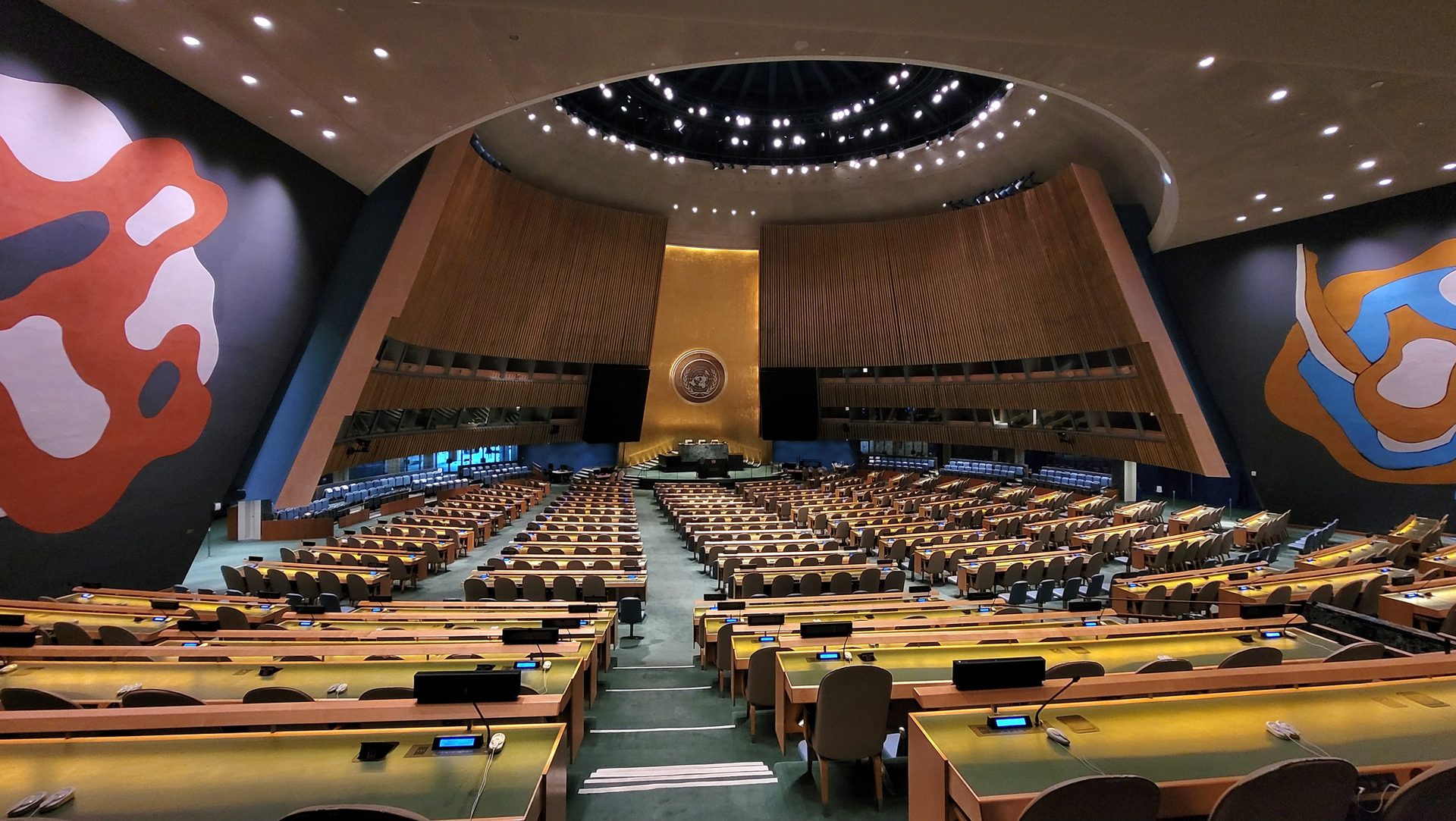
Two prisoners, one broken secret, and an ultimatum posted on X. On Friday, South Korea's president told Ukraine to admit a confidentiality pact over two North Korean soldiers — and apologize — or face “additional measures.” The war in Europe has just exported its ugliest argument to the Korean Peninsula.
On Friday morning, South Korea's president did what heads of state once reserved for sealed cables: he issued an ultimatum on X. “If the refusal to acknowledge the facts and issue a public apology continues, we will take additional measures,” Lee Jae Myung wrote, addressing Ukraine — not Moscow, not Pyongyang, but Kyiv: a partner, a fellow American ally, a country his government has quietly bankrolled for years. The demand came in two parts. First: acknowledge that a confidentiality agreement covered the transfer of two North Korean prisoners of war captured fighting for Russia. Second: apologize for breaking it. Lee then added the diplomatic equivalent of a blade between the ribs: “grave regret” over Ukrainian remarks about an imminent military clash between North and South Korea — remarks he said amounted to encouraging war on the Korean Peninsula. Read the week backwards and the ultimatum looks less like a spasm than a staircase. Monday: Seoul summoned Ukraine's acting ambassador, Andrii Vieshkin, for a formal dressing-down. Wednesday: South Korea's spy agency briefed lawmakers behind closed doors on how the secrecy pact was supposedly built. Thursday: Ukraine's foreign minister, Andrii Sybiha, tried the soothing route — “a diplomatic misunderstanding,” he called it, insisting Kyiv was working to mend ties. Friday: Lee dropped the hammer. Five days, five escalations, each one public, each one designed to be seen. And note the channel: Lee has fought this entire dispute in public, post by post, from Mexico City to Seoul — diplomacy as theater, with the peninsula's fifty million people in the front row. Consider what is actually at stake: two men, known to the public only by their surnames, Ri and Baek. One of them tried to kill himself rather than be taken alive. They are now living proof of a proposition the Korean Peninsula understands better than any place on earth — that prisoners are not just people. They are currency. And right now, the exchange rate is collapsing.
The ultimatum's wording is worth reading slowly, because Seoul is building a legal case in public. “Although Ukraine requested private handling and an agreement was reached to keep it confidential, they unilaterally made the matter public,” Lee wrote on Friday. The sequence matters to Seoul: Kyiv asked for secrecy, both sides agreed, Kyiv broke the deal. Lee further accused Ukraine of making him out to be a “liar” by denying any non-disclosure pact ever existed — a personal charge that explains the heat. This is no longer a disagreement about two prisoners. It is a fight about who is telling the truth, and a president does not call a wartime ally's government liars on social media unless he believes the domestic cost of silence is worse. Seoul's version of the pact, as briefed to lawmakers Wednesday by the National Intelligence Service, is granular. There was no single signed document between leaders — “We do not know whether there was an agreement between the leaders,” the NIS said — but there was, the agency insisted, a nondisclosure understanding “through several channels, including phone calls between the two countries' foreign ministers and consultations between our embassy [in Kyiv] and Ukraine's Foreign Ministry.” Consultations on the two soldiers began on January 9, 2025, the day of their capture. The logic, in Lee's telling, was humanitarian, diplomatic and security-driven: the men's families in North Korea would be at risk; Pyongyang would read the transfer as provocation; and Seoul's fragile effort to lower inter-Korean tensions could not survive a public spectacle. “It was reasonable and justifiable” to keep it secret, Lee wrote in September — a line that now reads like the preamble to Friday's threat. Kyiv's version is simpler, and flatly contradictory. “There was no such (non-disclosure) agreement. That is not true,” Dmitro Litvin, an adviser to President Volodymyr Zelensky, wrote — adding that “it would be wrong to conceal the whereabouts of specific prisoners.” Ukraine, in other words, denies the premise of the ultimatum entirely. You cannot apologize for breaking a promise you never made.
Two men crossed a border on a battlefield, and the war followed them home — Seoul wanted them protected; Kyiv needed them seen.
Before the row, there were the men. Ri and Baek — only surnames have been made public — were among an estimated 14,000 to 15,000 North Korean troops Pyongyang has dispatched to fight for Russia since 2024, under the mutual defense pact the two countries signed. Ukrainian forces captured them in Russia's Kursk region in January 2025, the first North Korean soldiers taken alive in the war. Zelensky himself narrated the capture at the United Nations: “These guys are not easy to capture alive. One of them, when he realized he was going to be taken prisoner, tried to kill himself. And he was shocked that fate did not let him die.” What followed is the part of the story neither capital disputes. Zelensky published their photographs and interrogation footage, then offered to hand them to North Korea in exchange for Ukrainians held by Russia. The two men, instead, said they wanted to go to South Korea — whose constitution treats North Koreans as its own citizens. They arrived in mid-September, and are now undergoing questioning under the protection of government agencies. The NIS says it confirmed several times that they genuinely wished to come, and that they have no major health problems. Why secrecy, then? Seoul's answer has three layers, and each one is real. The humanitarian layer: the men's families in North Korea face retaliation the moment their defection is confirmed — a pattern as old as the armistice. The security layer: Pyongyang, which has spent the year tightening its military bond with Moscow, reads any public handling of “its” soldiers by Seoul as a provocation. The diplomatic layer: Lee's government has been trying, against the grain, to reduce tensions with the North — a project that detonated this week when a suspected landmine explosion in the Demilitarized Zone injured three South Korean soldiers. Disclosure, in this reading, was not a communications choice. It was a detonation. The fuse was lit on September 23, at the United Nations General Assembly in New York. “Recently, we sent two North Korean prisoners of war to the Republic of Korea,” Zelensky said, addressing South Korea by its formal name — the first public acknowledgment of a transfer completed in mid-September. Seoul, which had said nothing until then, erupted within hours. On September 24, Lee wrote on X that the disclosure was “deeply regrettable” — a breach of the confidentiality both sides had agreed to. He went further, in language that startled even seasoned Korea-watchers: “We call someone who harms another person's life and the national interest and security for their own petty gain a murderer or a traitor.” Russian outlets, delighted, read it as a personal broadside against Zelensky. The days that followed hardened the positions. On Sunday, Lee's senior presidential secretary for public relations, Seong Ghi-hong, issued a formal statement: “The presidential office expresses strong regret over Ukraine's unilateral disclosure and its subsequent false announcement that there had not been a non-disclosure agreement,” adding that the government was reviewing additional measures. Seoul said Ukraine had repeatedly discussed the transfer through various channels and had requested secrecy itself — Kyiv, by Seoul's account, feared domestic criticism at home for giving up an opportunity to exchange the soldiers for Ukrainian prisoners. On Monday, Seoul summoned Ukraine's acting ambassador. Then came the wrinkle neither side can fully explain away: Kyiv had, in fact, informed Seoul in advance that Zelensky would mention the prisoners at the UN. “The Ukrainian side had informed us in advance and sought our understanding,” a senior presidential official said in Mexico City — but “it was unclear exactly how the matter would be phrased.” The dispute has also cracked open inside Ukraine itself. Oksana Torop, a media adviser to Valerii Zaluzhnyi — Ukraine's ambassador to London and Zelensky's most prominent potential rival — wrote on Facebook that a non-disclosure agreement did exist and called the UNGA announcement a “show.” Litvin shot back publicly: no agreement, not true. Whatever the truth about the pact, Kyiv is now arguing about it with itself.
Strip away the personalities and the row is a textbook study in how little room Seoul has left to maneuver — the geopolitics dimension, first. Lee's government came to office promising to lower the temperature with Pyongyang, a detente project that has consumed his first months. The suspected DMZ landmine blast that injured three South Korean soldiers this week landed squarely in the middle of that project, handing his conservative critics — who already accuse him of being excessively cautious toward Pyongyang — a live provocation to wave. In that context, Zelensky's disclosure was not a minor breach of etiquette. It was a grenade rolled into Lee's most delicate policy. The triangle is unforgiving. North Korea has signed a mutual defense pact with Russia and sent up to 15,000 troops to its war; Zelensky said this week that more than 8,000 North Korean soldiers remain in Russia and 10,000 more are being trained for deployment. Any public handling of captured North Korean soldiers by Seoul risks being read in Pyongyang as Seoul joining the war effort against the North's ally — precisely the escalation Lee's detente is designed to avoid. Meanwhile Washington watches two of its most capable aligned democracies brawling in public, a spectacle that could complicate American efforts to shore up a united global front to contain Russia, China and North Korea. And Kyiv, for its part, has a motive Seoul's own spies have named: the NIS assessed that Zelensky went public in hopes that South Korean public opinion would swing behind sending weapons and more aid to Ukraine. Ukraine set no conditions for the transfer and Seoul promised nothing — but the UNGA stage was, in this reading, a pressure tactic dressed as transparency. The macroeconomics dimension is where the ultimatum bites. South Korea has backed Ukraine with humanitarian and financial assistance since the full-scale invasion of 2022, and in July pledged a further $100 million in non-lethal assistance. That support — humanitarian, financial, reconstruction — is precisely what “additional measures” would target, according to Cho Han-bum, a senior fellow at the Korea Institute for National Unification: “Ukraine has more to lose than South Korea because it is receiving support from Seoul.” It is the classic asymmetry of aid as leverage: the donor threatens to close the tap, the recipient discovers how much of its resilience was rented. Note what Lee has not threatened: weapons. Seoul has held the line on lethal aid throughout the war, and the NIS briefing stressed that no promises of support were made in exchange for the prisoners. The row may yet force that line into question — which is exactly why Kyiv wanted Korean public opinion stirred in the first place. The historical dimension is older than either presidency. Prisoners have been diplomatic currency on this peninsula since the Korean War, when the question of who would be repatriated — and who refused to go — nearly sank the armistice talks. Zelensky's original offer, trading the two men for Ukrainians held by Russia, was straight from that playbook; spending them instead on a UNGA applause line, as Seoul sees it, debased the currency. And the structural dimension — how information war now works — is the deepest cut. Interrogation videos posted for the world, a transfer announced on the General Assembly floor: in the age of the permanent camera, a prisoner's body is a broadcast asset, and whoever controls the footage controls the narrative. Seoul wanted these men to disappear quietly into new lives. Kyiv needed them to be seen. The demographic and human dimension is the one both capitals claim and neither can fully own: the two men themselves, and the families they left behind. In the North, a confirmed defection can mean punishment for three generations of kin — which is why Seoul's humanitarian argument for secrecy is not posturing. But the men also chose the South, freely and repeatedly, under a constitution that claims them as citizens. They are not symbols. They are the only parties to this dispute who never asked to be in it.
Watch first for Kyiv's answer. Foreign Minister Sybiha has already chosen his register: “I would not like to call this an incident. Let's say, it's a diplomatic misunderstanding.” “For us, South Korea is an important country,” he added, promising “momentum, continuation, and concrete results.” That is the language of a government that knows it needs Seoul more than Seoul needs it — and that an apology, however bitter, costs less than a ruptured aid pipeline. Whether Zelensky himself apologizes is another matter; nothing in his record suggests he surrenders narrative ground easily, and the internal split — Torop versus Litvin — shows his own camp cannot agree on what was promised. Watch second for the content of “additional measures.” The menu runs from the symbolic (postponed visits, cooled rhetoric) to the material (frozen humanitarian tranches, stalled reconstruction commitments, reviewed financial assistance). Any of it would be unprecedented: South Korea has never sanctioned a fellow American-aligned democracy over a bilateral spat. Watch third for the DMZ landmine investigation — if Pyongyang is found responsible, Lee's detente project faces its hardest test yet, and the POW row will look like the undercard. Watch fourth for Washington. The United States has said little, but American diplomats detest public allied-on-allied feuds, and the pressure to quietly broker a face-saving formula — acknowledgment without humiliation, apology without admission — will be intense. And watch, finally, for Pyongyang's own reading. North Korea has not yet spoken. When it does, the words will matter less than the missiles: every disclosure about “its” soldiers is, to Kim Jong Un, a reminder that his troops are dying in someone else's war — and that Seoul now holds two of them. The soldiers nobody can agree on are, in the end, a mirror. Seoul looks at Ri and Baek and sees two human beings whose families' lives depend on discretion — and a presidency whose signature project, lowering the temperature with the North, cannot survive another public detonation. Kyiv looks at the same two men and sees proof, broadcast to the world, that North Korea is bleeding for Russia — and a lever to pry open the arsenal of Asia's most formidable arms industry. Both readings are sincere. Both cannot be true at once. That is what makes the row intractable, and that is what makes it revealing. For what the rupture really exposes is the geometry of Seoul's position in 2026: a middle power lashed to Washington's alliance system, courted by a wartime Kyiv, and living — as it always has — within artillery range of Pyongyang. Lee Jae Myung's ultimatum is an attempt to prove that the middle can set terms: acknowledge the pact, apologize, or pay. Whether Ukraine pays in pride or in aid tranches, the deeper bill has already arrived. Two prisoners crossed from a Russian battlefield into South Korean custody, and the war followed them home. On the Korean Peninsula, nothing — not even a secret — stays buried for long.
The Western read of this row is sympathetic to Ukraine's reflex and uneasy about Seoul's. Zelensky's instinct — that a war's truths belong in daylight, announced from the General Assembly floor — is the instinct of a leader who has survived on narrative oxygen for four years. From London, Paris and Washington, the idea that two prisoners' whereabouts should have stayed secret sits awkwardly with the transparency norms the West preaches. And yet Western capitals are quietly alarmed, because the fracture is real and the timing is terrible: two of the West's most capable aligned democracies are feuding in public while Moscow and Pyongyang deepen their military embrace. The “liar” charge, in particular, landed badly — Seoul is not some peripheral donor to be strong-armed; it is the arsenal of democracy's Pacific wing, a $100-million-plus backer of Ukraine's survival, and a capital whose restraint on lethal aid has always been a Western hope, not a Western right.
What the West wants now is de-escalation without humiliation: a formula in which Kyiv acknowledges the confidentiality understanding — even without conceding every word of Seoul's version — and Lee pockets the apology and moves on. American diplomats, experienced in brokering allied spats from Ankara to Tokyo, will be working the phones, because the alternative is genuinely dangerous. If Seoul follows through on “additional measures” and trims its humanitarian, financial and reconstruction support, Ukraine loses a quiet but meaningful lifeline — and the West's united front against the Russia–North Korea axis develops a visible crack. Nobody in the Western camp believes two prisoners are worth that price. The question is whether either president can afford to say so first.
The Eastern read starts from the peninsula itself, where the row looks less like a diplomatic accident than an inevitability. Seoul's detente project — lowering the temperature with a nuclear-armed neighbor that has just buried its soldiers in a European war — was always going to collide with somebody's communications strategy, and Kyiv's happened to be first. Tokyo, watching from across the strait, reads the episode as confirmation of its own doctrine: inter-Korean stability is a regional public good, and anyone who treats the peninsula as a stage for someone else's war risks breaking it. The region also understands Seoul's secrecy instinct in its bones: on this peninsula, prisoner politics are never abstract — they are families, retaliation, three generations of punishment — and discretion has always been the price of getting people out alive.
Moscow, meanwhile, is enjoying itself. Russian outlets like Moskovsky Komsomolets have gleefully framed Lee's “murderer or traitor” passage as a personal denunciation of Zelensky, and the Kremlin's broader read is strategic: every public crack between American-aligned capitals is proof that the Western coalition is a fiction, and every North Korean soldier in Russian uniform is a receipt for the mutual defense pact. Beijing watches the same crack with different eyes — a reminder that Washington's Asian alliances come with their own tripwires, and that Seoul's room for maneuver shrinks every time someone else's war washes up on its shores. The Eastern verdict: the prisoners were never the story. The triangle is.
The Global South read is cooler, and more skeptical of both capitals. From Doha to Dhaka, the row looks like two American-aligned states discovering that alignment is not alliance — that Washington's friends can still wound each other over interests Washington never bothered to reconcile. Al Jazeera's framing caught the essential absurdity: two powerful militaries, both facing down common adversaries, reduced to trading ultimatums on social media over two soldiers neither public had heard of a month ago. The South also notices the asymmetry that Seoul is now brandishing: aid as a leash. When a donor threatens to close the tap over a bilateral slight, every recipient capital in the developing world — from Kyiv to Khartoum — hears the same message about what “partnership” really means.
But the South's deepest sympathy is reserved for the two men at the center, and it is unsentimental. Ri and Baek are not the first soldiers of a poor country to be spent as currency in a rich country's war, and they will not be the last — conscripted by Pyongyang, captured in Kursk, filmed for the cameras, offered in a swap, claimed by a constitution, and now held hostage to a diplomatic row they never chose. The Global South has watched this film before, in other uniforms and other languages. Its verdict on the row is weary rather than outraged: the great powers will reconcile or they won't, the aid will flow or it won't — but the two men will still be the ones paying. Whatever Seoul and Kyiv decide, the South will be watching what happens to Ri and Baek. That is the only ledger that matters.
Beijing just wrote the biggest liquidity check of the year — and changed nothing else.
The People's Bank of China will offer banks up to one trillion yuan a day — about $149 billion — in overnight funds from September 28 through October 8, covering the Golden Week holiday. It is the largest such cap since the tool's introduction in June 2026, up from 600 billion yuan in mid-September.
The calendar explains the timing. Golden Week sends hundreds of millions of Chinese traveling and spending; banks need cash the way airports need runways. The central bank is making sure the plumbing holds.
The scale, though, is the story. One trillion yuan a day is not holiday housekeeping. It is a backstop — a signal that whatever the holiday throws at the financial system, the PBoC has already covered.
And then, the other hand: nothing. Chinese banks left the one-year and five-year loan prime rates unchanged at 3.00% and 3.50% — the 16th consecutive month without a move.
Sixteen months of stillness in the price of credit, alongside the largest liquidity flood of the year. Beijing is watering the garden and refusing to lower the fence — liquidity yes, cheaper credit no.
Governor Pan Gongsheng gave the doctrine a name: slower loan growth is becoming "the new normal." Property and local-government borrowing are shrinking faster than emerging industries can borrow. The credit engine is being rebuilt mid-flight.
Liquidity is Beijing's answer to everything except the one question markets keep asking: where is the growth?
The PBoC is not idle elsewhere. It stepped up support with a net 200-billion-yuan injection through medium-term lending facility operations, reiterated its "moderately loose" stance, and kept its grip on the yuan.
The yuan, for its part, cooperated — rebounding after briefly dipping below 6.70 per dollar as US Treasury yields rose and the PBoC's grip eased.
The diplomacy helped. A US–China summit extended the trade truce to January — without new tariff cuts, but without new tariffs either. A truce, not a peace; markets will take it.
Step back and the contrast is the story. In Washington, yields cross 5% and traders bet on another hike. In Beijing, the central bank floods the system with cash and leaves rates untouched for a 16th month. Two central banks, two planets.
The logic is not mysterious. China's problem is not hot demand — it is cold credit. Pumping liquidity keeps the system liquid; cutting rates into weak demand would be pushing on the proverbial string.
The risk is the one Beijing knows best: banks awash in cash, with nowhere productive to lend it. Liquidity without lending becomes asset froth — the 2015 lesson, still fresh in institutional memory.
For the region, the signal matters more than the mechanics. A stable yuan and a liquid Chinese banking system through Golden Week is the foundation under Asia's supply chains. When Beijing sneezes, the region's exporters reach for tissues.
Watch what happens after October 8. If the trillion-yuan window closes quietly, it was holiday plumbing. If support lingers, it was something else — a central bank telling you, without saying it, that the economy needs the help.
Western coverage — Reuters and the financial wires — emphasizes the restraint: Beijing holding rates while flooding liquidity, a central bank running out of its favorite tools.
In this telling, 16 months of unchanged loan prime rates is the real headline — evidence of a policymaker boxed in by a hawkish world, a weak property sector, and the fear that rate cuts would only weaken the yuan. Liquidity is what you do when you've decided rates can't move.
Pan's "new normal" gets a skeptical hearing: an elegant phrase for a credit engine that no longer transmits. The question in Western commentary is whether "moderately loose" is a stance or a shrug.
Eastern coverage — Xinhua and Chinese outlets — emphasizes the calibration: targeted, seasonal, and exactly as doctrine prescribes.
In this telling, the trillion-yuan facility is textbook PBoC: precise, time-bound, and aimed at a known seasonal need. The unchanged rates are not paralysis but prudence — "moderately loose" means loose where it counts, steady where it matters, with the yuan's stability as the binding constraint.
The summit's truce extension gets equal billing: diplomacy buying the central bank room to maneuver, and the maneuver working — the yuan's rebound presented as policy competence, not luck.
Global South coverage — Malaysia's business press among it — emphasizes the neighborhood: what Beijing's plumbing means for everyone downstream.
The read from Kuala Lumpur: a liquid China through Golden Week is good news for ASEAN exporters, supply chains, and the region's own central banks. Yuan stability is a public good in Asia, and the PBoC just underwrote another week of it.
The caution in this coverage is borrowed from experience: when the region's biggest economy needs record liquidity to get through a holiday, the "new normal" of slower credit is everyone's normal too.
To read Beijing's move properly, you need the toolkit. Start with the overnight reverse repo — the instrument at the center of the trillion-yuan headline. In a reverse repo operation, the central bank lends cash to commercial banks overnight, taking bonds as collateral; the banks get the liquidity they need, the central bank gets the bonds back the next morning plus a sliver of interest. It is plumbing, not policy: the money created exists for a day, maybe rolled over, and its purpose is to keep the interbank market — the market where banks lend to each other — from seizing. The cap is the message. A trillion yuan a day says: whatever the holiday throws at the system, the PBoC has already covered.
The tool itself is young — introduced only in June 2026 — which makes the record cap more interesting. A new instrument's ceiling is normally discovered cautiously; jumping from 600 billion yuan in mid-September to a full trillion two weeks later is not calibration but declaration. It tells the banks, and through them the market, that the central bank will not be outbid by seasonal stress. The facility runs September 28 to October 8, covering Golden Week exactly. Time-bound, enormous, and explicitly temporary: the PBoC is writing a check it intends to tear up on the 9th. The question the article ends on — what happens after October 8 — is the only one that matters, because a backstop that lingers stops being a backstop and starts being a subsidy.
Then the medium-term lending facility — the MLF — through which the PBoC added a net 200 billion yuan. If reverse repos are the overnight overdraft, the MLF is the term loan: banks borrow for months, not hours, pledging collateral, at a rate the central bank sets. The MLF rate is the PBoC's quiet policy lever — it guides the loan prime rates without the drama of changing them. And the loan prime rates, the LPRs, are the number the article keeps returning to: 3.00 percent for one year, 3.50 percent for five, unchanged for the sixteenth consecutive month. The LPR is the benchmark for most new lending in China; holding it still while flooding the system with cash is the whole doctrine in one gesture. Liquidity yes. Cheaper credit no.
The sixteen months of stillness deserve their own reading, because stillness is also a decision — sixteen times over. In a world where Washington is hiking and yields cross 5 percent, cutting Chinese rates would narrow the already thin cushion against capital outflow and yuan depreciation; every basis point of easing is a basis point of incentive for money to leave. The PBoC's box, as the Western lens describes it, is real: a property sector that no longer transmits stimulus, local governments deleveraging rather than borrowing, and a currency whose stability is the binding constraint on everything else. Holding the LPR is not paralysis. It is the recognition that the price of credit is no longer the economy's binding constraint — and that moving it would cost more in currency stress than it buys in growth.
The calendar explains the timing, as the article says — but the calendar deserves its scale stated plainly. Golden Week is the largest annual human migration on earth compressed into seven days: hundreds of millions of Chinese traveling, spending, withdrawing cash, settling bills. The banking system's cash demand does not rise. It detonates. ATMs must be stocked, merchants' settlement accounts funded, the interbank market supplied with enough reserves to clear a week's worth of the world's second-largest economy changing hands. In normal years, the PBoC manages this with routine open-market operations. This year it wrote the biggest check in the tool's short history.
The scale, though, is the story — the article's line, and worth pressing. One trillion yuan a day is not holiday housekeeping; it is a backstop sized for something the PBoC sees and the market does not yet. Seasonal demand explains the facility's existence. It does not fully explain its size. Either the central bank is being theatrically cautious — signaling strength by oversupplying safety — or its internal read on holiday-season financial stress is darker than the public data. Both readings are consistent with "moderately loose." Only one of them is reassuring. The banks will take the cash either way; the signal is in the surplus.
There is also the consumption angle, which is where the liquidity meets the real economy. Golden Week is China's great annual test of consumer confidence: the week when households vote with their wallets on whether the economy feels safe. A banking system visibly backstopped — cash available, payments clearing, no friction — is the precondition for the spending the state wants to see. The PBoC cannot make households spend; it can only ensure that nothing in the plumbing stops them. In an economy where the consumer has been the missing piece and property wealth no longer does the spending's work, the holiday's cash registers matter more than the interbank rate. The trillion yuan is, among other things, a bet on the tills.
And the regional read — the Global South lens from Kuala Lumpur — captures what the holiday means beyond China's borders. A liquid China through Golden Week is the foundation under Asia's supply chains: exporters paid, importers funded, the region's own central banks spared the volatility of a yuan under holiday stress. Yuan stability, as the article notes, is a public good in Asia, and the PBoC just underwrote another week of it. When the region's biggest economy needs record liquidity to get through a holiday, the "new normal" of slower credit becomes everyone's normal — but a stable holiday is still a stable holiday, and Asia's exporters will take it.
Central bankers choose their phrases the way diplomats choose communiqués — every word weighed, every ambiguity intentional. When Governor Pan Gongsheng said slower loan growth is becoming "the new normal," he was not describing a statistic. He was retiring an expectation. For two decades, China's credit engine ran on a simple formula: property developers borrowed, local governments borrowed against land, and the resulting construction carried GDP. That engine is being dismantled mid-flight — property deleveraging, local-government debt discipline — faster than emerging industries can borrow to replace it. "New normal" is the doctrine that says: stop waiting for the old credit cycle to return. It is not returning.
The doctrine has a logic, and it is worth steelmanning before doubting. Credit-fueled growth bought China two decades of expansion and left it with the property crisis, the local-government debt pile, and the demographic headwinds now arriving together. Pumping cheap credit into that structure — the old playbook — would reflate the very imbalances the state is trying to defuse. Slower, cleaner credit growth, directed at manufacturing upgrades and strategic industries rather than concrete, is the quality-over-quantity bet. The PBoC is not refusing to stimulate. It is refusing to stimulate the old economy. The distinction is the entire policy.
The risk, as the article notes, is the one Beijing knows best: banks awash in cash with nowhere productive to lend it. Liquidity without lending becomes asset froth — the 2015 lesson, still fresh in institutional memory, when stimulus leaked into equity speculation rather than productive investment. The trillion-yuan facility, the 200-billion MLF injection, the "moderately loose" stance — all of it presupposes transmission channels that the "new normal" itself describes as weakened. Watering the garden, to use the article's image, works only if the soil still absorbs water. If property and local governments no longer drink, and emerging industries cannot drink fast enough, the water pools. Pooled liquidity has a history in China. It is called a bubble.
Step back and the contrast the article closes on — two central banks, two planets — is the frame that will define the autumn. Washington hikes into data it may not have, fighting inflation with the South's interest bills. Beijing floods with cash it cannot lend, defending a currency it cannot afford to let slip, waiting for a credit engine it is rebuilding mid-flight. Neither has a clean instrument. Both are improvising inside doctrines — data-dependence, the new normal — that describe the world they wish they governed. Watch October 8: if the trillion-yuan window closes quietly, it was holiday plumbing, and the doctrine holds. If support lingers, the PBoC will have told you, without saying it, that the new normal needs more help than the old vocabulary admits.
Monetary policy does not happen in a diplomatic vacuum, and the PBoC's autumn maneuver owes more to the summit than the communiqués admit. The US–China meeting extended the trade truce to January — no new tariff cuts, but no new tariffs either — and that pause is worth more to Beijing's central bank than any single instrument in its toolkit. Tariff escalation would have meant a weaker yuan, imported inflation, and capital flight arriving together; the truce removes the worst tail from the PBoC's planning. "A truce, not a peace; markets will take it," as the article says. So will central bankers.
The yuan's rebound — recovering after briefly dipping below 6.70 per dollar — is the truce's signature in the currency market. With US Treasury yields rising and the PBoC's grip easing, the currency found its footing not through intervention but through the removal of a threat. That distinction matters: a yuan steadied by diplomacy is cheaper to defend than a yuan steadied by reserves. Every week the truce holds is a week the PBoC does not have to choose between growth and the exchange rate — the choice that has boxed in Chinese policy for the better part of a decade.
But truces expire, and January is closer than it looks. The extension without tariff cuts is a freeze, not a thaw: the existing duties remain, the structural disputes untouched, the next escalation one headline away. The PBoC is therefore managing a window, not a settlement — using the diplomatic calm to get through Golden Week, to steady the currency, to buy the "new normal" time to prove itself. If January brings escalation, the trillion-yuan plumbing will look like the prelude to a harder season. Diplomacy bought the central bank room to maneuver, as the Eastern lens notes. Room is not resolution. It is rented, monthly, and the rent comes due in January.
