CENTCOM chief Brad Cooper says a US naval blockade has cost Iran $25 billion in oil revenue and left the Revolutionary Guard unable to pay its troops. Tehran calls the collapse narrative an illusion — and both sides are using the economy as a weapon.
Published 20 October 2026 · 13:12 GMT
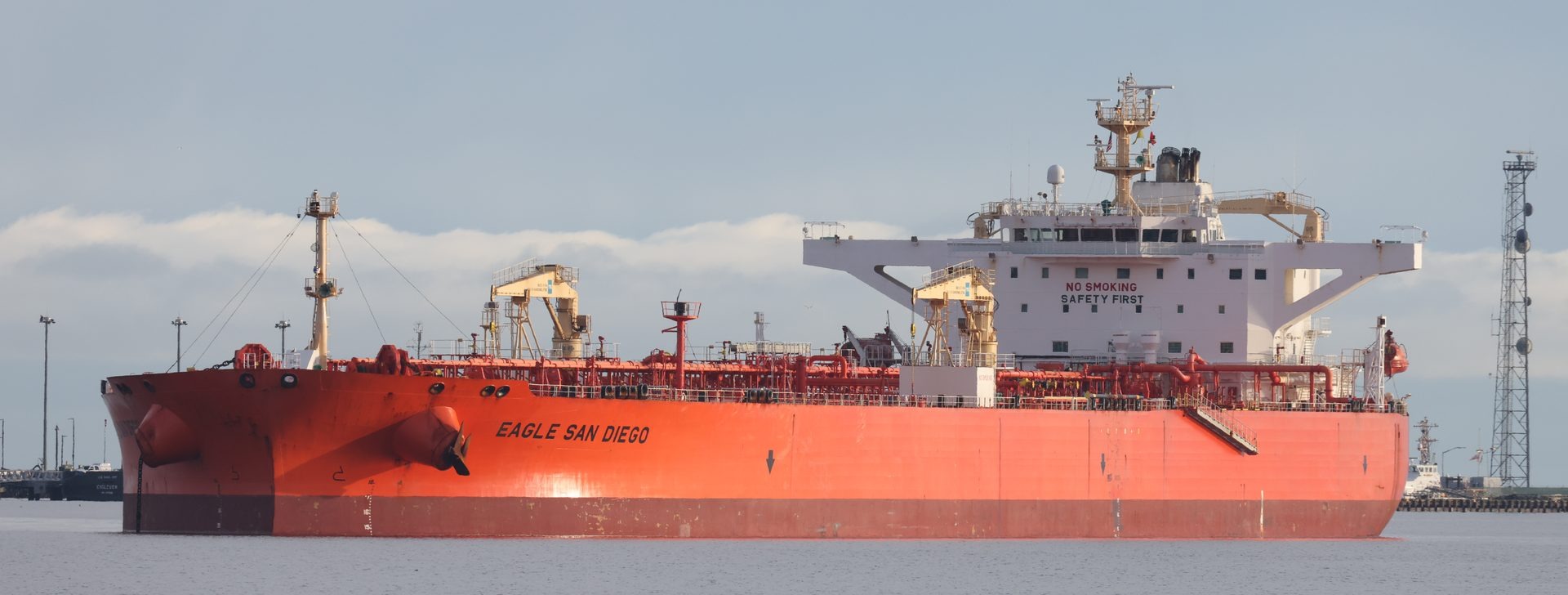
Two stories about Iran’s economy collided this week, and both cannot be true. On Friday, October 16, the commander of US Central Command, Admiral Brad Cooper, said in a video message that American military pressure and a naval blockade of Iran’s southern ports had “dealt severe blows” to the country. The blockade, he said, had prevented at least $25 billion in Iranian crude exports, while CENTCOM and the Treasury Department had helped freeze roughly $350 million in Iranian cryptocurrency assets. The financial strain, he claimed, was so severe that the Islamic Revolutionary Guard Corps could no longer pay its troops — and that Iran-aligned militias were withholding their fighters’ pay to funnel money back to Tehran.
Two days earlier, in Bangkok, Iran’s central bank governor Abdolnaser Hemmati had offered the mirror image. Speaking at an International Monetary Fund meeting on October 14, he dismissed American claims that Iran’s economy is collapsing as “an illusion,” insisting the country holds adequate foreign-exchange reserves and could inject up to $2 billion into currency markets to defend the rial. And on Sunday, October 18, President Masoud Pezeshkian acknowledged that the military attacks and the maritime blockade had created “substantial problems” — then argued Iran would weather them by relying on domestic capacities.
This is the information war wrapped around a real war: Washington says the siege is working and Tehran is running out of money; Tehran says the siege is real but the collapse narrative is fiction.
The mechanics of the pressure campaign are documented in unusual detail. Washington reinstated its naval blockade of Iranian ports in July and launched “Operation Economic Outcast” on August 24, a campaign aimed at severing Iran’s remaining financial and commercial links with the global economy. In September it widened the net to Iranian airlines, further isolating the country.
The export numbers tell the starkest story. According to energy-intelligence platform Vortexa, Iran’s seaborne crude exports fell to zero in the second week of September, down from a 14-day average of 230,000 barrels per day at the start of the month — and they were still at zero as of October 5. Oil sales typically account for about a third of Iran’s state budget and are a key funding source for the IRGC.
The domestic pain is measurable too. Exchange-rate data from Iranian currency tracker Bonbast shows the rial has lost nearly 35% of its value against the US dollar since July. Annual inflation reached 73.6% in September, according to the Statistical Centre of Iran — and the strain has been building for months, as the Bureau reported when the currency’s slide forced out the oil minister. The World Bank projected earlier this month that Iran’s economy will contract 7.7% in the fiscal year 2026-27.
Tehran is not standing still. In late September the central bank launched a program to sell up to $2 billion through state banks to support the rial. Pezeshkian said consumption management had removed the need for petrol imports that would otherwise cost $12 billion, and promised to return the revenues from recently increased fuel prices to families. His government had already doubled the price of petrol sold above the subsidized monthly quota in September.
On the proxy ledger, Washington added fresh claims. The US Treasury alleged in September that Kataib Hezbollah, a prominent Tehran-backed armed group in Iraq, had siphoned Iraqi resources to support Iran — a reversal of the usual money flow. Reuters reported earlier this month, citing sources speaking on condition of anonymity, that Hezbollah received $200 million from Iran in September; the US State Department rejected the report at the time.
Cooper’s most explosive claim — that the IRGC cannot pay its troops — rests on “reports” he did not identify, and it has not been independently confirmed. Neither has the $25 billion figure: CENTCOM’s statement did not specify the period the estimate covers, and the $350 million crypto freeze has no public paper trail. The claim that militias are withholding fighters’ pay to fund Tehran comes from the same unidentified reports.
We also do not know what Rezaei’s candor means. Earlier this month, state media quoted top security official Mohsen Rezaei admitting the country faces one of the most difficult periods in its history. Is that a prelude to a policy shift — or wartime honesty for a population that already knows the price of bread? Nor is it clear whether the White House pause on CENTCOM strikes against Iranian missile and drone launchers near the strait, which Axios reported was ordered to avoid escalation before the midterm elections, survives November.
Geopolitics first: economic warfare is now Washington’s main lever against Tehran short of a new offensive. The White House, Axios reported, is waiting with Qatari mediators for Iran’s response to an American counterproposal aimed at ending the war — the blockade is the pressure behind the diplomacy. Cooper framed the stakes in military terms: Iranian attacks on commercial shipping in the Strait of Hormuz are, in his telling, the “desperation” of a cash-strapped IRGC, while 400 ships carrying 100 million barrels of crude transited the waterway in a single week under US and partner protection.
That is also why the region is watching the rial as closely as the strait. If the collapse narrative is right, the question is how long a government can fund a war while withholding salaries, pensions and benefits from its own public-sector workers — Cooper’s claim — before the strain breaks something. If Tehran’s narrative is right, the blockade is a siege Iran has learned to survive, and the pressure buys Washington nothing but time. Either way, the collision of these two stories is itself the story: each side needs its version believed, because belief is what moves oil markets, militias and mediators.
The 5D lens starts with geopolitics: this is siege warfare updated for the tanker age. A naval blockade does what sanctions alone could not — it physically stops the oil, rather than merely punishing whoever buys it. The economics are the weapon: $25 billion in foregone crude sales, a currency in free fall, inflation devouring salaries. History counsels skepticism: decades of ever-tightening sanctions have impoverished Iran without producing the capitulation Washington sought. Demographics sharpen the point — 90 million Iranians are living the squeeze, and regimes that can externalize blame for hardship often outlast it.
Structure matters too. The crypto freeze, if real, signals the hunt moving into the shadow financial system Tehran built to evade sanctions; the militia-money-reversal claim, if true, would mean the IRGC’s regional network is becoming a liability rather than an asset. Technology cuts both ways: satellite tanker-tracking makes the blockade’s effects visible in near-real time, which is why both sides fight over the narrative of the numbers. The bet is that pain converts to flexibility. The evidence, so far, is that it converts to escalation — at Hormuz, in the air war over the Gulf, and in the rhetoric.
Second-order effects are already visible. If the IRGC is genuinely cash-strapped, its regional network — Hezbollah, the Houthis, Iraqi militias — faces a funding crunch at the exact moment Washington wants them quiet; if the claim is exaggerated, the announcement itself pressures those groups to prove otherwise. In Tehran, fuel-price politics are the domestic tripwire: Pezeshkian’s promise to return price-hike revenues to families aims to buy consent for austerity in advance. And in the Gulf, every new incident at sea — like the supertanker mine claim, which the Bureau has been tracking — raises the premium on every barrel that does move, which is why Britain is now flying combat air patrols over Saudi Arabia, as the Bureau reported today.
First, the money: the rial’s trajectory, the $2 billion support program’s staying power, and whether fuel-price politics ignite street pressure. Second, the strait: any verified incident — mines, seizures, missile fire — will move oil prices faster than any statement, and the ISNA supertanker claim is unresolved. Third, the diplomacy: Iran’s answer to the American counterproposal that Axios says Qatari mediators are awaiting. Fourth, the American calendar: whether the reported strike pause holds through the midterms, and what a post-election White House does with a blockade that has produced pressure but, so far, no deal.
The West. Western reporting split along its usual fault line: the wire and the scoop. Reuters kept to the discipline of the Bangkok dateline — Hemmati’s words, the Vortexa numbers, the rial and inflation data, the $2 billion program.
The East. India’s ANI wire carried Cooper’s claims straight and fast — a naval blockade, $25 billion in lost oil revenue, a $350 million crypto freeze — because for New Delhi the story is energy security first. DevDiscourse carried Hemmati’s denial from its syndicated feed, giving the Iranian rebuttal equal Indian bandwidth.
The Global South. Al Jazeera’s reporting was the most layered: it carried Cooper’s claims and Hemmati’s denial, then did what the wires did not — it interviewed Michael Knights of Horizon Engage, who delivered the week’s sharpest line: “Trump is betting that being poorer will make Iran’s regime more flexible, but that has never been a good bet.” In Lebanon, Ya Libnan carried the Axios version of the Cooper story, because the militia-funding angle lands differently in Beirut. And from Tehran itself, via ANI’s pickup of ISNA, came the counter-claim: the IRGC said an “illegal supertanker” carrying more than two million barrels was hit by a sea mine in the “unauthorised” strait.
In an October 16 video message, the CENTCOM chief said the US naval blockade had prevented at least $25 billion in Iranian crude exports and helped freeze about $350 million in Iranian crypto assets. He claimed the IRGC is not paying its troops, that Iran-aligned militias are withholding fighters’ pay to funnel money back to Tehran, and that the government is withholding salaries, pensions and benefits from public-sector workers. He called Iranian attacks on Hormuz shipping IRGC “desperation.”
Central bank governor Abdolnaser Hemmati, speaking at the IMF meeting in Bangkok on October 14, called US claims of an economic collapse “an illusion,” citing adequate foreign-exchange reserves and a $2 billion program to defend the rial. President Masoud Pezeshkian acknowledged on October 18 that the attacks and the maritime blockade had created “substantial problems,” but said Iran would rely on domestic capacities — including consumption management that removed the need for $12 billion in petrol imports.
The rial has lost nearly 35% against the dollar since July, per currency tracker Bonbast. Annual inflation reached 73.6% in September, according to the Statistical Centre of Iran. Energy-intelligence firm Vortexa says Iran’s seaborne crude exports fell to zero in the second week of September, down from 230,000 barrels a day, and stayed there into October. The World Bank projects a 7.7% economic contraction in fiscal 2026-27.
Analyst Michael Knights told Al Jazeera that Hezbollah and the Houthis have been financially strained for years while still receiving Iranian stipends and fuel. The US Treasury alleged in September that Iraq’s Kataib Hezbollah siphoned Iraqi resources to support Iran — a reversal of the usual flow. Reuters reported Hezbollah received $200 million from Iran in September, citing sources speaking on condition of anonymity; the State Department rejected that report.
That is Washington’s bet: Axios reported the White House and Qatari mediators are awaiting Iran’s response to a US counterproposal aimed at ending the war. But the historical record counsels doubt — decades of tightening sanctions have impoverished Iran without producing capitulation. As analyst Michael Knights put it: “Trump is betting that being poorer will make Iran’s regime more flexible, but that has never been a good bet.”
