On Gandhi's birthday, thousands marched on Jantar Mantar to demand the resignation of the Election Commission chief over 'vote theft' — and were dragged off the streets by the hundreds. Inside the Commission itself, two commissioners say they were cut out of the decisions.
Published 2 October 2026 · 18:00 GMT
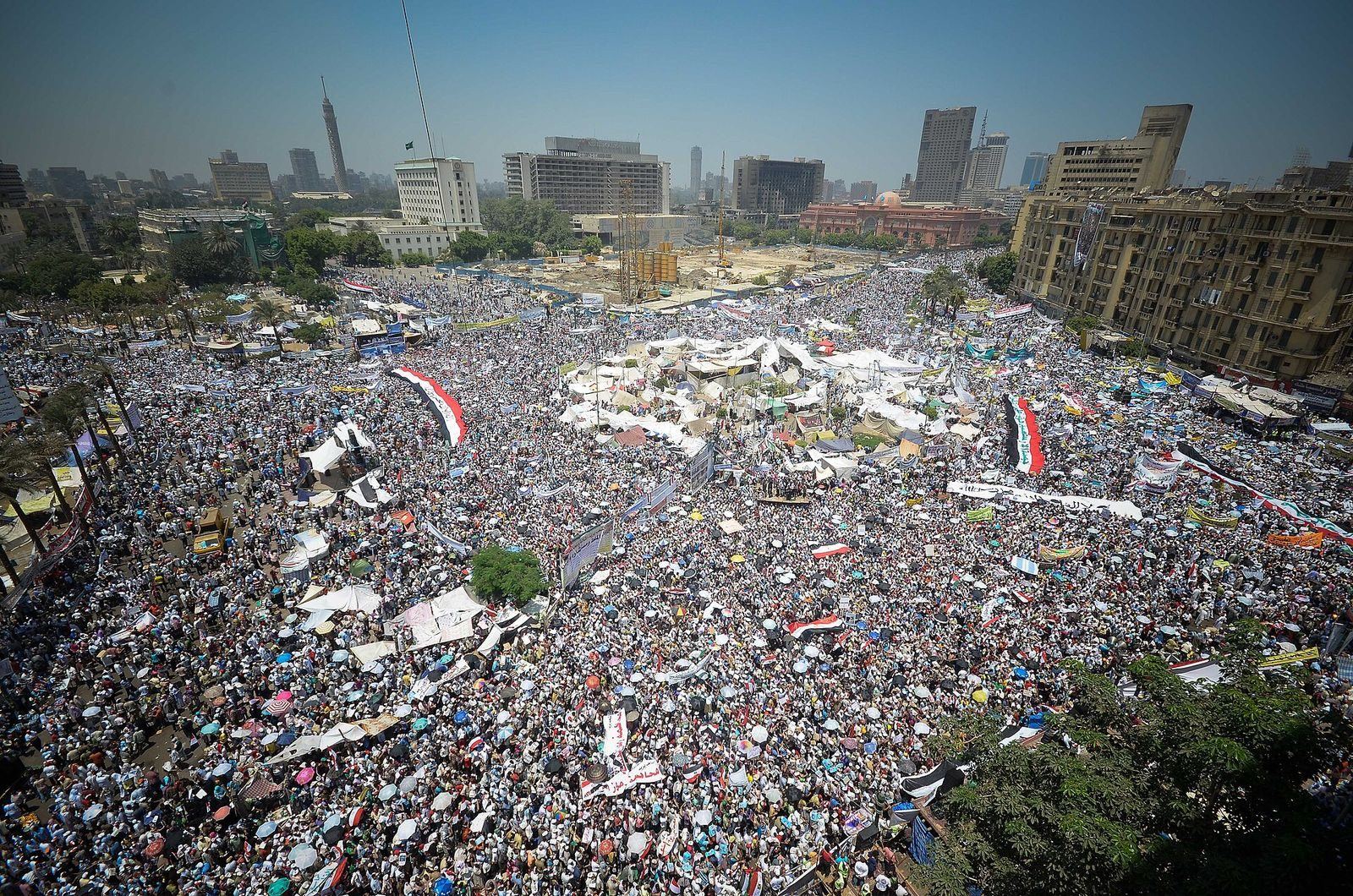
On the 157th birthday of the apostle of non-violence, Delhi's police dragged young protesters off the pavement outside Jantar Mantar. Their offence, said Rahul Gandhi, was asking a question the government cannot answer: who is deleting India's voters, and on whose orders?
NEW DELHI — They arrived with placards on the birthday of the man who made non-violence a political weapon, and they left in police buses. By Friday afternoon, more than 700 protesters had been detained around Jantar Mantar, the colonial-era observatory turned protest arena at the heart of the capital, after opposition parties, student organisations and civil-society groups tried to gather against Chief Election Commissioner Gyanesh Kumar. The demand was singular: his resignation, over what Rahul Gandhi calls the organised theft of votes through the Election Commission's Special Intensive Revision (SIR) of the electoral rolls. The Delhi Police had refused permission for the gathering and clamped prohibitory orders under Section 163 of the Bharatiya Nagarik Suraksha Sanhita, the 2023 successor to the old Section 144. Protesters who came anyway were lifted off the streets — among them Aam Aadmi Party leaders Atishi, Saurabh Bharadwaj, Sanjay Singh and Sanjeev Jha, and cadres of the student organisations AISA, SFI, NSUI and DYFI. The Delhi Metro shut entry and exit at twelve stations until further notice, a move that tells you how seriously the state took the prospect of a crowd. In Mumbai, meanwhile, activists of the CJP — the youth outfit whose street campaign is credited with forcing the education minister's resignation in July — held their own protest at Shivaji Park, where one of its leaders, Abhijeet Dipke, publicly dared Maharashtra's chief minister to have them jailed. And on X, Rahul Gandhi, the Leader of the Opposition in the Lok Sabha, wrote the line that will define the day: "Today is Gandhi Jayanti. And today, thousands of young people are on the streets against vote theft — peacefully, without violence, exercising their constitutional rights. Their demand is clear: Gyanesh Kumar must resign. Save democracy." He went on: "And the Modi-Shah government's response? Boys and girls are being dragged off the streets. Hundreds are in custody. Their only crime is that they dared to question vote theft." And the closer: "Bapu taught us exactly this — speak the truth, fight peacefully. And that's what scares this government the most. Because a lathi can stop a crowd, but not a question. Gyanesh Kumar will go. And the system that put him there will go too.
Forget, for a moment, the theatre of detentions and effigy-burnings. What is being fought over is the least photogenic and most consequential document in Indian democracy: the electoral roll. In a country of nearly a billion registered electors, the list of who may vote is, functionally, the election before the election. Stuff a ballot box and you steal a booth; corrupt the roll and you steal the election before a single speech is given. The mechanics are mundane. Form 6 adds a name to the roll. Form 7 objects to one — and can get it struck off. Under normal conditions these are retail transactions, one voter at a time, adjudicated by booth-level officers. What Rahul Gandhi alleges is wholesale: that BJP functionaries and election officials collude to bulk-file Form 7 objections through automated software, "votes deleted through software in a centralised manner," in his phrase, so that "in the blink of an eye, millions vanish from the voter list." The flashpoint is Belagavi, in Karnataka. In just three days — September 22, 23 and 24 — a flood of Form 7 applications sought the deletion of roughly 15,000 voters, overwhelmingly Muslims, Scheduled Castes, Scheduled Tribes and Other Backward Classes: communities, Gandhi argues, that do not vote for the BJP. The Congress's Karnataka unit says booth-level officers raised the alarm, that pre-printed Form 7s were circulating, that 198 applications were filed in the name of one BJP worker, Shashikanth Jadhav — who denies the signatures are his — and that some BJP workers have since withdrawn applications in writing, describing them as mistakes. Police have registered at least three first-information reports — two in Belagavi, one in Bhalki — with further cases reported in Mysuru and Bidar. Gandhi's response was to demand an FIR at the Karnataka chief electoral officer's office, the CEC's resignation, and a criminal investigation of the Prime Minister and the Home Minister alike. None of this is proven. All of it is explosive. Because if the allegation is even partly true, it means the machinery of deletion can be pointed at any demographic, in any constituency, at industrial scale — and the Commission charged with guarding the rolls is a party to the operation.
A lathi can stop a crowd, but not a question. — Rahul Gandhi, 2 October 2026
This did not erupt overnight; it detonated along a fuse the opposition has been laying for months. Gandhi has been running a "vote theft" campaign through this entire political cycle, claiming earlier to have exposed the deletion method — software, central control, targeted communities — and the current crisis is that campaign reaching the boiling point. On September 25, after a Congress directive to its state units to march on their respective election offices, the country saw the dress rehearsal for this week: Assam Congress president Gaurav Gogoi was detained in Guwahati; in Manipur, Congress workers led by Okram Ibobi Singh and Keisham Meghachandra Singh marched on the chief electoral office at Lamphelpat, burnt an effigy of Kumar, and were met with tear gas after the confrontation turned tense; police fired water cannons in Chandigarh and Patna; Congress MLAs protested inside the Jammu and Kashmir assembly with banners reading "Protect the vote, protect the democracy"; and in Delhi, the AISA president Neha Bora was among those detained. Then came the institutional earthquake. A week ago, The Indian Express published an investigation reporting that the Commission's two other members — Election Commissioners Sukhbir Singh Sandhu and Vivek Joshi — had formally recorded objections at least fourteen times over ten months to decisions and orders they said were taken without their knowledge. Four objections landed on a single day. On September 30, the opposition's INDIA alliance — some two dozen parties, twenty of them represented — met in New Delhi and announced the war plan: a march to the Election Commission on October 6, a rally in the capital on November 1, and a representation to the President. Congress president Mallikarjun Kharge went further, demanding a return to paper ballots and listing five demands — pre-SIR rolls for future elections, an effective appeal mechanism before any voter is removed, protection of eligible voters from administrative exclusion, and simpler registration. On October 1, Gandhi named the three men he holds responsible — Narendra Modi, Amit Shah and Gyanesh Kumar — accused them of "destroying democracy" through the SIR, called it "treason," demanded that Kumar resign and turn "approver," and called for an investigation against the Prime Minister and the Home Minister. On October 2, the streets answered.
And then there is what is happening inside the Commission itself, which may matter more than anything shouted at Jantar Mantar. The Express investigation, reconstructed from documents it says it has seen and interviews with officials in New Delhi, Kolkata, Goa and Mumbai, describes disquiet "unprecedented in scale and significance" within the constitutional body entrusted with free and fair elections. The objections went to the core of the mandate: new voter registration, the deletion and restoration of names, changes to Form 6, appeals against orders restoring voters during the SIR, and the custody and security of the electoral roll itself — including, most recently, changes to work allocation that removed a layer of oversight over the IT backbone of the rolls, a move Joshi and Sandhu struck down in writing after complaining it had been made without their knowledge. In one written objection, Sandhu described the Commission's action as "unauthorised and illegal." The stakes are constitutional, not procedural. Former chief election commissioner S.Y. Quraishi, writing in the same paper, pointed to Section 18 of the 2023 appointments Act: the Commission's business must be transacted unanimously as far as possible, and even the allocation of work requires unanimity — "unilateralism has no place." The Commission's response has been to reject the dissent characterisation: differing views, operational queries and internal feedback are, it says, the normal functioning of a multi-member body, and final decisions — including on the SIR — were unanimous. Over the weekend, Kumar, Sandhu and Joshi met, issued a joint statement and released a photograph of the three men together. The photograph is the message: there is no split here. But photographs do not erase fourteen recorded objections, and the opposition has seized on precisely that gap between the posed unity and the paper trail. All three commissioners, it is worth noting, were appointed under the 2023 Act by a selection panel of the Prime Minister, the Home Minister and the Leader of the Opposition — and the opposition's man dissented over the appointments each time: Adhir Ranjan Chowdhury in March 2024, Gandhi himself when Kumar was elevated to CEC and Joshi appointed in February 2025.
Run this through the prism. Geopolitics first. India sells itself to the world — and above all to Washington, in the long contest with Beijing — as the democratic counterweight: growth with ballots, scale with legitimacy. That brand is a strategic asset worth trillions in investment flows and diplomatic capital. A sustained, televised assault on the credibility of the Election Commission dents the asset at the worst possible moment, when Western capitals are deciding how much of the China hedge to park in New Delhi. Notice the asymmetry: the opposition's strategy only works because the international press — Reuters, and now everyone downstream of it — treats "the world's largest democracy" as a story that must be true for the narrative to hold. Gandhi is not just campaigning in India; he is litigating India's democratic brand in front of a global audience, and every baton charge on Gandhi Jayanti is an exhibit. Macroeconomics second. Markets can price almost anything except institutional doubt. India's equity story rests on a single unspoken assumption: that power changes hands, or doesn't, through rules everyone accepts. The moment a large share of the political class starts calling the referee bought, you introduce a tail risk that no spreadsheet models — the risk that a future transfer of power is contested in the streets rather than certified in a counting hall. The immediate market effect will be nil; the slow effect is a risk premium on Indian democracy itself, the kind that shows up years later as a discount nobody can quite explain. The BJP's calculation is the mirror image: that the economic costs of a credibility fight are smaller than the electoral costs of losing control of the rolls machinery. Both sides are betting the house on institutions they claim to defend.
Demographics third. This is, at bottom, a fight about who counts as a voter — and the youngest voters are in the blast radius. The Manipur Congress alleged that Gen Z is being targeted for exclusion from the rolls, and invoked the one piece of electoral history everyone in India knows: it was Rajiv Gandhi, in 1988, who lowered the voting age from 21 to 18. One prime minister gave the young the vote; the opposition now says another is trying to snatch it back "through underhand means." The framing is deliberate and potent: India is the youngest large country on earth, and the cohort coming of age politically has no memory of the Emergency, no loyalty to old party machines, and a finely tuned sense for being cheated. A "vote theft" narrative aimed at first-time voters is a long-term investment — it does not need to win the argument this year to poison the well for a decade. History fourth. India has been here before, or close enough that the ghosts are recognisable. The three-member Commission itself was created in 1993 precisely to stop one man from owning the institution — a reform born of the T.N. Seshan era, when a single imperious CEC showed the country what concentrated electoral power looks like. The irony of the current row is structural: the reform designed to prevent one-man rule is now the stage for a one-man-versus-two dispute, with the two claiming the one cut them out. And the SIR has its own lineage — special revisions of the rolls have been the routine plumbing of Indian elections for decades; what is new is the scale, the software, and the suspicion. Structure fifth. Step back and the pattern is infrastructural, not personal. ECINet — the Commission's centralised digital platform for the rolls — concentrates hundreds of millions of voter records behind a single administrative pane of glass. Centralisation is efficient; it is also the precondition for centralised abuse, real or alleged. The fight over Form 7 bulk filings is the fight over who gets to write to that database at scale. Whoever controls the write access controls the electorate, and the electorate is the one asset no government can afford to leave to chance. That is why this will not end with a resignation or a photograph.
None of the above is how the government and the Commission tell it, and the counter-narrative deserves a hearing, because it is not nothing. The Commission's stated purpose for the Special Intensive Revision is roll hygiene: removing duplicates, the dead, the shifted, and — in the Commission's own phrase, carried by the wire services — "foreign illegal immigrants" fraudulently on the voter lists. The BJP has made the last point its own for years, alleging that undocumented migrants from neighbouring Bangladesh have registered as voters, and noting, not irrelevantly, that many such migrants are Muslim. Flip the Belagavi allegation and you get the BJP's version: what the opposition calls communal targeting is the removal of ineligible names; what Gandhi calls "software-driven deletion" is digitisation doing what digitisation does. The Commission's institutional defence is narrower but real: in a three-member body, members disagree, operational queries fly, and what matters is that final decisions were unanimous — which it says they were. The joint statement and the posed photograph were the institution's way of saying the building is not on fire. There is a genuine asymmetry of proof here that honest observers should keep in view. The opposition has produced suspicious bulk filings, pre-printed forms, withdrawn applications described as "mistakes," and a paper trail of fourteen internal objections — but it has not produced the chain that connects a booth-level Form 7 to the Prime Minister's office. "Controlled from the top" is Gandhi's assertion, not an established finding. Shashikanth Jadhav denies his signature; the Commission denies the dissent. And there is a political risk the opposition rarely prices in: a "vote theft" charge repeated without a smoking gun can curdle into background noise, training the public to hear fraud in every outcome and trust no result at all — which is, ironically, the one outcome that genuinely breaks a democracy. The Commission's defenders make a final, dry point: every democracy on earth maintains its rolls, purges the dead, and centralises the database. India doing it loudly is not proof India is doing it wrong.
The calendar now does the talking. On October 6, the INDIA alliance marches on the Election Commission's headquarters in New Delhi — the first centrally coordinated opposition march on the institution itself, and the moment this stops being a Congress campaign and becomes a bloc confrontation. On November 1, the alliance plans a rally in the capital. In between, Congress says it is preparing a removal motion against Gyanesh Kumar in both Houses of Parliament — a move with a deliberately steep constitutional bar: removing a Chief Election Commissioner requires the same majority as removing a Supreme Court judge, an absolute majority plus two-thirds of those present and voting in each House, which the opposition cannot assemble alone. The motion is therefore theatre with a purpose: forcing every party, and every MP, onto the record. Watch Karnataka: the Congress unit is demanding an FIR at the chief electoral officer's office over Belagavi, the police have already registered cases in Belagavi, Bhalki, Mysuru and Bidar, and the question that matters is the simplest one — do the roughly 15,000 targeted names stay on the roll or not? Watch the Commission: fourteen objections are on the record, and paper trails have a habit of growing once the first page leaks. And watch the language: Kharge's demand to return to paper ballots, dismissed today as nostalgia, is the kind of idea that migrates from fringe to mainstream the moment enough people stop trusting the machine. The deepest question is not whether votes were stolen. It is whether enough Indians believe the people who count the votes — because a democracy can survive a stolen election, but it cannot survive the belief that elections are unwinnable. On Gandhi Jayanti, the apostle of non-violence watched his birthday become a referendum on the referee. The lathi stopped the crowd. The question is still standing.
The Western press reads this as an institutional stress test of the world's largest democracy. Reuters frames the core allegation plainly: the Commission "pushed large-scale voter list changes despite two commissioners questioning the process." For Washington, London and Brussels, the credibility of the Election Commission is the load-bearing assumption beneath the entire India bet — trade diversification, the China hedge, the "shared values" diplomacy. A sustained opposition campaign calling the referee captured is therefore covered not as local colour but as systemic risk, and every baton charge on Gandhi Jayanti lands in that file. The fourteen recorded objections are the detail that travels: a paper trail inside the institution is harder to dismiss than a slogan on a placard.
But the Western lens is not simply alarmist; it is ambivalent. The same capitals that fret over democratic backsliding have a deep strategic interest in Indian stability and in the BJP government's reliability as a partner — and Western investors, above all, price continuity. So the coverage carries a quiet tension: the press documents the erosion narrative while the policy establishment keeps signing the deals. That tension is itself part of the story. Gandhi's campaign is, among other things, an attempt to force the West to choose between its values narrative and its interests ledger — and the West, so far, is declining the choice.
Read from Beijing or Moscow, this is a different morality play. The Eastern lens treats electoral legitimacy as a domestic affair and regards opposition-led street pressure on an election commission with instinctive suspicion — the script of "colour revolution" infrastructure looms large in that reading, and a campaign that internationalises a domestic roll dispute looks less like democratic hygiene than like politics by other means. What the West calls a stress test, the East calls a sovereignty stress: outsiders should not be grading the referee, and the spectacle of a former colonial power's press corps tut-tutting over Indian procedures invites, at best, a shrug.
At the same time, the Eastern lens is genuinely invested in a stable India. Beijing and Moscow both need New Delhi functional — as a BRICS and SCO partner, as an energy and arms customer, as a pole in the multipolar architecture they are building. A delegitimised Election Commission serves no Eastern interest either, because the Eastern bet on India, like the Western one, assumes a government that can deliver. So the honest Eastern reading is unsentimental: this is India's internal machinery misfiring, and the only relevant question is whether the machine keeps running. Ideology is for editorials; contracts are for governments.
Across the Global South, the script is uncomfortably familiar. From Pakistan's Dawn — which covered the opposition's "save democracy" call straight — to newsrooms in Dhaka, Nairobi and Jakarta, the elements are recognisable: a contested roll revision, a commission under political pressure, a government invoking "foreign illegal immigrants" to justify purges, and an opposition crying communal targeting. Post-colonial democracies have lived this film in local versions, and the Southern lens reads Belagavi not as an Indian exoticism but as a regional archetype: the voter list as the quietest weapon in the electoral arsenal.
The Southern lens also carries a memory the Western one lacks: decades of being lectured on electoral standards by capitals whose own rolls and machines are hardly spotless. So there is little sermonising here — more a hard, practical interest. The South watches the Form 7 mechanics the way engineers watch a bridge collapse: what failed, at which joint, and could it fail here? If bulk digital deletions can be aimed at a demographic in Belagavi, they can be aimed anywhere the database is centralised. That is the Southern takeaway, stripped of moralising: centralised rolls are now a single point of democratic failure, and every country with one should be auditing its own.
Beijing just wrote the biggest liquidity check of the year — and changed nothing else.
The People's Bank of China will offer banks up to one trillion yuan a day — about $149 billion — in overnight funds from September 28 through October 8, covering the Golden Week holiday. It is the largest such cap since the tool's introduction in June 2026, up from 600 billion yuan in mid-September.
The calendar explains the timing. Golden Week sends hundreds of millions of Chinese traveling and spending; banks need cash the way airports need runways. The central bank is making sure the plumbing holds.
The scale, though, is the story. One trillion yuan a day is not holiday housekeeping. It is a backstop — a signal that whatever the holiday throws at the financial system, the PBoC has already covered.
And then, the other hand: nothing. Chinese banks left the one-year and five-year loan prime rates unchanged at 3.00% and 3.50% — the 16th consecutive month without a move.
Sixteen months of stillness in the price of credit, alongside the largest liquidity flood of the year. Beijing is watering the garden and refusing to lower the fence — liquidity yes, cheaper credit no.
Governor Pan Gongsheng gave the doctrine a name: slower loan growth is becoming "the new normal." Property and local-government borrowing are shrinking faster than emerging industries can borrow. The credit engine is being rebuilt mid-flight.
Liquidity is Beijing's answer to everything except the one question markets keep asking: where is the growth?
The PBoC is not idle elsewhere. It stepped up support with a net 200-billion-yuan injection through medium-term lending facility operations, reiterated its "moderately loose" stance, and kept its grip on the yuan.
The yuan, for its part, cooperated — rebounding after briefly dipping below 6.70 per dollar as US Treasury yields rose and the PBoC's grip eased.
The diplomacy helped. A US–China summit extended the trade truce to January — without new tariff cuts, but without new tariffs either. A truce, not a peace; markets will take it.
Step back and the contrast is the story. In Washington, yields cross 5% and traders bet on another hike. In Beijing, the central bank floods the system with cash and leaves rates untouched for a 16th month. Two central banks, two planets.
The logic is not mysterious. China's problem is not hot demand — it is cold credit. Pumping liquidity keeps the system liquid; cutting rates into weak demand would be pushing on the proverbial string.
The risk is the one Beijing knows best: banks awash in cash, with nowhere productive to lend it. Liquidity without lending becomes asset froth — the 2015 lesson, still fresh in institutional memory.
For the region, the signal matters more than the mechanics. A stable yuan and a liquid Chinese banking system through Golden Week is the foundation under Asia's supply chains. When Beijing sneezes, the region's exporters reach for tissues.
Watch what happens after October 8. If the trillion-yuan window closes quietly, it was holiday plumbing. If support lingers, it was something else — a central bank telling you, without saying it, that the economy needs the help.
Western coverage — Reuters and the financial wires — emphasizes the restraint: Beijing holding rates while flooding liquidity, a central bank running out of its favorite tools.
In this telling, 16 months of unchanged loan prime rates is the real headline — evidence of a policymaker boxed in by a hawkish world, a weak property sector, and the fear that rate cuts would only weaken the yuan. Liquidity is what you do when you've decided rates can't move.
Pan's "new normal" gets a skeptical hearing: an elegant phrase for a credit engine that no longer transmits. The question in Western commentary is whether "moderately loose" is a stance or a shrug.
Eastern coverage — Xinhua and Chinese outlets — emphasizes the calibration: targeted, seasonal, and exactly as doctrine prescribes.
In this telling, the trillion-yuan facility is textbook PBoC: precise, time-bound, and aimed at a known seasonal need. The unchanged rates are not paralysis but prudence — "moderately loose" means loose where it counts, steady where it matters, with the yuan's stability as the binding constraint.
The summit's truce extension gets equal billing: diplomacy buying the central bank room to maneuver, and the maneuver working — the yuan's rebound presented as policy competence, not luck.
Global South coverage — Malaysia's business press among it — emphasizes the neighborhood: what Beijing's plumbing means for everyone downstream.
The read from Kuala Lumpur: a liquid China through Golden Week is good news for ASEAN exporters, supply chains, and the region's own central banks. Yuan stability is a public good in Asia, and the PBoC just underwrote another week of it.
The caution in this coverage is borrowed from experience: when the region's biggest economy needs record liquidity to get through a holiday, the "new normal" of slower credit is everyone's normal too.
To read Beijing's move properly, you need the toolkit. Start with the overnight reverse repo — the instrument at the center of the trillion-yuan headline. In a reverse repo operation, the central bank lends cash to commercial banks overnight, taking bonds as collateral; the banks get the liquidity they need, the central bank gets the bonds back the next morning plus a sliver of interest. It is plumbing, not policy: the money created exists for a day, maybe rolled over, and its purpose is to keep the interbank market — the market where banks lend to each other — from seizing. The cap is the message. A trillion yuan a day says: whatever the holiday throws at the system, the PBoC has already covered.
The tool itself is young — introduced only in June 2026 — which makes the record cap more interesting. A new instrument's ceiling is normally discovered cautiously; jumping from 600 billion yuan in mid-September to a full trillion two weeks later is not calibration but declaration. It tells the banks, and through them the market, that the central bank will not be outbid by seasonal stress. The facility runs September 28 to October 8, covering Golden Week exactly. Time-bound, enormous, and explicitly temporary: the PBoC is writing a check it intends to tear up on the 9th. The question the article ends on — what happens after October 8 — is the only one that matters, because a backstop that lingers stops being a backstop and starts being a subsidy.
Then the medium-term lending facility — the MLF — through which the PBoC added a net 200 billion yuan. If reverse repos are the overnight overdraft, the MLF is the term loan: banks borrow for months, not hours, pledging collateral, at a rate the central bank sets. The MLF rate is the PBoC's quiet policy lever — it guides the loan prime rates without the drama of changing them. And the loan prime rates, the LPRs, are the number the article keeps returning to: 3.00 percent for one year, 3.50 percent for five, unchanged for the sixteenth consecutive month. The LPR is the benchmark for most new lending in China; holding it still while flooding the system with cash is the whole doctrine in one gesture. Liquidity yes. Cheaper credit no.
The sixteen months of stillness deserve their own reading, because stillness is also a decision — sixteen times over. In a world where Washington is hiking and yields cross 5 percent, cutting Chinese rates would narrow the already thin cushion against capital outflow and yuan depreciation; every basis point of easing is a basis point of incentive for money to leave. The PBoC's box, as the Western lens describes it, is real: a property sector that no longer transmits stimulus, local governments deleveraging rather than borrowing, and a currency whose stability is the binding constraint on everything else. Holding the LPR is not paralysis. It is the recognition that the price of credit is no longer the economy's binding constraint — and that moving it would cost more in currency stress than it buys in growth.
The calendar explains the timing, as the article says — but the calendar deserves its scale stated plainly. Golden Week is the largest annual human migration on earth compressed into seven days: hundreds of millions of Chinese traveling, spending, withdrawing cash, settling bills. The banking system's cash demand does not rise. It detonates. ATMs must be stocked, merchants' settlement accounts funded, the interbank market supplied with enough reserves to clear a week's worth of the world's second-largest economy changing hands. In normal years, the PBoC manages this with routine open-market operations. This year it wrote the biggest check in the tool's short history.
The scale, though, is the story — the article's line, and worth pressing. One trillion yuan a day is not holiday housekeeping; it is a backstop sized for something the PBoC sees and the market does not yet. Seasonal demand explains the facility's existence. It does not fully explain its size. Either the central bank is being theatrically cautious — signaling strength by oversupplying safety — or its internal read on holiday-season financial stress is darker than the public data. Both readings are consistent with "moderately loose." Only one of them is reassuring. The banks will take the cash either way; the signal is in the surplus.
There is also the consumption angle, which is where the liquidity meets the real economy. Golden Week is China's great annual test of consumer confidence: the week when households vote with their wallets on whether the economy feels safe. A banking system visibly backstopped — cash available, payments clearing, no friction — is the precondition for the spending the state wants to see. The PBoC cannot make households spend; it can only ensure that nothing in the plumbing stops them. In an economy where the consumer has been the missing piece and property wealth no longer does the spending's work, the holiday's cash registers matter more than the interbank rate. The trillion yuan is, among other things, a bet on the tills.
And the regional read — the Global South lens from Kuala Lumpur — captures what the holiday means beyond China's borders. A liquid China through Golden Week is the foundation under Asia's supply chains: exporters paid, importers funded, the region's own central banks spared the volatility of a yuan under holiday stress. Yuan stability, as the article notes, is a public good in Asia, and the PBoC just underwrote another week of it. When the region's biggest economy needs record liquidity to get through a holiday, the "new normal" of slower credit becomes everyone's normal — but a stable holiday is still a stable holiday, and Asia's exporters will take it.
Central bankers choose their phrases the way diplomats choose communiqués — every word weighed, every ambiguity intentional. When Governor Pan Gongsheng said slower loan growth is becoming "the new normal," he was not describing a statistic. He was retiring an expectation. For two decades, China's credit engine ran on a simple formula: property developers borrowed, local governments borrowed against land, and the resulting construction carried GDP. That engine is being dismantled mid-flight — property deleveraging, local-government debt discipline — faster than emerging industries can borrow to replace it. "New normal" is the doctrine that says: stop waiting for the old credit cycle to return. It is not returning.
The doctrine has a logic, and it is worth steelmanning before doubting. Credit-fueled growth bought China two decades of expansion and left it with the property crisis, the local-government debt pile, and the demographic headwinds now arriving together. Pumping cheap credit into that structure — the old playbook — would reflate the very imbalances the state is trying to defuse. Slower, cleaner credit growth, directed at manufacturing upgrades and strategic industries rather than concrete, is the quality-over-quantity bet. The PBoC is not refusing to stimulate. It is refusing to stimulate the old economy. The distinction is the entire policy.
The risk, as the article notes, is the one Beijing knows best: banks awash in cash with nowhere productive to lend it. Liquidity without lending becomes asset froth — the 2015 lesson, still fresh in institutional memory, when stimulus leaked into equity speculation rather than productive investment. The trillion-yuan facility, the 200-billion MLF injection, the "moderately loose" stance — all of it presupposes transmission channels that the "new normal" itself describes as weakened. Watering the garden, to use the article's image, works only if the soil still absorbs water. If property and local governments no longer drink, and emerging industries cannot drink fast enough, the water pools. Pooled liquidity has a history in China. It is called a bubble.
Step back and the contrast the article closes on — two central banks, two planets — is the frame that will define the autumn. Washington hikes into data it may not have, fighting inflation with the South's interest bills. Beijing floods with cash it cannot lend, defending a currency it cannot afford to let slip, waiting for a credit engine it is rebuilding mid-flight. Neither has a clean instrument. Both are improvising inside doctrines — data-dependence, the new normal — that describe the world they wish they governed. Watch October 8: if the trillion-yuan window closes quietly, it was holiday plumbing, and the doctrine holds. If support lingers, the PBoC will have told you, without saying it, that the new normal needs more help than the old vocabulary admits.
Monetary policy does not happen in a diplomatic vacuum, and the PBoC's autumn maneuver owes more to the summit than the communiqués admit. The US–China meeting extended the trade truce to January — no new tariff cuts, but no new tariffs either — and that pause is worth more to Beijing's central bank than any single instrument in its toolkit. Tariff escalation would have meant a weaker yuan, imported inflation, and capital flight arriving together; the truce removes the worst tail from the PBoC's planning. "A truce, not a peace; markets will take it," as the article says. So will central bankers.
The yuan's rebound — recovering after briefly dipping below 6.70 per dollar — is the truce's signature in the currency market. With US Treasury yields rising and the PBoC's grip easing, the currency found its footing not through intervention but through the removal of a threat. That distinction matters: a yuan steadied by diplomacy is cheaper to defend than a yuan steadied by reserves. Every week the truce holds is a week the PBoC does not have to choose between growth and the exchange rate — the choice that has boxed in Chinese policy for the better part of a decade.
But truces expire, and January is closer than it looks. The extension without tariff cuts is a freeze, not a thaw: the existing duties remain, the structural disputes untouched, the next escalation one headline away. The PBoC is therefore managing a window, not a settlement — using the diplomatic calm to get through Golden Week, to steady the currency, to buy the "new normal" time to prove itself. If January brings escalation, the trillion-yuan plumbing will look like the prelude to a harder season. Diplomacy bought the central bank room to maneuver, as the Eastern lens notes. Room is not resolution. It is rented, monthly, and the rent comes due in January.
