The Mate 90's Kirin 9050 Pro squeezes more power from older factories with a 3D wiring trick, while DeepSeek hands Huawei's AI chips an open-source software arsenal. The catch, Huawei admits, is capacity.
Seven years into the American chip blockade, Huawei has stopped trying to outrun it and started trying to out-think it. The Mate 90 does not pretend the sanctions are gone. It is engineered, fold by fold, as if they will never leave.
The phone itself is almost beside the point — though the point is beautifully made. The Mate 90 Pro Max pairs a revamped camera system with HarmonyOS 7 and, at its heart, the Kirin 9050 Pro: a system-on-chip built on a 7-nanometer-class process without extreme ultraviolet lithography, the tool Washington's export controls keep out of China's reach. Independent testing puts it ahead of Apple's A17 Pro in multi-core work and about 30% behind the current A20 Pro in single-core — a gap, but a shrinking and increasingly irrelevant one for most of what a phone actually does.
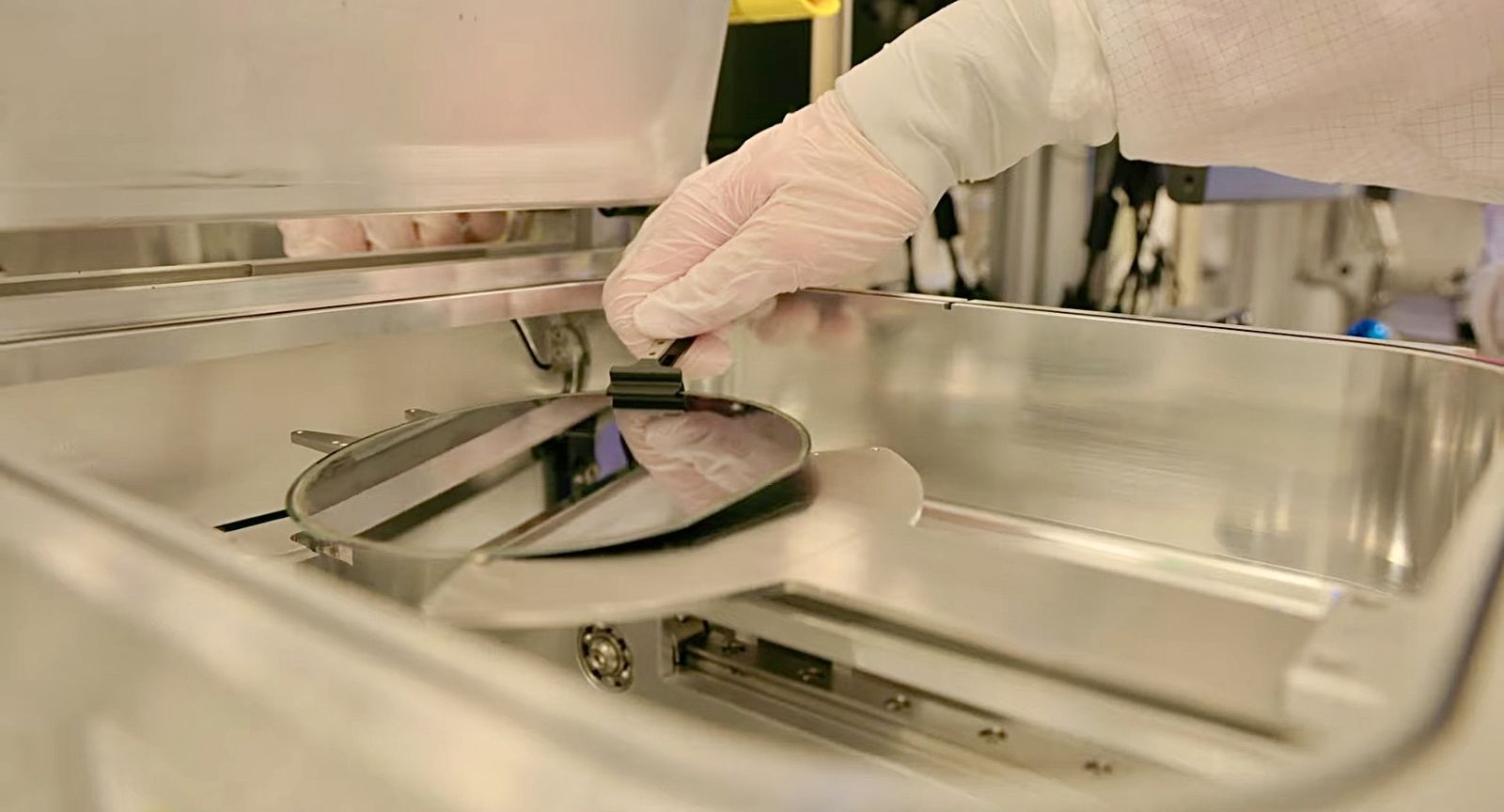
The engineering story is the LogicFolding. Instead of shrinking transistors further — the path blocked by the missing EUV machines — Huawei's designers restructured the chip's internal wiring vertically, in three dimensions rather than the conventional flat layout. Denser logic, faster paths, on the same aging DUV-fabricated silicon. It is a classic blockade innovation: when you cannot buy the better machine, you redesign the problem. The price is real — the technique consumes more wafers per usable chip, burning the very factory capacity China lacks most.
When you cannot buy the better machine, you redesign the problem.
And that is where Huawei's own candor becomes the story. Richard Yu, the consumer chief, told reporters this week that “advanced semiconductor capacity remains very limited in China,” and that Huawei's Ascend AI accelerators draw on the same scarce pool. Eric Xu added last month that Ascend 950 supply cannot meet domestic demand. This is not the language of victory laps; it is the language of a company rationing its scarcest resource — advanced fab time — between phones and AI data centers, and admitting it cannot serve both fully.
The software front moved faster than the silicon this week. DeepSeek, the Hangzhou AI lab, open-sourced six tools purpose-built for Huawei's Ascend chips — an Ascend-native TileLang programming language, the DeepGEMM matrix library, the DeepEP communications layer — developed, the company said, in “close collaboration” with Huawei and benchmarked near the hardware's limits. The stated goal is an “independent and controllable” GPU software stack. Translation: the CUDA moat, Nvidia's true fortress, is being drained one open-source commit at a time.
Put the two halves together and the strategy is legible: hardware ingenuity to survive the blockade, software openness to route around it. Huawei's rotating chairman now claims domestic AI chip sales have overtaken Nvidia's inside China — plausible, given that Nvidia's own executives admit H200 shipments to the region amount to less than one percent of datacenter revenue. Huawei is even deploying a 256,000-card Atlas 950 SuperCluster, with architectures designed to scale toward a million accelerators. Scale, here, is the substitute for shrink.
But the week's other headline punctures any triumphalism. The Financial Times reports that Tencent — China's most valuable tech company — has signed its largest-ever overseas compute deal: leasing roughly 100,000 advanced AI chips from Oracle that are simply not available inside China. The self-reliance drive is real, and so is its incompleteness. Beijing can celebrate the Mate 90 and quietly rent American silicon in the same week; industrial policy, like war, is fought on the terrain you have, not the terrain you want.
What is being built, then, is not independence but optionality — and optionality compounds. Each LogicFolding generation, each open-source kernel library, each quarter of capacity expansion narrows the blockade's bite without requiring the blockade's end. The question for Washington was never whether Huawei would survive the sanctions. It was whether the sanctions would survive Huawei's answer. Thursday's launch suggests the answer is still being written — in three dimensions.
The Western reading is grudging respect wrapped in a warning: Huawei's engineering is genuinely impressive, and the export controls are genuinely working — Yu himself admits capacity is “very limited.” The blockade has not killed Huawei, but it has taxed every chip with extra wafers, extra cost, extra delay. Containment, in this telling, was never about annihilation; it was about friction, and friction is everywhere in this launch.
But the West's blind spot is the software story. Washington restricted machines; it cannot restrict mathematics. Every open-source kernel DeepSeek publishes for Ascend permanently lowers the switching cost away from CUDA — and switching costs, once lowered, do not rise again. The hardware war is stalemated; the software war is being lost in slow motion.
From Beijing's vantage, the Mate 90 is a proof delivered on schedule: seven years of sanctions, and the flagship still ships, the ecosystem still grows, the chairman still claims the domestic AI chip crown. LogicFolding will be framed as the embodiment of the self-reliance doctrine — Chinese problems solved by Chinese thinking, no EUV required. The Tencent-Oracle lease will simply not be mentioned on the evening news.
The sharper Eastern reading, though, is the one Yu gave unprompted: capacity is the binding constraint, and capacity is built with machines China still cannot buy. Self-reliance as doctrine is triumphant; self-reliance as inventory is rationed. The gap between those two is where the next five-year plan will live or die.
The Global South watches this duel the way small countries watch great-power arms races: with interest, and with a shopping list. A world where capable AI chips come from two competing ecosystems instead of one monopoly is a world where Nairobi, Jakarta and São Paulo get better prices and fewer political conditions attached to their compute. Huawei has already said it will only supply “a very limited number” of foreign customers — but limited is more than zero, and zero was the old offer.
There is also a developmental parable here that the South understands intimately: LogicFolding is the engineering equivalent of jugaad, of gambiarra, of System D — doing more with what the blockade left you. The South has been innovating under constraint for centuries. It recognizes its own reflection in a Shenzhen lab.
