On Thursday, Gaza City held a mass funeral for 105 Palestinians recovered from the rubble of a 2023 air strike. Two weeks earlier, Israeli settlers danced with Torah scrolls at a new synagogue in the revived West Bank settlement of Homesh. Two ceremonies, one week, two claims on the same land.
Published 2 October 2026 · 18:00 GMT
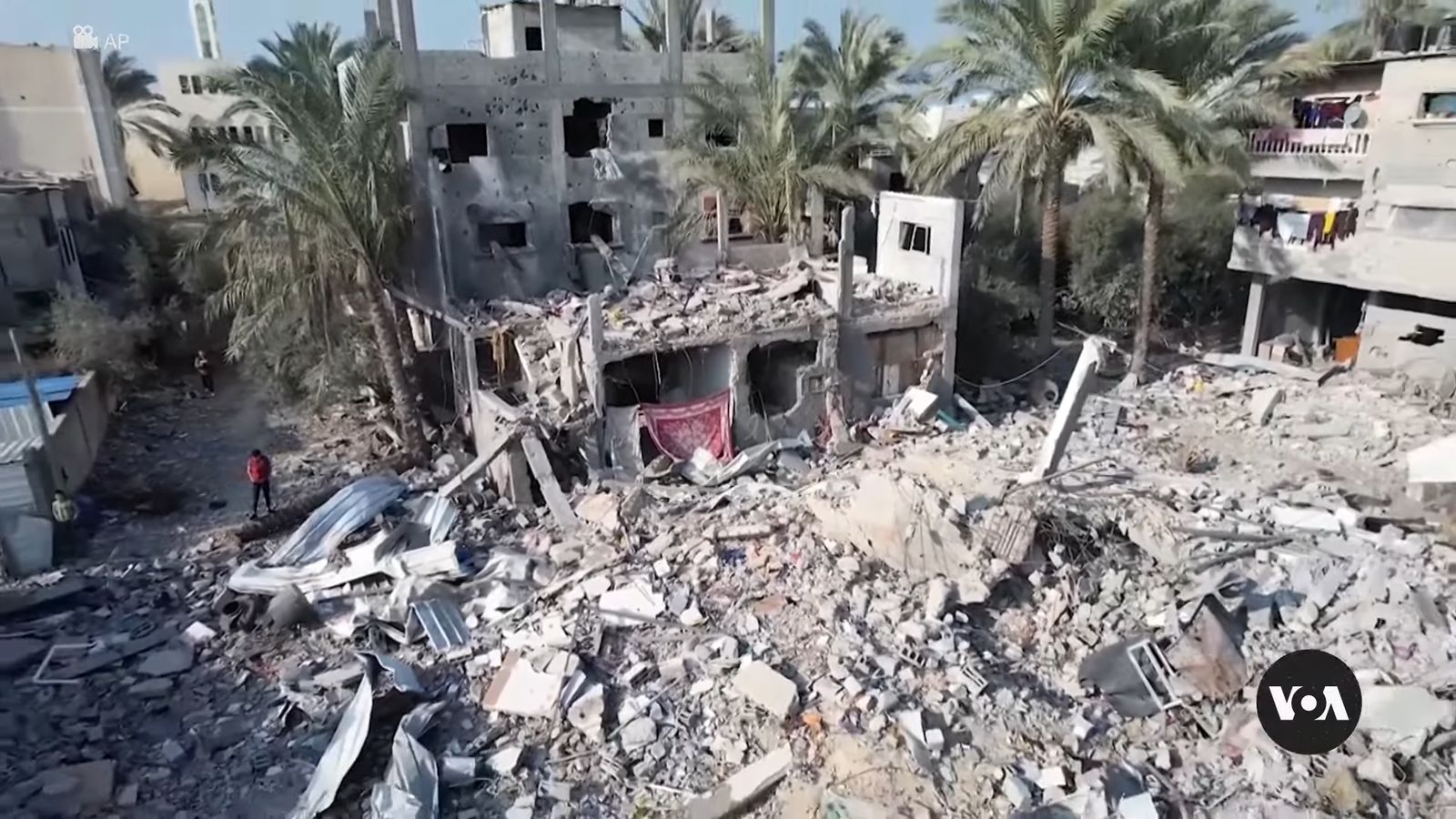
They waited nearly three years to be buried. On Thursday, in Gaza City's Al-Yarmouk neighborhood, hundreds of mourners prayed over 105 bodies recovered from beneath the Al-Taj residential block — and carried them, draped in Palestinian flags, to the Martyrs Cemetery. Two weeks earlier and a few hours north, settlers were dancing.
On the afternoon of October 25, 2023, at least 20 bombs fell on the Al-Taj residential complex in Gaza City's Yarmouk Square neighborhood, according to Al Jazeera. The seven-storey Al Taj 3 building was levelled outright; fifteen other residential buildings came down around it. Some 138 apartments were destroyed. Gaza's civil defense says roughly 450 Palestinians died in the attack. For nearly three years, the survivors could not reach the dead — civil defence operations director Abdul al-Majdalawi later told Al Jazeera that recovering bodies at the time had been impossible. Then, about three weeks ago, local civil defense teams, supported by Egyptian technical personnel and the International Committee of the Red Cross, began digging. The operation took 17 days. What they pulled out of the ruins, piece by piece, were the remains of 105 people: 37 children and 38 women among them, according to Gaza's civil defense. On Wednesday evening, relatives gathered at the site and lit candles beside the recovered remains. On Thursday, they buried them at the Martyrs Cemetery in Sheikh Radwan, northwestern Gaza City, in a mass funeral that Palestinian news agency WAFA described as one of the largest recovery burials of the war. Al Jazeera's correspondent Ibrahim al-Khalili, reporting from Gaza City, called it the fifth-largest recovery operation of its kind since Israel launched its war on Gaza in October 2023. One mourner, Taghreed al-Hanawi, lost her daughter, the physician Alia Ramzi al-Hanawi, along with her son-in-law and four grandchildren, in the strike. Their family was completely erased from the civil registry, she told the Anadolu Agency. Today the wound has reopened, but at last I was able to hold their remains and bury them with dignity. Another attendee, Mamdouh Atallah, told WAFA that more bodies are almost certainly still under the rubble — a view Palestinian authorities share: more than 8,000 people are estimated to remain buried in the wreckage across Gaza, according to Palestinian authorities cited by Reuters. Civil Defense spokesperson Mahmoud Basal renewed the call to protect civilians: These are civilians and human beings who have the full right to live in peace and safety.
Now drive north, across the wall and the checkpoints, into the northern occupied West Bank. On September 16, 2026 — sixteen days before the Gaza funeral — Israeli settlers gathered at Homesh, near the Palestinian village of Burqa, to inaugurate a newly built synagogue. The Associated Press photographed the scene: settlers, some carrying rifles, sang, danced and carried Torah scrolls through the settlement. Yossi Dagan, a settler leader, told the crowd: We are joyfully inaugurating a synagogue, bringing a Torah scroll into a well-constructed and organized settlement with an amazing community. In this place, we destroyed the settlements and received a wave of terror throughout the State of Israel in response. Instead of peace, we received terror, and now we are correcting it, returning to what is ours, to our homeland. Knesset member Limor Son Har-Melech — a member of National Security Minister Itamar Ben-Gvir's party, who says she was the last family expelled from Homesh in 2005 — spoke too: I knew we would return, that we would rebuild these communities, and today it is even more than I dreamed. Homesh is no ordinary settlement. Israel dismantled it in 2005, part of the disengagement plan that also removed all Israeli settlements from Gaza and four outposts in the northern West Bank. For years, national-religious groups kept an unauthorized yeshiva at the site; then, in 2025, the Israeli government formally approved its reestablishment, connecting it to Israel's water and electricity networks. Palestinians from Burqa say the settlement restricts their access to privately owned farmland — and Israel's own Supreme Court has acknowledged that land at the original settlement site belonged to Palestinians from the village. The two events, paired in Africanews' Pix of the Day on October 2, make an accidental diptych of the conflict's current season: a funeral three years overdue, and a celebration twenty-one years in the making.
Three years under the rubble is a long time to wait for a grave — and a short time to forget who put you there.
The funeral matters because it is evidence of a war that will not stay finished. A ceasefire took effect in Gaza in October 2025, ending the large-scale hostilities and returning the remaining Israeli hostages and their remains, according to the United Nations. But the war's wreckage is still being excavated, literally and politically. Since the ceasefire began, at least 1,394 Palestinians have been killed, according to UNRWA citing local health authorities — a figure the UN Security Council heard on September 28, 2026, as ambassadors met over a Gaza peace plan that has now stalled for nearly a year. The plan's later phases — Hamas's disarmament and Israel's full withdrawal — have not begun, and the Board of Peace's Nickolay Mladenov told the Council that the situation on the ground does not yet match the documents. UN officials describe the humanitarian situation as catastrophic, with Gaza's population confined to about 30 percent of the territory and 94 percent of people needing shelter assistance. Into this picture walk the dead of October 2023, finally getting funerals — a reminder that post-war is a term diplomats use; the people digging through rubble with Egyptian engineers and the ICRC are still at war with its consequences. The Homesh synagogue matters for the mirror-image reason: it is evidence of a project that does not pause either. While the Gaza track stalls, the West Bank is being remade at speed. More than 1,600 settler attacks were recorded this year — 6.7 a day, up from five a day in 2025 — and more than 4,300 Palestinians have been displaced, according to OCHA, figures the Security Council also heard. Israel has invited bids for 1,234 homes in the E1 area near East Jerusalem, with a deadline of October 19; UN officials warn the project would split the West Bank in two. On September 23, Israeli ministers and parliamentarians attended the founding ceremony of a brand-new settlement, Metzoke Eretz — formerly the Netzah Harel outpost, established in 2023 on what was once the site of a Bedouin community — and Al Jazeera, citing Haaretz, reports it is one of 104 settlements the Israeli government has legalised under Israeli law during its term. Each funeral closes one chapter; each synagogue, each new outpost, opens another in a different place. That is the rhythm of October 2026: mourning in Gaza, building in the West Bank, and a diplomacy track that cannot keep up with either.
Start with the bombs. October 25, 2023, was the third week of the war that followed the Hamas-led attacks of October 7, 2023, in which some 1,200 people were killed in southern Israel. The Al-Taj strike landed in the opening bombardment phase, when Gaza's civil defense could not reach collapsed buildings and the missing simply vanished into the rubble. Gaza's Health Ministry now says at least 73,651 Palestinians have been killed and 174,592 injured since October 2023 — the ABS-CBN/Reuters figure is higher, at more than 74,000 — and the recovery of the dead has become a rolling, grinding operation of its own: a mass funeral for 100 Palestinians recovered from the Zeitoun neighborhood was held on September 6, 2026, and Al Jazeera has documented similar recoveries for the Abu Shariah, Hassaniya and al-Taj Tower families. The current ceasefire, in effect since October 2025, stopped the bombing but never resolved the terms that follow a war: the UN Security Council endorsed a US-backed Comprehensive Plan through Resolution 2803 in November 2025, yet Hamas's disarmament and a complete Israeli withdrawal remain untouched. On July 30, Hamas and other Palestinian factions announced acceptance of a 15-point roadmap covering demilitarisation and Israeli withdrawal; on August 9, Prime Minister Benjamin Netanyahu said Israel did not accept it. The Board of Peace and Israel have since announced two working groups — one on disarmament, one on water, sanitation and public health — but the substance has not moved. Now the West Bank thread. Homesh was evacuated in August 2005 under Ariel Sharon's disengagement plan — a unilateral withdrawal that pulled some 8,000 settlers out of Gaza and four small settlements, Homesh among them, out of the northern West Bank. For two decades the site hosted a persistent settler presence and an unauthorized yeshiva, and in 2025 the government formally re-approved it. That decision belongs to a broader 2026 pattern documented by Haaretz and Al Jazeera: the cabinet's April 2026 approval of a new settlement near Ni'lin; the September 17 demolitions of Palestinian structures around the new Shira community, championed by Finance Minister Bezalel Smotrich's Religious Zionism party; the September 23 Metzoke Eretz founding ceremony. Israeli policy now moves on two visible tracks — Smotrich's party openly describes its goal as restoring Israeli governance and control in the seam zones — while Palestinians face demolitions, closures and, during the Jewish festival of Sukkot, a weeklong general closure of the West Bank from September 27 to October 3 that shut village entrances around Ramallah and stranded hundreds of vehicles. The ceasefire froze Gaza's war; it froze nothing in the West Bank. If anything, the numbers say it accelerated.
The legal frame is where precision matters, because the two legal systems in play produce opposite verdicts. Under international law, the matter is settled to the satisfaction of most of the world's governments: the Fourth Geneva Convention's Article 49 prohibits an occupying power from transferring its civilian population into occupied territory; UN Security Council Resolution 2334 (2016) states that settlements have no legal validity and constitute a flagrant violation of international law; and the International Court of Justice's July 2024 advisory opinion declared Israel's occupation of Palestinian territory unlawful and its settlement enterprise illegal. By that standard, every settlement and outpost in the West Bank — Homesh included, synagogue and all — is illegal, and France's permanent representative Jerome Bonnafont told the Security Council exactly that in August when Israel invited bids for the E1 housing units. Under Israeli domestic law, a different taxonomy applies: there are settlements (authorized by government decision) and outposts (built without government authorization but often with state support), and the Netanyahu government's current term has been spent blurring that line — regularising and legalising outposts by cabinet decision until the domestic category of illegal outpost nearly disappears inside Israel's own legal system, even as the international category stands unchanged. Homesh crossed that domestic line in 2025: from dismantled settlement to re-approved settlement, complete with Torah scrolls and housing caravans. Metzoke Eretz crossed it on September 23. None of this alters the international verdict; it simply makes the domestic one irrelevant to everyone except Israel. The gap between the two legal universes is itself one of the conflict's load-bearing structures — it is what allows a minister to inaugurate a settlement on a Wednesday and a diplomat to call it a war crime on a Thursday, both describing the same buildings.
Geopolitics. The two ceremonies sit on opposite sides of the same power balance. The Gaza funeral is the ledger of a war that ended without a settlement: the ceasefire of October 2025 was a truce, not a treaty, and truces that leave the core questions — who governs Gaza, who disarms, who withdraws — unanswered are truces with an expiry date. The stalled Gaza plan tells the story: Resolution 2803, the Board of Peace, the International Stabilization Force, the two working groups — an entire architecture of paper, and on the ground, 1,394 dead since the ceasefire and a humanitarian catastrophe. The Homesh synagogue is the ledger of a different kind of ending: the de facto absorption of Area C, the 60 percent of the West Bank under full Israeli control, into Israel's civic infrastructure — water lines, electricity grids, synagogues, schools — one settlement at a time. The Security Council met on September 28 and heard both halves of this at once: a Gaza plan stalled and a West Bank being foreclosed. The American position, as relayed at that meeting, opposes annexation and calls West Bank stability important for progress in Gaza — but opposing annexation while 1,600 settler attacks a year go unprosecuted is a policy of statements, and everyone in the region can read the gap between the statement and the bulldozer. Meanwhile the Abraham Accords generation of Arab states, Egypt chief among them — Egypt's technical teams literally digging in Gaza's rubble — is discovering that normalisation bought regional trade and security cooperation but no leverage over the settlement project. The geopolitics of October 2026 is the geopolitics of irreversibility: every month the West Bank is remade is a month the two-state map becomes more theoretical, and every theoretical map makes the next war's geography more crowded.
Macroeconomics. Wars are expensive; occupations are expensive; but the specific economics here are asymmetric in ways that matter. Gaza's economy was destroyed and then frozen: 94 percent of the population needs shelter assistance, reconstruction funds exist mostly as pledges and working groups, and the recovery of the dead is being done by civil defense teams begging for 10 excavators, 30 bulldozers and 100 heavy loaders they do not have. The West Bank economy is being strangled differently — not by bombing but by closure: the Sukkot general closure from September 27 to October 3 barred Palestinian workers from entering Israel and the settlements, village entrances were shut, ambulances were stopped at checkpoints and patients ferried through in private cars. This is the economics of control: a population whose livelihood depends on permits that can be revoked for a holiday, whose farmland shrinks around settlements like Homesh — Burqa's farmers losing access to land even Israel's Supreme Court says was theirs — and whose displacement (4,300 this year, per OCHA) is also an economic eviction. On the Israeli side, the settlement enterprise is a fiscal commitment — infrastructure, security, subsidies — made at a moment when the Gaza war already cost the treasury enormously and the 2026 election cycle has politicians, as Al Jazeera put it, vying to look toughest. Smotrich, who is both finance minister and the settlement project's chief patron, embodies the fusion: the man signing the demolition orders is the man holding the budget. The macroeconomic read is bleak and simple — Gaza cannot rebuild without capital it does not control, the West Bank cannot develop without land and movement it is losing, and the only economy visibly growing in the territories is the economy of the settlements themselves.
Demographic shifts. The numbers are doing the arguing. On the Palestinian side: more than 8,000 people still under the rubble; 37 children among the 105 recovered at Al-Taj; over 300 children killed since the ceasefire began, per Gaza's Health Ministry; 33,000 displaced by Israeli operations in Jenin, Tulkarem and Nur Shams since January 2025 — the largest West Bank displacement since 1967. This is a population being thinned and scattered: dead under rubble, displaced into camps, confined to 30 percent of Gaza's territory. The funeral itself is a demographic artifact — three years of missing persons compressed into one afternoon of burial, families like Taghreed al-Hanawi's erased from the civil registry in a single strike. On the Israeli side: nearly 737,000 settlers now live in the West Bank including East Jerusalem, among 3.43 million Palestinians, according to the UN — a ratio the settlement project is steadily tilting. Homesh's synagogue is a demographic instrument as much as a religious one: synagogues, schools and housing caravans are how a population puts down roots, and every re-approved settlement is a bet that facts on the ground will outlast negotiations. The E1 project's 1,234 homes would do to the map what the settlements have done to the demography — divide and surround. The dry, dark truth of the demographic dimension is that both populations are growing into a shrinking space, and the institutions being built — cemeteries in Gaza, synagogues in Homesh — are built to last longer than any ceasefire.
Historical patterns. Nothing here is new; that is the point. The Al-Taj funeral belongs to the long history of wars whose dead surface years later — mass graves, missing persons, the bureaucratic violence of the civil registry — and to the specific Palestinian history of the nakba as an ongoing event rather than a single date: displacement, dispossession and return are not chapters that closed in 1948 but a grammar the conflict still speaks. Homesh belongs to a different but equally familiar history: the settler movement's doctrine of facts on the ground, refined since the 1970s, in which every outpost is both a home and an argument, and every argument is eventually retroactively legalised by the state. The 2005 disengagement was supposed to be the exception that proved the movement could be rolled back — Sharon, the great expander, removing settlements — and Homesh's resurrection is the movement's answer, twenty-one years later: nothing is irreversible, everything can be rebuilt, and the synagogue is the proof. The pattern to watch is the ratchet: Palestinian losses are permanent (the dead stay dead, the demolished stay demolished), while settler gains are reversible in theory but have never, in practice, been reversed since 2005. Gaza's ceasefire follows the historical pattern of truces in this conflict — 2014, 2021, 2025 — each one holding until the unresolved core detonates the next round. And the international response follows its own pattern: Security Council meetings, advisory opinions, deep concern, and the bulldozers working through the night.
Structural trends. Beneath the week's events run three deep currents. First, the legalisation machine: the Israeli government's term has been defined by the systematic domestic legalisation of outposts — 104 and counting, per Al Jazeera via Haaretz — which does not change international law but changes the facts a future negotiation would have to confront. Each legalised outpost is a small annexation that no one has to vote for. Second, the privatisation of violence: 1,600 settler attacks in nine months, rarely prosecuted, with settlers at the Homesh ceremony openly carrying rifles — violence that functions as policy without being policy, giving the state deniability and the settlers impunity. OCHA's 6.7-attacks-a-day figure is not a crime wave; it is a system. Third, the hollowing of the diplomatic track: Resolution 2803, the Board of Peace, the working groups, the 15-point roadmap accepted by Hamas in July and rejected by Netanyahu in August — a diplomacy of process without movement, while the physical facts move daily. The structural read is that the conflict is being resolved, just not at the negotiating table: it is being resolved by whoever builds fastest. In Gaza, the builders are the recovery crews with Egyptian excavators, building cemeteries. In the West Bank, the builders are the settlers with Torah scrolls and government permits, building synagogues. Both are permanent structures. Only one of them is on the agenda at the Security Council.
Three dates, three pressure points. October 19: the deadline for bids on the 1,234 E1 homes — if the tenders proceed, the West Bank's territorial contiguity takes what France called an irreversible blow, and the two-state map becomes a historical document. The Gaza plan's next move: the disarmament and withdrawal working groups announced by Israel and the Board of Peace are the only live mechanism in the ceasefire architecture, and Mladenov's warning that the ground does not match the documents is the closest thing to an honest status report the diplomacy has produced — watch whether the 15-point roadmap Hamas accepted on July 30 gets a second life or a quiet burial. The rubble: with more than 8,000 still buried and recovery teams pleading for heavy machinery, Gaza will keep producing funerals like Thursday's for months — each one a fresh wound, a fresh headline, and a fresh test of a ceasefire that has already cost 1,394 lives. And in the West Bank, watch the Sukkot closure's aftermath and the settlement calendar: Metzoke Eretz's founding ceremony on September 23 showed ministers attending settlement inaugurations as campaign events ahead of Israel's election, which means the building will not slow — elections reward the toughest, and nothing looks tougher than a new synagogue on a hilltop. The week gave the conflict its two signature images: mourners carrying the dead home in Gaza, settlers carrying Torah scrolls home in Homesh. Both were homecomings. Only one of them is finished.
From the Western newsroom's vantage, this is a week that exposes the hollowness of the current diplomacy. The AP's photographs of the Homesh synagogue inauguration — armed settlers dancing with Torah scrolls — ran in American and European outlets as a symbol of a settlement enterprise that no longer bothers to disguise its permanence, while the Gaza funeral images ran as the human ledger of a war the West helped end on paper but not on the ground. The editorial line in Washington and Brussels is familiar: support the ceasefire, oppose annexation, condemn settler violence, fund humanitarian relief. The Security Council briefing on September 28 gave that line its numbers — 1,394 dead since the ceasefire, 1,600 settler attacks, the E1 tenders — and the numbers indict the policy: a ceasefire that permits continued killing is a ceasefire in name, and opposition to annexation that coexists with 104 newly legalised settlements is opposition in name. The honest Western assessment, rarely printed, is that the October 2025 truce bought quiet for the region's capitals while changing nothing in the territories — Gaza still being excavated, the West Bank still being built over.
The Western lens also carries the Israeli government's own framing, which deserves a fair hearing: Israel withdrew from Gaza entirely in 2005 and from Homesh the same year, and received the Second Intifada's aftermath and then October 7 in return — the settler leader Yossi Dagan's formulation at the synagogue inauguration (instead of peace, we received terror) is the lived conviction of much of the Israeli public. From Jerusalem's perspective, the Gaza plan's disarmament phase is the non-negotiable precondition that Hamas has not met, the working groups are the serious track, and settlement growth is a domestic political matter for an elected government facing an election. Western coverage tends to accept the security framing while questioning the proportionality — the standard, uneasy compromise of twenty years of reporting. What the Western lens rarely does is connect the two ceremonies: the funeral and the synagogue are reported as separate stories, Gaza news and West Bank news, when they are the same story — a single conflict in which one side buries its dead and the other builds on the land, and the diplomats in between keep issuing statements.
From the Eastern vantage — Moscow, Beijing, and the capitals that read the conflict through the prism of Western double standards — the week is exhibit A. The Gaza funeral is reported as the latest chapter of what much of the Eastern press openly calls a genocide: 105 bodies recovered after three years, 37 of them children, while the power that dropped the bombs faces no tribunal and the ceasefire it signed leaks 1,394 more dead. The Homesh synagogue is reported as the companion crime: an illegal outpost, on land even Israel's own courts admit was stolen, blessed with Torah scrolls and cabinet approvals while the Security Council issues another briefing. The Eastern editorial line is that international law is a fiction the West enforces selectively — Crimea is annexation and must be reversed, the West Bank is a disputed territory and must be negotiated — and that the stalled Gaza plan proves the point: Resolution 2803, the Board of Peace, the working groups, all the architecture of a Western-managed peace, delivering paperwork while the bulldozers work. Russia and China gain from this telling without lifting a finger; every E1 tender is an argument for their multipolar case.
The Eastern lens is not merely cynical, though — it carries a genuine strategic reading that Western outlets underplay. In this telling, the settlement project is not a fringe passion of religious nationalists but the settled policy of the Israeli state across governments, and the two-state solution is not stalled but dead, killed by 737,000 settlers and the E1 corridor. The honest Eastern conclusion is therefore the one-state reality: a single territory from the river to the sea under Israeli control, with Palestinians as a permanently disenfranchised population — which is why Eastern coverage of the funeral dwells on the civil registry, on families erased, on the administrative dimension of the destruction. The weakness of the Eastern lens is its selectivity: it is eloquent on Gaza's dead and Homesh's illegality, and silent on the disarmament question, on October 7, on what a durable arrangement would require of the Palestinian factions. Both lenses are doing advocacy; the Eastern one is just more honest about it.
From the Global South — the African, Asian and Latin American capitals where the Palestinian cause has always been read as an anti-colonial cause — the week's images need no translation. The mass funeral in Gaza is instantly legible: the colonised burying their dead, the candles at the rubble site, the dignity insisted upon in the face of erasure. The Homesh synagogue inauguration is equally legible: the settler dancing where the native was expelled, the rifle beside the prayer shawl, the minister in attendance. Africanews pairing the two in its Pix of the Day was, for Southern audiences, not a juxtaposition but a diagnosis — the same colonial grammar, one frame of mourning and one of celebration. The Southern editorial line, from Pretoria to Jakarta to Bogotá, is that the West Bank is the last large-scale settler-colonial project on earth, that the ICJ's 2024 opinion confirmed what the South always argued, and that the Gaza ceasefire's 1,394 post-truce dead prove that truces without justice are just pauses in the killing. Egypt's presence in the story — its technical teams digging in Gaza's rubble — is noted with pride and with bitterness: pride that an African state does the work, bitterness that it must.
The Global South lens carries the sharpest moral clarity and the thinnest practical programme, and honest Southern commentators admit it. The anti-colonial frame explains the funeral and the synagogue perfectly, but it offers Gaza's families no excavators — the civil defense is still begging for 10 excavators, 30 bulldozers and 100 heavy loaders — and it offers the West Bank's farmers no leverage against the next demolition order. The South's power is normative: the ICJ opinion, the General Assembly majorities, the growing sanctions conversation in Europe that France's warnings feed. But normative power moves slowly, and the settlement calendar moves fast — 104 legalisations in one government's term, a new settlement inaugurated by ministers as a campaign event. The Southern read of October 2026 is therefore mournful in the precise sense: it knows exactly what is happening, it has the vocabulary for it, and it is watching the vocabulary lose to the bulldozer. The funeral, in this lens, is not just Gaza's — it is the burial, week by week, of the law itself.
Beijing just wrote the biggest liquidity check of the year — and changed nothing else.
The People's Bank of China will offer banks up to one trillion yuan a day — about $149 billion — in overnight funds from September 28 through October 8, covering the Golden Week holiday. It is the largest such cap since the tool's introduction in June 2026, up from 600 billion yuan in mid-September.
The calendar explains the timing. Golden Week sends hundreds of millions of Chinese traveling and spending; banks need cash the way airports need runways. The central bank is making sure the plumbing holds.
The scale, though, is the story. One trillion yuan a day is not holiday housekeeping. It is a backstop — a signal that whatever the holiday throws at the financial system, the PBoC has already covered.
And then, the other hand: nothing. Chinese banks left the one-year and five-year loan prime rates unchanged at 3.00% and 3.50% — the 16th consecutive month without a move.
Sixteen months of stillness in the price of credit, alongside the largest liquidity flood of the year. Beijing is watering the garden and refusing to lower the fence — liquidity yes, cheaper credit no.
Governor Pan Gongsheng gave the doctrine a name: slower loan growth is becoming "the new normal." Property and local-government borrowing are shrinking faster than emerging industries can borrow. The credit engine is being rebuilt mid-flight.
Liquidity is Beijing's answer to everything except the one question markets keep asking: where is the growth?
The PBoC is not idle elsewhere. It stepped up support with a net 200-billion-yuan injection through medium-term lending facility operations, reiterated its "moderately loose" stance, and kept its grip on the yuan.
The yuan, for its part, cooperated — rebounding after briefly dipping below 6.70 per dollar as US Treasury yields rose and the PBoC's grip eased.
The diplomacy helped. A US–China summit extended the trade truce to January — without new tariff cuts, but without new tariffs either. A truce, not a peace; markets will take it.
Step back and the contrast is the story. In Washington, yields cross 5% and traders bet on another hike. In Beijing, the central bank floods the system with cash and leaves rates untouched for a 16th month. Two central banks, two planets.
The logic is not mysterious. China's problem is not hot demand — it is cold credit. Pumping liquidity keeps the system liquid; cutting rates into weak demand would be pushing on the proverbial string.
The risk is the one Beijing knows best: banks awash in cash, with nowhere productive to lend it. Liquidity without lending becomes asset froth — the 2015 lesson, still fresh in institutional memory.
For the region, the signal matters more than the mechanics. A stable yuan and a liquid Chinese banking system through Golden Week is the foundation under Asia's supply chains. When Beijing sneezes, the region's exporters reach for tissues.
Watch what happens after October 8. If the trillion-yuan window closes quietly, it was holiday plumbing. If support lingers, it was something else — a central bank telling you, without saying it, that the economy needs the help.
Western coverage — Reuters and the financial wires — emphasizes the restraint: Beijing holding rates while flooding liquidity, a central bank running out of its favorite tools.
In this telling, 16 months of unchanged loan prime rates is the real headline — evidence of a policymaker boxed in by a hawkish world, a weak property sector, and the fear that rate cuts would only weaken the yuan. Liquidity is what you do when you've decided rates can't move.
Pan's "new normal" gets a skeptical hearing: an elegant phrase for a credit engine that no longer transmits. The question in Western commentary is whether "moderately loose" is a stance or a shrug.
Eastern coverage — Xinhua and Chinese outlets — emphasizes the calibration: targeted, seasonal, and exactly as doctrine prescribes.
In this telling, the trillion-yuan facility is textbook PBoC: precise, time-bound, and aimed at a known seasonal need. The unchanged rates are not paralysis but prudence — "moderately loose" means loose where it counts, steady where it matters, with the yuan's stability as the binding constraint.
The summit's truce extension gets equal billing: diplomacy buying the central bank room to maneuver, and the maneuver working — the yuan's rebound presented as policy competence, not luck.
Global South coverage — Malaysia's business press among it — emphasizes the neighborhood: what Beijing's plumbing means for everyone downstream.
The read from Kuala Lumpur: a liquid China through Golden Week is good news for ASEAN exporters, supply chains, and the region's own central banks. Yuan stability is a public good in Asia, and the PBoC just underwrote another week of it.
The caution in this coverage is borrowed from experience: when the region's biggest economy needs record liquidity to get through a holiday, the "new normal" of slower credit is everyone's normal too.
To read Beijing's move properly, you need the toolkit. Start with the overnight reverse repo — the instrument at the center of the trillion-yuan headline. In a reverse repo operation, the central bank lends cash to commercial banks overnight, taking bonds as collateral; the banks get the liquidity they need, the central bank gets the bonds back the next morning plus a sliver of interest. It is plumbing, not policy: the money created exists for a day, maybe rolled over, and its purpose is to keep the interbank market — the market where banks lend to each other — from seizing. The cap is the message. A trillion yuan a day says: whatever the holiday throws at the system, the PBoC has already covered.
The tool itself is young — introduced only in June 2026 — which makes the record cap more interesting. A new instrument's ceiling is normally discovered cautiously; jumping from 600 billion yuan in mid-September to a full trillion two weeks later is not calibration but declaration. It tells the banks, and through them the market, that the central bank will not be outbid by seasonal stress. The facility runs September 28 to October 8, covering Golden Week exactly. Time-bound, enormous, and explicitly temporary: the PBoC is writing a check it intends to tear up on the 9th. The question the article ends on — what happens after October 8 — is the only one that matters, because a backstop that lingers stops being a backstop and starts being a subsidy.
Then the medium-term lending facility — the MLF — through which the PBoC added a net 200 billion yuan. If reverse repos are the overnight overdraft, the MLF is the term loan: banks borrow for months, not hours, pledging collateral, at a rate the central bank sets. The MLF rate is the PBoC's quiet policy lever — it guides the loan prime rates without the drama of changing them. And the loan prime rates, the LPRs, are the number the article keeps returning to: 3.00 percent for one year, 3.50 percent for five, unchanged for the sixteenth consecutive month. The LPR is the benchmark for most new lending in China; holding it still while flooding the system with cash is the whole doctrine in one gesture. Liquidity yes. Cheaper credit no.
The sixteen months of stillness deserve their own reading, because stillness is also a decision — sixteen times over. In a world where Washington is hiking and yields cross 5 percent, cutting Chinese rates would narrow the already thin cushion against capital outflow and yuan depreciation; every basis point of easing is a basis point of incentive for money to leave. The PBoC's box, as the Western lens describes it, is real: a property sector that no longer transmits stimulus, local governments deleveraging rather than borrowing, and a currency whose stability is the binding constraint on everything else. Holding the LPR is not paralysis. It is the recognition that the price of credit is no longer the economy's binding constraint — and that moving it would cost more in currency stress than it buys in growth.
The calendar explains the timing, as the article says — but the calendar deserves its scale stated plainly. Golden Week is the largest annual human migration on earth compressed into seven days: hundreds of millions of Chinese traveling, spending, withdrawing cash, settling bills. The banking system's cash demand does not rise. It detonates. ATMs must be stocked, merchants' settlement accounts funded, the interbank market supplied with enough reserves to clear a week's worth of the world's second-largest economy changing hands. In normal years, the PBoC manages this with routine open-market operations. This year it wrote the biggest check in the tool's short history.
The scale, though, is the story — the article's line, and worth pressing. One trillion yuan a day is not holiday housekeeping; it is a backstop sized for something the PBoC sees and the market does not yet. Seasonal demand explains the facility's existence. It does not fully explain its size. Either the central bank is being theatrically cautious — signaling strength by oversupplying safety — or its internal read on holiday-season financial stress is darker than the public data. Both readings are consistent with "moderately loose." Only one of them is reassuring. The banks will take the cash either way; the signal is in the surplus.
There is also the consumption angle, which is where the liquidity meets the real economy. Golden Week is China's great annual test of consumer confidence: the week when households vote with their wallets on whether the economy feels safe. A banking system visibly backstopped — cash available, payments clearing, no friction — is the precondition for the spending the state wants to see. The PBoC cannot make households spend; it can only ensure that nothing in the plumbing stops them. In an economy where the consumer has been the missing piece and property wealth no longer does the spending's work, the holiday's cash registers matter more than the interbank rate. The trillion yuan is, among other things, a bet on the tills.
And the regional read — the Global South lens from Kuala Lumpur — captures what the holiday means beyond China's borders. A liquid China through Golden Week is the foundation under Asia's supply chains: exporters paid, importers funded, the region's own central banks spared the volatility of a yuan under holiday stress. Yuan stability, as the article notes, is a public good in Asia, and the PBoC just underwrote another week of it. When the region's biggest economy needs record liquidity to get through a holiday, the "new normal" of slower credit becomes everyone's normal — but a stable holiday is still a stable holiday, and Asia's exporters will take it.
Central bankers choose their phrases the way diplomats choose communiqués — every word weighed, every ambiguity intentional. When Governor Pan Gongsheng said slower loan growth is becoming "the new normal," he was not describing a statistic. He was retiring an expectation. For two decades, China's credit engine ran on a simple formula: property developers borrowed, local governments borrowed against land, and the resulting construction carried GDP. That engine is being dismantled mid-flight — property deleveraging, local-government debt discipline — faster than emerging industries can borrow to replace it. "New normal" is the doctrine that says: stop waiting for the old credit cycle to return. It is not returning.
The doctrine has a logic, and it is worth steelmanning before doubting. Credit-fueled growth bought China two decades of expansion and left it with the property crisis, the local-government debt pile, and the demographic headwinds now arriving together. Pumping cheap credit into that structure — the old playbook — would reflate the very imbalances the state is trying to defuse. Slower, cleaner credit growth, directed at manufacturing upgrades and strategic industries rather than concrete, is the quality-over-quantity bet. The PBoC is not refusing to stimulate. It is refusing to stimulate the old economy. The distinction is the entire policy.
The risk, as the article notes, is the one Beijing knows best: banks awash in cash with nowhere productive to lend it. Liquidity without lending becomes asset froth — the 2015 lesson, still fresh in institutional memory, when stimulus leaked into equity speculation rather than productive investment. The trillion-yuan facility, the 200-billion MLF injection, the "moderately loose" stance — all of it presupposes transmission channels that the "new normal" itself describes as weakened. Watering the garden, to use the article's image, works only if the soil still absorbs water. If property and local governments no longer drink, and emerging industries cannot drink fast enough, the water pools. Pooled liquidity has a history in China. It is called a bubble.
Step back and the contrast the article closes on — two central banks, two planets — is the frame that will define the autumn. Washington hikes into data it may not have, fighting inflation with the South's interest bills. Beijing floods with cash it cannot lend, defending a currency it cannot afford to let slip, waiting for a credit engine it is rebuilding mid-flight. Neither has a clean instrument. Both are improvising inside doctrines — data-dependence, the new normal — that describe the world they wish they governed. Watch October 8: if the trillion-yuan window closes quietly, it was holiday plumbing, and the doctrine holds. If support lingers, the PBoC will have told you, without saying it, that the new normal needs more help than the old vocabulary admits.
Monetary policy does not happen in a diplomatic vacuum, and the PBoC's autumn maneuver owes more to the summit than the communiqués admit. The US–China meeting extended the trade truce to January — no new tariff cuts, but no new tariffs either — and that pause is worth more to Beijing's central bank than any single instrument in its toolkit. Tariff escalation would have meant a weaker yuan, imported inflation, and capital flight arriving together; the truce removes the worst tail from the PBoC's planning. "A truce, not a peace; markets will take it," as the article says. So will central bankers.
The yuan's rebound — recovering after briefly dipping below 6.70 per dollar — is the truce's signature in the currency market. With US Treasury yields rising and the PBoC's grip easing, the currency found its footing not through intervention but through the removal of a threat. That distinction matters: a yuan steadied by diplomacy is cheaper to defend than a yuan steadied by reserves. Every week the truce holds is a week the PBoC does not have to choose between growth and the exchange rate — the choice that has boxed in Chinese policy for the better part of a decade.
But truces expire, and January is closer than it looks. The extension without tariff cuts is a freeze, not a thaw: the existing duties remain, the structural disputes untouched, the next escalation one headline away. The PBoC is therefore managing a window, not a settlement — using the diplomatic calm to get through Golden Week, to steady the currency, to buy the "new normal" time to prove itself. If January brings escalation, the trillion-yuan plumbing will look like the prelude to a harder season. Diplomacy bought the central bank room to maneuver, as the Eastern lens notes. Room is not resolution. It is rented, monthly, and the rent comes due in January.
