A “handful” of trade ministers killed the US push against industrial overcapacity. Washington named no names. Everyone in the room knew the address.
Published 3 October 2026 · 06:00 GMT
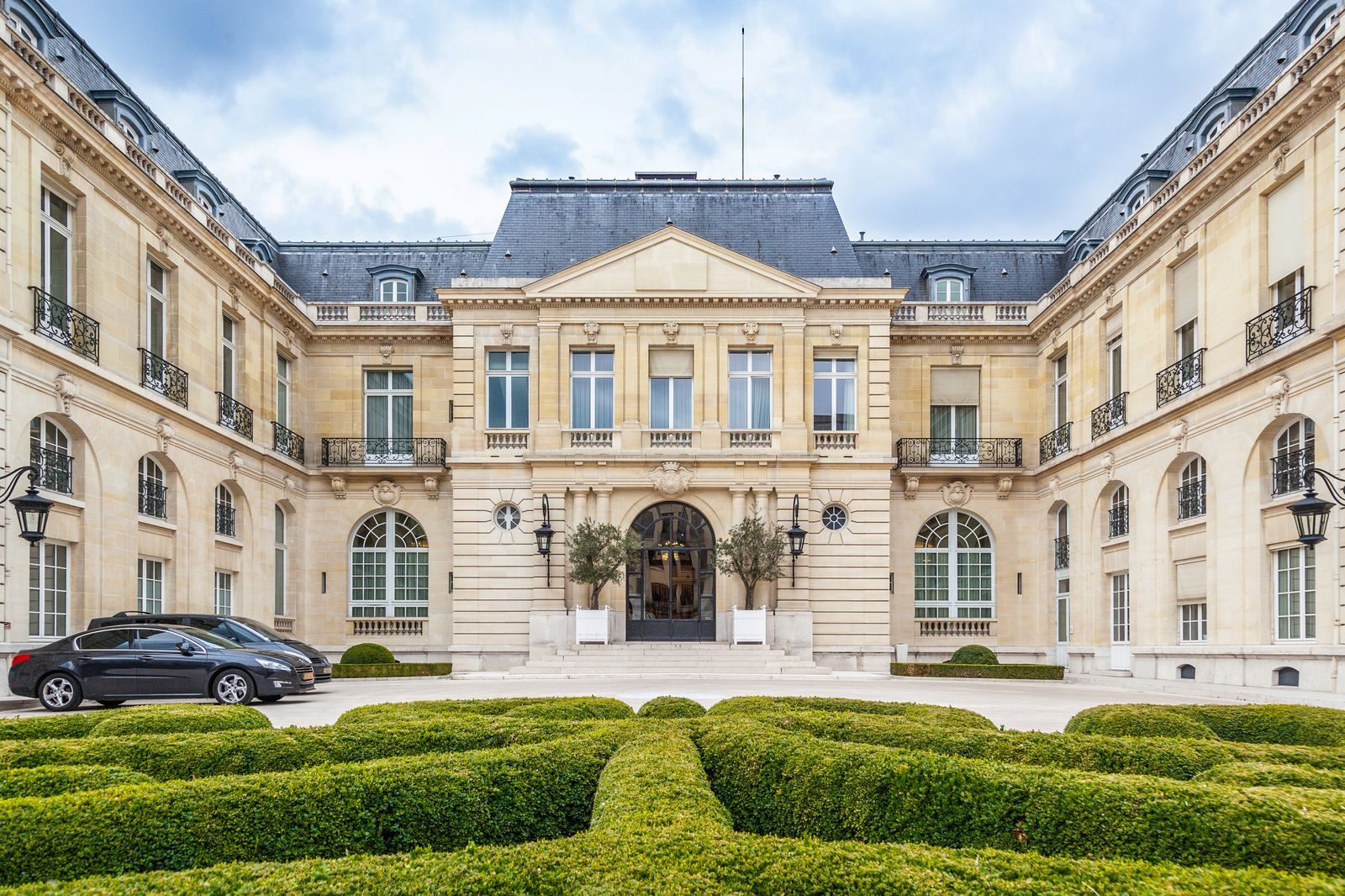
The family photo was supposed to be taken on Friday afternoon, on the shore of Lake Michigan, twenty trade ministers arranged by height and grievance. By Friday evening, the only photograph that mattered was the one that never happened: the United States, holding the G20’s rotating presidency, announcing it was “severely disappointed” that a “handful” of its partners had refused to condemn industrial overcapacity after two days of talks in Milwaukee. I cover trade for a living. I think in trade flows the way meteorologists think in fronts. And what I watched in Milwaukee was not a negotiation. It was an autopsy — of the idea that the world’s biggest economies can still agree on what fair trade even means.
Milwaukee in October is a city that understands production. Beer, motorcycles, machine tools — the American Midwest still makes things, which is presumably why the US Trade Representative chose it as the stage. Jamieson Greer, chairing the G20 trade ministerial, had brought a draft statement with a simple demand: that every country commit to eliminating structural excess industrial capacity and the “non-market” policies behind it. Read that sentence again and notice what it does not name. It does not say China. It does not have to. In trade diplomacy, “excess capacity” is the word you use when you mean Beijing and your lawyers have advised against saying so out loud. Greer’s verdict, delivered Friday: “The draft ministerial statement was supported by all but a handful of members, a few of whom firmly rejected creating this pathway toward cooperative action on excess capacity.” A handful. A few. Firmly rejected. In the coded language of communiqués, that is a scream. The Americans say nearly every country in the room agreed that excess capacity is a real problem requiring action, and that the current system of trade remedies — the anti-dumping duties, the countervailing tariffs, the whole creaking WTO toolbox — is inadequate to the task. Nearly every country agreed on the diagnosis. A handful refused the prescription. And the prescription was the entire point of the meeting.
Because this is the G20 doing what the G20 now does best: convening the arsonists and the firefighters in one room and issuing a statement about the temperature. Strip away the protocol and Milwaukee was a stress test of the oldest question in trade — who gets to decide what counts as cheating — and the answer came back: nobody, anymore. The United States holds the rotating G20 presidency in 2026, which means Washington set the agenda, chose the venue, and drafted the text. It still could not get the text past a handful of objectors. That is not a drafting failure; it is a power failure. When the chair cannot chair, the institution is furniture. And the stakes are not abstract. The industries Washington cites as victims of overcapacity — steel, autos, batteries, paper, semiconductors — are the industries the Indo-Pacific is betting its next fifty years on. The nickel smelters rising in Sulawesi, the EV plants breaking ground in Thailand, the battery supply chains being strung across Southeast Asia like festival lights: every one of them exists downstream of the question Milwaukee failed to answer. Is state-backed capacity a development strategy or a trade weapon? The G20’s answer, after two days: we decline to say. The market heard it anyway. When multilateralism cannot name the problem, unilateralism names the price — and the price, as Washington keeps demonstrating, is a tariff.
The G20 remains the place where the old trade order goes to be photographed. The developing is done elsewhere now. In Washington, mostly. With tariffs.
Here is the anatomy of the failure, because the details are where the diplomacy died. The draft ministerial statement called on all countries to move toward eliminating structural excess capacity. The US position, briefed to reporters, was that nearly all members agreed excess capacity is an issue requiring action — the disagreement was not about whether the house is on fire but about whether anyone is allowed to say who struck the match. The statement pointedly did not name the objectors, which in G20 practice means everyone knows and no one will confirm. But there is a paper trail. At the G20 finance leaders’ meeting in Asheville, North Carolina, in September, China objected to strikingly similar wording — language denouncing forced labor and non-market policies that produce excessive exports. Same objection, same vocabulary, one month apart: the pattern is not subtle. China’s international trade representative, Li Chenggang, offered the week’s most economical quote, saying only that parties had “expressed their respective opinions.” Diplomats will recognize the genre: the sentence that says nothing because everything it could say would be a headline. Beijing’s substantive position, restated for the hundredth time, is that it rejects the claim its industrial policies create excess capacity at all, and accuses Western countries of inventing the issue to justify protectionism. Two irreconcilable theories of the case, one ministerial table. Milwaukee was never going to reconcile them. The only surprise is that anyone scheduled two days to try. The American complaint about trade remedies is worth pausing on. Anti-dumping duties and countervailing tariffs were designed for a world of discrete, provable subsidies — a tax break here, a cheap loan there. They were not designed for an economy where the state is the banker, the landlord, the power company, and the customer. Washington’s argument is that the toolbox cannot fix a house built by the toolbox’s owner. Whether that is true matters less than that Washington believes it — belief, armed with Section 301, is policy.
To understand Milwaukee, rewind one month to Asheville, where the finance ministers ran into the same wall. The United States tried to insert language denouncing forced labor and non-market policies driving excessive exports; China blocked it. That was the preview. Milwaukee was the feature presentation, with trade ministers instead of finance ministers and “excess capacity” as the headline grievance. The forced-labor subplot deserves its own telling, because it produced the week’s most lopsided scoreboard. Washington circulated a separate US-led statement calling for more work to eliminate goods produced with forced labor from supply chains. Two countries signed it: Mexico and Argentina. Two. The vast majority of the G20 — the forum that claims to steward the global economy — declined to put its name to a sentence against forced labor in supply chains. Sit with that for a moment, because the number is doing a lot of work. This follows the Trump administration’s imposition of tariffs of 10 percent or 12.5 percent on goods from 59 countries and the European Union, explicitly tied to allegations of inadequate forced-labor enforcement. Fifty-nine countries plus the EU got tariffed for their forced-labor record; when offered a voluntary statement on the same subject, nearly all of them walked past the signing table. The contradiction is the story. Tariffs are coercion with paperwork; a joint statement is persuasion with signatures. Milwaukee suggests the G20’s members will endure the former while declining the latter — which tells you everything about where the institution’s authority now resides, and it is not in the communiqué.
Now the enforcement machinery, because Washington is not waiting for consensus it cannot get. The USTR is conducting a second “Section 301” tariff investigation — the statute that lets the United States punish “unfair” foreign trade practices unilaterally — this one aimed at 16 trading partners showing signs of excess industrial capacity. It is widely expected to produce new duties in the coming months. The target list, in Washington’s telling, runs “from Norway to Bangladesh,” and the industries under the microscope are the commanding heights of the green transition and then some: steel, autos, batteries, paper, semiconductors. From Norway to Bangladesh. Read that range as a threat assessment: this is not a China-only instrument, whatever its origins. A Norwegian metals producer and a Bangladeshi paper mill now inhabit the same American spreadsheet, which means the investigation’s blast radius covers allies, partners, and bystanders alike. And then there is the subplot Washington could not resist staging in the same week: Canada. This summer, Trump slapped 50 percent tariffs on roughly $20 billion of Canadian imports; Canada counterpunched. This week, Trump banned nearly $1 billion worth of Canadian imports outright — alcoholic beverages, dairy, motorcycles. Banned. Not tariffed: banned. Your closest ally, your largest trading partner, your co-host of the next World Cup, and the week of the G20 trade ministerial you prohibit its whisky and its cheese. If that is how Washington treats Ottawa, imagine the spreadsheet’s plans for Sulawesi’s nickel.
Geopolitics first, because Milwaukee was geopolitics wearing a trade minister’s lanyard. The “handful” of objectors was never going to be named, but the Asheville paper trail and Li Chenggang’s studied silence point to the same capital, and Beijing’s counter-accusation — that “overcapacity” is Western protectionism in a lab coat — is the mirror image of Washington’s charge. Both cannot be true; both are sincerely believed. The G20’s failure is therefore not a failure of wording but of worldview: the institution was built for a unipolar moment when everyone agreed on the rules, and it is now being asked to referee a contest between two economic systems that disagree on what the rules are for. Macroeconomics: overcapacity is, at bottom, a demand story wearing a supply costume. China’s property downturn and consumption shortfall mean its factories must export or die; the resulting flood of steel, batteries, and EVs depresses prices globally and hollows out producers from Duisburg to Detroit to — soon — Jakarta. Washington’s remedy, tariffs of 10 or 12.5 percent across 59 countries plus the EU and a Section 301 probe spanning Norway to Bangladesh, is the macroeconomic equivalent of sandbagging every door in the neighborhood because one house is flooding. Demographic shifts: the demand side of this equation lives in the Indo-Pacific, where young, urbanizing populations are buying their first cars, their first air conditioners, their first everything — and where governments from Jakarta to Bangkok are racing to build the smelters and EV plants that turn that demand into jobs. Milwaukee’s deadlock lands hardest here: the region making the world’s stuff needs stable rules most and gets them least. Historical patterns: we have seen this film. The 1980s had Japan-bashing and voluntary export restraints; the 2000s had the Doha Round dying in slow motion; every era’s “unfair trade” panic ends the same way, with the accuser’s remedies outliving the accused’s sins. Section 301 itself is a 1970s statute, dusted off and pointed at 21st-century batteries — the past is not even past, it is precedent. Structural and technological trends: the industries at issue — batteries, semiconductors, EVs — are the infrastructure of the energy transition, which means overcapacity politics is now climate politics by other means. Whoever controls cheap battery capacity controls the pace of decarbonization; calling that capacity “excessive” is also a claim about who gets to set the speed of the future. Milwaukee declined to adjudicate. The factories will not wait for the adjudication.
First, the Section 301 investigation — the only part of Milwaukee with a fuse attached. Sixteen trading partners, five named industries, new duties expected in the coming months: watch which countries get named when the findings land, because “from Norway to Bangladesh” suggests the list will embarrass at least one ally. The duties will tell you whether this is industrial policy or a shakedown. Second, the unnamed handful. Washington chose not to name the objectors; Beijing chose not to confirm it was one. Watch whether the US starts naming names in bilateral settings — the G20’s politeness ends where the tariff schedule begins. Third, the forced-labor statement’s lonely signatories. Mexico and Argentina signed; the vast majority did not. Watch whether the 10 and 12.5 percent tariffs on the 59 countries and the EU get adjusted, lifted, or extended — the tariff schedule is now the enforcement mechanism, and the statement’s sign-up sheet is the attendance record. Fourth, Canada. A $1 billion import ban on whisky, dairy, and motorcycles in G20 week is either a negotiating tactic or a new normal; Ottawa’s response will calibrate every other capital’s expectations. And fifth — the one consensus Milwaukee actually reached, and therefore the one worth memorizing — the ministers agreed “that trade in food and agricultural products should not be used as a tool for economic or political coercion.” Everybody signed that sentence. Everybody. In a week when the United States was tariffing 59 countries and banning Canadian cheese, the G20 unanimously agreed food should not be a weapon. Watch whether anyone remembers they signed it. Watch, finally, the calendar. The United States holds the G20 presidency through 2026, which means more ministerials, more drafts, more handfuls. Every failed communiqué is a data point for the capitals deciding whether the G20 is a steering committee or a photo studio. Milwaukee just voted: photo studio.
The family photo never got taken, or if it did, nobody will frame it. That is Milwaukee’s epitaph: the G20 trade ministerial where the chair announced the institution could not agree on what it was for. I think in trade flows, and the flow I see is unmistakable — away from the ministerial tables and toward the tariff schedules, the investigations, the bilateral bans. The old order is not being reformed; it is being photographed, and the camera keeps jamming. From the nickel smelters of Sulawesi to the EV plants of Thailand, the region that makes the world’s stuff just learned what it already suspected: nobody in Milwaukee is coming to set the rules. The rules will be set, instead, by whoever writes the next Section 301 finding — and the next one after that. The G20 remains the place where the old trade order goes to be photographed. The developing is done elsewhere now. In Washington, mostly. With tariffs.
From Washington’s side of the table, Milwaukee was a moral clarifier. The West’s read: state-backed overcapacity is not a development strategy, it is dumping with a five-year plan, and the G20’s refusal to name it is cowardice dressed as consensus-building. The Section 301 investigation — 16 partners, five industries — is what seriousness looks like when the communiqué fails. If the institution will not govern trade, the United States will, tariff by tariff.
The Western lens is notably unsentimental about the forced-labor scoreboard too. Two signatures — Mexico and Argentina — on a statement against forced labor in supply chains is, in this telling, the G20’s character revealed: happy to lecture, allergic to commitment. The 10 and 12.5 percent tariffs on 59 countries plus the EU are the enforcement the statement lacked. Coercion works; persuasion applauds itself.
But there is a quieter Western anxiety underneath the triumphalism, and it lives in the phrase “from Norway to Bangladesh.” A Section 301 probe that sweeps up Norwegian metals and Bangladeshi paper alongside Chinese batteries is a weapon with no safety catch. Allies tariffed today are adversaries courted tomorrow — and the West knows that every tariff wall eventually becomes someone else’s blueprint. Washington is winning the argument in Milwaukee by abandoning the room. The bill for the room comes later.
From Beijing, Milwaukee reads as vindication wrapped in hypocrisy. The Eastern lens: “excess capacity” is a Western fiction minted to punish success — China makes things cheaply because it invested, scaled, and competed, and Washington calls the result a crime because American factories cannot match it. Li Chenggang’s five-word courtesy — parties “expressed their respective opinions” — was the polite form of: we will not confess to a charge we consider fabricated.
The East also notes, dryly, who refused to sign what. The vast majority of the G20 declined the American forced-labor statement — not, in Beijing’s telling, out of indifference to labor, but out of refusal to sign a document whose enforcement mechanism is a 10 or 12.5 percent tariff aimed at 59 countries. A statement backed by a tariff schedule is not a moral appeal; it is an ultimatum with stationery. The empty sign-up sheet is the world’s answer to ultimatums.
And the East’s deepest read is structural: the United States is not trying to fix the trading system, it is trying to bill it. Section 301 investigations “from Norway to Bangladesh,” 50 percent tariffs on Canadian goods, a $1 billion import ban on an ally’s whisky and cheese — this is not the behavior of a country defending rules. It is the behavior of a country replacing rules with leverage, and then acting surprised when the room stops agreeing. Milwaukee did not fail because a handful objected. It failed because the chair brought a gavel to a negotiation.
The Global South watched Milwaukee with the weary recognition of a tenant watching the landlords argue about the rent. The Southern lens: “overcapacity” is a rich-country argument about who gets to industrialize, and the South has heard it before — every development strategy the North used is reclassified as cheating the moment the South tries it. The nickel smelters of Sulawesi and the EV plants of Thailand exist because governments decided industrial policy was not a slur. Milwaukee just confirmed the slur is back, with American spelling.
The South’s sharper observation is about the forced-labor statement and its two lonely signatures. Mexico and Argentina signed; everyone else — including the countries being tariffed at 10 or 12.5 percent for their labor records — declined. The Southern read is unsentimental: signing an American-drafted statement does not protect your workers, it paints a target on your exports. The 59 tariffed countries did the math. Sovereignty, it turns out, has a tariff schedule, and the South can read one.
And the South pockets the one consensus Milwaukee produced like a life raft: food and agricultural trade “should not be used as a tool for economic or political coercion.” Everybody signed it — in the same week Washington banned Canadian dairy. The South will remember that sentence the next time a Northern capital reaches for the food weapon, because the next time, the sentence will be quoted back. In trade, as in everything else, the weak collect receipts. Milwaukee issued one, unanimously, and the South filed it.
Beijing just wrote the biggest liquidity check of the year — and changed nothing else.
The People's Bank of China will offer banks up to one trillion yuan a day — about $149 billion — in overnight funds from September 28 through October 8, covering the Golden Week holiday. It is the largest such cap since the tool's introduction in June 2026, up from 600 billion yuan in mid-September.
The calendar explains the timing. Golden Week sends hundreds of millions of Chinese traveling and spending; banks need cash the way airports need runways. The central bank is making sure the plumbing holds.
The scale, though, is the story. One trillion yuan a day is not holiday housekeeping. It is a backstop — a signal that whatever the holiday throws at the financial system, the PBoC has already covered.
And then, the other hand: nothing. Chinese banks left the one-year and five-year loan prime rates unchanged at 3.00% and 3.50% — the 16th consecutive month without a move.
Sixteen months of stillness in the price of credit, alongside the largest liquidity flood of the year. Beijing is watering the garden and refusing to lower the fence — liquidity yes, cheaper credit no.
Governor Pan Gongsheng gave the doctrine a name: slower loan growth is becoming "the new normal." Property and local-government borrowing are shrinking faster than emerging industries can borrow. The credit engine is being rebuilt mid-flight.
Liquidity is Beijing's answer to everything except the one question markets keep asking: where is the growth?
The PBoC is not idle elsewhere. It stepped up support with a net 200-billion-yuan injection through medium-term lending facility operations, reiterated its "moderately loose" stance, and kept its grip on the yuan.
The yuan, for its part, cooperated — rebounding after briefly dipping below 6.70 per dollar as US Treasury yields rose and the PBoC's grip eased.
The diplomacy helped. A US–China summit extended the trade truce to January — without new tariff cuts, but without new tariffs either. A truce, not a peace; markets will take it.
Step back and the contrast is the story. In Washington, yields cross 5% and traders bet on another hike. In Beijing, the central bank floods the system with cash and leaves rates untouched for a 16th month. Two central banks, two planets.
The logic is not mysterious. China's problem is not hot demand — it is cold credit. Pumping liquidity keeps the system liquid; cutting rates into weak demand would be pushing on the proverbial string.
The risk is the one Beijing knows best: banks awash in cash, with nowhere productive to lend it. Liquidity without lending becomes asset froth — the 2015 lesson, still fresh in institutional memory.
For the region, the signal matters more than the mechanics. A stable yuan and a liquid Chinese banking system through Golden Week is the foundation under Asia's supply chains. When Beijing sneezes, the region's exporters reach for tissues.
Watch what happens after October 8. If the trillion-yuan window closes quietly, it was holiday plumbing. If support lingers, it was something else — a central bank telling you, without saying it, that the economy needs the help.
Western coverage — Reuters and the financial wires — emphasizes the restraint: Beijing holding rates while flooding liquidity, a central bank running out of its favorite tools.
In this telling, 16 months of unchanged loan prime rates is the real headline — evidence of a policymaker boxed in by a hawkish world, a weak property sector, and the fear that rate cuts would only weaken the yuan. Liquidity is what you do when you've decided rates can't move.
Pan's "new normal" gets a skeptical hearing: an elegant phrase for a credit engine that no longer transmits. The question in Western commentary is whether "moderately loose" is a stance or a shrug.
Eastern coverage — Xinhua and Chinese outlets — emphasizes the calibration: targeted, seasonal, and exactly as doctrine prescribes.
In this telling, the trillion-yuan facility is textbook PBoC: precise, time-bound, and aimed at a known seasonal need. The unchanged rates are not paralysis but prudence — "moderately loose" means loose where it counts, steady where it matters, with the yuan's stability as the binding constraint.
The summit's truce extension gets equal billing: diplomacy buying the central bank room to maneuver, and the maneuver working — the yuan's rebound presented as policy competence, not luck.
Global South coverage — Malaysia's business press among it — emphasizes the neighborhood: what Beijing's plumbing means for everyone downstream.
The read from Kuala Lumpur: a liquid China through Golden Week is good news for ASEAN exporters, supply chains, and the region's own central banks. Yuan stability is a public good in Asia, and the PBoC just underwrote another week of it.
The caution in this coverage is borrowed from experience: when the region's biggest economy needs record liquidity to get through a holiday, the "new normal" of slower credit is everyone's normal too.
To read Beijing's move properly, you need the toolkit. Start with the overnight reverse repo — the instrument at the center of the trillion-yuan headline. In a reverse repo operation, the central bank lends cash to commercial banks overnight, taking bonds as collateral; the banks get the liquidity they need, the central bank gets the bonds back the next morning plus a sliver of interest. It is plumbing, not policy: the money created exists for a day, maybe rolled over, and its purpose is to keep the interbank market — the market where banks lend to each other — from seizing. The cap is the message. A trillion yuan a day says: whatever the holiday throws at the system, the PBoC has already covered.
The tool itself is young — introduced only in June 2026 — which makes the record cap more interesting. A new instrument's ceiling is normally discovered cautiously; jumping from 600 billion yuan in mid-September to a full trillion two weeks later is not calibration but declaration. It tells the banks, and through them the market, that the central bank will not be outbid by seasonal stress. The facility runs September 28 to October 8, covering Golden Week exactly. Time-bound, enormous, and explicitly temporary: the PBoC is writing a check it intends to tear up on the 9th. The question the article ends on — what happens after October 8 — is the only one that matters, because a backstop that lingers stops being a backstop and starts being a subsidy.
Then the medium-term lending facility — the MLF — through which the PBoC added a net 200 billion yuan. If reverse repos are the overnight overdraft, the MLF is the term loan: banks borrow for months, not hours, pledging collateral, at a rate the central bank sets. The MLF rate is the PBoC's quiet policy lever — it guides the loan prime rates without the drama of changing them. And the loan prime rates, the LPRs, are the number the article keeps returning to: 3.00 percent for one year, 3.50 percent for five, unchanged for the sixteenth consecutive month. The LPR is the benchmark for most new lending in China; holding it still while flooding the system with cash is the whole doctrine in one gesture. Liquidity yes. Cheaper credit no.
The sixteen months of stillness deserve their own reading, because stillness is also a decision — sixteen times over. In a world where Washington is hiking and yields cross 5 percent, cutting Chinese rates would narrow the already thin cushion against capital outflow and yuan depreciation; every basis point of easing is a basis point of incentive for money to leave. The PBoC's box, as the Western lens describes it, is real: a property sector that no longer transmits stimulus, local governments deleveraging rather than borrowing, and a currency whose stability is the binding constraint on everything else. Holding the LPR is not paralysis. It is the recognition that the price of credit is no longer the economy's binding constraint — and that moving it would cost more in currency stress than it buys in growth.
The calendar explains the timing, as the article says — but the calendar deserves its scale stated plainly. Golden Week is the largest annual human migration on earth compressed into seven days: hundreds of millions of Chinese traveling, spending, withdrawing cash, settling bills. The banking system's cash demand does not rise. It detonates. ATMs must be stocked, merchants' settlement accounts funded, the interbank market supplied with enough reserves to clear a week's worth of the world's second-largest economy changing hands. In normal years, the PBoC manages this with routine open-market operations. This year it wrote the biggest check in the tool's short history.
The scale, though, is the story — the article's line, and worth pressing. One trillion yuan a day is not holiday housekeeping; it is a backstop sized for something the PBoC sees and the market does not yet. Seasonal demand explains the facility's existence. It does not fully explain its size. Either the central bank is being theatrically cautious — signaling strength by oversupplying safety — or its internal read on holiday-season financial stress is darker than the public data. Both readings are consistent with "moderately loose." Only one of them is reassuring. The banks will take the cash either way; the signal is in the surplus.
There is also the consumption angle, which is where the liquidity meets the real economy. Golden Week is China's great annual test of consumer confidence: the week when households vote with their wallets on whether the economy feels safe. A banking system visibly backstopped — cash available, payments clearing, no friction — is the precondition for the spending the state wants to see. The PBoC cannot make households spend; it can only ensure that nothing in the plumbing stops them. In an economy where the consumer has been the missing piece and property wealth no longer does the spending's work, the holiday's cash registers matter more than the interbank rate. The trillion yuan is, among other things, a bet on the tills.
And the regional read — the Global South lens from Kuala Lumpur — captures what the holiday means beyond China's borders. A liquid China through Golden Week is the foundation under Asia's supply chains: exporters paid, importers funded, the region's own central banks spared the volatility of a yuan under holiday stress. Yuan stability, as the article notes, is a public good in Asia, and the PBoC just underwrote another week of it. When the region's biggest economy needs record liquidity to get through a holiday, the "new normal" of slower credit becomes everyone's normal — but a stable holiday is still a stable holiday, and Asia's exporters will take it.
Central bankers choose their phrases the way diplomats choose communiqués — every word weighed, every ambiguity intentional. When Governor Pan Gongsheng said slower loan growth is becoming "the new normal," he was not describing a statistic. He was retiring an expectation. For two decades, China's credit engine ran on a simple formula: property developers borrowed, local governments borrowed against land, and the resulting construction carried GDP. That engine is being dismantled mid-flight — property deleveraging, local-government debt discipline — faster than emerging industries can borrow to replace it. "New normal" is the doctrine that says: stop waiting for the old credit cycle to return. It is not returning.
The doctrine has a logic, and it is worth steelmanning before doubting. Credit-fueled growth bought China two decades of expansion and left it with the property crisis, the local-government debt pile, and the demographic headwinds now arriving together. Pumping cheap credit into that structure — the old playbook — would reflate the very imbalances the state is trying to defuse. Slower, cleaner credit growth, directed at manufacturing upgrades and strategic industries rather than concrete, is the quality-over-quantity bet. The PBoC is not refusing to stimulate. It is refusing to stimulate the old economy. The distinction is the entire policy.
The risk, as the article notes, is the one Beijing knows best: banks awash in cash with nowhere productive to lend it. Liquidity without lending becomes asset froth — the 2015 lesson, still fresh in institutional memory, when stimulus leaked into equity speculation rather than productive investment. The trillion-yuan facility, the 200-billion MLF injection, the "moderately loose" stance — all of it presupposes transmission channels that the "new normal" itself describes as weakened. Watering the garden, to use the article's image, works only if the soil still absorbs water. If property and local governments no longer drink, and emerging industries cannot drink fast enough, the water pools. Pooled liquidity has a history in China. It is called a bubble.
Step back and the contrast the article closes on — two central banks, two planets — is the frame that will define the autumn. Washington hikes into data it may not have, fighting inflation with the South's interest bills. Beijing floods with cash it cannot lend, defending a currency it cannot afford to let slip, waiting for a credit engine it is rebuilding mid-flight. Neither has a clean instrument. Both are improvising inside doctrines — data-dependence, the new normal — that describe the world they wish they governed. Watch October 8: if the trillion-yuan window closes quietly, it was holiday plumbing, and the doctrine holds. If support lingers, the PBoC will have told you, without saying it, that the new normal needs more help than the old vocabulary admits.
Monetary policy does not happen in a diplomatic vacuum, and the PBoC's autumn maneuver owes more to the summit than the communiqués admit. The US–China meeting extended the trade truce to January — no new tariff cuts, but no new tariffs either — and that pause is worth more to Beijing's central bank than any single instrument in its toolkit. Tariff escalation would have meant a weaker yuan, imported inflation, and capital flight arriving together; the truce removes the worst tail from the PBoC's planning. "A truce, not a peace; markets will take it," as the article says. So will central bankers.
The yuan's rebound — recovering after briefly dipping below 6.70 per dollar — is the truce's signature in the currency market. With US Treasury yields rising and the PBoC's grip easing, the currency found its footing not through intervention but through the removal of a threat. That distinction matters: a yuan steadied by diplomacy is cheaper to defend than a yuan steadied by reserves. Every week the truce holds is a week the PBoC does not have to choose between growth and the exchange rate — the choice that has boxed in Chinese policy for the better part of a decade.
But truces expire, and January is closer than it looks. The extension without tariff cuts is a freeze, not a thaw: the existing duties remain, the structural disputes untouched, the next escalation one headline away. The PBoC is therefore managing a window, not a settlement — using the diplomatic calm to get through Golden Week, to steady the currency, to buy the "new normal" time to prove itself. If January brings escalation, the trillion-yuan plumbing will look like the prelude to a harder season. Diplomacy bought the central bank room to maneuver, as the Eastern lens notes. Room is not resolution. It is rented, monthly, and the rent comes due in January.
