On October 7, France's finance committee killed the 2027 budget's flagship pensioner savings measure on day one of review, and minister David Amiel warned the deficit is widening by 4 billion euros.
Published 8 October 2026 · 06:00 GMT
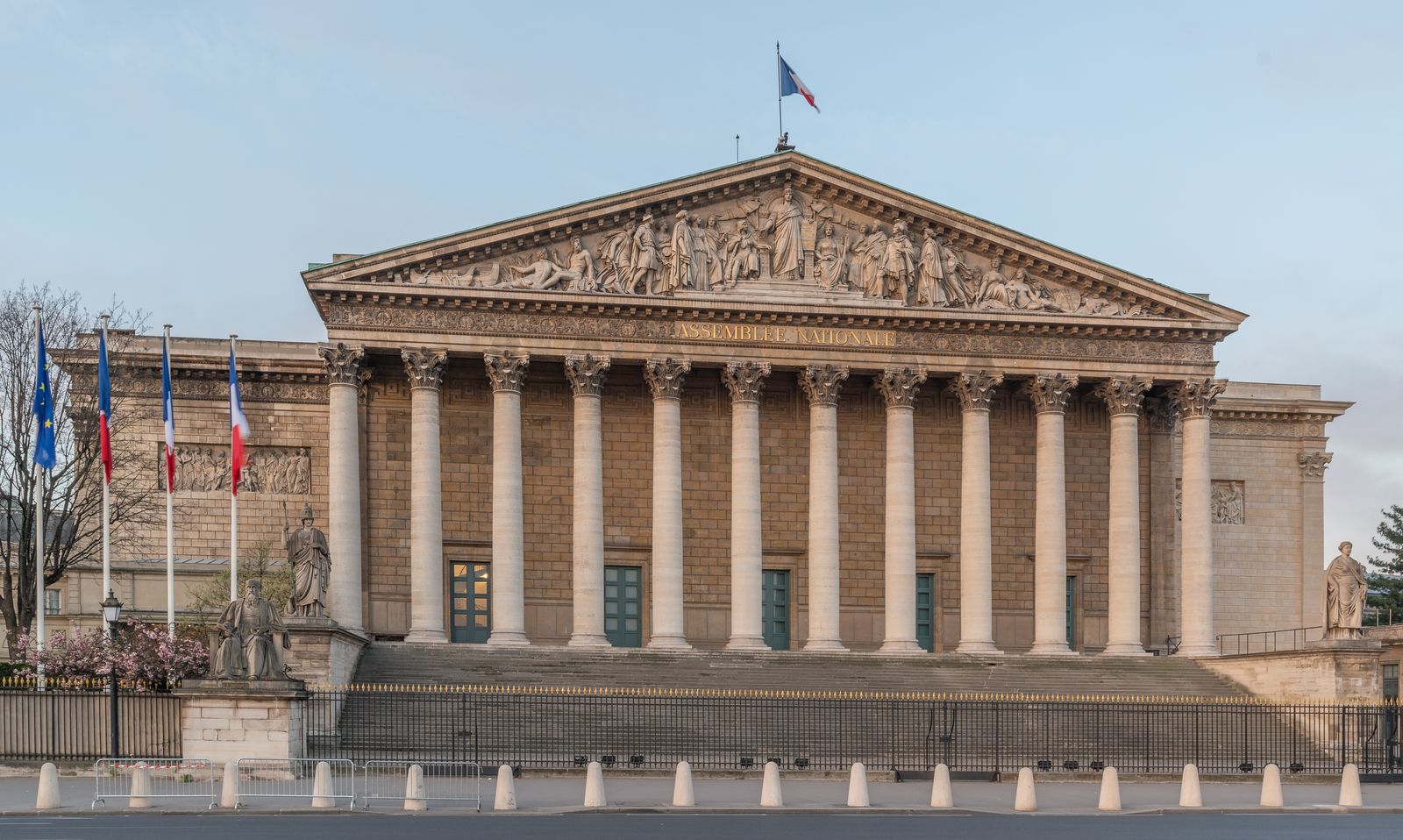
France's National Assembly began reviewing the 2027 budget on October 7, and the government's emblematic savings measure did not survive the morning. Finance committee deputies deleted Article 3, which would have lowered the 10 percent pensioner tax allowance ceiling from 4,439 to 3,000 euros, at a cost to the state of 1.4 billion. The revolt crossed every line of a hung parliament: far right, right, left and even allies of the government voted to spare retirees, leaving Prime Minister Sébastien Lecornu's consolidation plan bleeding from day one.
The committee had been sitting barely a few hours when the measure fell. At 9 a.m. on Wednesday, October 7, the finance committee of the National Assembly opened its examination of the first part of the 2027 finance bill, under the presidency of Éric Coquerel of La France Insoumise, with Philippe Juvin of the Droite républicaine as rapporteur général. By the time the amendment sponsors had finished speaking, Article 3 was gone: the deletion amendments, signed by deputies from Les Républicains, Horizons, the Rassemblement national, the UDR, La France Insoumise and the communist group, had all been adopted. Deputies from the government's own bloc had voted with the far right and the left against a measure drafted by their own executive.
What died was the centrepiece of the government's demand that retirees contribute to fixing public finances. Article 3 would have lowered the ceiling of the 10 percent income-tax allowance on pensions from 4,439 euros per tax household to 3,000 euros. According to the finance ministry's own documents, 4.6 million tax households would have been affected, a little more than a third of those counting at least one pensioner, and the state would have collected 1.4 billion euros. Coupled with a freeze on basic pensions of 1,260 euros a month or more, the government was asking retirees for a combined contribution of 5.5 billion euros, the single largest ask in a budget that must find 43 billion in new savings and bring the deficit down from 5.4 to 5 percent of GDP.
Retirees are the one group no French parliament dares to touch. On October 7, even the government's own allies proved it again.
The vote is provisional, and everyone in the Palais-Bourbon knows it. The committee's power is limited by Article 40 of the Constitution: an amendment cannot cut a tax receipt without compensating it, and the plenary debate that opens on October 13 restarts from the government's original text. Every measure deleted in committee must be tabled and voted again in the hemicycle. The government can revive Article 3 in session, and the measure will return to the floor as early as next week.
But as a political signal, the vote was unambiguous. This is the third time parliament has buried this exact measure. On November 13, 2025, during the 2026 budget, deputies rejected a flat 2,000 euro replacement for the allowance by 213 votes to 17. On January 15, 2026, in new reading, they removed the 3,000 euro ceiling introduced by the Senate, word for word the one revived in Article 3 of the 2027 bill, by 106 votes to 8. Last year the first part of the 2026 finance bill was rejected outright, 404 votes to 1, and the budget was finally adopted on February 2, 2026 through Article 49.3, with no overall vote of the deputies at all. A measure that has been killed three times in a year has a political mortality rate the government cannot ignore.
The government aimed at pensioners because the numbers point there. Pensions are by far France's largest public expense: 436 billion euros next year, or 14 percent of economic output. The finance ministry argues the 10 percent allowance is a fossil, a deduction meant to cover professional expenses granted to people who, in most cases, no longer have any. The ministry's documents stress the reform would be neutral or insignificant for households whose annual pensions sit around or below 30,000 euros, concentrating the effort on the better-off.
The opposition's arithmetic reads differently. Six billion euros was the early figure for the total retiree contribution before the budget was presented; the final coupled package of the allowance cut and the partial pension freeze comes to 5.5 billion. The government also wants pensions above 1,260 euros to rise less than inflation, which it says would save another 4.1 billion. For the critics, the sequence is the scandal: retirees, who vote in greater numbers than any other age group, are being asked to fund a consolidation from which the state's biggest structural costs, the debt service rising by 9.6 billion to 72.9 billion euros, are shielded. Socialists called the measure antisocial, the far right said it would not let the consolidation happen on the backs of retirees, and the left's committee president accused the executive of dramatising the debt to make any solution acceptable.
The day's votes drew a rare cross-party map. Deletion amendments to Article 3 were signed by Corentin Le Fur and Laurent Wauquiez for the Droite républicaine, François Jolivet for Horizons, Jean-Philippe Tanguy for the RN, Éric Ciotti for the UDR, Éric Coquerel for LFI and Nicolas Sansu for the communist group, and adopted across the committee. Nicolas Sansu called the article extremely harsh for retirees. The RN's Claire Marais-Beuil told the debate her group opposed any consolidation done on the backs of retirees. Only the MoDem deputies defended the measure alone, in the name of what Jean-Paul Mattei called fiscal solidarity between the generations, urging everyone to tighten their belts and act responsibly. Marc Fesneau, the MoDem group president, said the vote had no political meaning and that fixing the accounts could not rest only on those who work; Guillaume Kasbarian of the government bloc denounced primary electoralism toward retirees.
The left kept its distance from that defence. The Socialist Philippe Brun called the allowance cut antisocial, and Éric Coquerel, who chairs the committee, warned against debt catastrophism. Rapporteur général Philippe Juvin struck a different note from the right: deputies must keep in mind, he warned, that the country's creditors are watching. Minister of Public Accounts David Amiel, watching the amendments pile up, said the committee's copy was digging the public deficit by nearly 4 billion euros.
Article 3 was not the only casualty. The committee restored the tax exemption for daily sickness allowances paid to people with long-term illnesses, which the government wanted to tax at 50 percent, on a Socialist amendment. It raised the exceptional contribution on high incomes and strengthened the differential contribution guaranteeing a 20 percent minimum tax, on amendments from the Liot group carried by Charles de Courson, against the rapporteur's advice. It removed the annual 7,500 euro ceiling beyond which overtime becomes taxable again, on an amendment from the government's own EPR group. And it scrapped the planned cut to the tax break on redundancy payments, worth 800 million, on an amendment from Éric Ciotti's group.
The picture is a committee trimming the government's savings and keeping its concessions. Of the 1,784 amendments tabled on the first part, 217 had already been ruled inadmissible before debate, 205 of them under Article 40. The Socialists tabled the most, 290, ahead of the EPR's 262, LFI's 238 and the RN's 225, with the small Liot and ecologist groups the most prolific relative to their size.
Geopolitics and macroeconomics meet in Juvin's warning. France sits at the centre of a global bond market selloff over weak public finances, and its creditors are not an abstraction. Ten-year yields fell to 4.7506 percent on October 6 after Marine Le Pen's shadow budget promised to bring the deficit below the EU's 3 percent limit by 2030, then bounced back to 4.8498 percent the next morning, the spread over German bunds widening back to 136 basis points (see the shadow budget's brief market honeymoon). Public debt is projected at 121.7 percent of GDP by the end of 2027, and the debt service alone is growing by 9.6 billion euros, devouring the consolidation it is supposed to enable.
The historical pattern is the measure's own corpse count: three burials in eleven months, and a 2026 budget that never got a full vote. The demographic dimension is the voter the measure targets: pensioners, 436 billion euros of spending, the most reliable electorate in the country, six months before a presidential election whose first round is set for April 18 and which the polls say Marine Le Pen could win. The structural trend is the hung parliament itself: a government with no majority, a compromise offered to the Socialists on September 23, a refusal to deal with the RN, and the threat, aired openly, of Article 49.3 or even of an ordinance, which would be a first under the Fifth Republic. Add a two-week student protest wave that has closed hundreds of schools, and Lecornu's narrow path looks less like a strategy than a tightrope.
The committee sits again today, October 8, and Friday: corporate taxation, with Article 15 renewing the big-company surtax expected to raise 5 billion, then local authorities and allocated taxes, before the committee's vote on the first part. From October 13 to 19, the plenary debate replays everything from the government's text, and the first solemn vote lands on October 20, the same vote that sank the 2026 budget last year. The social security budget gets its solemn vote on October 27, and the full 2027 budget on November 17, before a 20-day Senate passage and a joint committee in December. The Constitution gives parliament 70 days in total; past the deadline, the government can impose the budget by ordinance.
The real question is whether Lecornu can assemble a majority that did not exist for the committee. His September compromise offer to the Socialists went unanswered in the open, his 49.3 threat remains the ultimate lever, and the ordinance option would detonate the presidential campaign. The retirees' allowance will return to the hemicycle next week, and the government will have to decide whether to spend its remaining political capital defending a measure parliament has already killed twice. If the committee's first day is any guide, the deputies intend to make the executive pay for every billion, and the creditors, as Juvin warned, are watching.
From a Western market and policy perspective, October 7 confirmed that France's fiscal consolidation is hostage to its own parliament. Investors watch two numbers: the deficit path toward 5 percent and the 136 basis point spread over German bunds that prices France's political risk. The committee's 4 billion euro hole, opened on day one, is small against 43 billion of planned savings, but the signal is what markets trade: a government that cannot pass a 1.4 billion measure against its own allies will struggle to deliver 43 billion. The creditors, as Juvin put it, are watching, and they vote with their feet.
There is also an institutional reading familiar in Western capitals: this is what consolidation looks like in a hung parliament six months before a presidential election. The EU's 3 percent deficit ceiling is the distant anchor, but the immediate constraint is electoral. Pensioners vote, students are in the streets, and the measure's three burials in eleven months show that the French political system has a hard limit on taxing the elderly. Western analysts will now price a rising probability that the 2027 budget, like the 2026 one, ends in 49.3, and that consolidation slips past the election.
From an Eastern perspective, the October 7 vote reads as a case study in the constraints of Western democratic budgeting. A government that presents itself as fiscally serious cannot get its own parliamentary allies to back a 1.4 billion euro saving, while the debt service climbs by nearly 10 billion a year untouched. For observers in Beijing and Moscow, the episode illustrates a familiar argument: that Western fiscal discipline is negotiable the moment it meets the ballot box, and that bond markets, not parliaments, end up arbitrating sovereignty. The EU's 3 percent rule looks increasingly like an aspiration states cite and miss.
There is a second Eastern reading, about leverage. France's fiscal paralysis weakens the Franco-German engine that is supposed to steer European economic policy, from trade defence to industrial strategy. A Paris consumed by its budget wars and a presidential campaign is a Paris that cannot drive the EU agenda. For Eastern capitals watching Europe's internal cohesion, each parliamentary humiliation of Lecornu is data: the continent's second economy is politically immobilised, and its creditors know it.
From the Global South perspective, the French debate over a pensioner tax allowance lands differently: 436 billion euros in annual pension spending is more than the GDP of most African states, and the idea that a rich country struggles to trim a tax break for its elderly reads as a luxury problem. Yet the mechanics are familiar. Senegal, which just ring-fenced its CFA debt to protect its banks, and France, which cannot touch its retirees' tax break, are both discovering the same truth: austerity always runs into the groups a political system cannot afford to alienate. The protected constituency differs; the arithmetic of power is identical.
Southern observers will also note the asymmetry of scrutiny. When an African state misses its fiscal targets, creditors and the IMF arrive with conditions; when France, with debt at 121.7 percent of GDP and a deficit twice the EU limit, cannot pass its own budget, the markets grumble and the show goes on. The lesson drawn in Dakar, Abidjan or Buenos Aires is not that France is failing, but that fiscal rules are enforced with a double standard: leniency for those who issue the reserve-adjacent currencies, lectures for the rest.
On the first day of its review of the 2027 finance bill, the committee deleted Article 3, which would have lowered the 10 percent income-tax allowance ceiling for pensioners from 4,439 to 3,000 euros. Deletion amendments from the RN, the Droite républicaine, Horizons, the UDR, LFI and the communist group were all adopted, some with votes from the government's own bloc. It also restored tax exemptions for long-term illness allowances and scrapped other savings measures.
The government says the 10 percent allowance is a relic meant to cover professional expenses that most retirees no longer have, and its documents estimate a 1.4 billion euro gain affecting 4.6 million tax households, mainly the better-off. Critics reply that pensions, at 436 billion euros or 14 percent of GDP, are being asked to fund a consolidation while the rising debt service is left untouched.
No. Committee votes on a finance bill are provisional: the plenary debate opening on October 13 restarts from the government's original text, and every deletion must be tabled and voted again in the hemicycle. The government can revive Article 3. But the same measure has now been killed three times in a year, which makes a revival politically costly.
The committee finishes its review on October 8 and 9, then votes on the first part. Plenary debate runs October 13 to 19, with a solemn vote on the first part on October 20, the social security budget vote on October 27, and the full budget vote on November 17. The Senate then has 20 days. If parliament misses the 70-day constitutional deadline, the government can impose the budget by ordinance.
Yes. Prime Minister Sébastien Lecornu has not ruled out Article 49.3, which was used to adopt the 2026 budget without an overall vote, or even an ordinance, which would be a first under the Fifth Republic. He has also offered the Socialists a compromise, as he refuses any deal with the RN. With a presidential election six months away and polls pointing to Marine Le Pen, the political price of forcing the text keeps rising.
