Donald Trump says the Omani co-pilot who tried to bring down a Dubai–Tel Aviv flight may be linked to Iran — and promises Tehran will be hit ‘very hard’ if so. The investigators, and even Netanyahu, are not so sure.
Published 2 October 2026 · 18:00 GMT
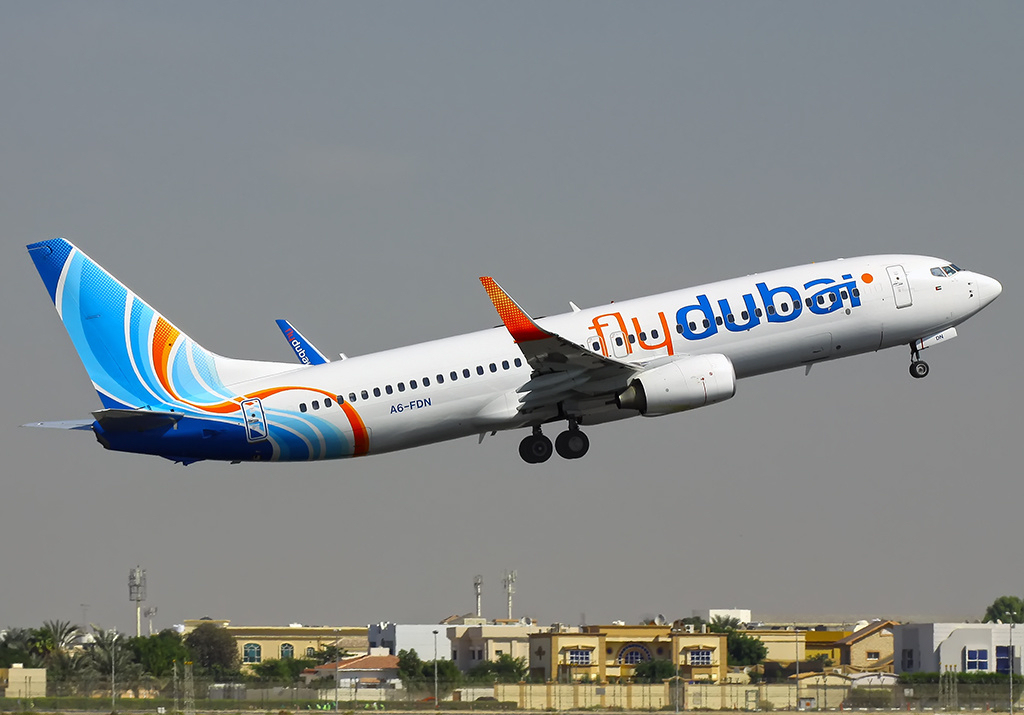
On Thursday the president pointed a finger at Tehran over the FlyDubai cockpit attack — ‘based on what I’m hearing.’ The investigators, the Israelis and the airline all say the same thing: it is too early to know anything. In a seven-month war, that gap is the whole story.
The question was shouted at the edge of a helicopter. On Thursday, as Donald Trump prepared to board Marine One, a Fox News reporter asked whether he had been briefed on a possible Iranian connection to the FlyDubai co-pilot who had tried to bring down a passenger jet. The president did not hesitate, and he did not produce evidence. “We’re working on it right now,” he said. Then, pressed: “I would say the answer, based on what I’m hearing, is yes, but we’re working on it right now.” Asked whether Iran’s Islamic Revolutionary Guard Corps could have placed the man in the cockpit, or radicalised him by some other route, Trump replied: “Could have been, yeah.” And asked what the United States would do if Tehran were found to be behind it, he answered: “Oh, they’ll be hit very hard, don’t worry.” A beat later: “You ask them. They know what happened. They’ll be hit very hard.” Earlier, after speaking with Netanyahu, Trump had offered a different theory of the man: “It seems as though the co-pilot was perhaps a terrorist or perhaps a whack-job.” Notice the machinery of the sentence. Not “intelligence indicates.” Not “a briefing concluded.” Just: what he is hearing. In the same 24 hours, the people actually holding the investigation said something far less useful for a headline. Netanyahu, the most invested man in the region, told Fox News it was “too early” to determine whether Iran was involved — a caution he repeated on the wider question of motive. Two Israeli security officials went further, telling Reuters that Israel had so far found no Iranian connection. FlyDubai itself, which has suspended its flights to and from Israel while its own inquiry runs, has warned against “premature speculation” and says the underlying reasons for the event remain unknown. So the ledger stands like this: a president says yes; his own ally’s security services say not yet; the airline says unknown; and the man at the centre of it all sits in Emirati custody saying nothing in public.
What happened inside that cockpit, on the other hand, is no longer much in doubt, and it is astonishing. On Wednesday 30 September, FlyDubai flight FZ1073 — a Boeing 737 MAX 8 from Dubai to Tel Aviv, carrying 174 passengers, 166 of them Israeli according to media reports cited by CGTN, and eight crew — became the scene of an attempted murder at altitude. An Israeli official told the Associated Press that a fight broke out between the two pilots and that one of them was armed with an axe. The co-pilot, an Omani national, stabbed Captain Smit Machchhar, an Indian veteran with nearly 9,750 flying hours, and fought for control of the aircraft. Flight-tracking data shows the jet shedding nearly 14,000 feet in under thirty seconds. The transponder spoke the language of emergencies twice over: 7700, the general emergency code, then 7500 — unlawful interference. Bleeding, Machchhar did the thing that saved everyone. He opened the cockpit door. Passengers poured onto the flight deck and grappled with the attacker. Dr Shota Musaev, a dentist among the passengers, told the Israeli journalist Ilana Dayan that he tied the co-pilot’s hands with headphones and then turned to treating the pilot; Machchhar’s words to him, with a wife and two children waiting at home, were: “I don’t want to die, I have children.” Another passenger, Asaf Rajuan, described the chaos in a statement shared by Israel’s presidency: “We felt helpless, suspended in midair, and I didn’t know who to turn to. But it was all instinct to survive.” Two off-duty FlyDubai pilots happened to be aboard — four pilots in total, a precaution the airline takes on this route against regional airspace disruptions that can force longer flight times — and they took the controls. Passengers later described a descent so violent it tore the rudder. The jet touched down at Tabuk in northwestern Saudi Arabia at 9:45 in the morning. Everyone — all 182 souls — survived. The captain went to a Tabuk hospital, reported stable. The passengers reached Tel Aviv that evening on a replacement aircraft at 5:40pm; the rest of the crew flew back to Dubai. And on the morning of 1 October, after being cleared by Saudi medical staff, both pilots were taken to Abu Dhabi under the escort of UAE security officials. The captain would go on to hospital care; the co-pilot, to questioning.
A claim like Trump’s does not land on a calm sea. It lands in the middle of a seven-month war between the United States and Iran — a war in which the same president, days earlier, rejected Tehran’s latest proposal for ending it, and in which Iranian officials said on Wednesday they had received Washington’s official response to that proposal, contents undisclosed. On Thursday, in a Time magazine interview, Trump said he would not accept Iranian proposals he “wouldn’t have approved a year ago” — and left the door open to resuming bombing after the 3 November US election. An American official told the Associated Press that roughly 9,000 troops aboard a group of ships have been dispatched to the Middle East, with as many as three aircraft carriers potentially in the region by late October. Meanwhile mediators, unnamed officials say, are still working both sides toward a deal that would end the fighting and reopen the Strait of Hormuz. Read Trump’s “very hard” warning against that backdrop and its function becomes clear: the FlyDubai allegation is not merely a crime story any more. It is a potential predicate. If an Iranian link hardens into evidence, the White House has already announced the punishment; if it evaporates, a president has still publicly accused a country at the edge of escalation of an attempted mass-casualty terror attack on the basis of what he was hearing. Both outcomes rearrange the war’s information terrain. And this is not the only accusation in the air: on the same Thursday, the British prime minister claimed “strong indications” of Iranian involvement in an alleged plot against a UK airbase, and Iran summoned the British ambassador in Tehran. A pattern is forming in which the allegation itself is the weapon — fired before the investigation can catch up, useful whether or not it ever lands.
A president said “yes” before the investigators could. In a seven-month war, that is the whole story.
Strip the politics away and what remains is a man in a cockpit, and a long list of unanswered questions about him. The co-pilot is Omani — holding only Omani citizenship, according to The Jerusalem Post — and had joined FlyDubai about eight months ago. Israeli media have not published his name; Omani authorities have not commented at all. What has surfaced is a portrait painted by a colleague. Speaking anonymously to Israel’s Channel 16, a fellow FlyDubai pilot described the attacker as a “religious extremist” who “prayed excessively throughout the day and refused to shake hands with women,” displaying behaviour his colleague considered out of step with his surroundings at the airline. The same colleague reportedly told Channel 16’s foreign editor Yosef Yisrael that the airline had “betrayed Israel”: “There is no other way to put it, we hired the services of a terrorist and nearly caused the deaths of 180 people.” These are one colleague’s claims, not established facts — and the reports themselves note they do not establish that the man’s religious observance was itself evidence of a motive. There is more, all of it in the same unconfirmed register. An iNews24 correspondent, citing an Emirati source, reported that “Free Palestine” pamphlets and other anti-Israel literature were found among the co-pilot’s belongings, and that the pilot had expressed hostility toward Israel and support for the Palestinians. One Indian outlet reported, in turn, that the co-pilot had talked of killing Jews. Netanyahu, who has the ear of the investigators, told Fox News the attacker had undergone “Islamist radical indoctrination” — and added that once passengers restrained him, the man repeatedly shouted “kill me, kill me” at the crew, which the prime minister read as suicidal intent. Then, in the same interview, Netanyahu refused to close the case: “I don’t make final conclusions yet. But that’s the indications we have now.” Israel’s foreign ministry spokesperson, Michal Maayan, confirmed that investigators are examining ideological motives, possible accomplices, and prior planning or direction — but said the inquiry is “still in the initial stages.” Even Israel’s envoy to the UAE, Yossi Shelley, has urged caution: too early for conclusions. Against that caution stands the political language. Israel’s defence minister, Israel Katz, called the episode “an attempted jihadist terror attack.” The foreign ministry went further, framing it as “an attempted terrorist attack against Israelis, the United Arab Emirates, and the Abraham Accords” — and foreign minister Gideon Saar said he had spoken with his Emirati counterpart Abdullah bin Zayed Al Nahyan and agreed to “collaborate against extremist elements seeking to harm security and undermine stability.” There is also the uncomfortable administrative question of how an Omani national came to be flying an Israel-bound service at all. Oman has no diplomatic ties with Israel, and Omani nationals need a visa to enter the country; Israel’s transportation ministry has told The Jerusalem Post that FlyDubai pilots should be citizens of nations with diplomatic ties to Israel — yet the bilateral aviation agreement between the UAE and Israel does not require it. Netanyahu said the co-pilot had exploited a “loophole.” The UAE, meanwhile, has moved to own the investigation. Its attorney general ordered a probe, and the state news agency announced the judicial authorities are seeking to establish “whether the incident was linked to any terrorist activity or purpose, or involved prior planning or direction” — asserting jurisdiction on the grounds that the aircraft is UAE-registered, flies under the Emirati flag, and that UAE law covers crimes aboard even outside its territory. The attacker is also being investigated in Saudi Arabia, where the plane landed, though Riyadh has issued no statements. Abu Dhabi, not Tabuk, is now where the co-pilot’s answers will be sought.
And then there is the other man in the cockpit — the one whose conduct on 30 September turned a likely mass-casualty event into a story of 182 survivors. Captain Smit Machchhar, 39, never intended to be a pilot at all. The Mumbai Ghatkopar boy from a textile-trading family studied textile engineering to join the family business, then enrolled in a management course at Mumbai’s Welingkar Institute — and there, at an aviation seminar, at the age of nineteen, “the aviation bug really found me.” His mother was frightened; his father, he recalled, was more comfortable with the leap. He trained at Mainland Air in Dunedin, New Zealand — his first trip outside India — took his Boeing 737 rating at the Flight Safety Training Centre in Manesar, and joined SpiceJet in 2011, spending eleven years there and rising to line training captain, the pilots’ pilot, responsible for mentoring younger crews. He moved to FlyDubai as a direct-entry captain in June 2022. His professional profile lists nearly 9,750 flying hours on the 737-800 and the MAX 8 and 9, and his LinkedIn bio reads: “Airline Captain, Lifelong Learner, Father, Helping Others Fly Higher.” His brother is also a FlyDubai pilot. He and his wife Sonal have two children, Ziva, nine, and Krishay, two. A year-old podcast interview, recorded long before Wednesday, now reads like a preview of the crisis: “Delay is not my problem,” he said of his operating philosophy. “As long as you’re walking out of the aircraft is what I want.” And: “When I get out of the cockpit or the aircraft, I don’t want the other guy to know that I’m a pilot… When you wear the uniform, then no nonsense and just do your job, finish the job.” He finished the job on Wednesday — bleeding, with a co-pilot trying to kill him, he got the door open. Since then the machinery of two states has wrapped around him: airlifted from Tabuk to Abu Dhabi for further treatment, where India’s embassy says he is “in good health and recovering well”; the ambassador visited him in hospital and met his family, pledging every possible support. Prime Minister Narendra Modi called him “a HERO” and spoke with the captain’s father, mother and wife. Netanyahu called him “a true hero.” The chief minister of Gujarat, his home state, announced the Visisht Gujarat Garima Award. It is worth pausing on what all this adulation can do: it turns a man who did his job into a symbol, and symbols get spent. The captain’s recovery, mercifully, is reportedly going well. Whether his name is allowed to remain a pilot’s — rather than a flag’s — is the next question.
Geopolitics. The cockpit attack is a fact; its meaning is being manufactured in real time. In the information terrain of a seven-month war, the first actor to fix a motive owns the story, and the White House has just tried to fix it on Tehran before the Emiratis have finished asking questions. Watch what is really being asserted: not evidence, but jurisdiction over the narrative. The UAE’s careful statement — jurisdiction, law, “prior planning or direction” — is a sovereign act by a small state that hosts an American president’s theory about its own airline while Saudi Arabia, Israel and now Washington all circle the evidence. Macroeconomics. Every escalation now runs through oil and the Strait of Hormuz, which mediators are reportedly trying to pry open even as carriers steam toward it. FlyDubai’s suspension of its Israel services is a small commercial casualty with an outsized signal: the Dubai–Tel Aviv corridor was the Abraham Accords made flesh, a six-year experiment in turning diplomacy into departure boards. Every cancelled rotation is the Accords’ economics taking the hit the diplomacy was supposed to absorb. Demographics. One cockpit, three worlds: an Indian captain, an Omani co-pilot, 166 Israeli passengers. Gulf aviation is built on expatriate labour — the region’s carriers could not fly a day without it — which makes crew vetting a demographic and diplomatic problem at once. The coming argument over who may fly where, and under which passport, will be fought in the language of security but decided by the labour map. History. The industry’s deepest fear has always been the trusted insider — the threat no scanner, no reinforced door, no passenger blacklist can reach, because the weapon is a uniform. Post-2001 cockpit doors were engineered to keep intruders out; they also keep everyone else out, which is exactly what a rogue pilot wants. The procedural answer — two people in the cockpit at all times, reinforced after the last European catastrophe — only works if it is followed, and on a routine regional hop, routine is the enemy. Structure. The loophole Netanyahu named is structural, not personal: security architecture assumes the state that certifies the crew and the state that receives the flight share a definition of trust. The UAE–Israel aviation agreement does not encode one. Until it does, every Gulf carrier flying to Tel Aviv is operating on political goodwill dressed up as a security regime — and goodwill, as Wednesday showed, does not open locked doors.
The investigation is the hinge on which everything now swings. In Abu Dhabi, the co-pilot will be questioned under Emirati jurisdiction, and the three questions Israel’s foreign ministry laid out — ideological motive, accomplices, prior planning or direction — are the ones that decide whether this was a disturbed individual, an organised plot, or the Iranian-directed operation the American president is already describing. Netanyahu has said Israel will follow the inquiry and may participate in it; what investigators say next will be measured against what Trump has already said. Second: watch whether the White House produces anything firmer than “what I’m hearing.” The two Israeli security officials who told Reuters no Iranian connection has been found so far are the only people on the record with access to actual evidence, and they point the other way. Third: the man himself. The co-pilot’s legal fate — charges, custody, a trial under Emirati law — will be watched across the Gulf as a test of whether the UAE can run a politically radioactive prosecution while two larger powers narrate it over its head. Fourth: the route. FlyDubai’s suspension of Israel services cannot last forever without becoming a verdict on the Abraham Accords themselves; its resumption, and under what new vetting rules, will tell you how much Wednesday really changed. Fifth: the carriers. Three American carrier groups in the region by late October is a deployment looking for a mission, and “hit very hard” is a promise looking for a trigger. The FlyDubai claim could be that trigger — or, if the investigators find nothing, it could become one more allegation that did its work and dissolved. Either way, Captain Machchhar — recovering, by all accounts, in an Abu Dhabi hospital — has already done the only thing in this whole affair that is beyond dispute: he opened a door.
From the Western vantage, the FlyDubai affair is first a security failure and only second a geopolitical one. An airline put a man of eight months’ standing, reportedly flagged by colleagues for behaviour they found extreme, into the right-hand seat of a flight to Tel Aviv — a route every intelligence service on earth would classify as sensitive. That a president then reaches for Iran on “what I’m hearing” is treated in this reading not as strength but as the familiar pathology: attribution racing ahead of evidence, the way it did in the run-ups to older wars. The proper response, Western editorialists will insist, is the investigation — motive, accomplices, planning, direction — before the cruise missiles.
At the same time, the Western lens carries genuine solidarity with the victims’ side of the story. A plane full of Israelis nearly fell out of the sky; Israel’s defence minister calls it an attempted jihadist attack, and the restraint of Netanyahu — “too early” — is read here as statesmanship, not weakness. FlyDubai’s suspension of Israel flights, the Abraham Accords framing, the Saar–Abdullah call: all of it reads as a civilised world closing ranks around a shared security architecture. The uncomfortable question this lens tends to underplay is whether Washington’s own “very hard” rhetoric is part of the threat to that architecture, or its defence.
The Eastern reading starts from a different file entirely: the seven-month American war on Iran. Trump rejected Tehran’s proposal days ago, told Time he will not accept terms he “wouldn’t have approved a year ago,” and is moving carriers into position while openly discussing resumed bombing after the November election. In this light, the FlyDubai allegation looks less like intelligence than like stagecraft — a pretext being assembled in public, “what I’m hearing” as a substitute for a dossier. Beijing and Moscow have watched this film before, this lens argues, and they note the tell: the accusation arrives before the evidence, the punishment is announced before the verdict.
None of which, in the Eastern account, proves Iran’s innocence — it proves the poverty of the process. The honest version of this lens takes Tehran’s position at face value only insofar as it mirrors its own complaint: that Muslim-majority publics are being primed to see a “religious extremist” as proof of a state-directed plot, collapsing the distance between one troubled Omani pilot and a government of ninety million people. If the investigation finds a real chain of command, say the Eastern commentators, publish it; if it does not, the “very hard” threat will stand exposed as what it currently is — coercion wearing the uniform of counter-terrorism.
The Global South lens reads this story through the people who actually flew the plane. Captain Smit Machchhar is a national hero in India tonight — praised by Modi, decorated by Gujarat, his family visited by an ambassador — and New Delhi’s interest is concrete: millions of its citizens crew the Gulf’s aircraft, hospitals and construction sites, and an Indian captain bleeding in a cockpit is a domestic story before it is a geopolitical one. The South’s question is practical, not ideological: who protects the workers who keep other people’s airlines flying, and what does consular muscle look like when the cockpit becomes a crime scene?
From the Gulf itself, the lens is sovereignty. The UAE has asserted, carefully and publicly, that this is its investigation — its aircraft, its flag, its law — even as Washington narrates it and Jerusalem watches it. That is a small state refusing to become scenery in someone else’s war. And the South notices what the North skips: that the co-pilot is Omani, that Oman has said nothing, that an entire region’s aviation economy — its crews, its routes, its fragile normalisation with Israel — now hangs on what a few interrogators in Abu Dhabi can establish. Evidence, not rhetoric, is the South’s demand — because the South is where the next war’s first casualties always live.
Beijing just wrote the biggest liquidity check of the year — and changed nothing else.
The People's Bank of China will offer banks up to one trillion yuan a day — about $149 billion — in overnight funds from September 28 through October 8, covering the Golden Week holiday. It is the largest such cap since the tool's introduction in June 2026, up from 600 billion yuan in mid-September.
The calendar explains the timing. Golden Week sends hundreds of millions of Chinese traveling and spending; banks need cash the way airports need runways. The central bank is making sure the plumbing holds.
The scale, though, is the story. One trillion yuan a day is not holiday housekeeping. It is a backstop — a signal that whatever the holiday throws at the financial system, the PBoC has already covered.
And then, the other hand: nothing. Chinese banks left the one-year and five-year loan prime rates unchanged at 3.00% and 3.50% — the 16th consecutive month without a move.
Sixteen months of stillness in the price of credit, alongside the largest liquidity flood of the year. Beijing is watering the garden and refusing to lower the fence — liquidity yes, cheaper credit no.
Governor Pan Gongsheng gave the doctrine a name: slower loan growth is becoming "the new normal." Property and local-government borrowing are shrinking faster than emerging industries can borrow. The credit engine is being rebuilt mid-flight.
Liquidity is Beijing's answer to everything except the one question markets keep asking: where is the growth?
The PBoC is not idle elsewhere. It stepped up support with a net 200-billion-yuan injection through medium-term lending facility operations, reiterated its "moderately loose" stance, and kept its grip on the yuan.
The yuan, for its part, cooperated — rebounding after briefly dipping below 6.70 per dollar as US Treasury yields rose and the PBoC's grip eased.
The diplomacy helped. A US–China summit extended the trade truce to January — without new tariff cuts, but without new tariffs either. A truce, not a peace; markets will take it.
Step back and the contrast is the story. In Washington, yields cross 5% and traders bet on another hike. In Beijing, the central bank floods the system with cash and leaves rates untouched for a 16th month. Two central banks, two planets.
The logic is not mysterious. China's problem is not hot demand — it is cold credit. Pumping liquidity keeps the system liquid; cutting rates into weak demand would be pushing on the proverbial string.
The risk is the one Beijing knows best: banks awash in cash, with nowhere productive to lend it. Liquidity without lending becomes asset froth — the 2015 lesson, still fresh in institutional memory.
For the region, the signal matters more than the mechanics. A stable yuan and a liquid Chinese banking system through Golden Week is the foundation under Asia's supply chains. When Beijing sneezes, the region's exporters reach for tissues.
Watch what happens after October 8. If the trillion-yuan window closes quietly, it was holiday plumbing. If support lingers, it was something else — a central bank telling you, without saying it, that the economy needs the help.
Western coverage — Reuters and the financial wires — emphasizes the restraint: Beijing holding rates while flooding liquidity, a central bank running out of its favorite tools.
In this telling, 16 months of unchanged loan prime rates is the real headline — evidence of a policymaker boxed in by a hawkish world, a weak property sector, and the fear that rate cuts would only weaken the yuan. Liquidity is what you do when you've decided rates can't move.
Pan's "new normal" gets a skeptical hearing: an elegant phrase for a credit engine that no longer transmits. The question in Western commentary is whether "moderately loose" is a stance or a shrug.
Eastern coverage — Xinhua and Chinese outlets — emphasizes the calibration: targeted, seasonal, and exactly as doctrine prescribes.
In this telling, the trillion-yuan facility is textbook PBoC: precise, time-bound, and aimed at a known seasonal need. The unchanged rates are not paralysis but prudence — "moderately loose" means loose where it counts, steady where it matters, with the yuan's stability as the binding constraint.
The summit's truce extension gets equal billing: diplomacy buying the central bank room to maneuver, and the maneuver working — the yuan's rebound presented as policy competence, not luck.
Global South coverage — Malaysia's business press among it — emphasizes the neighborhood: what Beijing's plumbing means for everyone downstream.
The read from Kuala Lumpur: a liquid China through Golden Week is good news for ASEAN exporters, supply chains, and the region's own central banks. Yuan stability is a public good in Asia, and the PBoC just underwrote another week of it.
The caution in this coverage is borrowed from experience: when the region's biggest economy needs record liquidity to get through a holiday, the "new normal" of slower credit is everyone's normal too.
To read Beijing's move properly, you need the toolkit. Start with the overnight reverse repo — the instrument at the center of the trillion-yuan headline. In a reverse repo operation, the central bank lends cash to commercial banks overnight, taking bonds as collateral; the banks get the liquidity they need, the central bank gets the bonds back the next morning plus a sliver of interest. It is plumbing, not policy: the money created exists for a day, maybe rolled over, and its purpose is to keep the interbank market — the market where banks lend to each other — from seizing. The cap is the message. A trillion yuan a day says: whatever the holiday throws at the system, the PBoC has already covered.
The tool itself is young — introduced only in June 2026 — which makes the record cap more interesting. A new instrument's ceiling is normally discovered cautiously; jumping from 600 billion yuan in mid-September to a full trillion two weeks later is not calibration but declaration. It tells the banks, and through them the market, that the central bank will not be outbid by seasonal stress. The facility runs September 28 to October 8, covering Golden Week exactly. Time-bound, enormous, and explicitly temporary: the PBoC is writing a check it intends to tear up on the 9th. The question the article ends on — what happens after October 8 — is the only one that matters, because a backstop that lingers stops being a backstop and starts being a subsidy.
Then the medium-term lending facility — the MLF — through which the PBoC added a net 200 billion yuan. If reverse repos are the overnight overdraft, the MLF is the term loan: banks borrow for months, not hours, pledging collateral, at a rate the central bank sets. The MLF rate is the PBoC's quiet policy lever — it guides the loan prime rates without the drama of changing them. And the loan prime rates, the LPRs, are the number the article keeps returning to: 3.00 percent for one year, 3.50 percent for five, unchanged for the sixteenth consecutive month. The LPR is the benchmark for most new lending in China; holding it still while flooding the system with cash is the whole doctrine in one gesture. Liquidity yes. Cheaper credit no.
The sixteen months of stillness deserve their own reading, because stillness is also a decision — sixteen times over. In a world where Washington is hiking and yields cross 5 percent, cutting Chinese rates would narrow the already thin cushion against capital outflow and yuan depreciation; every basis point of easing is a basis point of incentive for money to leave. The PBoC's box, as the Western lens describes it, is real: a property sector that no longer transmits stimulus, local governments deleveraging rather than borrowing, and a currency whose stability is the binding constraint on everything else. Holding the LPR is not paralysis. It is the recognition that the price of credit is no longer the economy's binding constraint — and that moving it would cost more in currency stress than it buys in growth.
The calendar explains the timing, as the article says — but the calendar deserves its scale stated plainly. Golden Week is the largest annual human migration on earth compressed into seven days: hundreds of millions of Chinese traveling, spending, withdrawing cash, settling bills. The banking system's cash demand does not rise. It detonates. ATMs must be stocked, merchants' settlement accounts funded, the interbank market supplied with enough reserves to clear a week's worth of the world's second-largest economy changing hands. In normal years, the PBoC manages this with routine open-market operations. This year it wrote the biggest check in the tool's short history.
The scale, though, is the story — the article's line, and worth pressing. One trillion yuan a day is not holiday housekeeping; it is a backstop sized for something the PBoC sees and the market does not yet. Seasonal demand explains the facility's existence. It does not fully explain its size. Either the central bank is being theatrically cautious — signaling strength by oversupplying safety — or its internal read on holiday-season financial stress is darker than the public data. Both readings are consistent with "moderately loose." Only one of them is reassuring. The banks will take the cash either way; the signal is in the surplus.
There is also the consumption angle, which is where the liquidity meets the real economy. Golden Week is China's great annual test of consumer confidence: the week when households vote with their wallets on whether the economy feels safe. A banking system visibly backstopped — cash available, payments clearing, no friction — is the precondition for the spending the state wants to see. The PBoC cannot make households spend; it can only ensure that nothing in the plumbing stops them. In an economy where the consumer has been the missing piece and property wealth no longer does the spending's work, the holiday's cash registers matter more than the interbank rate. The trillion yuan is, among other things, a bet on the tills.
And the regional read — the Global South lens from Kuala Lumpur — captures what the holiday means beyond China's borders. A liquid China through Golden Week is the foundation under Asia's supply chains: exporters paid, importers funded, the region's own central banks spared the volatility of a yuan under holiday stress. Yuan stability, as the article notes, is a public good in Asia, and the PBoC just underwrote another week of it. When the region's biggest economy needs record liquidity to get through a holiday, the "new normal" of slower credit becomes everyone's normal — but a stable holiday is still a stable holiday, and Asia's exporters will take it.
Central bankers choose their phrases the way diplomats choose communiqués — every word weighed, every ambiguity intentional. When Governor Pan Gongsheng said slower loan growth is becoming "the new normal," he was not describing a statistic. He was retiring an expectation. For two decades, China's credit engine ran on a simple formula: property developers borrowed, local governments borrowed against land, and the resulting construction carried GDP. That engine is being dismantled mid-flight — property deleveraging, local-government debt discipline — faster than emerging industries can borrow to replace it. "New normal" is the doctrine that says: stop waiting for the old credit cycle to return. It is not returning.
The doctrine has a logic, and it is worth steelmanning before doubting. Credit-fueled growth bought China two decades of expansion and left it with the property crisis, the local-government debt pile, and the demographic headwinds now arriving together. Pumping cheap credit into that structure — the old playbook — would reflate the very imbalances the state is trying to defuse. Slower, cleaner credit growth, directed at manufacturing upgrades and strategic industries rather than concrete, is the quality-over-quantity bet. The PBoC is not refusing to stimulate. It is refusing to stimulate the old economy. The distinction is the entire policy.
The risk, as the article notes, is the one Beijing knows best: banks awash in cash with nowhere productive to lend it. Liquidity without lending becomes asset froth — the 2015 lesson, still fresh in institutional memory, when stimulus leaked into equity speculation rather than productive investment. The trillion-yuan facility, the 200-billion MLF injection, the "moderately loose" stance — all of it presupposes transmission channels that the "new normal" itself describes as weakened. Watering the garden, to use the article's image, works only if the soil still absorbs water. If property and local governments no longer drink, and emerging industries cannot drink fast enough, the water pools. Pooled liquidity has a history in China. It is called a bubble.
Step back and the contrast the article closes on — two central banks, two planets — is the frame that will define the autumn. Washington hikes into data it may not have, fighting inflation with the South's interest bills. Beijing floods with cash it cannot lend, defending a currency it cannot afford to let slip, waiting for a credit engine it is rebuilding mid-flight. Neither has a clean instrument. Both are improvising inside doctrines — data-dependence, the new normal — that describe the world they wish they governed. Watch October 8: if the trillion-yuan window closes quietly, it was holiday plumbing, and the doctrine holds. If support lingers, the PBoC will have told you, without saying it, that the new normal needs more help than the old vocabulary admits.
Monetary policy does not happen in a diplomatic vacuum, and the PBoC's autumn maneuver owes more to the summit than the communiqués admit. The US–China meeting extended the trade truce to January — no new tariff cuts, but no new tariffs either — and that pause is worth more to Beijing's central bank than any single instrument in its toolkit. Tariff escalation would have meant a weaker yuan, imported inflation, and capital flight arriving together; the truce removes the worst tail from the PBoC's planning. "A truce, not a peace; markets will take it," as the article says. So will central bankers.
The yuan's rebound — recovering after briefly dipping below 6.70 per dollar — is the truce's signature in the currency market. With US Treasury yields rising and the PBoC's grip easing, the currency found its footing not through intervention but through the removal of a threat. That distinction matters: a yuan steadied by diplomacy is cheaper to defend than a yuan steadied by reserves. Every week the truce holds is a week the PBoC does not have to choose between growth and the exchange rate — the choice that has boxed in Chinese policy for the better part of a decade.
But truces expire, and January is closer than it looks. The extension without tariff cuts is a freeze, not a thaw: the existing duties remain, the structural disputes untouched, the next escalation one headline away. The PBoC is therefore managing a window, not a settlement — using the diplomatic calm to get through Golden Week, to steady the currency, to buy the "new normal" time to prove itself. If January brings escalation, the trillion-yuan plumbing will look like the prelude to a harder season. Diplomacy bought the central bank room to maneuver, as the Eastern lens notes. Room is not resolution. It is rented, monthly, and the rent comes due in January.
