The Airbus A320, carrying 51 passengers and six crew, made an emergency landing in the Bulgarian capital on Sunday evening after the crew reported a “bomb threat signal” near the Romanian border. Bulgarian MiG-29s were scrambled under NATO’s air-policing mission; everyone aboard disembarked safely and a security inspection was under way.
Published 19 October 2026 · 01:34 GMT
An Austrian Airlines flight from Tel Aviv to Vienna was diverted to Sofia, Bulgaria, on Sunday evening, 18 October 2026, after its crew reported a bomb threat in midair. The aircraft — an Airbus A320 registered OE-LZE operating as flight OS82 — carried 51 passengers and six crew members. All 57 people aboard disembarked safely at Sofia’s Vasil Levski Airport.
The diversion came near the Romanian border. Bulgaria’s Transport Ministry said the crew reported a “bomb threat signal” and chose to land in Sofia “extraordinarily” — the ministry’s own term for an unscheduled emergency landing. Flight-tracking data from Flightradar24 and ADS-B Exchange show the aircraft transmitting squawk code 7700 — the international general-emergency signal — at about 9:10 p.m., as the aircraft turned south back into Bulgaria. The Defence Ministry put the alert at 9:17 p.m. local time.
A Bulgarian Air Force fighter took off and accompanied the airliner until it landed. The Defence Ministry specified that MiG-29 fighters were scrambled under NATO’s air-policing mission, coordinated from Torrejón, Spain. The Lufthansa Group, Austrian Airlines’ parent company, confirmed the incident: “We confirm that a threat was received regarding Austrian Airlines flight OS82 from Tel Aviv to Vienna, as a result of which the flight was diverted to land in Sofia, Bulgaria.” Passengers would be rebooked on another aircraft.
What triggered the alarm is unresolved. Israeli media described an anonymous warning about an explosive aboard, of unclear origin and credibility. No official findings had been announced as of late Sunday night.
The flight: Austrian Airlines OS82, Airbus A320 OE-LZE, Tel Aviv’s Ben Gurion Airport to Vienna — diverted roughly two and a half hours in, on Sunday evening, 18 October 2026.
The people: 51 passengers and six crew — 57 aboard — all disembarked safely; no injuries reported. The Associated Press, the Bulgarian authorities, and the airline agree on this without qualification.
The response: the crew declared a general emergency via squawk 7700; a Bulgarian fighter escorted the aircraft to Sofia; the Transport Ministry formed a joint working headquarters; a full security inspection began at an isolated stand.
The NATO dimension: MiG-29s were scrambled under NATO’s air-policing arrangements, coordinated with the Combined Air Operations Centre in Torrejón, Spain — a civilian diversion activating the alliance’s integrated command chain within minutes.
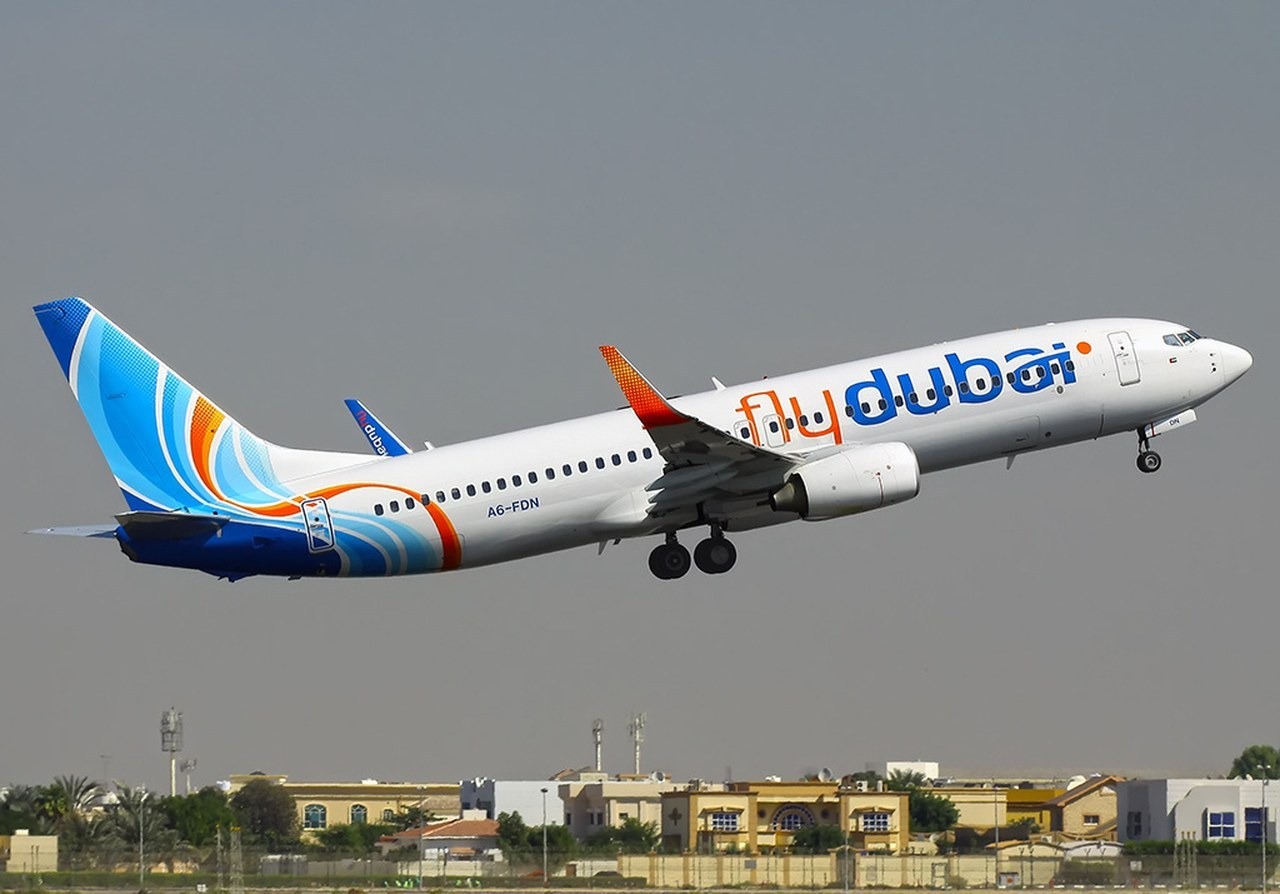
The pattern: the scare is not isolated. On 13 October a Delta flight arriving at Ben Gurion from New York was evacuated over an anonymous bomb threat that proved to be nothing. A month earlier, a Flydubai service bound for Tel Aviv ended in an emergency landing in Saudi Arabia after its co-pilot attacked the captain, producing terrorism charges in the United Arab Emirates.
Who made the threat, and how. The ministry says the crew reported a “bomb threat signal.” Israeli media describe an anonymous warning about an explosive. Airlive reports a telephone call from Vienna warning of a suspicious object. Haaretz says an Austrian national not on the flight alerted the airline. These may describe one warning travelling through different channels — or several. No authority has named a suspect. No result had been announced late Sunday night.
Whether anything was found. The inspection was under way as of late Sunday night, with no result announced.
Who the Austrian national is. Haaretz’s single-source report — a person in Austria alerting the airline — changes the incident’s anatomy if true: a threat delivered to the airline’s security apparatus rather than to the crew. Neither Austrian Airlines nor Austrian authorities have commented.
What comes next for the passengers and the investigation. The Lufthansa Group promised rebooking but gave no timetable. Bulgaria’s investigation has no published schedule, and it is unclear whether the case is being treated as a criminal matter.
Because that is what the system is built to do. A civilian airliner declaring a general emergency over Europe does not get a quiet landing — it gets an armed escort. The OS82 scramble under NATO’s air-policing mission is procedure working as designed: it protects the aircraft, and it signals that Balkan airspace is watched in real time, with decisions taken in minutes and coordinated across borders.
The incident matters because of the pattern it sits in. Routes touching Israel have been under heightened security pressure for weeks: the anonymous threat that evacuated a Delta flight at Ben Gurion, the Flydubai cockpit attack that ended in Saudi Arabia with terrorism charges, and now a third in-flight alarm forcing an emergency diversion with a NATO escort. Each incident — real or false — imposes the same costs: diverted aircraft, searched cabins, stranded passengers, scrambled jets, and a small erosion of confidence in the routine of civil aviation.
For airlines the arithmetic is simple. Every false alarm is treated as genuine until proven otherwise — there is no discount for probability in aviation security — and each treatment costs fuel, crew time, rebooking, and inspection. That is the price the industry pays, and it is paid whether the threat was real or not.
There is a geopolitical undertow. Bulgaria activated not just its own jets but the alliance’s integrated command architecture — and the line between civil aviation security and military air defence in Europe’s skies, thinning since the war in Ukraine forced NATO to treat its airspace as contested, thinned a little further on Sunday night.
Geopolitics: a civilian bomb threat over the Balkans activated, within minutes, an alliance-wide command chain built for war — Bulgaria’s jets scrambled under arrangements coordinated from Torrejón, Spain. The procedure is defensive and routine, but its visibility is a signal: European airspace is policed in real time, and the infrastructure does not distinguish between a wartime scramble and a civilian one.
Economics: the unit economics of false alarms are the second layer. An emergency descent, a cabin security sweep, 57 stranded people needing rebooking, an aircraft grounded until cleared — the Lufthansa Group pays whether the threat was real or not. Multiplied by the recent run of alarms on Israel routes, the pattern becomes a line item: aviation security on these routes is now priced, implicitly, as a recurring operational tax.
Demographics: the crew did exactly what they are trained to do — report, declare, descend — and that professionalism is why this story has no casualties section.
History and technology: civil-aviation bomb-threat protocols were written in blood and are deliberately over-engineered — every alarm is treated as real because the alternative has a death toll, and no accumulation of false alarms will change that. Meanwhile the crowd-sourced surveillance layer reported first: Flightradar24, ADS-B Exchange and FlightAware turned a midair emergency into public data within minutes, while official statements arrived hours later. Trackers publish, institutions confirm.
The immediate effects are operational. Austrian Airlines and the Lufthansa Group must reposition aircraft and crew, rebook 51 passengers, and keep OS82’s airframe grounded until the inspection is complete — a cascade touching the next day’s schedule out of Vienna. Bulgarian authorities, having activated their crisis apparatus, now own a cross-border investigation into an anonymous threat, which means coordination with Austrian and possibly Romanian authorities. Aviation incidents can harden into lasting burdens — the recent Pakistani airspace ban for Indian aircraft is the extreme case — but this one, mercifully, ends at rebooking rather than at geopolitics.
The subtler effect is psychological. Every emergency diversion erodes, fractionally, the assumed routine of flying — and the erosion compounds. Passengers on Israel routes already fly through a heightened-alert environment; another fighter-jet escort on another Sunday evening deepens the sense that the ordinary has become exceptional. Confidence in civil aviation is built over decades and spent in incidents. Sunday night spent a little more of it.
The immediate watchpoint is the security inspection. Bulgaria’s working headquarters and the Lufthansa Group will have to report what the sweep found — and “nothing found” is itself a result the public will want to hear officially. Initial reports suggested a false alarm, but initial reports are not findings; the investigation’s next step — tracing the anonymous warning — determines whether this is filed as a hoax, a miscommunication, or something else.
The passengers’ onward journey is the second watchpoint: the Lufthansa Group promised alternative flights but gave no timetable. The longer watchpoint is the pattern: if the warning proves a hoax, OS82 joins the 13 October Delta evacuation in the file of false alarms — costly, disruptive, ultimately reassuring. The next anonymous threat will be treated exactly as seriously as this one was. That is the point, and the price.
Western reporting converges on the official account. The Media Line’s is the most complete single report: ministry statement, the 9:17 p.m. local alert, the MiG-29 scramble coordinated from Torrejón, Spain, the Lufthansa confirmation, and the 13 October Delta context. The Associated Press anchors the core facts — crew reported the threat, fighter escort, 51 passengers and six crew.
There is no independent East-information-environment reporting on this story within the cycle window. The digest’s CNA pull carried nothing on the OS82 diversion, and three targeted news searches returned no East-outlet pickup. That is not unusual for a first-evening Balkan aviation scare: East Asian outlets typically cover such incidents only if they escalate, involve their nationals, or feed a larger narrative.
Global South coverage has two poles. The Hindu — India’s paper of record, publishing an AFP-sourced account — gives the full treatment: OE-LZE, the Romanian-airspace entry, the squawk 7700, the crisis response team, plus context linking the scare to the Flydubai cockpit attack. Its framing is systemic.
Flight OS82, an Airbus A320 flying from Tel Aviv to Vienna with 51 passengers and six crew, made an emergency landing in Sofia, Bulgaria, on the evening of 18 October 2026 after the crew reported a bomb threat near the Romanian border. A Bulgarian Air Force fighter escorted the aircraft to the ground, everyone aboard disembarked safely, and a security inspection began immediately.
The crew transmitted squawk code 7700, the international signal for a general emergency, which triggered Bulgaria’s crisis protocols. The Defence Ministry scrambled MiG-29 fighters under NATO’s air-policing arrangements, coordinated with the alliance’s Combined Air Operations Centre in Torrejón, Spain. Armed escorts of distressed airliners are standard procedure across European airspace.
No injuries were reported. All 51 passengers and six crew disembarked safely at Sofia’s Vasil Levski Airport after landing at an isolated stand on the tarmac. The Lufthansa Group, Austrian Airlines’ parent company, said security checks were under way and passengers would be rebooked onto alternative flights as soon as possible.
The origin of the threat is unconfirmed. Bulgarian authorities and the airline have not named a suspect or the channel used. Israeli media reported an anonymous warning about an explosive aboard the aircraft; Haaretz reported the airline was alerted by an Austrian national not on the flight. Initial reports suggested a false alarm, but no official findings had been published as of Sunday night.
