The Comoros-flagged tanker Yara J caught fire after an explosion in Romanian territorial waters near the Sulina canal on October 14, 2026; all 17 crew are safe. It is the fifth merchant vessel struck in the northwestern Black Sea since early October, with roughly 23 sailors dead or missing.
Published 15 October 2026 · 04:39 GMT
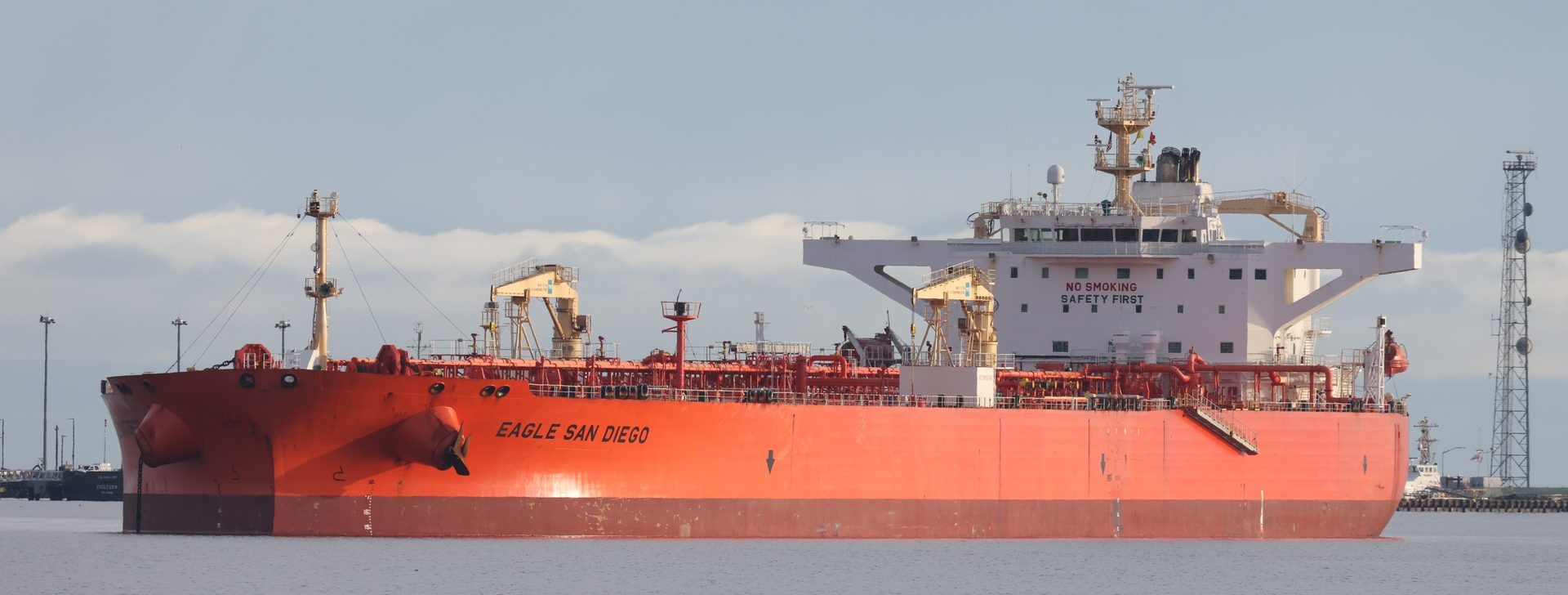
The Comoros-flagged chemical and oil products tanker Yara J caught fire late on Wednesday, October 14, 2026, while at anchor eight to ten nautical miles southeast of the Sulina canal, inside Romanian territorial waters in the Black Sea. The Romanian Naval Authority was notified at about 8:00 p.m. local time, after the ship's captain alerted authorities that a fire had broken out following an explosion aboard the vessel.
The 17-member crew — Syrian, Indian and Iranian nationals according to maritime tracking data, though some reports described only Syrian and Indian sailors — escaped unhurt. Romanian maritime authorities said the crew extinguished the fire themselves, and no injuries were reported. Romania's maritime rescue agency, ARSVOM, dispatched the search-and-rescue vessel Apollo to the scene. The tanker later weighed anchor and sailed toward Constanta.
Romanian officials later clarified that the vessel was in ballast — travelling unladen — a statement that contradicted earlier reports claiming the tanker was carrying petroleum products or even coal bound for Ukraine. Defence Minister Radu Miruta said it remained unclear whether the ship had been hit by a drone, adding that the matter was under investigation, though military radar had detected no drone headed for the vessel.
The incident unfolded against an already tense backdrop. Wednesday also saw multiple drones breach Romanian airspace near the border with Ukraine, prompting Romania and Spain to scramble fighter jets — an exercise repeated with grim regularity after four years of repeated Russian drone incursions into the airspace of NATO member Romania.
The Sulina canal, at the mouth of the Danube in Romania's east, is one of the principal maritime routes for Ukrainian grain exports. It is heavily congested: dozens of vessels are backlogged at its approaches, delayed by bad weather and understaffing at the port authorities, leaving slow-moving traffic exposed in waters already threatened by drifting naval mines. Romania shares a 614-kilometre border with Ukraine and sits on the front line of the alliance's southeastern flank.
What is established: a fire followed an explosion on a vessel inside Romanian territorial waters; all 17 crew members are safe; the ship is making for Constanta under its own power; and the cause remains officially undetermined. The coast guard's ballast clarification undercuts the most alarming initial reports — but not the gravity of another fire aboard a merchant ship in these waters.
The cause of the explosion and the fire remains unresolved. Whether the Yara J suffered a drone strike, struck a floating mine, caught fire through an onboard accident, or was hit by something else entirely is unknown, and the Romanian investigation has produced no findings yet.
The fog of conflicting reports has not fully lifted either. The coast guard says the ship was in ballast; earlier dispatches said it was laden with petroleum products bound for Ukraine, and others mentioned coal. The vessel's ownership and flag history have not been laid out in public.
If an attacker was involved, no state or group has claimed responsibility, and Bucharest has named none. Whether this incident connects to the string of attacks on merchant shipping since early October is, for now, a matter of pattern recognition rather than evidence.
Because the Yara J is not an isolated case. Since early October, at least five commercial vessels have been struck off the coasts of Romania and Bulgaria, with roughly 23 sailors killed or missing. On October 13, two ships were hit by drone attacks off Bulgaria's Black Sea coast and one sank; Bulgaria's prime minister, Rumen Radev, said there was no clear evidence identifying the culprit, but added that "the outcome benefits" Russia — after which Sofia summoned the Russian ambassador for clarification.
Earlier still, a grain carrier caught fire and sank outside Romanian territorial waters in what Kyiv described as a Russian drone attack; two sailors died and eleven were rescued, while President Volodymyr Zelenskyy called it "a horrific strike by two Russian drones on a civilian vessel in neutral waters carrying corn and owned by Turkiye." The grain trade through the Black Sea has been under sustained pressure all year (see our coverage of the Black Sea grain corridor), and each new strike compounds the damage (Zelenskyy condemns 'horrific' Russian strike on civilian vessel).
These attacks are turning the northwestern Black Sea into one of the most dangerous merchant corridors in the world — and the insurance market is watching. What happens to freight and war-risk premiums here ripples into food prices far beyond Europe.
The pattern emerging this month resembles a campaign of attrition against Black Sea commerce — deniable, incremental, and calibrated to stay below the threshold of open war. Merchant ships are the softest possible target: unarmed, crewed by multinational civilians, and enormously leveraged in the insurance market, where a single sinking moves premiums for the entire corridor.
Sulina is the pressure point because it is Ukraine's maritime lifeline — and the calendar matters. As winter approaches, the Black Sea traditionally becomes rougher and the energy trade more sensitive; Ankara has already warned of escalation risks in the basin (Turkiye warns of Black Sea escalation as winter nears). The parallel with other chokepoints is instructive: when a strait becomes a pressure tool, the playbook is the same — deniable harassment, rising insurance costs, and slow economic strangulation (the Hormuz seven-day pressure plan).
NATO's dilemma is the gap between vigilance and response. Bucharest can scramble jets and dispatch rescue vessels; it cannot, on its own, police a sea where mines drift and drones strike without claiming flags.
The immediate knock-on effects run through money and logistics. War-risk insurance premiums for Black Sea calls are rising with each incident; shipowners are rerouting, demanding hazard pay, or simply refusing charters into the northwestern basin. Grain export delays at Sulina feed directly into prices for importers in the Middle East and Africa. Constanta, already managing a backlog at the canal's approaches, faces heavier congestion as traffic bunches behind delays.
Politically, the pressure is building on the littoral states. Bulgaria's President Iliana Iotova said on October 7 that she would invite Romania and Türkiye to consultations on merchant-ship security — a trilateral track that may now accelerate. In Sofia, the summons of the Russian ambassador raised the diplomatic temperature; in Bucharest, the opposition will ask why airspace breaches keep recurring. And if energy cargoes are hit next, winter heating calculations in southeastern Europe get harder.
The Romanian investigation is the first variable: its findings on the cause of the explosion will either calm the waters or harden the attribution debate. The trilateral consultations among Romania, Bulgaria and Türkiye on merchant-ship security — floated before this fire — are likely to move from proposal to meeting room. NATO's posture in the southeastern flank will be watched for any shift from vigilance to active escort or patrol arrangements.
The deeper question is whether the strikes continue into winter. If October's tempo holds, the northwestern Black Sea becomes a de facto high-risk zone by the end of the year, with freight markets, grain flows and alliance cohesion all absorbing the cost. Watch the next ship, the next radar trace, and the next insurance renewal — they will tell the story before any communiqué does.
Western outlets read the incident through the alliance-security lens. The facts they foreground: repeated drone breaches of Romanian airspace, scrambled jets from two NATO members on the same day as the fire, and a pattern of strikes on civilian shipping that looks like coercion by other means. NATO Secretary-General Mark Rutte, speaking in Tallinn on October 14, said the alliance sees no imminent Russian threat to its own territory but would respond to any buildup, while urging allies to send more air-defense aid to Ukraine.
In this framing, the Black Sea is a gray zone where deniable attacks test NATO's response threshold without triggering Article 5. The remedy offered is deterrence — more air defenses, closer allied coordination, and a posture that makes the next strike costlier than the last.
Eastern outlets treat the claims of Russian responsibility with open scepticism. They stress what has been admitted: Bucharest's own radar recorded no drone approaching the Yara J; Prime Minister Radev conceded there was no clear evidence identifying the culprit behind the Bulgarian strikes; no investigation has concluded. In this reading, "the outcome benefits Russia" is a political inference, not evidence — convenient for some, but no basis for attribution.
The framing warns against escalation by assumption: attributing strikes without findings risks hardening positions and widening a conflict that the Black Sea states have every interest in containing. The fog of war, they argue, is precisely what makes these incidents so dangerous to misread.
Southern outlets focus on the human ledger and the trade ledger. The crews are the story: Syrians, Indians, Iranians — working-class seafarers from the Global South doing dangerous work for modest wages, now facing drone attacks and drifting mines in a corridor they did not choose. Roughly 23 of them have been killed or gone missing since early October, and union voices like Mihălcioiu's are asking who protects them.
The second ledger is food. The Sulina route carries Ukrainian grain to import-dependent countries; every sunken or delayed ship tightens supply and pushes freight and insurance costs upward — costs that land on consumers in Africa, the Middle East and Asia, far from the Black Sea. For the South, this is not a chess game of deterrence: it is the price of bread.
The Yara J is a Comoros-flagged chemical and oil products tanker that caught fire late on October 14, 2026, while anchored 8–10 nautical miles southeast of the Sulina canal in Romanian territorial waters. Its 17-member crew — Syrian, Indian and Iranian nationals per maritime tracking data — escaped unhurt and extinguished the fire themselves. The tanker later weighed anchor and sailed toward Constanta. The Romanian coast guard says the vessel was in ballast, travelling unladen.
That remains officially undetermined. Defence Minister Radu Miruta said it was unclear whether a drone had hit the Yara J and that the matter was under investigation, adding that military radar had detected no drone headed for the vessel. Wednesday also saw separate drone breaches of Romanian airspace near the Ukrainian border, which prompted Romanian and Spanish jets to scramble — but Bucharest has drawn no link between those incursions and the fire aboard the tanker.
The Yara J is at least the fifth commercial vessel struck off Romania and Bulgaria since early October, leaving roughly 23 sailors dead or missing. On October 13, two ships were hit by drone attacks off Bulgaria and one sank. A week earlier, two vessels were hit in Bulgaria's waters, one sinking with its crew. Earlier in October, a grain carrier caught fire and sank outside Romanian waters in what Kyiv called a Russian drone attack.
NATO Secretary-General Mark Rutte said on October 14 that the alliance sees no imminent Russian threat to its own territory but would respond to any buildup, while urging allies to send more air-defense aid to Ukraine. Bulgaria's president has proposed consultations among Romania, Bulgaria and Türkiye on merchant-ship security. The immediate variable is the Romanian investigation: its findings will shape whether the response stays at vigilance or moves toward active naval protection of the corridor.
