54 of 63 economists now expect the Bank of England to lift Bank Rate to 4% in November — the first rise in three-plus years — with markets pricing four more hikes by end-2027.
Published 15 October 2026 · 18:00 GMT
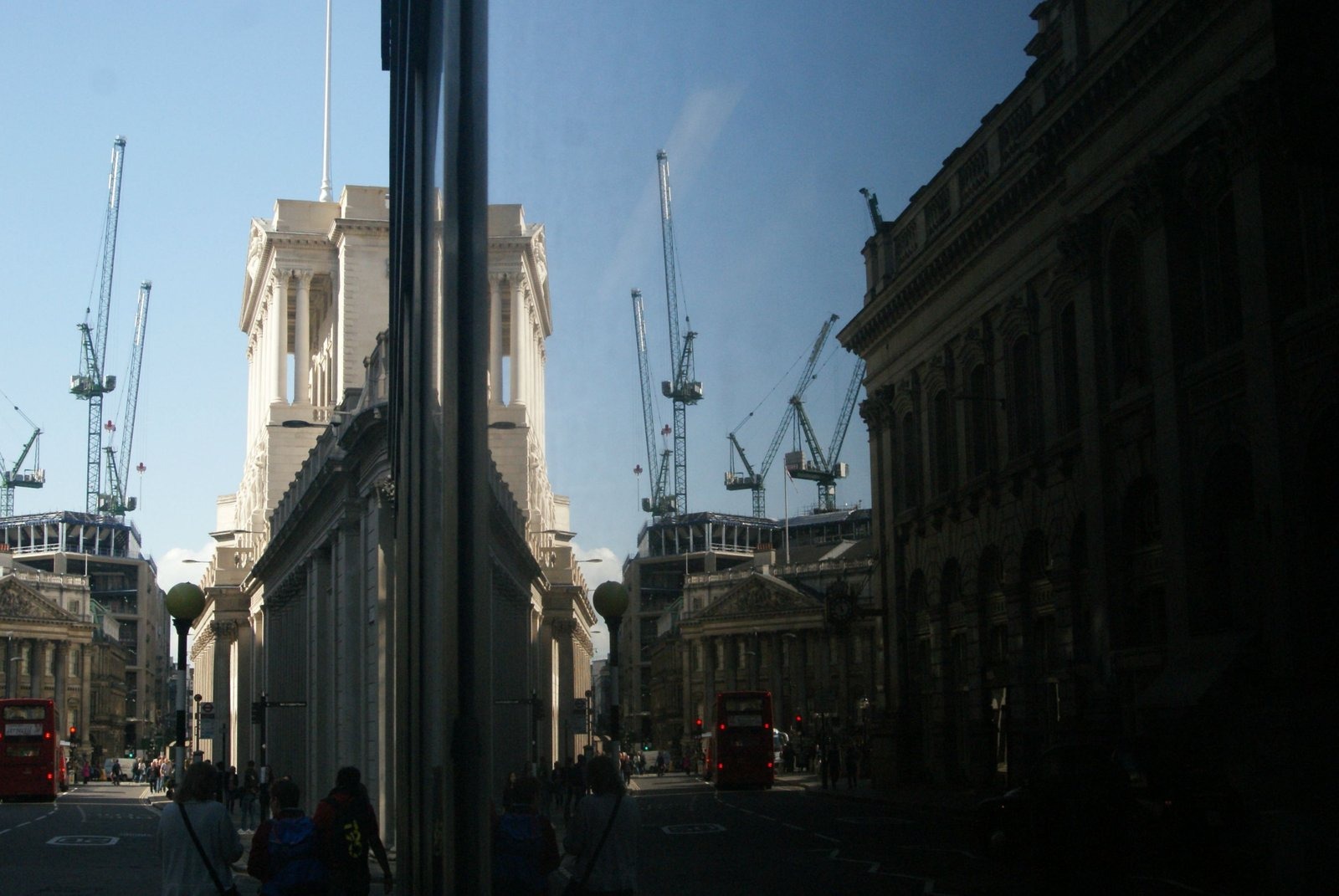
Three weeks from today, the Bank of England’s ratesetters gather on Threadneedle Street facing a decision most economists had written off a month ago. Now 54 of 63 expect a quarter-point rise to 4% — the first in more than three years. For millions of borrowers, that is the sound of money getting more expensive.
A month ago, almost nobody saw this coming. In last month’s survey, about nine in ten economists expected the Bank of England to sit on its hands for the rest of the year. Now, in a Reuters poll of 63 economists conducted between Monday and Wednesday and published today, 54 of them — a strong majority — expect the Monetary Policy Committee to raise Bank Rate by a quarter of a percentage point, to 4.0%, in November. If it happens, it will be the Bank’s first rate rise in more than three years, and a sharp reversal of the cutting cycle that brought rates down from 5.25% to 3.75% between August 2024 and December 2025.
The reason is written in the United Kingdom’s price data. Inflation stands at 3.1%, far above the Bank’s 2% target — and it has been above that target for more than five years. Worse, economists forecast it will climb to roughly double the target, near 4%, as higher energy costs feed through. For a central bank whose entire job description is keeping prices stable, five years of overshoot followed by another climb is increasingly hard to defend with borrowing costs parked at 3.75%.
“The bigger pickup in inflation is still ahead of us rather than behind us.”
Few conversions tell the story better than Sonali Punhani’s. The UK economist at Bank of America recently switched her call from hold to hike. “The bigger pickup in inflation is still ahead of us rather than behind us,” she said. Her logic is blunt: “As a central bank, if you are heading towards inflation close to or above 4%, the risk-reward is probably leaning towards the direction of a hike versus a hold and hoping second-round effects don’t come in.” Translation: hoping the problem goes away is not a policy.
The “second-round effects” she means are the chain reaction central bankers fear most. So far, the hefty energy price rises stemming from the US-Israeli war with Iran, which began in late February, have not broadly spilled into consumer prices beyond fuel itself — the pickup in inflation has been almost entirely about energy. The worry is what comes next: a cold winter of expensive heating bills, workers pushing for bigger pay rises to cover them, and businesses raising prices in turn to protect their margins. Once that loop starts, it no longer needs the war to keep going.
The economy, meanwhile, refuses to cooperate with the doves. Britain has consistently beaten growth forecasts this year, which removes the usual excuse for patience — a weak economy that needs cheap money. Government bond yields are climbing as investors demand higher returns to hold UK debt, and rising yields tighten financial conditions on their own, doing some of the central bank’s work before it lifts a finger. When growth holds up and markets are already tightening, the case for sitting still gets thinner by the week.
Start with the arithmetic. A move from 3.75% to 4.0% is a quarter of a percentage point — 25 basis points in market language. On its own it is small, but Bank Rate is the anchor for the entire British borrowing market. Anyone on a tracker mortgage, whose rate follows Bank Rate directly, feels the move within weeks and pays more every month. With the average five-year fixed mortgage already charging about 6%, lenders have begun raising rates in anticipation — so anyone remortgaging soon is shopping in a market that has already moved against them.
Put plainly: a rate rise is a transfer of money from borrowers to lenders. Households with variable-rate debt pay more; banks collect wider margins; savers earn a slightly better return on deposits. Nobody at the Bank will frame it that way — the official language is about making sure inflation comes down to 2% sustainably — but the mechanics are a deliberate tax on borrowing, imposed to cool spending. Fixed-rate borrowers are spared until their deal expires; then they join the queue, at whatever price the market is charging by then.
Britain is unusually exposed to this kind of move. Households carry some of the highest debt loads in the developed world relative to income, and a large share of mortgages reset within two to five years, so higher Bank Rate reaches family budgets faster here than in countries where thirty-year fixed loans are the norm. That is the demographic edge of the story: the pain lands first on younger buyers who bought at peak prices and on renters, whose landlords pass higher mortgage costs through in the rent.
Here the poll gets interesting — and more cautious. Financial markets are fully pricing in four quarter-point rises by the end of next year, which would take Bank Rate toward 5%. But the economists are more guarded: there is still no majority among them for a further rise beyond November. Traders, in other words, are betting on a full hiking cycle; the professionals who watch central banks for a living are not yet convinced the first move has company. When markets and economists disagree this sharply, one of them is usually wrong.
The Bank’s own chief economist, Huw Pill, sounded that note of caution on Wednesday. He questioned whether four quarter-point rises would really be needed to tame inflation: “Is it obvious that we will need to follow market pricing to four 25 basis point hikes?” he asked. “There I would be a little more skeptical.” Pill has voted for a rise at recent meetings, so his doubt is about the destination, not the direction. Notably, the Bank has diverged from the United States Federal Reserve and the European Central Bank, both of which have lifted borrowing costs in response to energy prices since the war began.
November’s meeting carries extra weight because it coincides with the Bank’s next set of quarterly forecasts — the moment the committee puts its numbers where its vote is. It also lands a week after the Autumn Budget on October 28, so the ratesetters will know exactly what the government plans to tax and spend before they vote. The governor has already hinted that a rise before the end of the year could happen. Markets, economists, and the Treasury will all be reading the same tea leaves — and this time, unusually, they mostly agree on what they see.
Agreement does not mean safety. Move too slowly and inflation expectations unanchor after five years of overshoot; move too fast and a resilient economy tips into something less resilient, with house prices and business investment paying the price. The Bank’s last hiking cycle, from late 2021 to August 2023, took rates to 5.25% and two years to unwind. A November rise would close a cutting run that began in August 2024 — and open the question of how far Threadneedle Street is prepared to go this time. Dounia Filali has argued in these pages that central banks keep underestimating how long energy shocks linger in the data.
Watch three things. First, the November 5 decision itself and the vote split — the September meeting divided 6–3 in favour of holding, with three members already backing a rise to 4%. Second, the quarterly forecasts: if they show inflation peaking near 4% and falling back, one hike may suffice; if the peak keeps moving up, expect more. Third, winter pay data. The entire bet rests on whether higher energy bills turn into higher wages. If they do, 4% is a beginning. If they don’t, it may be the end — and American inflation data suggests price pressure is a shared Western headache, not a British one.
Through a Western lens, this is a credibility story. Five years above the 2% target is a long time for an inflation-targeting central bank to miss, and the poll shows the economics profession closing ranks behind action. The governor’s hint, the 6–3 September vote, and the market pricing all point the same way: Threadneedle Street has decided that looking patient now looks like looking weak later.
It is also a fiscal story. The November decision lands a week after the Autumn Budget, and ratesetters will be watching what the government spends. If the Budget loosens the purse strings, the Bank may feel it must tighten harder to compensate — the classic tug-of-war between Threadneedle Street and the Treasury, playing out in public.
From the East, the driver looks imported, not homegrown. The inflation forcing the Bank’s hand comes largely from energy prices set by a war in the Gulf, not by British wage packets — a reminder that even a major central bank can end up hiking rates to fight a shock it did not create and cannot control. Rate rises do not produce more oil.
The divergence also matters: the US Federal Reserve and the European Central Bank have already lifted borrowing costs in response to the same energy shock, while the Bank hesitated. If London now joins them, the world’s three biggest Western central banks will be tightening in formation — a synchronized squeeze with consequences far beyond their borders.
For the Global South, a British hiking cycle is felt through the currency and the cost of money. Higher UK rates tend to strengthen the pound and pull capital toward London, making dollar- and sterling-denominated debt more expensive for developing economies — just as many are still digesting the energy price shock themselves.
There is a quieter lesson too. If a rich country with its own currency, deep markets, and five years of warning still ends up hiking into an energy shock, smaller economies with fewer buffers face harsher versions of the same dilemma: raise rates and slow growth, or hold and watch prices run. The Bank’s choice will be studied in finance ministries from Jakarta to Lagos.
A Reuters poll of 63 economists published on October 15 found that 54 expect the Bank of England to raise Bank Rate by a quarter point to 4.0% in November. It would be the first increase in more than three years. The decision is due on November 5 and coincides with the Bank’s next set of quarterly forecasts, a week after the Autumn Budget on October 28.
Bank Rate currently stands at 3.75%, where it has sat since December 2025 after a cutting cycle that began in August 2024. At its September meeting the Monetary Policy Committee voted 6–3 to hold, with three members — including chief economist Huw Pill — already backing a rise to 4%. The rate peaked at 5.25% in August 2023 during the last hiking cycle.
Anyone on a tracker mortgage, which follows Bank Rate directly, would pay more within weeks of a rise. Fixed-rate borrowers see no change until their deal expires, but lenders have already begun raising new fixed rates in anticipation — the average five-year fix charges about 6%. If your remortgage is due soon, the market has effectively moved against you before the Bank has even voted.
Inflation stands at 3.1%, above the Bank’s 2% target for more than five years, and is forecast to reach roughly double the target near 4%. The pickup so far comes almost entirely from higher energy prices linked to the US-Israeli war with Iran. Economists fear second-round effects: expensive winter heating bills pushing workers to demand bigger pay rises, which businesses then pass on in higher prices.
