Nicosia and Jerusalem aim to close the Aphrodite-Ishai compensation deal by end-October, while Chevron pushes engineering toward a final investment decision. A sliver of reservoir, a decade of diplomacy.
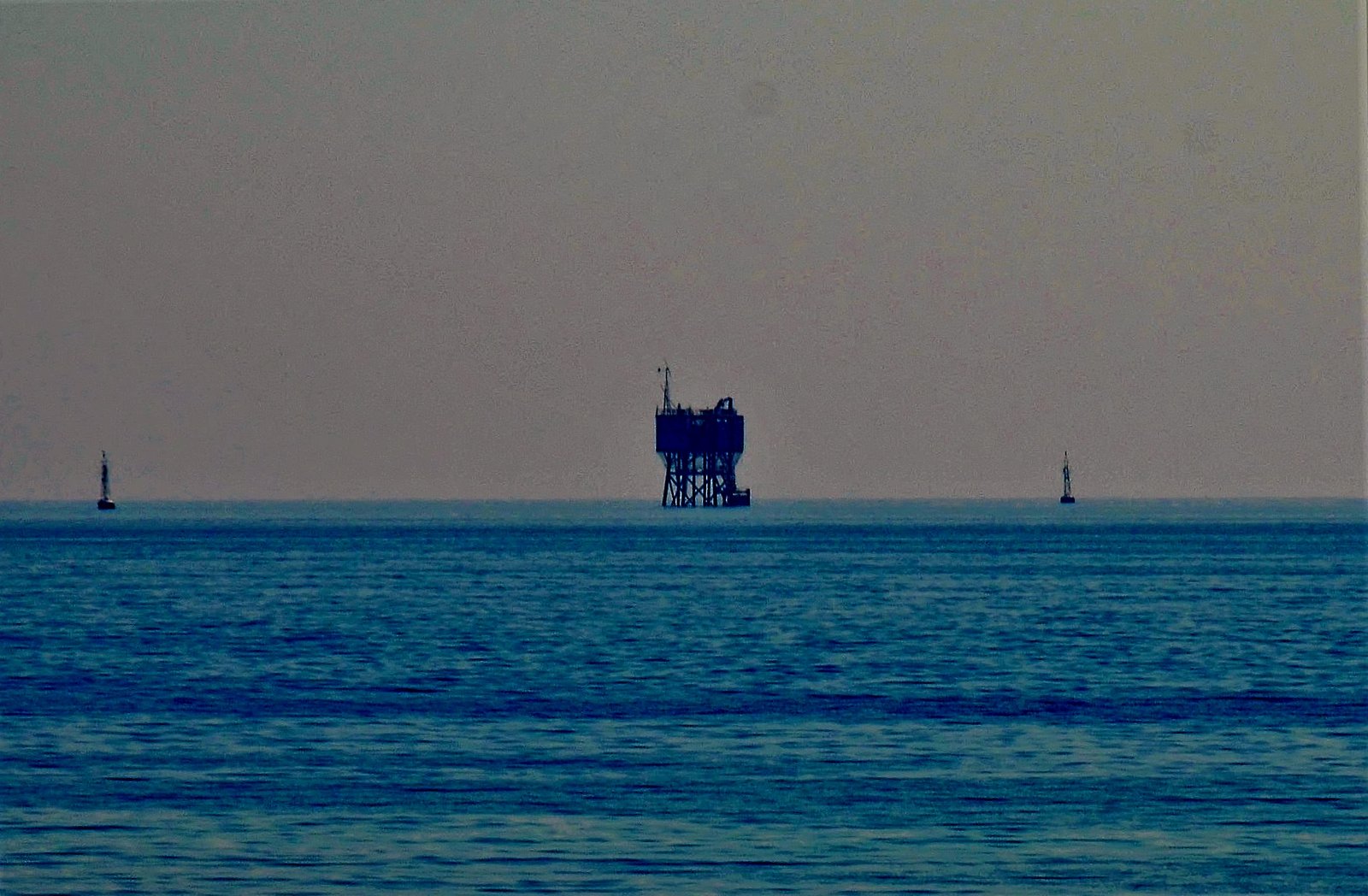
Some gas fields are just geology. Aphrodite is diplomacy with a reservoir attached. The field — 5.6 trillion cubic feet of it, almost entirely in Cypriot waters — extends by a few percent into Israel's Ishai licence, and that sliver has taken a decade to price. Now Nicosia and Jerusalem are racing an end-October clock to close the compensation deal, while Chevron's engineers push toward the investment decision that would finally build it.
The mechanism under discussion is elegant in its simplicity. Aphrodite would be developed entirely by the Cypriot-side partnership — Chevron operating, with NewMed and soon MOL as partners — while Israel and the Ishai licence holders receive a one-time payment for their share of the reservoir. An international expert determines the share; the money settles the geology. No joint operation, no shared control, no maritime boundary redrawn.
The choreography this month has been deliberate. President Christodoulides met Chevron's Javier La Rosa in New York on September 22 and pressed for implementation over planning; Egypt's petroleum minister met the same Chevron executive the same day to accelerate the export arrangements. When the buyer, the operator and the host president all meet in the same week, the calendar is not coincidental.
Aphrodite is diplomacy with a reservoir attached.
Egypt is the quiet center of this story. The commercial structure already initialled with EGAS covers all of Aphrodite's recoverable gas — 700 million cubic feet a day to Port Said, priced against Brent within an agreed floor and ceiling, feeding Egypt's LNG export system. The field's route to market does not run through the Ishai talks; it runs through Cairo. The Israeli agreement removes an obstacle; Egypt is the destination.
The ownership is shifting under the diplomacy. Shell agreed on July 31 to sell its 35% stake — held through BG Cyprus — to Hungary's MOL for up to $720 million, a deal expected to close in early 2027. MOL's announcement penciled FID in 2027; NewMed's project page says 2028. Both point to first gas in 2031. Christodoulides is pressing for faster; the engineers are pricing reality.
Beneath the surface, the wider dispute hasn't moved. Türkiye maintains that Turkish Cypriots have equal rights over the island's resources and holds separate maritime claims in the Eastern Mediterranean — though Turkish official reporting does not claim the Block 12 area itself. The Aphrodite-Ishai deal settles a bilateral sliver; the island's larger hydrocarbon argument continues.
The Israeli ambassador in Nicosia, Oren Anolik, has cautioned against treating a signature as the finish line: an agreement establishes the principles, and then the mechanism for calculating Israel's share must be applied. Previous target dates have slipped. End-October is a target, not a deadline — but it is the most serious target this file has had in years.
Western coverage — the energy press, Cyprus Mail — reads the October target as the Eastern Mediterranean gas story finally maturing: a decade of discoveries, disputes and delays converging on actual investment decisions. The frame is commercial — FEED, FID, first gas 2031 — and the Ishai deal is presented as the last political precondition.
The Western lens also watches the MOL entry. A Hungarian company buying into Cypriot gas via a Shell exit is, in this reading, Central Europe diversifying away from Russian molecules — the energy-security logic that has driven every Eastern Mediterranean deal since 2022.
Eastern coverage reads Aphrodite as a footnote to the region's real energy war. Russian commentary treats Eastern Mediterranean gas as marginal — 5.6 trillion cubic feet is a rounding error against Siberian reserves — and the decade of diplomacy over a sliver of reservoir as evidence of Western energy fragmentation.
The Eastern lens also notes the American operator. Chevron runs the field, American diplomacy hovers over the talks, and the gas flows to Egypt's LNG plants — in this reading, Aphrodite is another node in the US-managed energy architecture of the Eastern Mediterranean.
The Global South lens — Al Jazeera, the Egyptian press — reads the story from Cairo. For Egypt, Aphrodite is feedstock for its LNG export terminals and leverage in its eternal energy balancing act. The 700 million cubic feet a day to Port Said is not a footnote; it is the point.
The South's structural observation is about the compensation mechanism itself: an international expert, a one-time payment, no redrawn borders. For a region where resource disputes usually end in conflict, the Aphrodite formula — price the sliver, don't fight over it — is presented as a model worth copying.
