The Santa Clara AI chip startup closed a $1.5 billion Series E led by Trace Capital and Innovation X, valuing Jim Keller's RISC-V challenger at $6.2 billion — more than double its December 2024 mark — as crossover capital, a memory giant and crypto money all pile into open AI compute.
Published 19 October 2026 · 12:06 GMT
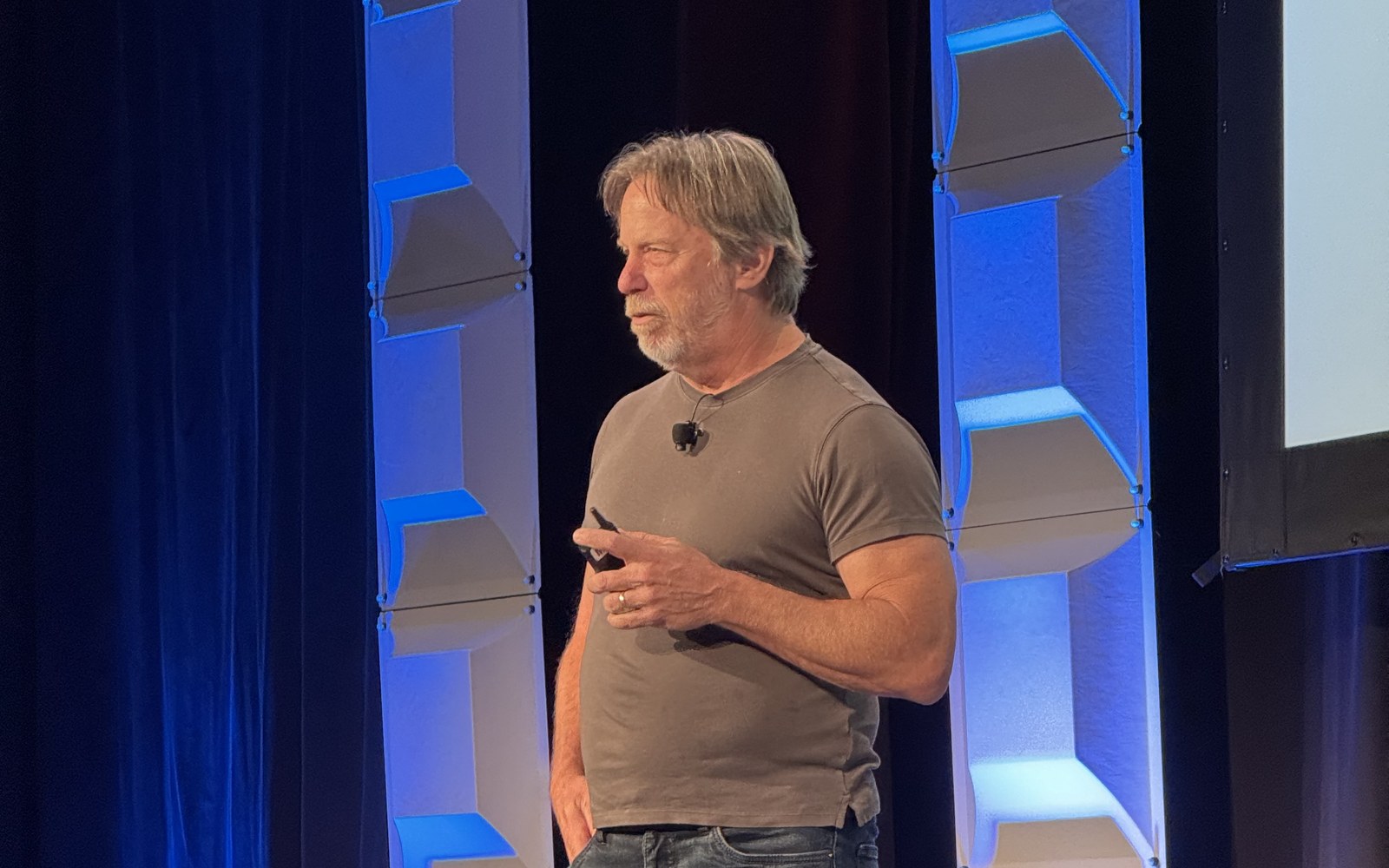
Tenstorrent, the Santa Clara AI chip startup led by legendary chip architect Jim Keller, said on Monday it had raised $1.5 billion in a late-stage funding round that values the company at $6.2 billion post-money — more than doubling its valuation from December 2024. The announcement, first reported by Reuters and independently confirmed by Bloomberg the same morning, makes it one of the largest private AI-infrastructure financings of the year.
The Series E round was led by Trace Capital and Innovation X, with a roster of new backers that reads like a map of where smart money now sees AI compute heading: Cathie Wood's ARK Invest, memory giant Sandisk, Morgan Stanley, T. Rowe Price — and Tether Investments, the crypto empire's investment arm, in a striking crossover between digital-asset capital and silicon.
Tenstorrent said the money will go toward scaling production of its Galaxy servers, rack-scale systems that combine dozens of its AI chips to power chatbots, coding assistants and video generators. In plain terms: the company is moving from selling the promise of an Nvidia alternative to manufacturing it at volume.
Here is what the two independent reports establish. The raise is $1.5 billion at a $6.2 billion post-money valuation, structured as a Series E. The co-leads are Trace Capital and Innovation X; participating investors include ARK Invest, Sandisk, Morgan Stanley, T. Rowe Price and Tether Investments, according to Reuters.
The last priced round came in December 2024, when Tenstorrent raised more than $693 million at a $2 billion pre-money valuation, led by Samsung Securities and AFW Partners. The new $6.2 billion mark is roughly two-and-a-half times that post-money value — the "more than doubles" framing both wires use.
Tenstorrent builds AI chips and software on RISC-V, the open-source chip architecture that lets companies design processors without paying license fees and reduces dependence on proprietary ecosystems such as Arm's. Its chief executive, Jim Keller, previously led Tesla's effort to build a self-driving chip for its electric vehicles and held key design roles at Apple and AMD.
Several material facts remain undisclosed. The sequencing with the summer raise is unclear: PitchBook's company profile records a $1.29 billion late-stage raise closing in September 2026, and industry coverage this autumn cited regulatory filings pointing to a $5.8–6.4 billion valuation range — the company has not said how today's $1.5 billion relates to that financing, whether as an extension, a close, or a separate tranche. Revenue and customer numbers are private and were not disclosed. Galaxy unit economics — cost per rack, margins, yields — remain unknown. And the full investor list and terms beyond the named leads and participants have not been published. We report what two independent wires confirm; the rest is marked, honestly, as pending.
Valuations are votes, and this one is a loud vote on three propositions at once. First, that the AI compute market is big enough — and Nvidia's margins fat enough — to sustain a genuine second architecture. Second, that openness is a commercial weapon: RISC-V lets customers own their silicon destiny instead of renting it from a licensor, a pitch with obvious resonance for hyperscalers tired of paying the Nvidia tax. Third, that the inference era rewards it — the workloads Tenstorrent targets (chatbots, coding assistants, video generation) are where AI spending is actually landing now, not in training runs alone.
The investor list matters as much as the number. When Morgan Stanley and T. Rowe Price write late-stage checks, they are pricing an IPO path, not a science project. When Sandisk — a memory company — joins, it signals that the memory wall, not just raw compute, is where the next AI bottleneck lives. And when Tether shows up, it confirms that crypto-era balance sheets are now hunting real-world AI infrastructure yield.
For the broader chip economy, the round lands days after markets have been repricing AI hardware euphoria — our own reporting has tracked the $2 trillion question hanging over chip stocks. A $6.2 billion private mark for a company with a fraction of Nvidia's revenue is either the smart money seeing around the corner, or the corner seeing the smart money coming.
Because in semiconductors, the team is the moat and the architecture is the leverage. Jim Keller is arguably the most bankable chip architect alive — the man behind AMD's Zen turnaround, Apple's A-series foundations and Tesla's autopilot silicon. Investors are not buying Tenstorrent's current revenue; they are buying the demonstrated ability of this specific team to ship working silicon on an open instruction set while incumbents optimize for lock-in.
The 5D lens clarifies the bet. Geopolitics: every major power now treats domestic AI compute as strategic infrastructure, and an open ISA is the only architecture no single government or company can switch off — a feature, not a bug, for buyers in Seoul, Tokyo, Abu Dhabi and beyond. Economics: the round's structure — crossover funds plus strategics plus crypto capital — shows AI compute being priced as infrastructure yield, like pipelines in the 20th century. Structure: RISC-V attacks the licensing layer of the industry's profit stack; if it wins even a slice of inference, Arm's royalty model faces its first credible architectural rival.
The risk is execution at manufacturing scale. Designing a brilliant chip and shipping a million of them are different sports — one reason the announced use of funds (Galaxy server production) is the most important sentence in the announcement. The foundry cycle, as this year's chip earnings showed, forgives no one.
Follow the second-order effects. First, the acquisition math just changed: The Information reported Qualcomm exploring a Tenstorrent acquisition at $8–10 billion earlier this year, via Data Center Dynamics. Private investors have now set the floor at $6.2 billion — any acquirer must beat what the market just paid, not what it paid in 2024. Second, Arm should be nervous: every design win for RISC-V in AI is a royalty stream that never reaches Cambridge. Third, the crossover-to-IPO pipeline is priming: T. Rowe Price and Morgan Stanley do not lead Series E rounds to hold forever; this capital is best understood as pre-IPO runway, which puts a public listing — and public scrutiny of the unit economics — on a two-to-three-year clock.
And quietly, the Tether line item deserves its own paragraph. When the world's largest stablecoin issuer starts buying into AI silicon, the crypto-AI convergence stops being a conference panel and becomes a cap table. Watch where that money goes next — the global race for next-generation fabs is already redrawing who funds what.
Three proofs, in order. Proof one: ship Galaxy at scale. The company says the money funds Galaxy server production — dozens of Tenstorrent chips per rack, aimed at real inference workloads. Working silicon in customer data centers, not keynote slides, is the entire thesis. Proof two: win a hyperscaler or sovereign buyer. A $6.2 billion valuation needs anchor demand — a cloud provider, a national AI program, or an OEM licensing the RISC-V IP at volume (the company already licenses its cores as IP, its highest-margin line). Proof three: survive the benchmark wars. Independent, production-workload benchmarks against Nvidia's stack do not yet exist in public; until they do, the valuation rests on architecture and team, not measured performance.
Meanwhile the takeover watch continues. Bloomberg's "after takeover interest earlier this year" is doing quiet work in that headline — Intel and Qualcomm both need an AI-accelerator answer, and a freshly funded Tenstorrent negotiates from strength, not need. Expect the next twelve months to bring either a landmark customer announcement or a bid. Possibly both.
The Western business press reads this as validation of the open-silicon thesis. Reuters frames the round around the doubling valuation and the Keller factor; Bloomberg's headline adds the crucial context — "after takeover interest earlier this year" — reminding readers that private investors just paid $6.2 billion for a company that acquisition suitors had reportedly been circling at lower numbers. The Western consensus: the funding window for credible Nvidia challengers is wide open, and crossover capital is doing the pricing.
The East Asian information environment is watching through a different lens: supply-chain sovereignty. Singapore's CNA carried the Reuters wire within hours, the standard first pass. But the deeper eastern story is the capital trail — Samsung Securities, a Korean institution, led the December 2024 round, and Tenstorrent has been building its Asian beachhead deliberately: a strategic collaboration with LG Electronics discussed in Seoul in late 2024, and in September 2026 a partnership with Japan's ai& to bring open-source, sovereign drug discovery to Japan.
From the Global South, the honest reporting position is: no independent southern coverage of the raise exists yet — the announcement is under two hours old, and southern wires had not picked it up at press time. What matters for the South is structural, not episodic: an open instruction set lowers the entry ticket to designing AI silicon. If RISC-V matures into a genuine second ecosystem, universities and startups from São Paulo to Bangalore to Nairobi can build on AI hardware without paying the proprietary toll — the same democratization logic that once made open-source software the South's great equalizer.
Tenstorrent raised $1.5 billion in a Series E round announced October 19, 2026, at a $6.2 billion post-money valuation — more than double its December 2024 mark, when it raised over $693 million at a $2 billion pre-money valuation. The figures were confirmed independently by Reuters and Bloomberg on the same morning, making it one of the year's largest private AI-infrastructure financings worldwide.
The round was co-led by Trace Capital and Innovation X. Named participants include Cathie Wood's ARK Invest, memory maker Sandisk, Morgan Stanley, T. Rowe Price and Tether Investments, the investment arm of the stablecoin issuer. The mix — crossover funds, a strategic memory player and crypto capital — signals that AI compute is increasingly priced as infrastructure yield rather than venture speculation.
RISC-V is an open-source chip instruction-set architecture: anyone can design processors on it without paying license fees, unlike proprietary ecosystems such as Arm's. For AI customers it means owning their silicon destiny instead of renting it — lower costs, no licensor lock-in, and no single company or government able to switch the architecture off. That openness is Tenstorrent's core commercial weapon against Nvidia's closed stack.
The company says the funds will scale production of its Galaxy servers — rack-scale systems combining dozens of Tenstorrent AI chips, aimed at inference workloads like chatbots, coding assistants and video generators. In short, the money moves Tenstorrent from demonstrating an Nvidia alternative to manufacturing one at volume, which is the milestone its $6.2 billion valuation now demands.
