Warsaw's air force went up overnight as Russian drones pounded the Volyn region on Poland's border, cutting power to 370,000 people. Later on Friday, Bulgaria formally asked NATO to deploy combat aircraft and anti-drone systems after a string of Black Sea ship attacks.
Published 16 October 2026 · 12:06 GMT
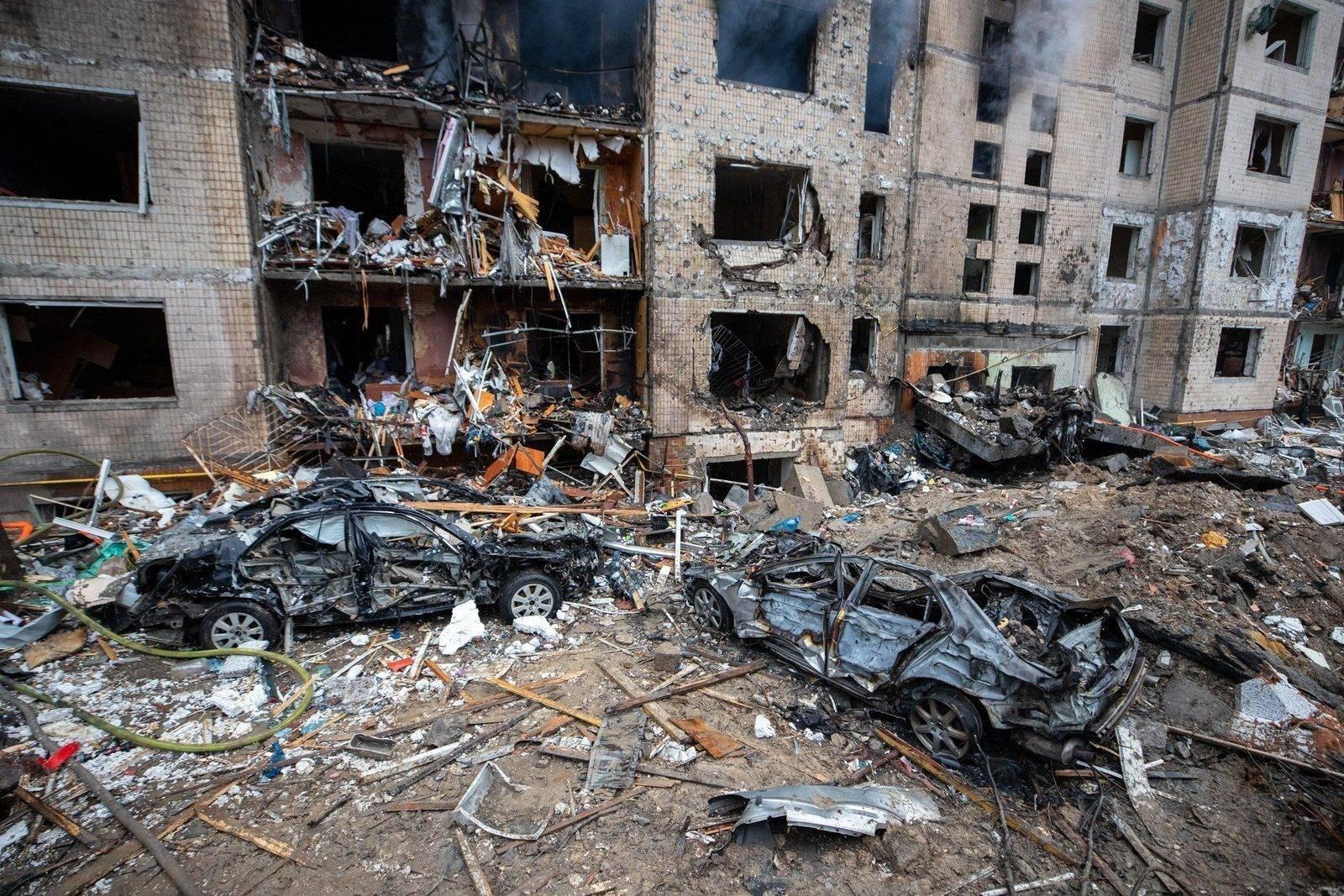
On Friday 16 October 2026, Poland's armed forces announced that they had scrambled fighter jets overnight as Russian attacks pounded western Ukraine close to the Polish border. The Polish military said the alert was triggered by Russian strikes on targets in western Ukraine and that no violation of Poland's airspace was recorded.
The strikes hit the Volyn region hardest. Regional governor Roman Romaniuk said attacks across the district, which sits directly on the Polish border, cut electricity to 370,000 people and injured two. A business with foreign investment was struck, he reported via Telegram. In central Ukraine, a drone hit a residential apartment block in Uman, injuring five people, according to the national police. And in the eastern city of Kharkiv, a drone attack killed three people and injured five, the regional governor said. Private electricity provider DTEK announced emergency power cuts across Kyiv as the strikes were under way.
The overnight wave was not limited to Ukraine. Russia said its air defences had blocked a Ukrainian drone attack against a heating plant in the Vladimir region, and claimed to have shot down 644 Ukrainian drones overnight, 94 of them headed for Moscow — claims that could not be independently verified. Moscow's four airports and St Petersburg's Pulkovo Airport suspended operations. Ukrainian attacks killed two people in the Russian-controlled Luhansk region of eastern Ukraine, the Russian-installed governor said.
The Polish statement was unequivocal on one point: jets went up, and Polish airspace was not breached. The Polish Armed Forces Operational Command announced the scramble on X, framing it as a defensive measure during Russia's attacks on western Ukraine. Poland, a member of both NATO and the European Union, has activated its military aviation repeatedly this year as Russian strikes have crept closer to its frontier — a pattern analysts of Polish security policy have flagged as the new normal on the alliance's eastern edge.
The Volyn region is Ukraine's westernmost gateway, bordering Poland and hosting the road and rail corridors — including the Yahodyn crossing — through which much of the Western military and humanitarian aid flows into the country. Hitting Volyn's power infrastructure simultaneously degrades a logistics hub and pushes the blast zone of the war right up against the NATO frontier, forcing Poland to react every time.
We also know the outage numbers are large and early: 370,000 people without power in Volyn per the governor, and emergency cuts in the capital imposed by DTEK on X. We know the Kharkiv strike was lethal — three dead, five injured — and that Uman's apartment-block hit injured five. And we know the political layer moved fast on Friday: Bulgaria's defence minister Dimitar Stoyanov told reporters that Sofia has formally asked NATO to deploy combat aircraft and anti-drone systems, with letters sent to the NATO Secretary General and the Supreme Allied Commander.
Early figures in a fast-moving story rarely agree, and this one is no exception. Al Jazeera and the Volyn governor put the outage at 370,000 people; another outlet reported 270,000, with one person killed in Volyn rather than the two injured the governor cited. The Kharkiv death toll is reported as three by one wire and two by another. The true casualty and damage totals will settle once regional authorities publish consolidated counts.
We do not know the composition of the Russian strike package — how many drones and missiles, and how many of the jet-powered type that has featured in recent waves — because Ukraine's air force had not published its overnight interception figures at the time of writing. We do not know whether the Polish jets stayed strictly inside Polish airspace or what rules of engagement they carried, and Warsaw said nothing about shoot-downs. NATO had not responded to Bulgaria's formal request by Friday afternoon, and Sofia's 'evidence' pointing to Russia in the Black Sea ship attacks has not been published — Prime Minister Rumen Radev himself said his government lacks proof.
Friday's scramble matters less for what happened than for what it confirms: the eastern flank now lives inside Russia's blast radius on a nightly basis. Since the summer, Romania, Moldova, Poland and the Baltic states have reported numerous drone intrusions into their airspace and waters. Drones have struck at least seven cargo ships off the Black Sea coasts of Romania and Bulgaria in recent weeks, leaving 25 people dead or missing. Two ships were hit off Romania's coast this week; a commercial vessel sank off Bulgaria's coast on Tuesday, prompting Sofia to summon Russia's ambassador.
Bulgaria's request is the policy consequence of that drift. It is a formal demand — letters to the alliance's top civilian and military chiefs — for combat aircraft and anti-drone systems on Bulgarian territory, driven by attacks on civilian shipping that the country's own prime minister admits are not yet proven Russian operations. Romania's president has separately said his country has asked for additional equipment. The eastern and southeastern flanks are now simultaneously asking the alliance for more hardware, more sensors and more presence — a demand signal that NATO's military leadership cannot file away as a one-off alert.
The war has entered its phase of seams. The front line in the east barely moves, but pressure is rising along every seam around it: the airspace seam between Ukraine and NATO territory, the maritime seam of the Black Sea shipping lanes, and the energy seam of power grids and refineries on both sides. Ukraine's deep strikes on Russian energy infrastructure — its oil refineries in particular — have had real battlefield effect, but they have also provoked anger from US President Donald Trump, who has blamed Kyiv for pushing up global oil prices. Both sides are now waging war on the other one's energy system while a third actor, the global energy market, absorbs the cost.
The strategic read is that Bulgaria's letter formalises what the Black Sea ship attacks already implied: the southeastern flank now treats the Black Sea as an active theatre, not a backwater. A NATO anti-drone initiative is expected by the end of October, and Stoyanov says Bulgaria will join it. Expect the conversation in Brussels to shift from 'how do we intercept' to 'who owns the sky over the Black Sea'. The miscalculation risk is no longer theoretical; it is measured in drone flight paths.
Second-order effects fan out in four directions. First, air defence: the eastern flank's appetite for anti-drone systems, radars and interceptors will outrun supply for years, and Bulgaria's formal request puts a queue number on it. Second, shipping: every drone hit on a commercial vessel reprices Black Sea war-risk insurance, and a sustained campaign against grain and energy carriers quietly taxes the world's food and fuel supply — the same inflation channel the Global South felt in 2022. Sofia has proposed a moratorium on attacks on civilian ships, which tells you how seriously the littoral states take the economic bleed.
Third, energy: Volyn's 370,000 without power and Kyiv's emergency cuts are the overture to a winter campaign against Ukraine's grid, while Ukraine's refinery strikes keep Russian fuel markets tight and Washington annoyed. Fourth, politics: Stoyanov plans to meet his Romanian and Turkish counterparts soon on a common Black Sea approach, and Romania's own tanker investigation shows the littoral states are already aligning their playbooks. The alliance's southeastern flank is beginning to act as a bloc — and blocs, once formed, set agendas.
The immediate watchlist is short and concrete. Watch whether NATO answers Bulgaria's letter this weekend, and in what form — a deployment, a study group, or silence. Watch whether Poland scrambles again tonight. Watch for Romaniuk's repair updates and whether the outage figure firms up at 370,000 or revises down. Watch for any published evidence from Sofia on the ship attacks — the gap between 'the evidence points to Russia' and proof is where diplomacy will be fought.
Structurally, the flank is heading toward permanent reinforcement: more sensors, more interceptors, more standing patrols — and a doctrinal answer to the question of what the alliance does when the next drone actually crosses the line. Bulgaria's anti-drone initiative membership by end of October is one datapoint; the Romanian-Turkish-Bulgarian ministerial is another. The danger is not a deliberate Russian attack on NATO. It is the statistical certainty that, with drones flying this close this often, something eventually goes somewhere it should not — and the response will be improvised under fire.
Western capitals read Friday's events as confirmation of a pattern: Russia is probing the alliance's seams nightly, and the eastern flank's air defences are being tested in real time. Warsaw's scramble was framed as routine deterrence; Sofia's formal request for combat aircraft and anti-drone systems is the sharper signal — a member state now asking the alliance to harden the Black Sea theatre after civilian ships were hit. In this reading, Bulgaria's move is exactly how the alliance should work: a threat appears, a member invokes the machinery, and Brussels responds.
The Russian framing, as relayed through its officials' claims, inverts the story: Moscow presents its strikes as legitimate attacks on Ukrainian military and energy targets, and itself as the victim of a massive Ukrainian drone campaign — 644 drones intercepted in one night, 94 of them allegedly headed for Moscow, with a heating plant in the Vladimir region targeted. In this lens, Poland's scramble is theatre over routine border precautions, and Bulgaria's accusations are unproven — Sofia's own prime minister concedes there is no proof. The eastern reading warns that each Ukrainian deep strike invites retaliation and that the West is sleepwalking into escalation by hardening the very seams it claims to be defending.
From the Global South, the story is read through prices and shipping lanes rather than alliance doctrine. Seven cargo ships hit in the Black Sea and 25 dead or missing is an attack on the world's food and fuel arteries, and every drone that forces insurers to reprice war risk quietly taxes consumers from Istanbul to Jakarta. Ukraine's refinery campaign pushing up oil prices — and Washington's irritation at it — is watched with unease by import-dependent economies. In this lens, Bulgaria's proposed moratorium on attacks against civilian ships is the most constructive line in Friday's news: the war's costs are spilling outward, and the countries paying them have no seat at the negotiating table.
Poland scrambles jets as a precaution whenever large Russian air attacks approach its eastern border, to guarantee its own airspace stays intact and to track anything that might cross over. The Polish Armed Forces Operational Command announces the alerts on X. It is a defensive routine, not an engagement: Friday's statement explicitly said no violation of Polish airspace was recorded.
Regional governor Roman Romaniuk said strikes cut electricity to 370,000 people across Volyn, the western district bordering Poland, and that two people were injured. Another outlet reported 270,000 without power and one killed, so early figures differ — expect the consolidated count to settle as repair crews finish. Volyn is Ukraine's westernmost gateway for Western aid flowing through border crossings like Yahodyn.
Defence Minister Dimitar Stoyanov said on 16 October that Bulgaria formally asked NATO to deploy combat aircraft and anti-drone systems to bolster its defences, with letters sent to the NATO Secretary General and the Supreme Allied Commander. The request follows drone attacks on commercial shipping in the Black Sea: two ships hit off Romania's coast this week and a vessel sunk off Bulgaria's coast on Tuesday, prompting Sofia to summon Russia's ambassador.
Article 5 is collective defence: an armed attack on one member is treated as an attack on all. Friday's events do not meet that bar — no Polish airspace violation was recorded and no NATO territory was hit. The real risk analysts flag is miscalculation: with drones flying this close this often, an accidental crossing or debris impact could force an improvised response. That is why eastern-flank capitals are demanding more sensors and interceptors now.
