Jakarta's benchmark fell more than 5 percent on Monday to its lowest since 2020 after MSCI proposed stripping Indonesia of emerging-market status — a shock demotion that could unleash billions in forced selling.
Published 19 October 2026 · 04:25 GMT
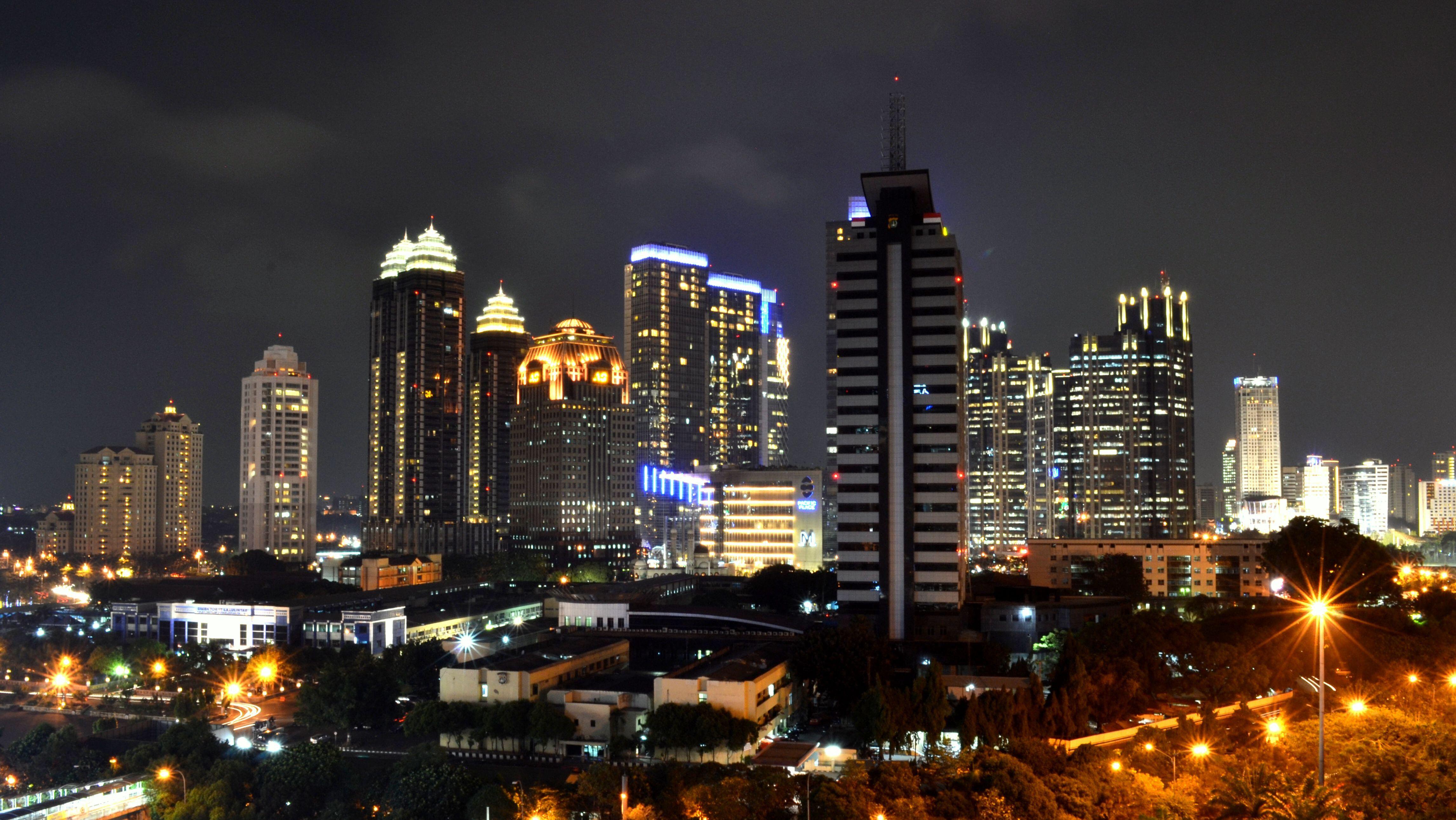
Indonesia's stock market opened the week the way it ended the last one: in free fall. The Jakarta Composite Index (IHSG) slid 4.31 percent within minutes of Monday's opening bell to 4,961.87, according to CNBC Indonesia, and kept sinking — ending the session down more than 5 percent at its lowest level since early October 2020, a six-year low.
The trigger was Friday's bombshell from MSCI. The index provider said Indonesia was no longer worthy of "emerging market" status and proposed moving the country straight to "standalone" status — skipping even the "frontier" downgrade it had threatened in January — because reforms to fix opacity in share ownership and trading behavior had not made sufficient progress.
Friday's session was already historic: the index plunged 11.6 percent to close at 5,185.11, its worst single-day collapse since 1998, taking year-to-date losses to 40 percent. Jakarta is now the world's worst-performing major stock market of 2026. The rush for the exits at Friday's open forced a rare 30-minute trading halt — "the first time this has ever happened in my 20 years in the stock market," Liza Camelia Suryanata, head of research at Kiwoom Sekuritas Indonesia, told Reuters.
Because even "frontier" flattered the market, in MSCI's view. "Significant concerns remain around market dysfunction," it said — the January threat was a warning shot; Friday's proposal was the verdict on nine months of promised reform.
It is MSCI's penalty box. Standalone markets sit outside its Developed, Emerging and Frontier categories — a small club that, Reuters notes, includes Lebanon and Zimbabwe. A downgrade would remove Indonesian stocks from the main MSCI Emerging Markets index that global investment managers use as a benchmark, forcing funds that track or are measured against it to sell.
MSCI laid out a calendar: a consultation with market participants runs until April 30, 2027, with a final decision due by June 30, 2027, and possible interim updates along the way. It is a proposal, not yet a sentence — but the market is pricing the sentence.
The outflow math is stark. Goldman Sachs estimates a full removal could trigger $5.6 billion of passive fund outflows — equal to about 18 days of average daily trading volume for constituents of the MSCI Indonesia Investable Market Index. Active funds benchmarked to MSCI and FTSE indexes hold more than $8 billion in Indonesian equities; UBS puts total risk at about $4 billion passive plus $15 billion active.
Foreign investors have already net sold $4.88 billion of Indonesian stocks this year — on track for the biggest annual outflow in at least 16 years. The rupiah slid 0.6 percent on Friday to 18,070 per U.S. dollar, its weakest since late July, and hovered near 18,000 on Monday, uncomfortably close to June's record low of 18,190.
Whether Jakarta's reforms will satisfy MSCI by April 2027 — no checklist has been published, and Goldman warns that "avoiding reclassification will require clear evidence that the announced reforms have been consistently implemented and materially improved market functioning." Whether FTSE Russell follows, putting another $2.7 billion at risk, is a separate open question.
Whether the equity rout spills into the currency and bond markets. Analysts worry that sustained outflows could widen the risk premium on rupiah assets and lift local bond yields, tightening financial conditions for the whole economy.
And who exactly the alleged manipulators are: the sanctioned companies have not responded to requests for comment, and the regulator has named participants, not masterminds.
This is Southeast Asia's biggest economy being told it may no longer belong in the room where global capital is allocated. Index labels sound cosmetic, but they steer trillions in passive money; a forced exit turns Jakarta into an investment backwater, in Reuters' phrase, cut off from the benchmarks that define "investable" for the world's largest funds.
The mechanics are merciless: $5.6 billion of mechanical selling against 18 days of normal volume means weeks of sessions dominated by forced sellers — a feedback loop where falling prices trigger more selling.
For the region, it is a credibility shock. Indonesia has carried emerging-market status since 1989; a demotion would be read across ASEAN as a verdict on the bloc's market governance. Our earlier coverage of Indonesia's nickel downstreaming ambitions and the IMF's resilient global outlook shows how much of Jakarta's economic story depends on foreign capital believing the rules are fair.
Strip away the drama and this is a story about plumbing. Passive capital is the largest, dumbest, and most honest voter in global markets: it buys what the index says and sells what the index drops. When Jakarta's benchmark carries a 0.4 percent EM weight but $5.6 billion of mechanical selling against 18 days of volume, the index decision becomes the market — fundamentals don't get a vote that week.
MSCI's real accusation is structural: low free float and obscured ownership mean prices don't reflect true supply and demand. Jakarta's Rp2.1 trillion in fines punishes individuals; MSCI wants architecture — transparent ownership, genuine float, credible price discovery.
The Bangkok-meeting grievance matters more than it looks. Hartarto's complaint that MSCI never discussed "standalone" with officials this week suggests the decision landed as a unilateral shock, not a negotiated process. Trust between regulator and referee is now as damaged as the index — and the consultation to April 2027 will be fought as much on procedure as on substance. Indonesia's broader economic narrative, from our Indonesia factbook profile to its resource diplomacy, depends on that trust being rebuilt.
The first contagion channel is the rupiah. Near 18,000 to the dollar and within sight of June's record low of 18,190, the currency is where equity outflows become a macro problem: a wider risk premium on rupiah assets and higher local bond yields.
The second is corporate Indonesia. A 40 percent drawdown in the benchmark crushes equity financing just as the state leans on markets to fund its ambitions — and as President Prabowo Subianto's government faces criticism over funding for its flagship programs, questions about central-bank independence, and unease over growing state control of key industries.
The third is regional. If Jakarta — ASEAN's largest economy, EM-classified since 1989 — can be ejected, every frontier-aspirant market in the region faces harder questions from allocators. Compare the parallel stress in India's recent market rout: emerging markets are being repriced not on growth, but on governance.
With a three-track defense: enforcement (the Rp2.1 trillion fines), rule changes (1 percent ownership disclosure, a 15 percent minimum float target, the 7 percent auto-rejection brake), and diplomacy (the IDX's request for clarification, Hartarto's process complaint). Whether MSCI accepts the package will be judged through interim updates during the consultation — watch for those as the real signal, not the press releases.
The calendar is the trade: consultation to April 30, 2027, decision by June 30, 2027. Between now and then, every MSCI interim comment moves the market. The FTSE Russell question hangs over everything — another $2.7 billion in the balance if London follows New York's lead.
For investors, Goldman's underweight and Mirae's warning against bottom-fishing define the near term: a headline-driven market until the index question is resolved. For Jakarta, the stakes are the only currency that matters to a market — trust.
The Western financial press reads this as a governance verdict, full stop. Reuters' framing is clinical: "market dysfunction," a freeze in January, nine months of insufficient progress, and now a proposal that stunned even seasoned investors — landing a month ahead of the scheduled review, which senior economic minister Airlangga Hartarto called a "big question mark" over MSCI's process. Goldman Sachs' note captures the street's mood: "the burden of proof has shifted." Valuations have compressed but remain above historical troughs, the bank's strategists led by Alvin So wrote, maintaining an underweight on Indonesian equities — "index, earnings, and macro risks constrain a re-rating." This lens trusts the index providers' rulebook and treats Jakarta's reform promises as overdue.
The regional lens is cooler — and more skeptical of the referee. China Daily Asia's coverage gives voice to the view that MSCI's move was "heavy-handed, given Indonesia's efforts to tackle issues around market transparency and increase the free-float requirement for listed firms" — the pushback from Jakarta's camp that Deputy Coordinating Minister for Economic Affairs Dradjad Hari Wibowo voiced bluntly: "they (MSCI) aren't always right." From Singapore and Kuala Lumpur desks, the story is also about regional plumbing: ASEAN has spent years harmonizing capital markets, and a standalone Indonesia complicates every cross-border product built on shared index status. The CNBC Indonesia figures — 602 stocks falling against 64 gainers at Monday's open — show how broad the damage is.
Inside Indonesia, the story is about national dignity as much as money. The Financial Services Authority (OJK) moved within hours: Rp2.1 trillion in administrative fines for alleged market violations, with Rp1.5 trillion tied to "planned and structured" price manipulation of Dian Swastatika Sentosa shares, according to OJK official Hasan Fawzi, plus probes into IPO share allocations at Barito Renewables Energy and Petrindo Jaya Kreasi that allegedly funneled stock to parties linked to controlling shareholders. OJK chair Friderica Widyasari Dewi insisted "the domestic capital market remains prospective and attractive," announcing disclosure of share ownership above 1 percent, tighter investor classification, supervision of ownership concentration, and a plan to raise the minimum public float to 15 percent.
Standalone is MSCI's classification for markets outside its Developed, Emerging and Frontier categories — a small group that includes Lebanon and Zimbabwe. A downgrade would remove Indonesian stocks from the flagship MSCI Emerging Markets index, forcing passive funds that track it to sell. Goldman Sachs estimates $5.6 billion of such outflows, equal to about 18 days of average daily trading volume.
On Friday, October 16, the Jakarta Composite Index plunged 11.6 percent — its worst single day since 1998 — closing at 5,185.11. On Monday, October 19, it fell more than 5 percent further to a six-year low, the lowest since early October 2020. Year-to-date losses stand at roughly 40 percent, making Jakarta the world's worst-performing major stock market of 2026.
Opacity in share ownership and trading behavior. In January, MSCI froze Indonesia in its indexes and threatened a 'frontier' downgrade over concerns about who really owns listed shares, suspected coordinated trading, low free floats, and weak price discovery. On October 16 it said reforms had not made sufficient progress — 'significant concerns remain around market dysfunction' — and proposed the harsher standalone classification instead.
The Financial Services Authority imposed Rp2.1 trillion in fines over alleged violations, including Rp1.5 trillion tied to suspected manipulation of Dian Swastatika Sentosa shares. It announced disclosure of ownership above 1 percent, supervision of ownership concentration, and a 15 percent minimum public-float target. The exchange will seek clarification from MSCI and has already cut its lower trading-rejection limit from 15 to 7 percent.
