China's exports jumped 36.3 percent in September, the strongest monthly rise since 2021, as shipments of semiconductors and computing hardware surged. The boom keeps growth on track — and leaves the economy more dependent than ever on foreign buyers.
Published 14 October 2026 · 15:07 GMT
China's exports surged by more than one-third in September, handing the world's second-largest economy a powerful boost as it wrestles with slowing growth. Exports grew 36.3 percent last month compared with a year earlier, reaching $447.18 billion, according to government figures released on Wednesday. That was a sharp acceleration from the 25 percent gain recorded in August, and the biggest monthly rise since 2021, when trade figures were distorted by the COVID-19 pandemic and stringent lockdowns. Imports also climbed, rising 31 percent year-on-year, up from 28.2 percent in August — a sign that the export machine is pulling in components, materials and energy at a matching pace.
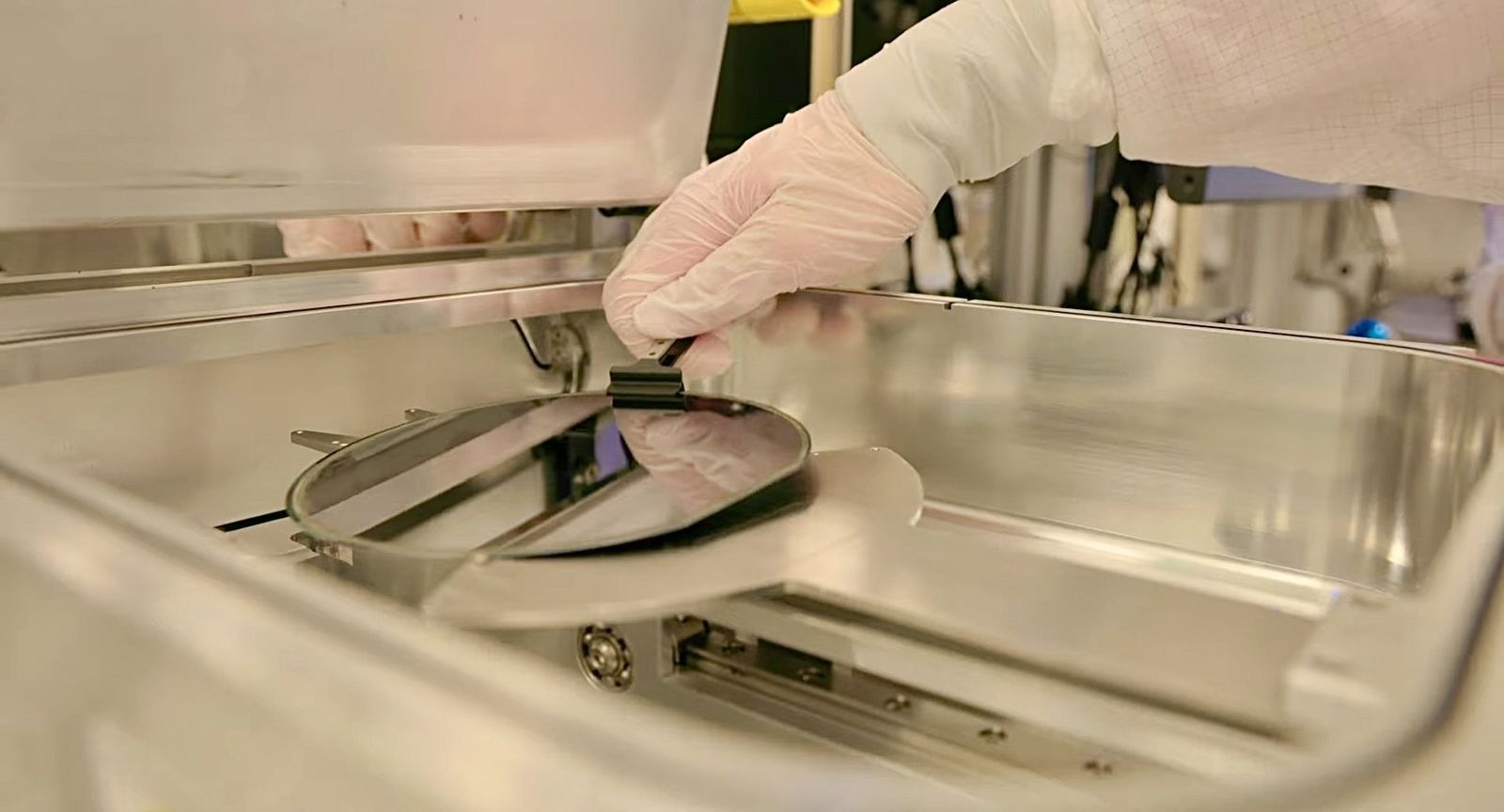
The engine of the surge was technology. Semiconductor exports jumped more than 108 percent, and shipments of automatic data processing machines — the servers, computers and hardware that power data centres and artificial-intelligence systems — rose nearly 55 percent. The pattern points to a global build-out of computing capacity that runs through Chinese factories: the world is buying the hardware of the artificial-intelligence boom, and much of it is assembled, tested or shipped from China. For Beijing, the timing is fortunate. Domestic demand remains soft, the property market is still deflating, and exports are doing the heavy lifting that consumption cannot.
The nine-month picture is one of scale. China's total exports in the first three quarters of the year rose 21.3 percent to $3.37 trillion, while imports gained 27.5 percent to $2.43 trillion. The gap between the two left a trade surplus of $938.1 billion — a surplus large enough to shape the politics of trade in every major market that buys from China. The geography of the boom is also shifting. The Association of Southeast Asian Nations was China's biggest export market by a wide margin, with exports rising more than 52 percent in September to $81.7 billion. Exports to the European Union rose 25.3 percent to $60.15 billion, while shipments to the United States jumped 39.6 percent to $47.88 billion, despite years of tariffs and technology controls.
Economists quoted in the reporting credit a mix of forces. High-technology demand, supported by the global and domestic artificial-intelligence build-out, remained the key driver, while China's pricing and supply-chain competitiveness in other major export categories helped sustain the momentum, according to an HSBC economist in Hong Kong. The strong export growth should keep China's growth on track to achieve its growth target of 4.5 to 5 percent for 2026, an ING economist said — though he added that growth remains unbalanced, with domestic data soft by comparison. The September factory surveys had already hinted at the export strength behind the headline numbers.
The figures leave several questions unanswered. The first is how much of the surge is a genuine expansion of demand and how much is front-loading — buyers rushing orders forward ahead of new tariffs, controls or disruptions. The second is durability: a 108 percent jump in semiconductor shipments is a pace no supply chain sustains indefinitely, and the history of hardware cycles is a history of booms followed by inventory corrections. The third is the domestic side: imports rose fast, but it is unclear how much of that reflects factories stocking up for export orders rather than Chinese households spending more. The fourth is the politics: a surplus approaching a trillion dollars over nine months invites new trade defences in the very markets that are buying the most.
China's economy is expected to grow 4.5 percent in 2026, according to the International Monetary Fund's latest outlook — the slowest expansion since 1990, excluding the outlier years of the COVID pandemic. Against that backdrop, an export surge of this size is not a footnote; it is the difference between meeting the official target and missing it. But it also deepens the imbalance at the heart of the Chinese model. After decades of relying on state-led investment and exports, China is striving to find new avenues for growth amid a falling population, a deflating property market, and weak domestic consumption that contributes far less to output than in advanced economies. A world in which exports carry the economy is a world in which every tariff threat in Washington or Brussels lands directly on the growth rate. The recent stimulus debate in Beijing reflects exactly that vulnerability.
The imbalance is structural, not accidental. China saves far more than it consumes, invests at a scale few economies can match, and produces far more than its own households buy. When the property market deflates and population falls, the gap between what factories make and what domestic buyers want widens — and exports absorb the difference. The artificial-intelligence hardware cycle has given that old mechanism a new, high-value product to sell. That is why the boom feels both impressive and fragile: it depends on a global spending wave that China does not control, in markets whose governments are increasingly inclined to restrict it.
The United States number is the most telling. Shipments to America jumped 39.6 percent despite tariffs and controls, which suggests that demand for the hardware is strong enough to absorb the extra cost, or that buyers are stocking up before the next round of measures. Either way, the leverage runs in both directions: Washington can raise costs, but it cannot quickly replace the supply. The parallel bargaining with Europe over hybrid exports shows the same tension — markets want the goods, governments want the leverage, and China is selling to both sides of the argument.
The second-order effects will show up in factory towns, shipping lanes and trade ministries. Southeast Asia's role as China's largest export destination deepens the integration of Asian supply chains, and with it the exposure of the region to any rupture in the United States-China relationship. For Europe, a 25 percent rise in imports from China complicates an industrial strategy that promises both openness and protection. For the shipping and logistics industries, the September numbers mean full order books now — and the risk of overcapacity later if the hardware cycle turns.
Three forces could brake the boom. The first is policy: new tariffs, export controls or investigations in the United States or Europe aimed at a surplus that is now hard to ignore. The second is the cycle itself: a hardware build-out eventually saturates, orders pause, and inventories pile up. The third is China's own pivot — the longer-promised rebalancing toward domestic consumption, which would shrink the surplus by raising imports of consumer goods rather than components. The numbers to watch are October's export growth, the property market's drag on household spending, and whether Beijing's next round of support targets consumers rather than factories.
Western readings of the figures focus on the surplus and on dependence. A $938.1 billion nine-month surplus is treated as evidence that the trading relationship remains lopsided, and the technology mix — chips and computing hardware at the centre — sharpens the security question that already surrounds semiconductor supply chains. The policy response in this reading is more controls, more tariffs and more pressure on allies to align, even as Western buyers keep ordering the hardware.
Coverage from the East presents the surge as proof that Chinese manufacturing has moved up the value chain: the export story is no longer cheap goods but the hardware of the world's computing build-out. In this reading, competitiveness comes from scale, pricing and supply-chain depth, and the ASEAN numbers show that the centre of gravity of Asian trade is shifting toward regional partners rather than the old trans-Pacific route.
Coverage from the Global South reads the figures as a mirror of its own position. For developing economies, China's export machine is both supplier and competitor: it delivers affordable technology, machinery and goods, and it crowds out local manufacturers trying to climb the same ladder. The ASEAN surge cuts both ways — Southeast Asia buys and assembles, but it also absorbs the flows that richer markets are trying to restrict.
China's exports grew 36.3 percent in September compared with a year earlier, reaching $447.18 billion, according to figures from the General Administration of Customs. That was a sharp acceleration from the 25 percent gain in August, and the biggest monthly rise since 2021, when trade figures were distorted by the COVID-19 pandemic and stringent lockdowns.
Technology trade led the growth. Semiconductor exports surged more than 108 percent, and shipments of automatic data processing machines, the servers and computers that power data centres and artificial-intelligence systems, jumped nearly 55 percent. Economists also credit China's pricing and supply-chain competitiveness in other major export categories, which helped sustain the momentum across the board.
The Association of Southeast Asian Nations was China's biggest export market by a wide margin, with exports rising more than 52 percent in September to $81.7 billion. Exports to the European Union rose 25.3 percent to $60.15 billion, while shipments to the United States jumped 39.6 percent to $47.88 billion, despite years of tariffs and technology controls.
The boom deepens an imbalance. China's economy is expected to grow 4.5 percent in 2026, the slowest since 1990 excluding the pandemic years, while domestic consumption remains weak, the population is falling and the property market is deflating. Growth that depends on foreign buyers leaves the economy exposed to tariffs, controls and any cooling of the global hardware cycle.
