The Sumatran orangutan, rescued in India in November 2024, was repatriated on October 19 under CITES protocols — New Delhi waived all care costs as a goodwill gesture, and five more rescued babies are now awaiting the same journey.
Published 19 October 2026 · 11:06 GMT
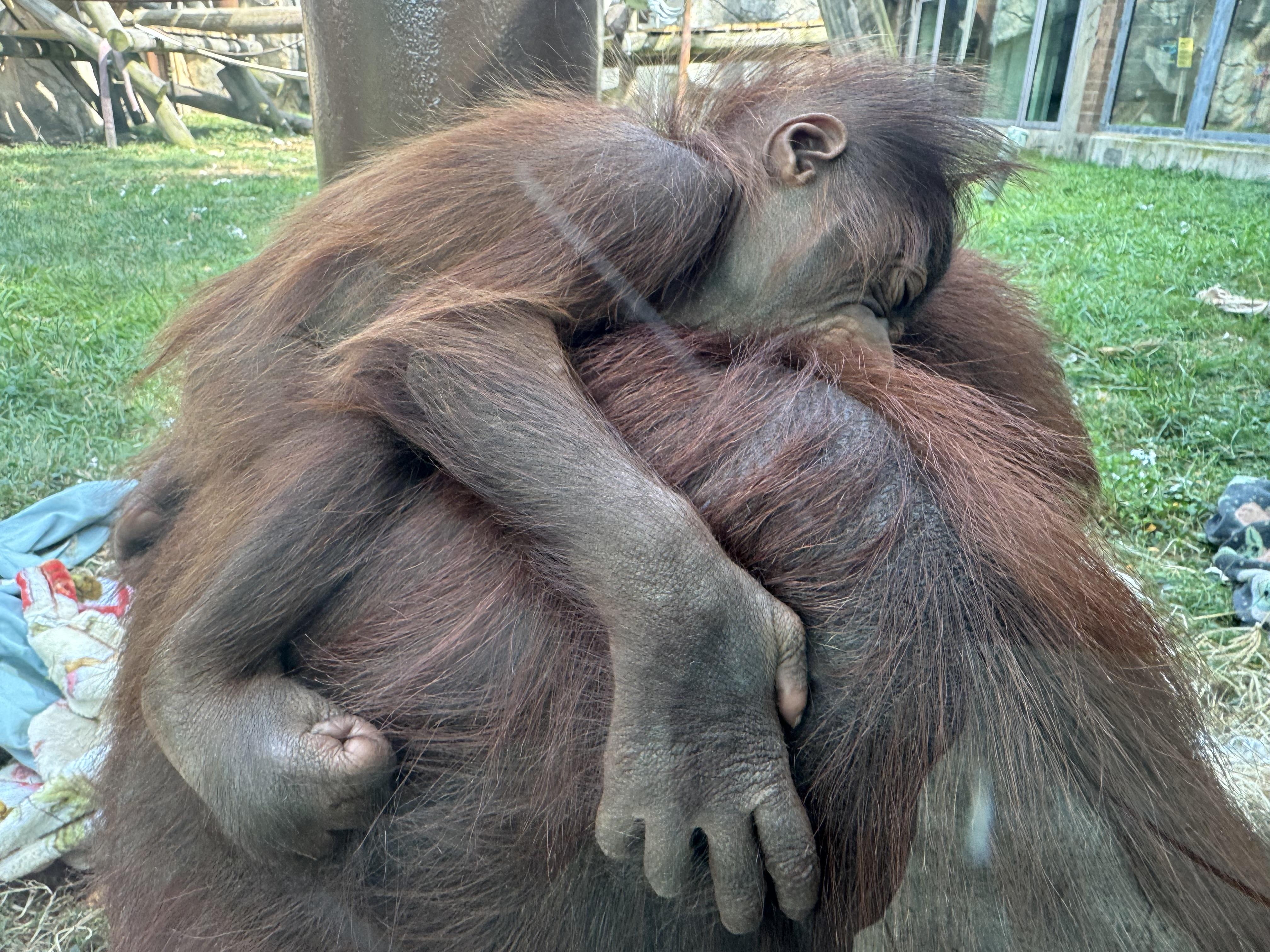
On Monday morning, October 19, a baby orangutan named Rocky touched down at Kualanamu International Airport in Medan, completing a journey that began nearly two years earlier when Indian wildlife authorities rescued him in November 2024. The Sumatran-origin ape had spent the intervening months under Indian care, receiving veterinary attention and appropriate habitat facilities, before the coordinated repatriation that returned him to Indonesia.
The handover was formal and state-level: officials of India's Consulate General in Medan attended a reception ceremony organized by Indonesia's Ministry of Forestry at the airport, with Forestry Minister Raja Juli Anthoni present for the ceremony. The transfer was arranged through the CITES Management Authorities of both countries — the international machinery that governs the movement of endangered species across borders.
India added a diplomatic flourish of its own. As a special gesture, New Delhi waived all historical costs incurred for Rocky's care and maintenance before the repatriation — an expense borne by Indian wildlife authorities for nearly two years. The Embassy of India in Jakarta said the successful repatriation "reflects the close bilateral ties between India and Indonesia and their shared commitment to the protection and conservation of endangered species, setting a positive precedent for future cooperation in wildlife conservation."
The facts on record are unusually clean for a wildlife story, because nearly all of them come from the official announcements of the two governments involved. Rocky is of Sumatran origin — one of the world's most endangered great apes. He was rescued in India in November 2024 and cared for by Indian wildlife authorities until the October 19 repatriation, when he was flown from Gujarat to Medan.
These transfers require CITES permits and both countries' coordination, which worked as designed. The reception ceremony at Kualanamu, staged by the Ministry of Forestry, signals how seriously Indonesia treats the return of a species found in the wild only in Indonesia and Malaysia — the islands of Sumatra and Borneo.
Rocky is only the beginning. Five young orangutans, roughly a year and a half old, were rescued in early September by rangers patrolling in Balasore, in India's eastern Odisha state. They are being cared for at the Nandankanan Zoological Park in Bhubaneswar, and Indonesia has formally requested their return. Their repatriation is underway but incomplete: it awaits confirmation of their species and origin, completion of required procedures, and approvals from the relevant Indian court — one of the five is reportedly being treated for a recurring fever. Indonesian forestry experts are expected to visit India in November to advance the process.
We do not know how the five Odisha orangutans reached India — the suspected route through Myanmar is an expert assessment, not an established fact, and the criminal investigation's findings have not been published. We do not know whether DNA testing will confirm Sumatran origin for all five, nor how long the health and legal procedures will take. We do not know whether the single baby's November 2024 rescue and the five's September 2026 rescue are connected to the same network. And we do not know where Rocky himself will live now — the ceremony returned him to Indonesia, but his final placement in rehabilitation or a managed forest has not been announced.
Every orangutan repatriation is a story about two separate crises: the rescue of one animal, and the trafficking industry that put it in a forest thousands of kilometers from home. Rocky was rescued in India — a country with no wild orangutans. The five Balasore babies were found motherless in an Indian forest. Orangutans exist in the wild only in Sumatra and Borneo. Their presence in eastern India is not a mystery of migration; it is evidence of an organized illegal trade.
The scale of that trade is what makes this story bigger than one ape. Humane World for Animals India's June 2026 report documented a steep rise in exotic-wildlife seizures across the country and estimated India's underground exotic-pet market at $42.6 million in 2024. Orangutans and gibbons, the report found, are increasingly trafficked into India from the rainforests of Southeast Asia — moved through war-torn Myanmar to feed demand among wealthy buyers seeking exotic status symbols to flaunt on social media. The five Odisha babies, found in early September, are the latest visible cargo.
Conservationists treat every returned ape as a small victory against that trade, and as a test of the international system meant to fight it. CITES works only when both ends of the chain cooperate — seizure and care on one side, reception and rehabilitation on the other. The Rocky transfer is that system functioning as designed, and it is why the precedent language in the Indian embassy's statement matters: this is the template for the five still waiting in Bhubaneswar, and for whatever comes next.
Read through the 5D lens, the Rocky repatriation is conservation diplomacy at its most literal — but it also exposes the asymmetry of the wildlife trade. India is the seizure side of the equation: its authorities keep finding Southeast Asian apes inside its borders (November 2024, September 2026), which means the smuggling pipelines through Myanmar remain operational despite years of enforcement rhetoric. Indonesia is the rehabilitation side, with forestry ministries, reception ceremonies and a domestic NGO infrastructure built around repatriation. Both governments get a diplomatic win from the handover; the trafficking networks get disrupted only at the endpoints.
The September 2026 discovery in Odisha sits on a corridor that conservation experts have been flagging for years: exotic wildlife funneled from Southeast Asia through conflict zones where enforcement is thinnest. Myanmar's civil war — the Bureau covered its spiraling humanitarian toll as the conflict deepened — creates exactly the lawless transit geography that traffickers exploit. A baby orangutan that ends up motherless in a Balasore forest has traveled through a chain of handlers, forged paperwork and border crossings that no single agency is tracking.
The $42.6 million figure is the uncomfortable number in this story. A market that size doesn't die because one ape flies home. India's exotic-pet demand — driven by wealth display on social media — keeps rising, and every seizure exposes only the visible tip. The November visit of Indonesian forestry experts is a step toward faster repatriations, but the pace of rescue-and-return will always lag the pace of smuggling unless the demand end is addressed: enforcement against buyers, platform pressure on the status trade, and prosecutions that reach past the couriers to the organizers. For now, the system is excellent at saving individual animals and poor at dismantling the business that endangers them.
The first-order effect is a healthy ape in Sumatra and a diplomatic photo opportunity in Medan. The second-order effects are where the story's real stakes live. A working India-Indonesia repatriation channel — with a November expert visit already scheduled — becomes a standing pipeline for the five Odisha babies and for future seizures, which are statistically certain given the market's growth. The cost-waiver precedent also lowers the diplomatic friction for the next transfer: Indonesia's forestry ministry now knows the financial and bureaucratic terms India will offer. The repatriation also sits inside Indonesia's broader resource-state strategy — the same Jakarta that leverages its nickel reserves now extends that assertiveness to wildlife sovereignty.
But there is a darker second-order reading. Successful repatriations, paradoxically, can mask the trade's growth — each heartwarming return becomes evidence that the system works, while the $42.6 million market keeps expanding underneath. And Indonesia's own conservation capacity is under parallel strain: the Bureau recently documented the fires ravaging Sumatra and Borneo, which have already forced the rescue and relocation of dozens of wild orangutans. Rocky arrives home to a country whose forests are burning — rehabilitation capacity stretched between trafficked babies flown in and wild populations driven out by smoke and flame.
The immediate milestone is the November visit of Indonesian forestry experts to India, which the embassy press release flagged as the next step. Their examinations — species and origin confirmation, health assessments, completion of legal procedures — will determine the timeline. The five remain at Nandankanan Zoological Park under veterinary care, with at least one receiving treatment for a recurring fever. The relevant Indian court must also approve the transfer, so the calendar depends as much on legal procedure as on biology.
Beyond the five, the open questions are systemic: whether the criminal investigation into the September trafficking case produces arrests or just seized animals; whether the Myanmar transit corridor sees any enforcement attention; and whether India's rising exotic-pet demand meets any counterweight. The Rocky precedent — smooth, state-backed, cost-free — is now the benchmark the Bureau will measure the next repatriation against.
The Western information environment, through AFP's reporting, frames the story as a wildlife-crime episode: trafficked babies, a criminal investigation, the institutional voice of Indonesian ministries and conservation NGOs. The emphasis falls on the endangered status of the species and the mechanics of rescue — DNA tests, health checks, rehabilitation — treating the repatriation as the proper endpoint of an enforcement chain. The broader critique, visible in the AFP coverage of the September case, is that repatriation is triage: the real question is how the animals entered India at all.
The Asian information environment, through India's ANI wire and its syndication, reads the story as a state-led conservation success: the embassy press release, the CITES coordination, the waived costs, the November expert visit, the bilateral ties language. The framing is procedural and diplomatic — a government demonstrating that its institutions function and that India treats endangered-species protection as an international responsibility. The trafficking backstory appears as context for the five waiting babies rather than as the lead.
The Global South information environment reads sovereignty into the homecoming. From the Indonesian vantage — the country where all wild orangutans live — Rocky is a national species coming home, and the Ministry of Forestry's reception ceremony is the proper posture of a state reclaiming its wildlife. The domestic debate captured in the coverage is revealing: Indonesian conservation voices argue that repatriation should be the priority and DNA confirmation can wait until the animals are back.
Rocky is a baby Sumatran orangutan rescued by Indian wildlife authorities in November 2024. On October 19, 2026, he was repatriated from Gujarat to Medan, Indonesia, under CITES protocols, in a handover ceremony organized by Indonesia's Ministry of Forestry. India waived all historical care and maintenance costs as a goodwill gesture, and the transfer was framed by both governments as a milestone in conservation cooperation.
Five young orangutans, about a year and a half old, were rescued in early September 2026 by rangers in Balasore, in India's Odisha state. Orangutans are not native to India — they exist in the wild only in Sumatra and Borneo — so their presence indicates wildlife trafficking. Indonesia has formally requested their return, and they are being cared for at Bhubaneswar's Nandankanan Zoological Park while repatriation is prepared.
Humane World for Animals India's June 2026 report estimated India's underground exotic-pet market at $42.6 million in 2024, with seizures rising steeply. Orangutans and gibbons are increasingly trafficked from Southeast Asian rainforests through Myanmar to wealthy Indian buyers seeking exotic status symbols. The trade explains why critically endangered apes keep appearing in Indian forests far from their only natural habitat.
The five babies remain at Nandankanan Zoological Park receiving veterinary care — one is being treated for a recurring fever. Their repatriation awaits confirmation of species and origin, completion of procedures, and court approval. Indonesian forestry experts are expected to visit India in November to advance the process. Conservationists in Indonesia argue repatriation should be the priority and DNA tests can be completed after the animals are home.
